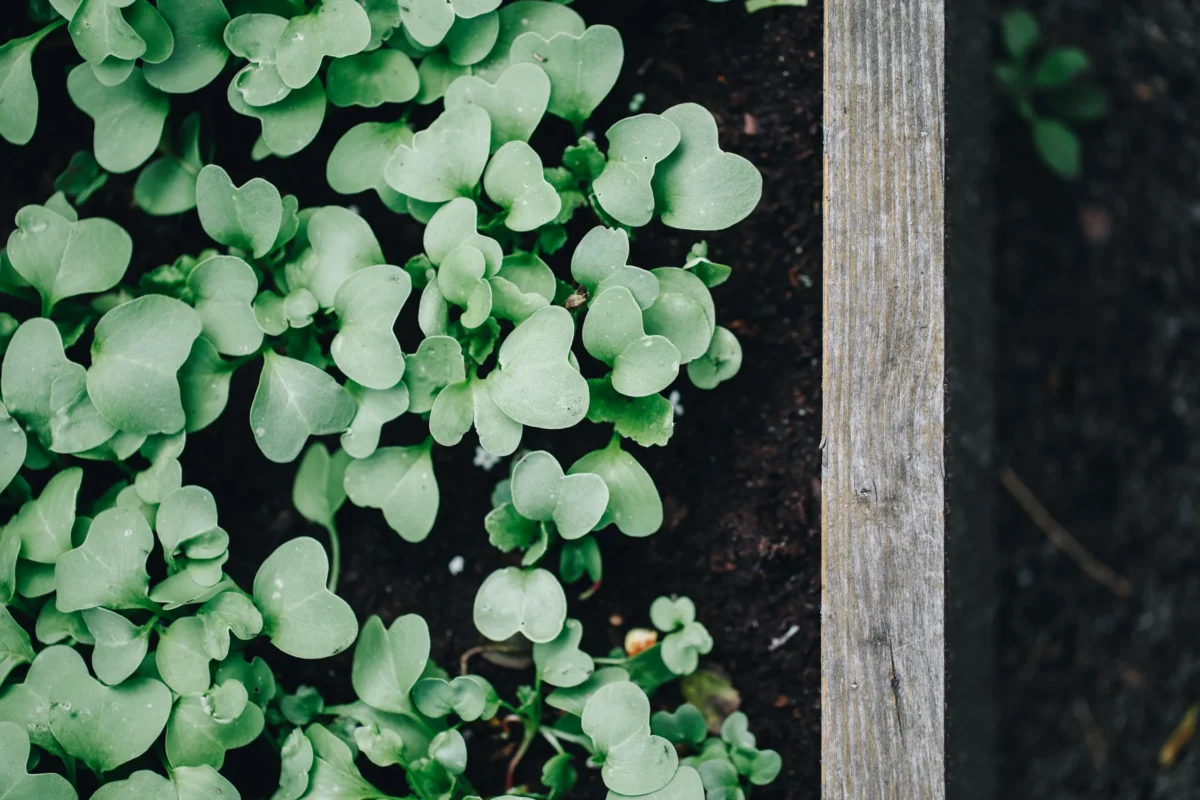
The first frost date used to be a rough guess passed down from a neighbor or a seed packet. This year it matters more than usual, because one of the strongest El Niño events on record is building in the Pacific, and it has real potential to push typical frost timing later than average across parts of the northern United States while bringing a wetter, stormier pattern to the South. Whether that shifts your actual planting window by a few days or not, the safest approach is the one gardeners have always used: find your real frost date, count backward from it, and plant accordingly. Here’s exactly how to do that, plus what to get in the ground this week.
Key Takeaways
- First frost dates are based on the 1991–2020 U.S. Climate Normals and range from late August in Alaska and high elevations to mid-November or later along the Gulf Coast — but they’re 30-year averages, not forecasts for any single year.
- The reliable way to plan fall planting is to count backward from your frost date using each crop’s days-to-maturity, not to guess a calendar date.
- Fast crops like radishes and baby spinach can still go in the ground now almost anywhere in the US; garlic and hardy onions go in now specifically because they’re meant to overwinter for a summer 2027 harvest.
- As of August 2026, the International Research Institute for Climate and Society puts the odds of El Niño persisting through winter at 100% for the fall season, with models pointing to one of the strongest events ever recorded — a real factor in how late this year’s actual frost arrives in some regions.
- Row covers, cloches, and a thick layer of mulch can buy one to several degrees of protection if frost arrives earlier than your area’s average.
How to Find Your Actual First Frost Date
Frost date guides, including this one, are built from the 1991–2020 U.S. Climate Normals — a 30-year historical average maintained by NOAA. That means a published frost date is the midpoint of decades of local weather, not a prediction for this specific year. Elevation, nearby water, urban heat, and this year’s particular weather pattern can all shift the actual date earlier or later than the average, sometimes by weeks. Gardeners in neighboring towns, or even neighboring yards at different elevations, can see meaningfully different timing.
It also helps to know the difference between the two terms used in frost guides: a light frost typically forms between 29°F and 32°F and damages tender plants like basil or tomatoes without necessarily killing hardier ones, while a freeze — 32°F or lower, sustained — is more likely to kill most garden plants outright. Fall planting decisions should be based on the light-frost date, since that’s when tender crops start to suffer even if hardier ones push through.
Typical first light-frost windows, based on historical climate normals, fall into five broad bands:
| Region | Typical First Frost Window | Example Cities |
|---|---|---|
| Alaska, high elevations, far north | Late August–mid-September | Nome (~Aug 26), Fairbanks (~Sep 4) |
| Northern Plains, Upper Midwest | Mid-September–early October | Bismarck (~Sep 23), Duluth (~Sep 26) |
| Midwest, Great Lakes, Northeast | Early–late October | Denver (~Oct 6), Columbus (~Oct 22) |
| Lower Midwest, Mid-Atlantic | Late October–mid-November | Charlotte (~Oct 30), Philadelphia (~Nov 5) |
| Deep South, Gulf Coast | Mid-November–early December | Atlanta (~Nov 19), New Orleans (~Dec 5) |
For a date specific to your ZIP code rather than a regional average, the Old Farmer’s Almanac and NOAA’s Climate Normals lookup tools both let you search by location — worth doing once and writing down, since you’ll use that date every fall from here on.
The Backward-Planning Method: Counting Days to Maturity
Once you know your frost date, the actual planting decision comes down to simple subtraction. Every seed packet and plant tag lists “days to maturity” — the number of days from planting (or transplanting) to harvest. Subtract that number from your frost date, and you get your latest safe planting date. Most experienced gardeners add a one- to two-week buffer on top of that, since fall growth slows as daylight and temperatures drop, and a crop planted right at the mathematical deadline often matures a little later than the seed packet promises.
As a worked example: if your first frost date is around October 15 and you want to plant a crop with a 40-day maturity window, count back 40 days to September 5 — then subtract another 10–14 days as a buffer, landing on a last-safe-planting date closer to August 22–26. The faster the crop, the more flexibility you have; the slower it is, the less room for error remains this late in the season.
What to Plant Right Now, by Days to Maturity
These seven crops remain reasonable options to plant in most of the US in mid-to-late September, based on typical days-to-maturity and how well each tolerates cooling temperatures:
| Crop | Typical Days to Maturity | Notes |
|---|---|---|
| Radishes | ~21 days | Fastest option; sow in succession every 1–2 weeks for repeat harvests |
| Winter salad greens (arugula, mesclun) | ~20–30 days for baby leaves | Extend the season further with row covers or a cold frame |
| Spinach | ~30–40 days | Can overwinter under row cover in mild climates for an early spring harvest |
| Kale | ~55–65 days (or use transplants to shortcut this) | Flavor actually improves after light frost; harvestable into winter with protection |
| Hardy onion sets | Overwinters — harvest next spring/early summer | Choose a cold-hardy variety suited to your region |
| Garlic | Overwinters — harvest next summer | Plant cloves pointy-side up, several inches apart, then mulch heavily |
| Fava (broad) beans | Overwinters in mild-winter regions — early spring crop | Use vertical support; mulch well in colder zones |
Before planting any of these, clear out spent summer crops and work a layer of compost or organic matter into the bed — fall-planted crops are drawing on that soil for the rest of their (often slower, cooler-weather) growth cycle, and starting with homemade compost gives them a real head start.
How This Year’s Developing Super El Niño Could Shift Your Timing
This isn’t an average fall in the Pacific. As of the International Research Institute for Climate and Society’s August 19, 2026 update, the weekly Niño 3.4 index — the standard measure of El Niño/La Niña strength — had reached +2.7°C, with the July monthly value at +2.03°C, indicating rapidly intensifying conditions. The forecast is about as confident as ENSO forecasting gets: a 100% probability of El Niño persisting from August–October 2026 all the way through February–April 2027, with no probability assigned to La Niña or neutral conditions in that window at all. Model consensus points to a peak in October–December 2026, with 15 separate forecast models projecting Niño 3.4 anomalies at or above +3.0°C — comfortably past the +2.0°C threshold that defines a “very strong” event, and in range of the strongest events ever recorded, including 1982-83, 1997-98, and 2015-16. For the full picture of what’s driving this event and what it could mean beyond the garden, see our 2026 Super El Niño forecast breakdown.
For gardeners specifically, El Niño winters have historically followed a fairly consistent regional pattern in the US: warmer and drier conditions across the northern tier and Pacific Northwest, and a wetter, stormier pattern across the Gulf Coast and southern states. USDA Climate Hubs’ analysis of past El Niño events in the Pacific Northwest found that “fall and winter are usually warmer and drier during El Niño events,” with more precipitation falling as rain rather than snow — a pattern that, if it holds this year, tends to push the first hard freeze later than average in those regions. The flip side is that a wetter, stormier southern pattern can mean more days of soggy, poorly-draining soil, which matters for anything planted just before dormancy, like garlic or fall bulbs.
None of this changes the fundamental planning method — you still count backward from your local frost date — but it’s a reasonable argument for two adjustments this particular fall: gardeners in the northern tier and Pacific Northwest may have a slightly wider margin than the historical average frost date suggests, while gardeners anywhere expecting a wetter pattern should prioritize well-drained beds and raised rows for anything going in the ground to overwinter. Building that kind of flexibility into a garden’s underlying design, rather than reacting one storm at a time, is exactly the approach covered in our guide to building a climate-resilient garden.
If Frost Arrives Early Anyway
Seasonal outlooks shift the odds; they don’t guarantee an outcome for your specific yard. A few low-cost tools buy real protection if a cold night arrives ahead of schedule:
- Row covers or frost cloth draped loosely over beds can protect tender crops down to several degrees below the outside air temperature.
- Cloches or overturned buckets work well for individual plants on a single unexpectedly cold night.
- A thick mulch layer insulates soil and root systems, which matters most for anything — like garlic or hardy onions — that needs to survive underground through winter.
- Watering beds before a cold night can help, since moist soil holds heat slightly better than dry soil and releases it slowly overnight.
FAQ
What is the best way to know when to stop planting in fall?
Find your local first-frost date, then count backward using each crop’s days-to-maturity, adding a one- to two-week buffer since growth slows as fall progresses. That backward calculation, not a fixed calendar date, is the reliable stopping point.
Is it too late to plant vegetables in late September?
In most of the US, no. Fast crops like radishes (about 21 days) and baby salad greens (20–30 days) still have time before frost in nearly every region, and garlic and hardy onions are meant to be planted now specifically because they overwinter for a summer 2027 harvest.
Does El Niño actually affect frost dates?
It can shift the odds without guaranteeing an outcome. Past El Niño winters have tended to bring warmer, drier conditions to the northern US and Pacific Northwest, which historically correlates with a later-than-average first freeze in those regions, and a wetter, stormier pattern in the South. This year’s event is forecast by the International Research Institute for Climate and Society to be one of the strongest on record, with a 100% probability of El Niño conditions persisting through this fall and winter as of the August 2026 outlook.
What’s the difference between a light frost and a freeze?
A light frost typically forms between 29°F and 32°F and damages tender plants without necessarily killing hardier ones. A freeze is a sustained temperature at or below 32°F and is more likely to kill most garden plants outright. Fall planting plans should be built around the light-frost date, since that’s when sensitive crops start to suffer.
Can I still plant garlic if I missed the “ideal” window?
Garlic is fairly forgiving. It’s typically planted anywhere from six to eight weeks before the ground freezes solid, which in many regions still leaves a window through October or even early November. The main goal is giving cloves enough time to establish roots before hard freeze, not hitting an exact date.
The Bottom Line
Fall planting doesn’t need to be a guessing game. Find your real first-frost date, count backward by days-to-maturity with a buffer built in, and choose crops that match the time you actually have left — fast greens and radishes for a quick last harvest, garlic and hardy onions for a head start on next summer. This year’s unusually strong El Niño adds a genuine wrinkle worth watching, particularly if you garden in the northern tier, Pacific Northwest, or Gulf Coast, but it’s a reason to stay flexible rather than a reason to change the underlying method. The calculation still works the same way it always has; it just might pay off with a few extra days this time around.
Frost dates and seasonal outlooks are historical averages and probabilistic forecasts, not guarantees for any specific location or year. Check a source specific to your ZIP code and monitor local forecasts as your planting window approaches.