Outdoor watering accounts for more than 30 percent of the average American household’s total water use — and in arid regions, that figure climbs to 60 percent, according to the U.S. Environmental Protection Agency’s WaterSense program. Roughly half of that water never reaches a plant’s roots at all; it’s lost to wind, evaporation, and runoff from inefficient sprinklers. The fastest way to cut that waste isn’t a smarter irrigation timer — it’s choosing plants that were built for the job in the first place.
Drought-tolerant and native plants are the foundation of a genuinely water-wise garden. They need less supplemental water once established, support local pollinators and wildlife, and hold up better against the heat waves and irregular rainfall covered in our guide to building a climate-resilient garden. But “drought-tolerant” isn’t a single plant list — the right choices depend heavily on where you live. A plant that thrives in Arizona’s Sonoran Desert can rot in a wet Pacific Northwest winter, and a Northeast native chosen for clay soil may struggle in the sandy ground of a Great Plains yard.
This guide breaks down what actually makes a plant drought-tolerant, why native species usually outperform imported ones, and — region by region — which trees, shrubs, and perennials extension services and water authorities across the US actually recommend.
What “Drought-Tolerant” and “Native” Actually Mean
A drought-tolerant plant is one that can survive extended periods with little or no supplemental water once it’s established — usually because it has evolved deep root systems, waxy or silvery foliage that reduces water loss, or the ability to go semi-dormant during dry stretches. A native plant is one that occurs naturally in a region without human introduction, which means it has already adapted to that area’s rainfall patterns, soil chemistry, and temperature swings over thousands of years.
The two categories overlap heavily but aren’t identical. As the University of Nebraska–Lincoln’s water resources program puts it, native plants are generally considered more drought tolerant than non-native species specifically because they’re already suited to local conditions — but plenty of non-native, drought-adapted species (Mediterranean herbs like lavender and rosemary, for example) also perform well in low-water gardens. The real value of prioritizing natives isn’t drought tolerance alone; it’s the added ecological return. Native plants support far more local pollinators, birds, and beneficial insects than ornamental imports, which is why organizations like the Xerces Society publish region-specific native plant lists specifically for pollinator conservation.
One caution worth repeating from University of Georgia Extension nursery specialist Matthew Chappell: native plants aren’t automatically low-maintenance in a garden setting. A species that thrives in an undisturbed forest or prairie isn’t always adapted to compacted, disturbed soil next to a driveway. Matching a native plant’s natural habitat to your yard’s actual conditions matters as much as the “native” label itself.
Start With Your USDA Hardiness Zone — and Your Soil
Before picking a single plant, find your USDA Plant Hardiness Zone. The map divides the US into 13 zones based on average annual minimum winter temperature, with each zone split into 5°F half-zones for more precision. The USDA updated the map in 2023 for the first time since 2012, pulling data from over 13,000 weather stations (nearly double the previous count), and roughly half the country shifted into a warmer half-zone as a result. Perennial and woody plants need to match your zone to survive winter; annuals depend more on your local frost dates and season length.
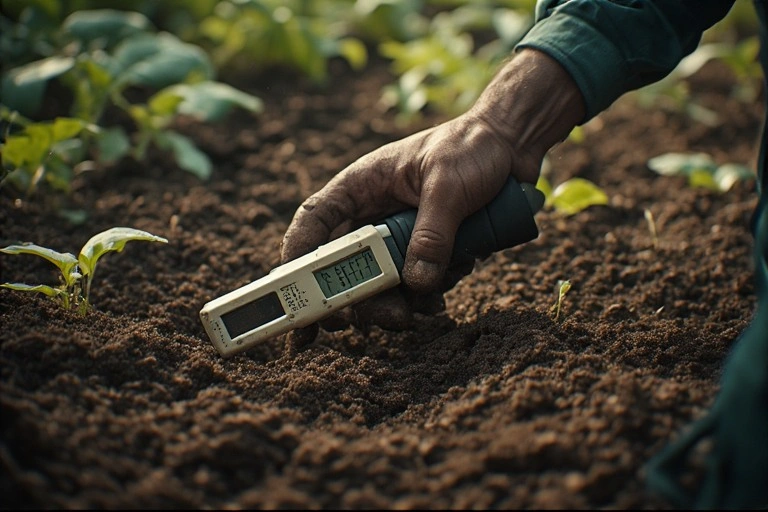
Soil matters just as much as climate zone, and it’s the more commonly skipped step. Drought-tolerant plants still need healthy root conditions to establish, and soil texture determines how water moves through your yard in the first place. It’s worth testing your soil’s pH at home before amending anything, and matching plant choices to your existing soil type rather than fighting it. Nebraska Extension recommends soil with 4–6% organic matter for the best drought resilience — high enough to hold moisture, loose enough that roots can still spread.
Drought-Tolerant Native Plants by US Region
The lists below are drawn from university extension services and regional water authorities — the closest thing to a verified, “will actually survive here” source available to home gardeners. Always cross-check against your specific hardiness zone and local nursery availability before buying.
Northeast
UMass Amherst Extension notes that even the most drought-tolerant plant still needs regular watering during its first one to three seasons while roots establish — after that, these hold up well through dry summers:
- Trees: American hornbeam, Kousa dogwood, oak species, Japanese zelkova
- Shrubs: Panicle hydrangea, lilac, ornamental sumac, spirea
- Evergreens: Juniper, eastern arborvitae, inkberry, American holly
- Perennials: Coneflower, coreopsis, daylily, Russian sage, sedum, black-eyed Susan
Southeast
University of Georgia Extension horticulturists recommend building a Southeast drought-tolerant bed around heat-loving perennials and self-sowing annuals, backed by mulch and rain barrels for moisture retention:
- Perennials: Butterfly weed, native hibiscus, beebalm, wild blue phlox, ornamental onions
- Annuals: Black-eyed Susan, Mexican sunflower, vinca, wild ageratum
- Groundcover/spreading: Homestead purple verbena, Mexican petunia, lantana
Midwest and Great Plains
University of Nebraska–Lincoln’s water resources program singles out buffalograss as “the most water-conserving turfgrass” for the region, and points to native prairie species for beds and borders:
- Turf alternative: Buffalograss (far less water than Kentucky bluegrass or tall fescue)
- Perennials: Coneflower, little bluestem and other native prairie grasses, yarrow
- Establishment tip: Water new trees/shrubs to 18 inches deep, perennials to 8 inches, and turf to 6 inches during the first one to three years
Intermountain West and Rocky Mountains
Utah State University Extension’s Center for Water-Efficient Landscaping groups plants into “hydrozones” by water need and recommends these for zones 4–9:
- Shrubs/small trees: Apache plume, curl-leaf mountain mahogany, Mexican cliffrose (southern zones)
- Perennials: Firecracker penstemon, mountain beebalm, coneflower, prince’s plume
- Grasses: Little bluestem
- Caution: Not every regional native adapts to garden conditions — aspen, for instance, typically fails outside its natural mountain habitat
Desert Southwest
The Sonoran and Chihuahuan deserts require plants adapted to extreme heat and minimal rainfall. The City of Gilbert, Arizona’s water conservation program — one of many Southwest municipal xeriscape guides — recommends:
- Trees: Palo verde, desert willow, mesquite, Texas ebony
- Shrubs: Texas sage (“the most reliable and fool-proof of the low-water-use plants”), fairy duster, yellow/orange bells (tecoma)
- Succulents and accents: Agave, yucca, hesperaloe, aloe
- Groundcover: Muhlenbergia grasses, penstemon, angelita daisy, dalea
Pacific Northwest
Despite its reputation for rain, the Pacific Northwest has long, dry summers where water-wise native planting matters. Oregon State University Extension recommends grouping these by water need and giving new plantings two to three years of supplemental water before cutting back:
- Trees: Oregon white oak, Pacific madrone, ponderosa pine (Willamette Valley form)
- Shrubs: Oregon grape, kinnikinnick, red-flowering currant, oceanspray, hairy manzanita
- Perennials: Douglas iris, camas, yarrow, Oregon sunshine, broadleaf stonecrop
- Note: Some natives, like Oregon white oak, are prone to root rot if watered in summer — they want to stay dry once established
Gardeners in California and other Mediterranean-climate areas of the West Coast face a similar summer-dry, winter-wet pattern; the free plant database at Calscape, run by the California Native Plant Society, lets you search native, low-water species by ZIP code.
How to Group and Plant Them: Hydrozoning
Buying the right plants only pays off if they’re arranged well. The core design principle every regional guide above agrees on is hydrozoning: grouping plants with similar water needs together, so you’re never overwatering drought-tolerant species to keep thirstier neighbors alive (or the reverse). The Arizona Municipal Water Users Association frames this as one of seven core xeriscaping principles, alongside:
- Planning the layout before buying plants, rather than reacting to what looks good at the nursery
- Limiting turf grass to small, functional areas rather than covering the whole yard
- Designing irrigation valves around hydrozones, not a single blanket schedule
- Improving soil drainage and structure before planting
- Mulching to reduce evaporation and suppress weeds
- Following through with basic seasonal maintenance — xeriscaping reduces water need, but it isn’t a no-maintenance landscape
On irrigation specifically, drip systems that deliver water directly to the root zone consistently outperform overhead sprinklers, which lose a large share of water to evaporation and wind drift before it ever reaches the soil — the same conclusion covered in more depth in our climate-resilient garden guide. The EPA notes that swapping a standard irrigation controller for a WaterSense-labeled smart controller can cut irrigation water use by up to 30 percent, saving an average home as much as 15,000 gallons a year.
Common Mistakes When Planting Native or Drought-Tolerant Species
- Skipping the establishment period. Nearly every extension source above stresses that “drought-tolerant” describes a plant’s needs after establishment — not on day one. Most trees and shrubs still need consistent water for one to three growing seasons before their root systems can handle dry spells alone.
- Watering natives like ornamentals. Overwatering an established native, especially one adapted to dry summers (Oregon white oak and many Southwest natives included), can cause root rot faster than drought ever would.
- Ignoring microclimates. A south-facing slope, a low spot that collects runoff, and a spot under an eave can each behave like a different hardiness zone within the same yard.
- Choosing by zone alone. Hardiness zone tells you about winter cold, not summer humidity, soil pH, or rainfall pattern — a Zone 7 plant from the humid Southeast may fail in Zone 7 high-desert conditions.
- Skipping soil prep. Compacted or nutrient-poor soil undermines even the toughest drought-tolerant species; working in compost and testing pH first — as covered in our guide to adjusting soil pH — gives new plantings a real chance to establish.
Why This Is Worth the Effort
A yard built around native, drought-tolerant plants isn’t just a lower water bill — though cutting outdoor water use by even a third, in line with EPA figures, adds up quickly over a full growing season. It’s also a more resilient garden overall, one that needs less rescuing during the heat waves and irregular rainfall increasingly common across the US. For gardeners already growing food, the same water-wise thinking extends naturally into edible landscaping, which we cover in our guide to turning a backyard garden into a productive, low-input space.
Start small if the idea of reworking an entire yard feels overwhelming: replace the highest-water, lowest-payoff section of lawn first, choose two or three regionally appropriate species from the lists above, and expand the water-wise footprint by a bed or two each season.
Frequently Asked Questions
Do native plants really need less water than non-native plants?
Generally, yes. Native plants have adapted to a region’s typical rainfall and soil over long periods, so they usually need less supplemental irrigation once established than ornamental species imported from a different climate — though every plant, native or not, needs regular water during its first one to three seasons.
What’s the difference between xeriscaping and native plant gardening?
Xeriscaping is a design approach focused on minimizing water use through plant choice, irrigation efficiency, and layout — it can include drought-tolerant non-native species alongside natives. Native plant gardening specifically prioritizes species indigenous to the region, primarily for ecological reasons like pollinator support, though the two approaches overlap heavily in practice.
How do I find my USDA hardiness zone?
The USDA Plant Hardiness Zone Map, updated in 2023, is searchable by ZIP code and based on each area’s average annual minimum winter temperature. It’s the standard reference for whether a perennial, shrub, or tree can survive winter in your location.
Can drought-tolerant plants still get overwatered?
Yes, and it’s one of the most common ways they fail. Many drought-tolerant and native species — desert and Pacific Northwest natives especially — are prone to root rot when watered on the same schedule as thirstier ornamentals. Grouping plants by water need (hydrozoning) prevents this.
Do I need to amend my soil before planting drought-tolerant natives?
Usually, yes, at least minimally. Extension guidance consistently recommends working compost into the planting area and correcting major drainage or compaction issues first, since even the toughest drought-tolerant species establish poorly in compacted or nutrient-poor soil.