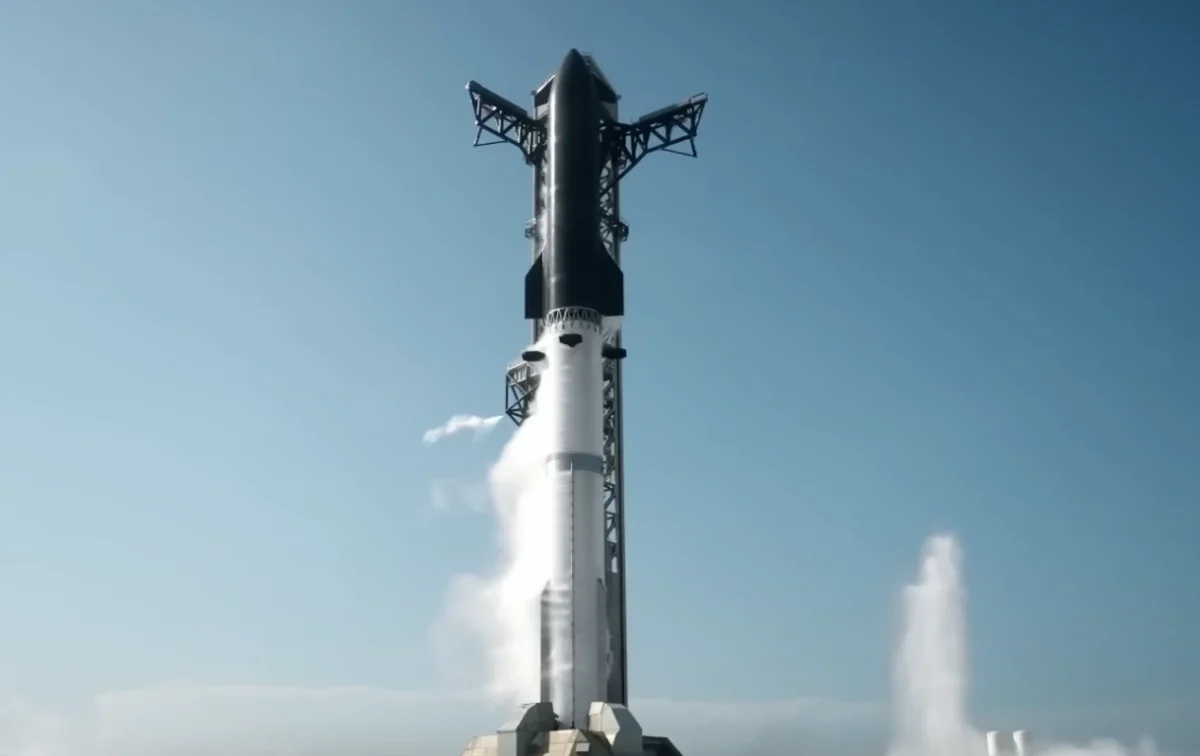
The SpaceX IPO is unlike anything that has come before it in market history — not just because of its record-breaking valuation, but because of a striking contradiction at its core: a significant number of the retail investors rushing to buy shares openly acknowledge that the price is hard to justify. Yet they are buying anyway. Understanding why reveals something important about both the SpaceX story and the psychology of investing in extraordinary companies.
Contents
- The key numbers at a glance
- What makes this IPO structurally different
- SpaceX is not one company — it is three
- Why the valuation is so hard to pin down
- The two types of retail buyers
- The bull case and the bear case
- Key risks every investor should understand
- What history tells us about landmark IPOs
The key numbers at a glance
IPO share price
$135
Opening price
$150
Day-one gain
+25%
IPO valuation
$1.77T
Retail share allocation
~20–30%
Total capital raised
$75B
Musk voting control
~85%
2025 net loss (post-xAI)
$4.94B
What makes this IPO structurally different
Every aspect of the SpaceX market debut defies standard IPO convention. Rather than presenting a price range and adjusting based on institutional demand — the method used in virtually every major listing of the past three decades — SpaceX set a single, fixed price of $135 per share. There was no range, no book-building period in the traditional sense, and no opportunity for institutional investors to negotiate the entry point downward. The company named its price, and investors accepted it or walked away.
The total capital raised — $75 billion — would make this the largest public market debut ever recorded, surpassing Saudi Aramco’s $29 billion raise in 2019 by a wide margin. The valuation of $1.77 trillion would position SpaceX, before most investors had ever owned a single share, as one of the most valuable companies on earth.
Retail investors received an unusually prominent role. In a typical large IPO, retail investors receive somewhere between 5% and 10% of available shares. SpaceX directed between 20% and 30% of its offering toward individual retail buyers — a deliberate choice that its CFO described as recognising the long-standing support of individual investors and SpaceX enthusiasts. Investors applied through consumer brokerage platforms but received no guarantee of allocation, with final share distributions communicated only the night before trading began.
The company’s stock is listed on the Nasdaq. Notably, SpaceX was not approved for inclusion in the S&P 500 prior to its IPO — a detail with meaningful implications for post-listing demand dynamics, as discussed later in this article.
SpaceX is not one company — it is three
One reason the SpaceX valuation is so difficult to evaluate using conventional metrics is that the company’s revenues and growth trajectories span three fundamentally different business models, each at a different stage of maturity and each carrying different risk profiles.
Business 1
Launch Services
The original SpaceX — commercial rocket launches, defence contracts, and NASA missions. Dominated by the Falcon 9 with Starship as the next-generation vehicle. Holds a near-monopolistic position in commercial orbital launch with very limited direct competition at scale.
ScalingBusiness 2
Starlink (Connectivity)
The satellite broadband network serving millions of subscribers globally. Generated over $7.1 billion in adjusted EBITDA in 2025 and accounts for approximately 61% of total 2025 revenue. Starlink is the highly profitable engine that currently funds the rest of the company’s activities.
Highly profitableBusiness 3
AI Infrastructure (xAI)
Following the February 2026 merger with xAI — which owns the X platform and the Grok AI model — SpaceX now carries a loss-making AI division. The segment posted a $6.36 billion operating loss in 2025 and $2.47 billion in Q1 2026 alone, with spending still increasing.
Significant lossesThe interplay between these three segments is central to any honest valuation of SpaceX. Starlink’s profits have historically subsidised the launch business and early-stage research. The addition of xAI changed that equation significantly: before the merger, the core business was generating an estimated $8 billion in annual profit. The xAI integration turned that surplus into a net loss, and SpaceX has stated it does not expect to return to profitability in the near term.
During the IPO roadshow, Anthropic and Google announced partnerships with SpaceX that the company projects will add $26 billion in annual revenue — effectively more than doubling projected revenue figures in the middle of the investor pitch period. This kind of mid-roadshow development is almost without precedent in public market history, and it added significant complexity to an already difficult valuation exercise.
At roughly 90 times trailing revenue, SpaceX’s valuation at IPO is among the highest price-to-sales ratios ever applied to a company of this size. Morningstar analysts have noted publicly that they believe the company has been significantly overvalued at the IPO price, and that investors are likely to find more attractive entry points after the initial listing period.
Why the valuation is so hard to pin down
Normally, analysts value a company by applying standard multiples to revenue, earnings, or cash flow — then comparing those figures against similar businesses. SpaceX resists this approach at every level. There is no directly comparable publicly traded company. The closest analogues — commercial satellite operators, aerospace defence contractors, and cloud infrastructure businesses — each capture one dimension of what SpaceX does, but none captures all three simultaneously.
The argument made by SpaceX bulls is that applying a traditional valuation framework to a company that is simultaneously redefining launch economics, building the world’s largest satellite network, and positioning itself for space-based AI infrastructure is itself a category error. The speed at which SpaceX adds revenue, secures contracts, and executes technically, they argue, cannot be adequately modelled using conventional tools built for slower-moving industries.
The counterargument is simpler: at $1.77 trillion, the market is pricing in a version of SpaceX that has not yet been built. Nearly every element of the growth case — Starship at commercial scale, the AI segment turning profitable, continued Starlink subscriber expansion — must come true simultaneously for the valuation to be justified by future fundamentals. That leaves almost no room for setbacks, delays, or regulatory obstacles.
The two types of retail buyers
Among the retail investor community that requested allocations through platforms including Robinhood, Charles Schwab, and E-Trade, two distinct investment philosophies have emerged — with meaningfully different expectations, strategies, and risk tolerances.
Short-term traders
These investors are not primarily buying a belief in SpaceX’s long-term fundamentals. They are buying scarcity, demand, and hype. The logic is that the combination of unprecedented retail allocation, intense public interest, and limited float creates conditions for a strong first-day or first-week price pop — regardless of whether the underlying valuation is justified.
Key watch
First-day trading dynamics, Nasdaq 100 rebalancing on day 15, and the first lock-up expiry when early insiders may sell.
Long-term believers
These investors acknowledge the aggressive valuation but are thinking in multi-year or multi-decade terms. The relevant question for them is not whether SpaceX is fairly priced today, but whether the space economy, satellite broadband, and AI infrastructure will be substantially larger ten years from now — and whether SpaceX will be central to all three.
Key approach
Starting with a small initial position and building over time if the stock experiences post-IPO volatility and more attractive pricing levels emerge.
What is striking about both groups is that neither is operating under the illusion that SpaceX is cheap. The valuation debate is effectively settled among informed retail investors — the question being asked instead is whether the premium is worth paying given what the company could become, or whether the first-day pop is worth capturing before stepping back.
The FOMO factor is real and acknowledged. Multiple retail investors have openly described the fear of missing out as a genuine factor in their decision-making — not as a rationalisation, but as a conscious recognition that some companies become so central to their industries that the cost of non-participation outweighs the cost of overpaying at entry. The Amazon and Tesla precedents are frequently cited in this context.
The bull case and the bear case
Bull case
- Starlink revenue projected to reach $300B annually by 2035 (ARK Invest)
- Near-monopoly in commercial launch — no viable competitor at Falcon 9’s cost per kg
- $26B in new annual revenue from Anthropic and Google partnerships announced mid-roadshow
- Starship, if commercially successful, would further lower launch costs and open new markets
- Space-based AI infrastructure could bypass Earth’s land, power, and cooling constraints
- Sum-of-parts valuation across three distinct high-value segments may justify the premium
Bear case
- $4.94B net loss in 2025 after xAI merger — profitable core turned loss-making overnight
- AI division spending accelerating with no near-term profitability guided
- ~90x trailing revenue leaves almost zero margin for execution slippage
- Not included in S&P 500 — removes a major automatic buyer at index rebalancing
- 85% voting control means public shareholders have minimal governance rights
- Lock-up expiry could trigger insider selling pressure within six months of listing
Key risks every investor should understand
Valuation risk
At ~90x trailing revenue, the stock prices in years of future growth that has not yet materialised. Any miss on Starlink, Starship, or AI timelines could trigger a sharp correction.
Governance risk
One individual controls approximately 85% of voting power. Public shareholders cannot block mergers, acquisitions, executive pay, or strategic pivots without the founder’s consent.
Lock-up risk
Early insiders who have held equity for years may be required — or under pressure — to take profits when lock-up restrictions expire, creating a meaningful supply overhang.
Profitability risk
The company does not expect to return to profitability in the near term. The AI segment’s losses are growing, not shrinking — and that spending is expected to accelerate post-IPO.
Execution risk
Three complex businesses must all scale successfully and simultaneously — Starship commercialisation, Starlink subscriber growth, and AI infrastructure build-out — for the valuation to hold.
Index exclusion risk
Without S&P 500 inclusion, the wave of automatic index-fund buying that typically follows a large listing will not materialise, removing a significant source of structural demand.
What history tells us about landmark IPOs
Precedent is imperfect guidance for an IPO this unusual, but it offers some calibration. Alibaba’s 2014 listing — at the time the largest IPO in history — delivered a 38% gain on its first trading day. ARM Holdings surged 25% on its debut in 2023. Facebook’s 2012 IPO, perhaps the most anticipated consumer technology listing before SpaceX, closed effectively flat on day one before a prolonged decline in subsequent months.
SpaceX opened at $150 on its first trading day against a $135 IPO price — a first-day gain of approximately 25%, broadly in line with ARM and well ahead of Facebook. Whether that opening pop marks the beginning of a sustained rally or a short-term ceiling will depend on the factors that have divided retail investors from the start: execution, timing, and the question of what SpaceX is actually worth if everything goes right.
For long-term holders, the IPO date is not the destination. It is, as one framing goes, a stop on the way to the democratisation of the space economy — and the true test of that thesis will play out not in the first week of trading, but over the decade that follows.
Watch these post-IPO dates: Day 15 — Nasdaq 100 rebalancing adds SpaceX as an automatic buy for index-tracking funds. Month 6 — First major lock-up expiry, when early institutional investors and insiders may begin selling. Month 12 — First full-year earnings as a public company, providing the clearest picture yet of whether the AI division’s losses are stabilising.
Disclaimer: This article is published for informational and educational purposes only. Nothing in this content constitutes financial advice, investment advice, trading advice, or any other form of professional financial guidance. All references to the SpaceX IPO, SpaceX IPO valuation, SpaceX stock price, and SpaceX retail investor strategies are presented solely to explain publicly available information and market commentary.
Investing in any SpaceX IPO stock or publicly traded equity involves substantial risk, including the possible loss of your entire investment. Past performance — including the SpaceX IPO day-one gain of approximately 25% — is not indicative of future results. The SpaceX $1.77 trillion valuation and all financial figures cited in this article are sourced from publicly available filings, analyst reports, and financial media as of June 13, 2026, and are subject to change without notice.
Before making any decision related to SpaceX Starlink IPO 2026 shares or any other investment product, you should conduct your own independent research and consult with a licensed financial adviser who understands your personal financial situation, objectives, and risk tolerance. The risks associated with should I buy SpaceX IPO decisions — including valuation risk, governance risk, lock-up risk, and AI infrastructure execution risk — are outlined in this article but do not represent an exhaustive list of all risks involved.
SpaceX IPO, SpaceX IPO valuation, SpaceX stock price, SpaceX IPO retail investors, SpaceX $1.77 trillion, should I buy SpaceX IPO, SpaceX Starlink IPO 2026, SpaceX IPO risks,