Lake Mead is one of those destinations that rewards visitors on multiple levels simultaneously — part outdoor recreation paradise, part engineering landmark, part living demonstration of one of the most pressing environmental challenges facing the American West. Whether you are driving in from Las Vegas for a half-day or building a dedicated trip around its 1.5 million acres of desert wilderness, this guide tells you everything you need to know in 2026.
Contents
- Quick facts about Lake Mead
- The water crisis — what visitors need to know right now
- History: from Hoover Dam to the modern crisis
- Best things to do at Lake Mead
- Hoover Dam — a visit within the visit
- Best time to visit
- Getting there and getting around
- Fees and entry
- Practical tips for 2026 visitors
Quick facts about Lake Mead
Designation
National Recreation Area
Total area
1.5M acres
Location
Nevada / Arizona border
Nearest city
Las Vegas (~30 miles)
Entry fee
$25 / vehicle
Current level (Jun 2026)
~1,049 ft
Formed by the construction of Hoover Dam on the Colorado River in 1935, Lake Mead became the largest reservoir in the United States by volume — capable of holding close to 9 trillion gallons of water when completely full. It sits on the Nevada-Arizona border and serves as the primary drinking water source for approximately 25 million people across Nevada, Arizona, California, and parts of Mexico. Together with Lake Powell, it holds around 80% of the entire Colorado River system’s stored water supply.
The water crisis — what visitors need to know right now
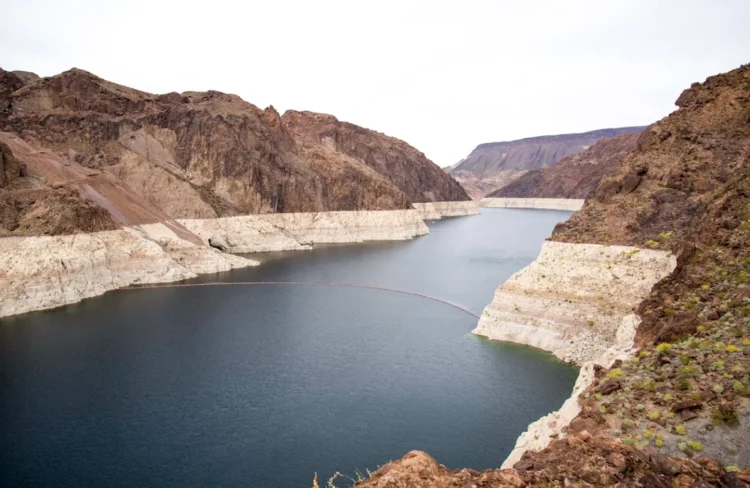
Visiting Lake Mead in 2026 means visiting at a genuinely historic moment in the reservoir’s story — and not a comfortable one. As of early June 2026, the lake’s elevation has dropped below 1,049 feet, placing it at roughly 35% of its total storage capacity and approximately 180 feet below full pool. That puts it within striking distance of the all-time record low of 1,040 feet set in July 2022.
June 2026 status: The US Bureau of Reclamation projects Lake Mead could fall to 1,020 feet by July 2027 — more than 20 feet below the 2022 record low. Hoover Dam’s hydropower capacity begins to be affected at 1,035 feet, and the current trajectory suggests that threshold could be crossed as early as autumn 2026.
The visible evidence is striking. The famous “bathtub ring” — a pale mineral band left on the canyon walls by receding water — marks the dramatic gap between where the lake once sat and where it sits today. In 2022, the drop revealed submerged objects including old boats, vehicles, and even human remains that had been underwater for decades. A further decline could expose yet more of the lake’s hidden history.
The causes are interconnected: a 26-year drought across the Colorado River basin, two consecutive poor snowpack seasons in the Rocky Mountains, rising temperatures that accelerate evaporation, and long-standing political disagreements between the seven US states and Mexico that share the river’s water. The current operating agreements governing how that water is divided are set to expire at the end of 2026 — adding a layer of political urgency to an already acute physical crisis.
For visitors: The water crisis does not prevent a visit — Lake Mead National Recreation Area remains open, trails and roads operate normally, and the Hoover Dam is fully accessible. However, some boat ramps may be closed or relocated due to low water levels. Check the National Park Service website for current ramp status before arriving with watercraft.
History: from Hoover Dam to the modern crisis
Hoover Dam is completed on the Colorado River, creating Lake Mead. At the time it was the largest dam in the world, and the reservoir it formed was the largest man-made lake in the United States.
Lake Mead National Recreation Area established — the first National Recreation Area in the United States — recognising the lake’s value not only as a water resource but as a destination for outdoor leisure.
The last time Lake Mead reached full capacity — 1,229 feet above sea level. It has not returned to that level since, and the gap has widened steadily over four decades.
A prolonged drought begins across the Colorado River basin. The lake’s elevation and stored volume enter a long-term decline that continues to the present day, losing roughly 160 feet of elevation over the following two decades.
Lake Mead hits its all-time recorded low of approximately 1,040 feet — the lowest level since the reservoir was first filled in the 1930s. Submerged boats, vehicles, and human remains are exposed as the shoreline retreats.
An exceptional Rocky Mountain snowpack gives the lake a significant reprieve, with water levels recovering by more than 50 feet. Conservation measures from the Lower Basin states contribute to the rebound.
Following two below-average precipitation years, Lake Mead has retreated again. Federal projections now place the most probable elevation at 1,020 feet by July 2027 — a new record low that would exceed the 2022 crisis level by more than 20 feet.
Seven US states and Mexico must agree on a new long-term Colorado River water-sharing framework before the end of 2026. The outcome will determine the river’s trajectory — and Lake Mead’s future — for the next two decades.
Best things to do at Lake Mead
Despite the water crisis, Lake Mead National Recreation Area remains a spectacular outdoor destination. Its sheer scale — spanning nearly 1.5 million acres across Nevada and Arizona — means there is far more to experience than the lake’s surface level alone. Here are the activities that reward a visit most.
Best things to do at Lake Mead
Despite the water crisis, Lake Mead National Recreation Area remains a spectacular outdoor destination spanning nearly 1.5 million acres.
Historic Railroad Tunnel Trail
A flat, accessible trail passing through five 1930s construction tunnels with sweeping views of Boulder Basin. Suitable for all fitness levels.
Free to hikeBoating and watersports
Kayaking, paddleboarding, jet skiing from Hemenway Harbor and Callville Bay. Check NPS ramp status before arriving with your own vessel.
Book in advanceSnorkelling and diving
One of the Southwest’s few freshwater dive sites. Clear water and newly exposed submerged formations make for rewarding underwater exploration.
No permit neededDesert hiking
Red rock canyon trails through Calico Hills and White Rock Canyon. Start before 8am in summer and carry at least 1 litre of water per hour.
Free with park entryFishing
Striped bass, largemouth bass, catfish, and trout year-round. A valid Nevada or Arizona fishing licence is required depending on your location.
Fishing licence requiredCamping
Campgrounds at Las Vegas Bay, Boulder Beach, and Callville Bay. Tent pitches through to full RV hook-ups. Reserve well ahead for spring and autumn.
Reserve earlyHoover Dam — a visit within the visit
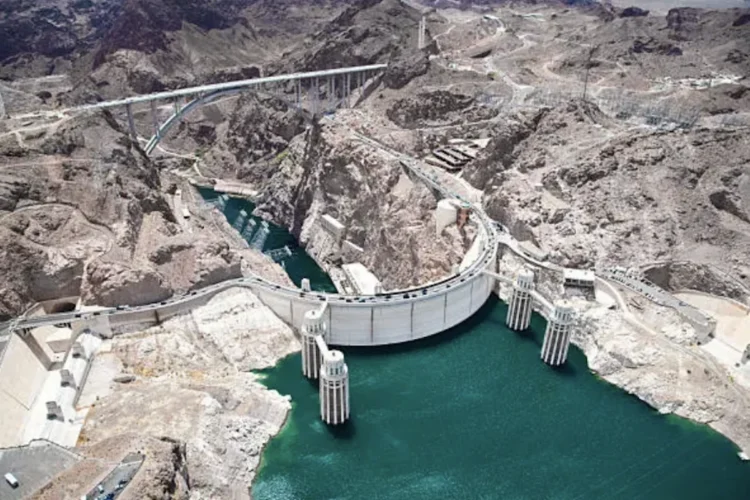
No trip to Lake Mead is complete without crossing the road to Hoover Dam — one of the most significant engineering achievements of the 20th century and a genuinely arresting sight in person. Straddling the Nevada-Arizona border at the southern end of Lake Mead, the dam stands 726 feet tall and was, when completed in 1935, the tallest dam on earth.
The dam currently generates hydroelectric power for Nevada, California, and Arizona. However, with Lake Mead’s elevation approaching levels where generation capacity becomes significantly reduced — below 1,035 feet, output begins to decline noticeably, and below 950 feet the facility can no longer generate power at all — the dam’s energy future is one of the most closely watched numbers in Western energy policy. Federal projections now warn that generating capacity could be reduced by as much as 40% by autumn 2026 if current trends continue.
- ✓Dam tours depart from the Hoover Dam Lodge and visitor centre, covering the dam’s construction history, inner workings, and the hydroelectric plant.
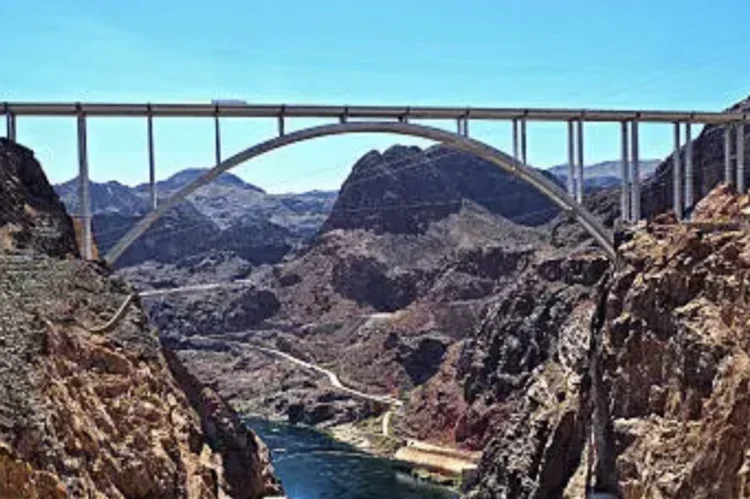
- ✓The Mike O’Callaghan–Pat Tillman Memorial Bridge, completed in 2010, offers a pedestrian walkway with extraordinary views of both the dam and the canyon below — free to walk.
- ✓Entry to the dam itself is free; guided tours of the interior carry a separate admission fee. Allow 2–3 hours for a thorough visit.
Best time to visit
Best time to visit
March to May
Mild temperatures, good water clarity, and manageable crowds. Wildflower season brings colour to the desert. Ideal for hiking without extreme heat.
October to November
Crowds thin out, temperatures ease, and uncrowded boat ramps make autumn one of the most pleasant times to visit.
June to September
Midday temperatures can exceed 40°C. Water activities are popular but hiking requires very early starts and large water supplies.
December to February
Minimal crowds and lowest prices. Pleasant for hiking. An underrated window for those who prefer solitude over water activities.
Getting there and getting around
Lake Mead sits roughly 30 miles south-east of the Las Vegas Strip — an easy 40-minute drive that makes it one of the most convenient major national recreation areas in the country. Most visitors drive in from Las Vegas, making a rental car the most practical option for independent exploration.
- From Las Vegas: Take US-93 South toward Boulder City. The Lake Mead Visitor Center entrance is well-signposted and sits just off the main highway.
- From Phoenix: Approximately a 4-hour drive north on US-93, passing through Kingman, Arizona.
- Public transport: No direct bus or rail service connects Las Vegas to the park interior. Day tours departing from the Las Vegas Strip are available through multiple operators and include transport, a guide, and often a Hoover Dam stop.
- Within the park: A private vehicle is essentially required for exploring the full recreation area. The Northshore Road and Lakeshore Road offer excellent scenic drives between key access points.
Fees and entry
- Vehicle pass (7 days): $25
- Motorcycle pass (7 days): $20
- Individual entry on foot or bicycle (7 days): $15
- America the Beautiful Annual Pass: Covers entry to all US national parks and recreation areas for $80 per year — excellent value for those making multiple visits.
- Park hours: Gates and main roads are open 24 hours a day, 7 days a week. The Visitor Center operates daily from 9am to 4:30pm.
Practical tips for 2026 visitors
- ✓Check boat ramp status before arriving. Low water levels have closed several ramps and relocated others. The NPS website maintains a live status page — consult it the morning of your visit if you are bringing watercraft.
- ✓Carry significantly more water than you think you need. Desert heat dehydrates quickly, and distances between facilities are large. A minimum of one litre of water per person per hour of hiking is the standard recommendation.
- ✓Start hikes before 8am in summer. Trails become genuinely dangerous in the midday heat of July and August. Rangers respond to heat-related rescues regularly during peak summer months.
- ✓Book watercraft rentals in advance. Hemenway Harbor and Callville Bay both offer rentals, but summer weekends sell out weeks ahead. Online booking is strongly recommended.
- ✓Use sunscreen rated SPF 50 or above. Desert sun at this elevation is significantly more intense than coastal environments, and exposure at the water’s edge amplifies UV levels further through reflection.
- Visit the Visitor Center first. Free maps, a relief model of the recreation area, wildlife exhibits, and ranger advice will all improve your day. It is the single best investment of the first 20 minutes of your visit.
- ✓Combine with a Hoover Dam stop. The dam is less than 10 minutes from the main park entrance. Including it adds relatively little time but considerably enriches the experience of the whole area.