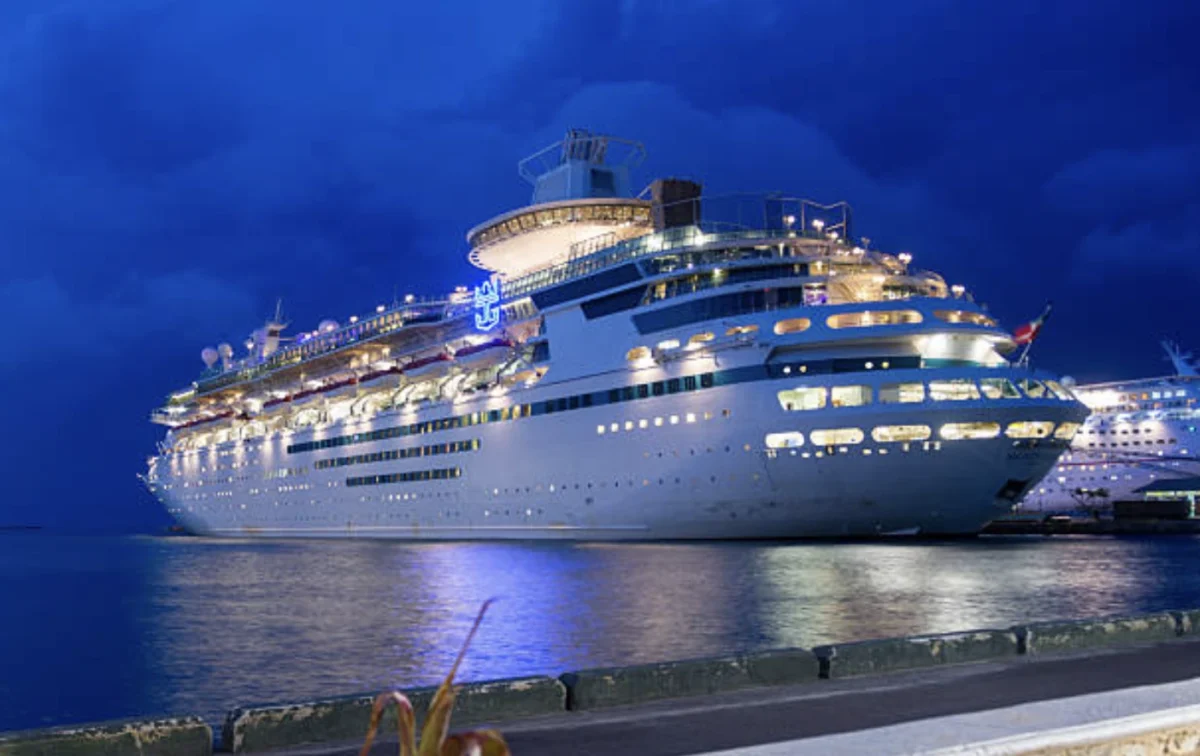
A Florida woman is taking Royal Caribbean to federal court after sustaining a serious wrist injury aboard the Jewel of the Seas — and the circumstances of her case have ignited a broader conversation about passenger safety, mobility device policies, and what cruise lines are legally required to do when things go wrong.
The lawsuit, filed in May 2026 in the United States District Court for the Southern District of Florida, is one of a growing number of negligence claims against Royal Caribbean in 2025 and 2026. Together, these cases are drawing increased public attention to a question that millions of cruise passengers rarely think about until something goes wrong: who is responsible when you are injured on a cruise ship?
What Happened Aboard the Jewel of the Seas
On June 22, 2025, Colleen Parsons of Florida was a paying guest aboard Royal Caribbean’s Jewel of the Seas, a Radiance Class vessel launched in 2004 and measuring 90,090 gross tons. During the voyage, Parsons entered the ship’s Casino Royale — a 6,459-square-foot gaming area housing approximately 195 machines and 12 gaming tables — which she describes in her complaint as crowded with passengers at the time.
While moving through the casino, another guest bumped into Parsons. The collision knocked her off balance and into the path of a large electric mobility scooter that had been parked near the gambling tables in the walkway. Parsons fell. The impact resulted in what her legal team describes as a comminuted intraarticular fracture of the distal radius of her left wrist — a complex break of the wrist bone involving multiple bone fragments extending into the joint surface. The injury required open reduction internal fixation surgery, a procedure in which surgeons reposition the fractured bone and secure it with metal plates and screws. The surgery left permanent scarring.
Beyond the immediate medical consequences, Parsons’ complaint details a range of ongoing losses: medical expenses, physical pain, mental suffering, lost income, and the loss of enjoyment and financial value of her cruise vacation.
The Legal Claims: What Parsons Is Arguing
Parsons’ complaint against Royal Caribbean rests on two core legal theories: negligent maintenance and failure to warn.
Negligent Maintenance
The negligent maintenance argument holds that Royal Caribbean had a duty to ensure its casino was kept in a reasonably safe condition for guests — and that allowing a mobility scooter to remain parked in a pedestrian walkway in a crowded area constituted a breach of that duty. The ship’s own internal mobility device policy explicitly states that when assistive devices including scooters are parked throughout the ship, they must be positioned out of the way to allow safe and easy access by other guests and crew members.
In Parsons’ telling, the scooter was not parked out of the way. It was in the walkway near the gambling tables, in a space she characterises as crowded. The crew was present. The hazard was observable. And no one acted to have the scooter repositioned.
Failure to Warn
The failure to warn claim argues that Royal Caribbean had an obligation to alert guests to hazards in the space. In a crowded casino environment, where guest movement is dense and the focus of most patrons is on the gaming activity around them rather than on floor-level obstructions, a large scooter in a walkway presents a foreseeable trip risk. Parsons’ legal team argues the cruise line neither removed the hazard nor warned guests of its presence.
What Parsons Is Seeking
Parsons is seeking damages exceeding USD 75,000, a threshold that in the context of the US Southern District of Florida establishes federal court jurisdiction. Her claim encompasses compensation for medical costs, pain and suffering, lost earnings, and the diminished value of the cruise experience itself.
Royal Caribbean’s Defence: “Open and Obvious”
Royal Caribbean responded to the complaint on June 3, 2026, denying all of Parsons’ allegations and asserting that she alone is responsible for her injuries.
The cruise line’s legal position rests on a doctrine familiar in personal injury defence: the “open and obvious” rule. Under this doctrine, a property owner — or in maritime law, a vessel operator — may argue that they are not liable for a hazard that a reasonably attentive person would have noticed and avoided through the ordinary use of their senses.
Royal Caribbean’s attorneys argued that the scooter constituted an open and obvious condition, visible to any passenger exercising normal attention, and that Parsons’ failure to observe it and adjust her path was the direct cause of her injuries. The defence contended that her own negligence was the sole cause of the harm she sustained, and that her damages claim is therefore legally barred.
Royal Caribbean has formally requested that the court enter judgment in its favour.
Royal Caribbean’s Own Mobility Device Policy
Perhaps the most legally significant dimension of this case is the tension between Royal Caribbean’s defence and the company’s own published policy governing mobility assistive devices.
The Royal Caribbean Mobile Disability Assistive Devices Policy states clearly that mobility scooters must be stored and recharged in passengers’ staterooms at all times when not in active use, specifically to keep fire doors, corridors, and elevator lobbies clear for emergency evacuation. The policy further states that when devices are parked elsewhere on the ship, they must be positioned to allow safe and easy access for all guests and crew.
If the scooter in Parsons’ case was parked in a walkway near gaming tables in a crowded casino, a reasonable question arises: was it in compliance with the company’s own guidelines? Parsons’ legal team will likely argue that the same policy Royal Caribbean relies upon to govern guest behaviour also creates an affirmative duty on the cruise line’s crew to enforce those rules — and that the failure to do so constitutes exactly the kind of negligence the company claims not to have committed.
This internal contradiction — arguing that the condition was open and obvious while also maintaining a policy designed to prevent that condition from existing at all — is likely to be a focal point of the litigation as it proceeds.
A Pattern of Lawsuits: Royal Caribbean’s Legal Landscape in 2025–2026
Parsons’ case does not stand alone. Royal Caribbean has faced a sustained wave of personal injury litigation throughout 2025 and into 2026, with several cases raising similar core themes around hazard management, duty of care, and the adequacy of warnings.
Harmony of the Seas slip and fall (November 2024): Jaimie Lewis of California filed a maritime personal injury lawsuit after slipping on a wet walkway in the ship’s Central Park neighbourhood following rainfall. The complaint alleged that no wet-floor warning signs or anti-slip measures were in place despite the crew’s awareness of the wet surface. Lewis is seeking damages exceeding USD 75,000.
Oasis of the Seas slip and fall (February 2025): Lindemere Richard Bernhardt of North Carolina filed suit in March 2026 after slipping and falling in the Central Park neighbourhood aboard Oasis of the Seas, again alleging Royal Caribbean’s negligence contributed to the incident.
Adventure of the Seas FlowRider injury (February 2025): Jason Keller filed suit in February 2026 after falling headfirst off the FlowRider surf simulator aboard Adventure of the Seas, sustaining a fractured neck. The lawsuit alleges both general negligence and medical negligence, with Keller claiming that the ship’s medical staff misdiagnosed his injury as a non-fracture despite the damage sustained.
Mariner of the Seas bathroom threshold injury (April 2025): Ruth Hicks of Texas filed suit in 2026 after tripping on a bathroom threshold while entering her cabin on her first day aboard the Mariner of the Seas. The complaint names three counts of negligence including failure to warn and failure to maintain.
Voyager of the Seas leg amputation (March 2025): Mary Bowden of Florida filed a lawsuit alleging that Royal Caribbean failed to provide necessary medical treatment and emergency evacuation after she sustained a serious leg injury during a port call in Cozumel, Mexico. The injury ultimately required the amputation of her left leg. The lawsuit includes six counts, among them general negligence and negligent misrepresentation.
The accumulation of these cases across multiple vessels, incident types, and years reflects a pattern that goes beyond isolated incidents. Several of the complaints share a common thread: the allegation that Royal Caribbean was aware of a hazardous condition and failed either to remediate it or to warn passengers.
What Is Maritime Personal Injury Law?
Cruise ship injury cases operate within a distinct legal framework that differs meaningfully from standard personal injury litigation. Understanding these differences matters for any passenger who has been injured at sea.
Federal Jurisdiction and Florida Courts
Most major cruise lines — including Royal Caribbean, Carnival, and Norwegian — are headquartered in Miami and include provisions in their passenger ticket contracts requiring that any lawsuits be filed in the United States District Court for the Southern District of Florida. This venue requirement is generally enforceable, meaning that regardless of where a passenger is from, litigation typically proceeds in Miami.
The Duty of Reasonable Care
Under maritime law, cruise lines owe their passengers a duty of reasonable care under the circumstances. This is not the same as a duty to guarantee safety — but it does require cruise operators to take reasonable steps to identify and address known hazards, maintain their vessels in safe conditions, and warn passengers of dangers that are not immediately apparent.
Critically, courts have consistently held that the cruise line’s duty to warn extends to hazards that passengers would not reasonably anticipate — and that the “open and obvious” defence does not automatically absolve a cruise line when it had an obligation to address a foreseeable risk. Whether a mobility scooter in a crowded casino walkway meets the threshold for open and obvious, or whether it is a hazard that passengers were not in a reasonable position to anticipate, is precisely the kind of factual question a jury will be asked to resolve.
The Comparative Fault Question
Many cruise ship injury cases involve some degree of comparative fault — a legal framework in which the court allocates responsibility between the parties based on their respective contributions to the incident. If a jury finds that Royal Caribbean was 60% responsible for the conditions that caused Parsons’ fall but that Parsons was 40% responsible for failing to observe the scooter, her damages would be reduced proportionally.
Royal Caribbean’s defence — arguing that Parsons bears sole responsibility — is the most aggressive version of this argument. It is also the outcome the company must establish to avoid any financial liability whatsoever. For Parsons’ team, demonstrating that the cruise line’s own policy was violated, and that crew members who were present in the casino failed to act, will be central to establishing the company’s share of fault.
What Cruise Passengers Should Know About Mobility Scooters and Safety
Mobility scooters have become a common feature of modern cruise travel. They allow passengers with limited mobility to participate in the full range of shipboard activities — and cruise lines, including Royal Caribbean, actively accommodate guests who bring or rent them.
That accommodation, however, comes with responsibilities on all sides.
For passengers using mobility scooters: Royal Caribbean’s policy is explicit. Scooters must be stored in the stateroom when not in active use, not parked in walkways, corridors, or public spaces. Leaving a scooter parked in a casino walkway, near gaming tables, in a space described as crowded, appears to be in direct conflict with this policy.
For passengers navigating crowded spaces: Cruise casinos, buffet areas, and entertainment venues can become dense with foot traffic and equipment. Situational awareness — particularly in spaces where mobility devices are common — reduces the risk of the kind of incident Parsons experienced.
For the cruise line: The policy requiring safe scooter parking is only as effective as its enforcement. If crew members are present in spaces where parked mobility devices obstruct walkways and take no action to address the hazard, the policy’s existence provides passengers with little practical protection.
Your Rights as a Cruise Passenger
If you sustain an injury aboard a Royal Caribbean or any other cruise vessel, several practical steps can significantly affect the outcome of any subsequent legal proceedings.
Report the incident immediately. The ship’s medical centre and security department should be notified without delay. Formal incident reports create a contemporaneous record of the event and its circumstances that is difficult for the cruise line to dispute later.
Seek medical attention on board. Even if the injury appears minor, a medical evaluation by the ship’s staff creates a documented clinical record. In cases like Parsons’, where the true extent of the injury — a complex multi-fragment fracture — may not be immediately visible, early medical documentation establishes the timeline between the incident and the diagnosis.
Preserve all evidence. Photograph the location of the incident, any hazard that contributed to your injury, and your injuries themselves. Collect names and contact information for any witnesses. Keep all medical records, expenses, and receipts.
Be aware of limitation periods. Cruise passenger ticket contracts typically include contractual limitation periods for filing suit that are shorter than the standard statute of limitations — often as short as one year from the date of the incident. Missing this deadline can extinguish your right to bring a claim entirely. Consulting a maritime personal injury attorney promptly after an incident is strongly advisable.
Understand what you can recover. Maritime personal injury claims can include compensation for medical expenses, lost income, pain and suffering, permanent disability or scarring, and the loss of enjoyment of the vacation itself — as reflected in Parsons’ complaint.
The Bigger Picture: Cruise Line Accountability and Passenger Safety
The steady flow of personal injury litigation against Royal Caribbean through 2025 and 2026 raises a legitimate policy question that goes beyond any individual case: are cruise lines doing enough to manage foreseeable passenger safety risks?
Each of the cases described above involves a hazard that was, in some sense, foreseeable — wet walkways, parked mobility devices, surf simulator equipment, bathroom thresholds. In several cases, the cruise line was allegedly aware of the hazard before the injury occurred. In Parsons’ case, the hazard was in apparent conflict with the company’s own published device policy.
Cruise lines operate at an extraordinary scale. Royal Caribbean alone carries tens of millions of passengers each year across dozens of ships. The density of passenger movement, the variety of onboard activities and environments, and the 24-hour operation of these floating cities create a safety management challenge of genuine complexity. But scale and complexity do not reduce the legal and ethical obligation to protect guests from foreseeable harm.
The outcome of Parsons’ case — and the broader pattern of litigation it is part of — will be worth watching for anyone who sets foot on a cruise ship.
Case Summary: Parsons v. Royal Caribbean
| Detail | Information |
|---|---|
| Plaintiff | Colleen Parsons, Florida resident |
| Defendant | Royal Caribbean Cruises Ltd. |
| Vessel | Jewel of the Seas (Radiance Class, 90,090 GT) |
| Incident Date | June 22, 2025 |
| Location of Incident | Casino Royale aboard Jewel of the Seas |
| Nature of Injury | Comminuted intraarticular fracture, left wrist; surgery with permanent scarring |
| Claims | Negligent maintenance; failure to warn |
| Damages Sought | In excess of USD 75,000 |
| Royal Caribbean’s Position | Denied all allegations; claims plaintiff’s own negligence was sole cause |
| Court | US District Court, Southern District of Florida |
| Filing Date | May 18, 2026 |
| Status | Active litigation |
This article is for general informational purposes only and does not constitute legal advice. If you have been injured on a cruise ship, consult a qualified maritime personal injury attorney regarding your specific circumstances.