Last updated: October 13, 2026. This article is for general information only and is not tax, legal, or financial advice. Rules depend on your filing status, income and entity type, so confirm details with the IRS or a qualified tax professional.
If you are self-employed, freelance, run a small business, or have significant income that does not have tax withheld, the IRS expects you to pay tax during the year through quarterly estimated payments. The fourth and final payment for tax year 2026 is due January 15, 2027, which falls on a Friday. This guide explains who has to pay, how to calculate what is enough to avoid a penalty, and the practical ways to pay.
The Short Answer
- Q4 2026 due date: January 15, 2027. It covers income earned from September 1 through December 31, 2026, according to the IRS schedule.
- Who generally must pay: you expect to owe at least $1,000 for the year after subtracting withholding and refundable credits, and your withholding and credits will be less than the smaller of the two safe harbor amounts below.
- Safe harbor: pay at least 90% of this year’s tax, or 100% of last year’s tax, whichever is smaller. The IRS says the prior-year figure becomes 110% if last year’s adjusted gross income was more than $150,000 ($75,000 if married filing separately).
- Weekend or holiday rule: a payment due on a weekend or legal holiday is on time if made the next business day.
The 2026 Estimated Tax Schedule
| Payment period | Income earned | Due date |
|---|---|---|
| Q1 | January 1 – March 31 | April 15, 2026 |
| Q2 | April 1 – May 31 | June 15, 2026 |
| Q3 | June 1 – August 31 | September 15, 2026 |
| Q4 | September 1 – December 31 | January 15, 2027 |
The periods are uneven, which surprises many people: the second period is only two months, and the third is three. The schedule above follows the IRS’s estimated tax page, updated September 25, 2026. If you missed earlier quarters, you can still make the January payment, but a penalty may apply for the earlier shortfall, as explained below.
Who Needs to Make Estimated Payments
The IRS says individuals, including sole proprietors, partners and S corporation shareholders, generally must pay estimated tax if they expect to owe $1,000 or more when they file. Corporations generally must pay if they expect to owe $500 or more. Common situations include freelance and gig income, rental income, large capital gains, interest and dividends, and retirement distributions without enough withholding.
You usually do not have to pay for the current year if you meet all three conditions: you owed no tax in the prior year, you were a U.S. citizen or resident for the whole year, and your prior tax year covered 12 months. Special rules apply to farmers and fishers: if at least two-thirds of your gross income for 2025 or 2026 comes from farming or fishing, you can pay all of your 2026 estimated tax by January 15, 2027, or file your 2026 return by March 1, 2027 and pay what you owe then.
How Much Is Enough? The Safe Harbor Rules
You can avoid the underpayment penalty if you meet any of these tests, according to the IRS:
- You owe less than $1,000 after subtracting withholding and refundable credits.
- You paid at least 90% of the current year’s tax through withholding and estimated payments.
- You paid at least 100% of the prior year’s tax (110% if last year’s AGI exceeded $150,000, or $75,000 if married filing separately).
The IRS says to use the smaller of the 90% test and the prior-year test. Because the prior-year number is already known, it is often the simplest target. For example, if your 2025 return showed $12,000 in total tax and your AGI was under the threshold, paying $12,000 across withholding and estimates during 2026 generally protects you from the penalty, even if your 2026 income is higher. The trade-off is that you may owe a larger balance when you file, so set that money aside.
A Worked Example
This is an illustration, not personal advice. Suppose a freelance designer had $12,000 of total tax on her 2025 return and an AGI under $150,000. She paid $2,500 in each of the first three quarters, a total of $7,500. To reach the 100% prior-year safe harbor, she would need to pay another $4,500 by January 15, 2027, assuming she has no withholding. If she expects her 2026 tax to be lower, the 90% test could require less, so she would compare both numbers and use the smaller one.
What If You Have Not Paid Enough Yet?
The penalty is calculated by period, so a small Q4 payment cannot fully erase an underpayment in an earlier period. The IRS says it may waive the penalty if a casualty, disaster or other unusual circumstance caused the missed payment, or if you retired after age 62 or became disabled in the year or the year before and the underpayment was due to reasonable cause. Income that arrives unevenly, such as a big sale in November, may be handled with the annualized income method on IRS Form 2210, which a tax professional can help you apply.
How to Pay
- IRS Online Account: view balances and make payments from your bank account.
- IRS Direct Pay: pay directly from a checking or savings account.
- IRS2Go app or phone: the IRS lists these options on its estimated tax page.
- EFTPS: the Electronic Federal Tax Payment System, which the IRS lists for partners paying estimated tax.
- Form 1040-ES: the worksheet and payment vouchers for calculating and mailing a payment.
Keep your confirmation numbers. Many states also have their own estimated tax schedule, so check your state revenue agency separately.
Q4 Checklist for Small Business Owners
- Pull your year-to-date profit and loss statement.
- Estimate your total 2026 income tax and self-employment tax.
- Add up what you have already paid through withholding and estimates.
- Compare against 90% of this year’s tax and 100% or 110% of last year’s tax, and choose the smaller target.
- Schedule the January 15 payment early, and set aside cash for any balance due at filing.
- Download receipts and payment confirmations for your records.
If you filed a tax extension earlier this year, our guide on what self-employed and small business owners must do before October 15, 2026 covers the extended-return deadline, which is separate from estimated payments. For planning next year’s income, see our explanation of 2027 tax brackets, what is confirmed and what is projected.
Frequently Asked Questions
When is the fourth-quarter estimated tax payment due for 2026?
January 15, 2027, according to the IRS estimated tax schedule.
Do I have to pay if I expect to owe less than $1,000?
Generally no. The IRS says most taxpayers avoid the penalty if they owe less than $1,000 after subtracting withholding and refundable credits.
What is the 110% rule?
If your adjusted gross income for the prior year was more than $150,000 ($75,000 if married filing separately), the prior-year safe harbor is 110% of last year’s tax rather than 100%.
Can I skip the January payment by filing early?
The IRS lets farmers and fishers meet a special rule by filing by March 1, 2027 and paying in full. For most other taxpayers, the January payment is still the deadline unless you meet another safe harbor.
How do I pay estimated tax online?
Use your IRS Online Account or IRS Direct Pay with a bank account, or pay by phone or the IRS app, as listed on the IRS estimated tax page.
Sources: IRS, “Estimated taxes” (irs.gov/businesses/small-businesses-self-employed/estimated-taxes, updated September 25, 2026); IRS, “Estimated tax” FAQs (irs.gov/faqs/estimated-tax, updated September 25, 2026); IRS Tax Topic 306, “Penalty for underpayment of estimated tax” (reviewed September 24, 2026). The worked example is an illustration only.
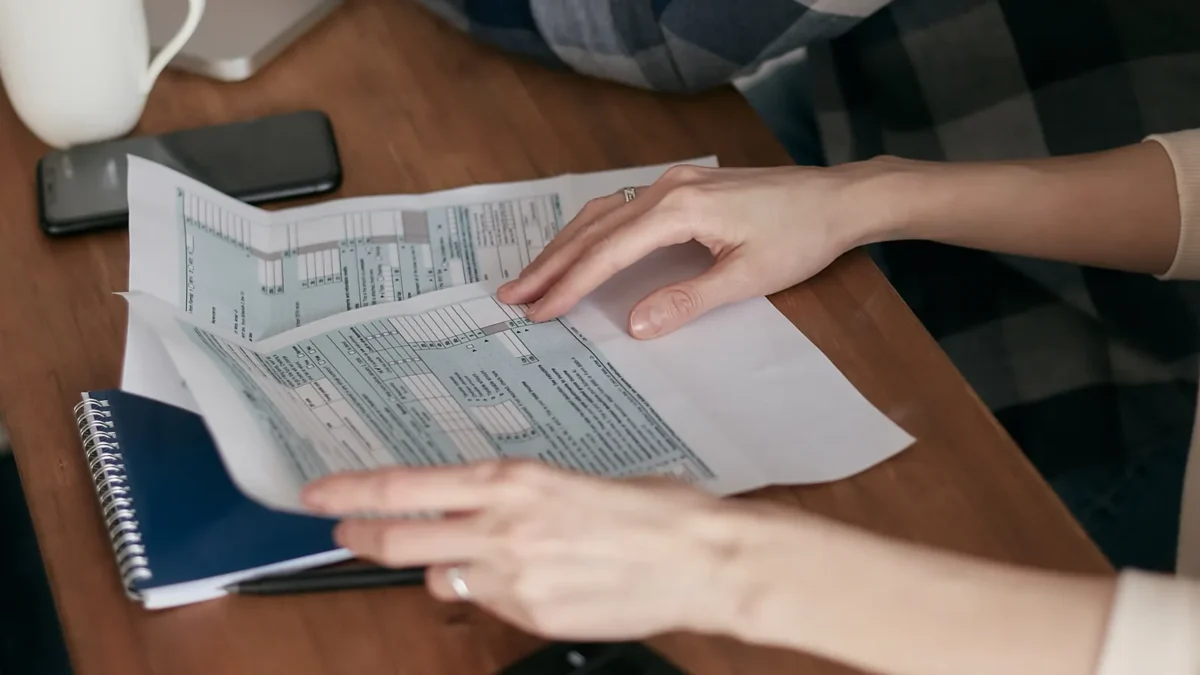
Featured image: “A Person Holding Tax Forms on Wooden Table” by Mikhail Nilov, via Pexels (Pexels License).