Last updated: November 12, 2026. This is a neutral explainer based on reporting by the Times of Israel, Al Jazeera, Fox News and JNS, and on Israel’s Basic Law: The Government as explained by the Israel Democracy Institute. Coalition talks change daily, and seat figures for some smaller parties were not published in the sources we used. It does not take a position on any party or on the conflict.
Israeli President Isaac Herzog chose former army chief Gadi Eisenkot, not caretaker Prime Minister Benjamin Netanyahu, to try to form Israel’s next government. The decision was announced on November 7, 2026, after Eisenkot received 67 recommendations from members of the 120-seat Knesset against 46 for Netanyahu. A recommendation is not a coalition, though. Eisenkot’s own bloc holds 48 seats, and he needs a path to a working majority before his deadline runs out.
This guide covers the election results, how the recommendations added up, the legal clock, the realistic coalition options and what each outcome could mean for Israel’s foreign policy.
The Short Answer
- Who has the mandate: Gadi Eisenkot, leader of the Yashar party, nominated by President Herzog on November 7, with the formal handover scheduled for November 8 (Times of Israel, Fox News).
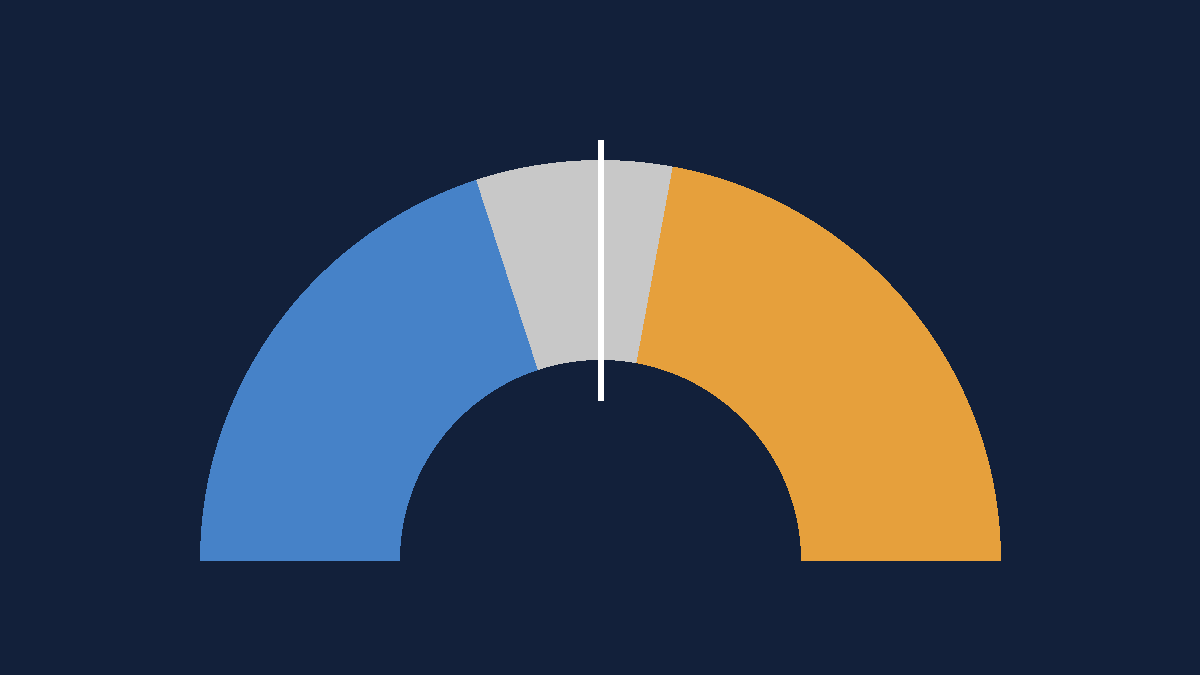
- Recommendations: 67 for Eisenkot (his four-party bloc plus the Arab-led parties), 46 for Netanyahu, and 7 seats (United Torah Judaism) recommending no one.
- The clock: 28 days, which the president can extend by up to 14 more. If the clock started on November 8, that points to roughly December 6, or about December 20 with the full extension. These dates are our calculation; no outlet we read published an official deadline.
- The core problem: Eisenkot’s bloc has 48 seats. He has ruled out bringing Arab parties into the government, so the main routes are a deal with the ultra-Orthodox parties, a minority government with outside support, or a unity government that includes Likud.
The 2026 Election Results in Numbers
Israelis voted on October 27, 2026. None of the sources we used published a complete party-by-party table, so the figures below are the ones reported directly, with derived totals labeled as such.
| Party or bloc | Seats | Source |
|---|---|---|
| Likud (Netanyahu) | 27 | Al Jazeera, Fox News |
| Yashar (Eisenkot) | 21 | Al Jazeera |
| United Torah Judaism | 7 | Times of Israel, Al Jazeera |
| Shas | 6 | Times of Israel, Al Jazeera |
| Arab-led parties (Joint List and Ra’am) | 19, a record | Al Jazeera, Fox News |
| Eisenkot’s bloc (Yashar, the Democrats, Naftali Bennett’s party, Yisrael Beytenu) | 48 | Times of Israel, Al Jazeera, Fox News |
| Netanyahu’s wider bloc | 53 | Al Jazeera, Fox News |
The three blocs add up to 120 (53 + 48 + 19). Joint List MK Ahmad Tibi told Al Jazeera his list holds 11 seats, which would leave 8 for Ra’am, but that split rests on a single source.
Why Herzog Picked Eisenkot
Under Israeli law, the president consults every Knesset faction and then gives the first mandate to the member he judges most likely to form a government. Herzog held consultations on November 4 and 5. The tally was:
- 67 for Eisenkot: the 48 seats of his own bloc plus the 19 seats of the Arab-led parties, which recommended him without joining his bloc.
- 46 for Netanyahu: Likud, Shas and other right-wing parties.
- 7 for nobody: United Torah Judaism declined to recommend any candidate.
Herzog said on November 5 that “the results of the consultations may appear clear,” as quoted by Fox News. A majority of recommendations made Eisenkot the natural choice, but 19 of his 67 come from parties he says will not sit in his cabinet. That gap is the whole story of the next few weeks.
Who Is Gadi Eisenkot?
Eisenkot, 66, was chief of staff of the Israel Defense Forces from 2015 to 2019. After the October 7, 2023 attack he joined Netanyahu’s war cabinet as an observer for about eight months, then left over disagreements about how the war was being run, according to Al Jazeera. He now leads Yashar, the largest party in the anti-Netanyahu bloc.
The Times of Israel reports that Eisenkot has set four conditions for any partner: recognizing Israel as a Jewish and democratic state, accepting the values of the Declaration of Independence, supporting mandatory military, national or civilian service for all citizens, and recognizing Hamas as a terrorist organization whose military and governing power must be dismantled. He has also said he will not serve with Netanyahu. On X he wrote that “now is the time for the formation of a national emergency government.”
The Legal Clock: What Happens Step by Step
The process is set out in Basic Law: The Government (Articles 7 to 11). The Israel Democracy Institute’s explainer and the Knesset’s English translation describe it this way:
- First candidate, 28 days. The president can add extensions, but they cannot total more than 14 days. This is the stage Eisenkot is in now.
- Second candidate, 28 days. If the first candidate fails or gives up, the president has 3 days to assign the task to another willing member, or to tell the Knesset speaker he sees no way to form a government. The second candidate gets 28 days with no extension. Several outlets say Netanyahu would be the obvious second choice.
- The 61-member route. If that also fails, a majority of Knesset members has 21 days to ask the president, in writing, to give the mandate to a named member. That person gets 14 days.
- New elections. If no one succeeds, the Knesset is treated as having dissolved itself. The election takes place on the last Tuesday before the end of 90 days from the president’s announcement.
A government takes office only after it wins a confidence vote in the Knesset. The law does not explicitly require 61 votes for that, so a minority government is legally possible, as the IDI notes. In practice, every government formed after an election has had at least 61 supporters. Until a new government is sworn in, Netanyahu remains caretaker prime minister.
Four Possible Paths to a Government
1. Eisenkot’s bloc plus the ultra-Orthodox parties (61 seats)
Adding United Torah Judaism (7) and Shas (6) to the 48-seat bloc produces exactly 61. This is the path most discussed in Israeli media, and it has obvious friction. Eisenkot’s platform calls for service obligations for everyone, while the ultra-Orthodox parties want protections for yeshiva students. Yisrael Beytenu leader Avigdor Lieberman said on November 6 that he would accept “painful compromises” on Haredi enlistment to form a government without Netanyahu or the Arab parties, according to the Times of Israel. UTJ has said it is open to talks but had received no proposal. Shas recommended Netanyahu and called reports that it would join Eisenkot “total fake news,” even as a source close to its rabbinical council told Channel 12 that Shas would not oppose a government approved by UTJ’s rabbis.
2. A minority government backed from outside
The 48-seat bloc could govern with outside support from the Arab-led parties, in the style of the 2021 Bennett-Lapid arrangement but without them in the cabinet. Tibi told Al Jazeera he expects a minority government “with external support from the Arab parties.” The obstacle is inside Eisenkot’s own bloc: Lieberman has said he refuses a government that depends on the abstention of the Joint List and Ra’am. Democrats leader Yair Golan is more open to cooperation with those parties.
3. A unity government with Likud
Al Jazeera notes that Yashar, Bennett’s party, Yisrael Beytenu and Likud together would reach 67 seats. Netanyahu has called publicly for a “national unity government,” but Eisenkot’s camp rejects any partnership with him personally. A Yashar statement quoted by the Times of Israel said Netanyahu speaks of unity “only now that he realizes his days in office are numbered.” This path likely requires either Eisenkot or Likud to change course on Netanyahu’s role.
4. Deadlock and a fresh election
If none of the above works, the law moves to Netanyahu or another candidate, then to the 61-member route, and finally to an election within about 90 days. Netanyahu’s own bloc has 53 seats and UTJ has declined to back him, so he would face his own arithmetic problem if he got the second mandate.
What It Could Mean for Foreign Policy
Because the government affects US-Israel ties, the Gaza war, the Iran file and Gulf diplomacy, the outcome matters well beyond Israel. Reported positions so far:
- Gaza and Hamas: Eisenkot’s conditions commit partners to dismantling Hamas’s military and governing power. Netanyahu argues that a government relying on Arab parties “won’t fight Hamas.” Neve Gordon of Queen Mary University of London told Al Jazeera he does not foresee “any substantial change in policy in the Gaza Strip.”
- Iran: Netanyahu has tied a unity government to removing “the nuclear threat from Iran.” Tensions in the Gulf remain high, which is one reason energy markets are watching. Our explainer on why the Strait of Hormuz is still rattling energy markets covers that side.
- West Bank: Al Jazeera reports that Eisenkot has called a Palestinian state “delusional” and that Lieberman’s party backs settlement expansion. Gordon expects only “cosmetic” changes on the West Bank. Other outlets we read did not report Eisenkot’s statement, so treat it as single-sourced.
- United States: Joel Rubin, a former Obama administration official, told JNS that an Eisenkot government “will open up some space for the Democrats” in Washington. Domestically, Eisenkot’s bloc has filed bills for a state inquiry into October 7 and to end the judicial overhaul, according to the Times of Israel.
Israel’s coalition talks also overlap with other diplomacy this month, including the Russia-Ukraine talks in Abu Dhabi and the APEC leaders’ meeting in Shenzhen on November 18-19, where Middle East security is likely to come up on the sidelines.
Key Dates to Watch
| Date | Event | Status |
|---|---|---|
| October 27, 2026 | Knesset election | Held |
| November 4-5 | Presidential consultations | Held |
| November 7-8 | Eisenkot nominated; mandate handover scheduled | Reported |
| November 10 | 26th Knesset sworn in | Reported (Times of Israel, JNS) |
| About December 6 | End of the first 28 days | Our calculation |
| About December 20 | Latest end with a full 14-day extension | Our calculation |
FAQ
Is Netanyahu still prime minister?
Yes, as caretaker. Under the Basic Law, the outgoing government stays in office until a new one wins a Knesset confidence vote.
How many seats does Eisenkot need?
A government needs to win a confidence vote, and in practice every post-election government has had at least 61 of the 120 seats. Eisenkot’s bloc has 48.
Can Arab parties join the government?
Legally, yes; Ra’am was part of the 2021-2022 coalition. Eisenkot has ruled out Arab parties in his cabinet, though outside support remains possible.
What happens if Eisenkot fails?
The president can give a second candidate 28 days. After that, 61 Knesset members can nominate someone for a final 14 days, and if that fails Israel holds another election within roughly 90 days.
Why did United Torah Judaism refuse to recommend anyone?
UTJ withheld its recommendation from both candidates. Reporting ties its stance to the military service exemption dispute and to its leverage in coalition talks.
Bottom Line
Eisenkot has the first mandate and the most recommendations, but his bloc is 13 seats short of a majority. Watch three signals over the next few weeks: whether UTJ and Shas agree to formal talks on military service, whether Lieberman softens his stance on outside Arab support, and whether Likud moves on Netanyahu’s role in a unity government. If none of those breaks, Israel could be heading toward a second mandate or another election in early 2027.
For more on how US alliances are shifting this year, read our guide to the G20 summit in Miami.
Sources
- Times of Israel, “President Herzog taps Eisenkot to form coalition, but path remains fraught” (November 8, 2026)
- Al Jazeera, “Israel’s president picks Eisenkot over Netanyahu to form next government” (November 7, 2026) and “Will Eisenkot be able to form Israel’s next gov’t amid divided opposition?” (November 8, 2026)
- Fox News, “Herzog taps Eisenkot to form government with 67 Knesset nods” (November 7, 2026)
- JNS, “Herzog to grant Eisenkot mandate to form Israel’s next government” (November 8, 2026)
- Israel Democracy Institute, “Everything You Need to Know About How a Government is Formed Following Elections”; Knesset, Basic Law: The Government (English translation)