Roughly a fifth of the world’s oil and a quarter of its liquefied natural gas pass through a waterway just 33 kilometers wide at its narrowest point. That waterway, the Strait of Hormuz, has spent most of 2026 at the center of a shooting war, and just weeks ago tanker traffic through it was still down by around 90% year-on-year. At the same time, Yemen’s Houthi movement resumed attacks on commercial vessels in the Red Sea in July, reopening a second front in the fight over who controls the world’s energy arteries. For anyone watching fuel prices, shipping costs, or the durability of Gulf alliances, this is not a distant regional dispute — it is a live stress test of the infrastructure that keeps the global economy moving.
Quick Context: What’s Happening and Why It Matters
- The Strait of Hormuz, bordering Iran and Oman, normally carries about 20% of global petroleum consumption and a similar share of the world’s LNG trade.
- A war between the United States, Israel, and Iran began on February 28, 2026, after strikes killed Iran’s Supreme Leader Ali Khamenei; Iran responded by declaring the strait closed and attacking merchant ships.
- A ceasefire memorandum of understanding (MoU) opened a settlement period, but by mid-July 2026 tensions had flared again, with the U.S. conducting renewed strikes on Iranian military infrastructure.
- The Red Sea, a separate but related chokepoint linking the Suez Canal to Asian trade, saw Houthi attacks on shipping resume in July 2026 after a period of relative calm.
- Gulf Cooperation Council (GCC) states — Saudi Arabia, the UAE, Qatar, Kuwait, Oman, and Bahrain — have all faced direct Iranian strikes on their territory, exposing the limits of relying solely on U.S. security guarantees.
Why This Matters Right Now
Energy markets don’t just react to how much oil exists — they react to how confident traders are that it can move. That’s why the head of the International Energy Agency, Fatih Birol, warned in mid-July 2026 that global energy security was under serious threat unless oil flows through Hormuz improved. When roughly a fifth of the world’s seaborne oil depends on safe passage through one strait bordered by a state at war, even a partial disruption sends ripples through gasoline prices, airline costs, and inflation forecasts far beyond the Gulf. This dynamic is closely tied to the broader shifts in how the global order and geopolitics are reshaping ordinary economic life, where a single regional flashpoint can move markets thousands of kilometers away.
What Is the Strait of Hormuz, and Why Is It So Vulnerable?
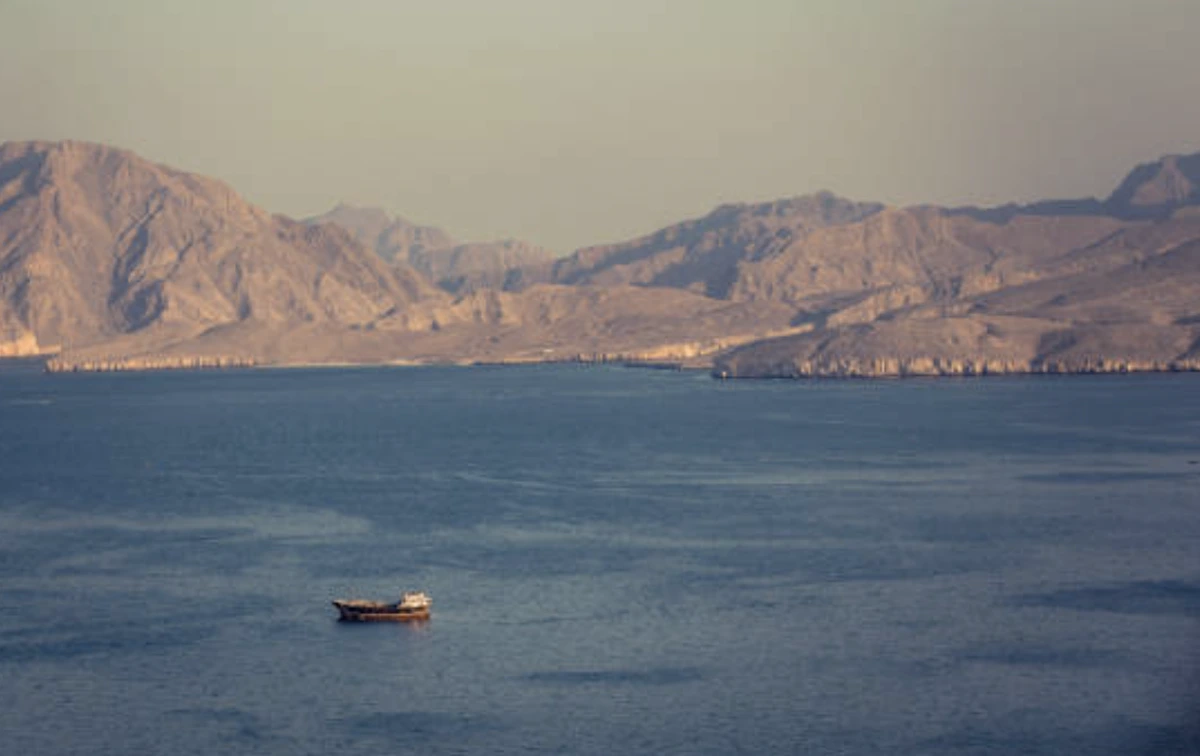
The Strait of Hormuz is a narrow sea passage connecting the Persian Gulf to the Gulf of Oman and, from there, the open ocean. Nearly every tanker carrying crude oil, petrochemicals, and LNG out of Saudi Arabia, Iraq, the UAE, Qatar, and Kuwait must pass through it, because there are few practical alternative routes for that volume of cargo. Iran controls the northern shore; Oman controls the southern shore. That geography means Iran has long had the physical capacity to threaten shipping there, even though international law does not recognize any single state’s right to close an international strait.
Fact, then analysis: In February 2026, after U.S. and Israeli strikes killed Iran’s Supreme Leader, Iran’s Islamic Revolutionary Guard Corps (IRGC) declared the strait “closed” and began attacking, boarding, and mining vessels attempting to transit. According to the UK House of Commons Library, shipping data showed a roughly 95% reduction in ships carrying crude oil to and from Persian Gulf ports, and a 99% reduction in LNG carriers, compared to pre-war levels. The analytical point here is that Iran did not need to physically seal the strait to achieve its effect — the mere credible threat of attack was enough to make insurers, shipowners, and charterers avoid the route almost entirely. This is the core vulnerability of any chokepoint: disruption doesn’t require total blockade, only enough uncertainty to change commercial behavior.
The 2026 Crisis Timeline: How We Got Here
| Date | Development |
|---|---|
| February 28, 2026 | U.S. and Israeli strikes hit Iranian nuclear and military targets; Supreme Leader Ali Khamenei is killed. Iran declares the Strait of Hormuz closed. |
| March–May 2026 | Iran attacks and mines vessels in the strait; the U.S. imposes a naval blockade on Iranian ports; strikes hit Iranian coastal missile silos and mine-laying vessels. |
| March 11, 2026 | An Iranian drone strike hits oil storage tanks at the Port of Salalah in Oman, illustrating how the conflict spread to neighboring Gulf states’ infrastructure. |
| Mid-2026 | A ceasefire memorandum of understanding (MoU) opens a settlement period; a Persian Gulf Strait Authority is floated as part of efforts to restore safe passage. |
| Early July 2026 | Houthi forces resume attacks on commercial vessels in the Red Sea, and reportedly strike two Saudi oil tankers, according to media reports cited by the UN. |
| Mid-to-late July 2026 | Tensions around Hormuz escalate again; the U.S. conducts ten consecutive nights of strikes on Iranian military infrastructure; tanker traffic drops roughly 90% year-on-year, with a growing share of ships operating “dark” (transponders off) to avoid detection. |
This timeline matters because it shows the conflict has not followed a single trajectory of escalation or de-escalation — it has cycled between open warfare, fragile truce, and renewed strikes, which is precisely what keeps energy markets on edge even during quiet periods.
The Red Sea’s Separate but Connected Crisis
While Hormuz dominates headlines because of its sheer volume of oil traffic, the Red Sea and its southern chokepoint, the Bab-el-Mandeb Strait, present a related but distinct problem. Since Yemen’s Houthi movement — which is backed by Iran and has fought Yemen’s internationally recognized government for over a decade — began targeting commercial vessels in late 2023 in what it describes as solidarity with Palestinians in Gaza, container lines including Maersk have repeatedly suspended Red Sea transits, rerouting ships around Africa’s Cape of Good Hope instead. That detour adds roughly a week and a half to a typical Asia-Europe voyage and meaningfully raises fuel and insurance costs.
Shipping had cautiously begun returning to the Red Sea in early 2026, with new port infrastructure at Egypt’s Sokhna facility signaling optimism about a durable recovery. That recovery was interrupted in July 2026 when Houthi forces resumed attacks, prompting UN Secretary-General António Guterres to warn against wider escalation tied to the Hormuz crisis. The so-what here is that the Red Sea and Hormuz are not isolated problems — a shipping company facing risk in one chokepoint often has no fully safe alternative route, since the Cape of Good Hope diversion only avoids the Red Sea, not the separate risks tied to Gulf-origin cargo transiting Hormuz.
Key Players and Their Positions
International relations coverage tends to flatten “the Gulf” into a single bloc, but GCC states have responded to this crisis quite differently:
- The United Arab Emirates, which faced the highest number of Iranian strikes of any GCC state, has taken the most defiant public posture toward Tehran, and notably exited OPEC in May 2026 — a move some analysts read as a signal of diverging strategic priorities from Saudi Arabia.
- Saudi Arabia has called for de-escalation and helped promote peace talks based in Pakistan, while asserting its right to self-defense after Iranian strikes hit its territory.
- Qatar, home to the U.S. Al Udeid air base, was struck directly by Iranian missiles — most intercepted by its integrated air defense system — making it acutely aware of the risks of hosting American forces during a regional war.
- Oman, whose Salalah port was hit by an Iranian drone strike in March 2026, occupies a more exposed but also more insulated position: analysts at the Middle East Council on Global Affairs note Oman is comparatively less dependent on the Red Sea route than Saudi Arabia’s western coastline.
- Iran, following Khamenei’s death, has undergone a leadership transition, with the Assembly of Experts electing his son, Mojtaba Khamenei, as the new Supreme Leader.
Analysts at the Middle East Council on Global Affairs argue that the war exposed a structural weakness for Gulf states: decades of bilateral defense arrangements with the United States did not guarantee that Gulf interests would prevail when they diverged from Washington’s. That reassessment is feeding proposals for deeper intra-GCC intelligence sharing and more diversified security partnerships — a shift that echoes a broader pattern seen whenever a dominant power’s security guarantee weakens and leaves a regional vacuum to be filled.
How Does This Affect Global Energy Markets and Consumers?
The transmission mechanism from a Gulf naval standoff to a driver’s fuel bill runs through several stages. First, tanker owners and insurers reprice risk, which raises shipping costs even for vessels that ultimately transit safely. Second, oil traders price in the probability of supply disruption, which can push crude prices above $80–90 per barrel even without an actual drop in production, as reported amid the 2026 escalation. Third, downstream fuel markets, particularly gasoline, pass those costs to consumers, with reports during the crisis citing U.S. pump prices approaching $4 per gallon. This dynamic connects directly to the broader question of how U.S. and Israeli strikes on Iran ripple through gas prices and consumer costs, since energy markets tend to price in geopolitical risk well before any actual barrel is delayed.
For energy-importing economies in Asia — including Indonesia, which sources a significant share of its crude and LNG from Gulf suppliers — sustained disruption to Hormuz throughput has knock-on effects for import costs and currency stability, reinforcing why regional economic partnerships such as the one profiled in Indonesia and Singapore’s expanding economic ties increasingly factor energy security into their planning.
What to Watch Next
The trajectory from here depends on several unresolved variables rather than a single outcome. Whether the ceasefire MoU’s 60-day settlement period holds, whether the proposed Persian Gulf Strait Authority materializes into a functioning safe-passage mechanism, and whether Iran’s new leadership under Mojtaba Khamenei pursues continuity or a different posture toward the Gulf states will all shape how quickly — or whether — tanker traffic normalizes. On the Red Sea side, the durability of any renewed Houthi ceasefire will determine if shipping lines resume the shorter Suez route or continue absorbing the cost of the longer African diversion. For Gulf states themselves, the coming months will show whether the war accelerates genuine GCC security integration or simply reinforces old patterns of bilateral hedging with outside powers. What is not in question is that as long as these chokepoints remain contested, global energy markets will keep pricing in a Gulf risk premium — whether or not a single additional tanker is ever struck. A similar pattern of encouraging talks followed by disputed collapses has defined the Russia-Ukraine peace process throughout 2026, a reminder that this year’s diplomacy has repeatedly proven easier to announce than to sustain.