A Dollar a Gallon, and Rising
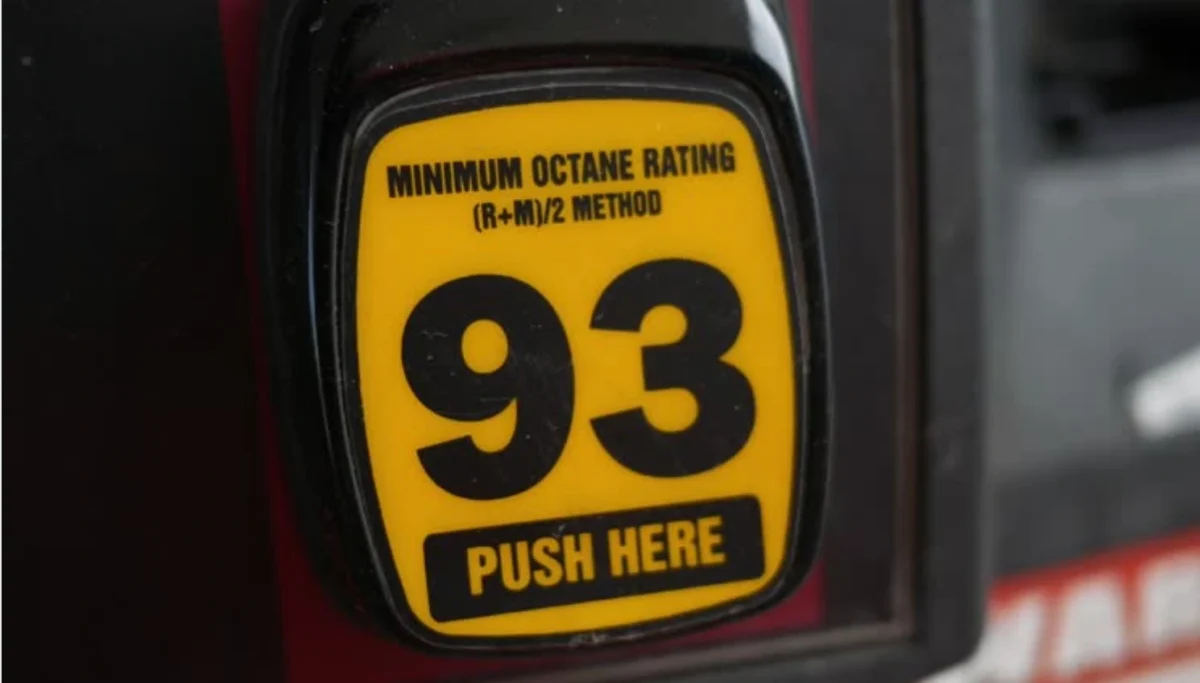
At some U.S. stations this past spring, the price posted above the third button on the pump — premium — climbed past $5.40 a gallon for days at a stretch.The price displayed above that third button on the gas pump averaged more than $5.40 for several days this spring. Drivers kept buying it anyway. Today, premium runs roughly a dollar more per gallon than regular nationally, a gap that dwarfs what “premium” used to cost drivers a decade ago.
That price differential raises a question that looks simple on the surface but turns out to be a genuinely interesting case study in refining economics, retail pricing power, and consumer psychology: why does one grade of gasoline cost so much more than another, when the actual product difference is chemically modest? And why, even as the price gap widens, are more Americans choosing to pay it?
This piece breaks the question into its component parts — the chemistry of octane, the regulatory history that quietly reshaped refining costs in the 2000s, the retail pricing mechanics that turned premium into what one industry analyst calls a “profit engine,” and the demand-side psychology that keeps drivers reaching for it. Along the way, we’ll flag where the popular explanation (higher production costs) diverges from what the wholesale data actually shows.
What Octane Actually Measures
Before getting into pricing, it’s worth being precise about what premium gasoline is. Octane rating is not a measure of energy content or power output — it’s a measure of a fuel’s resistance to “knocking,” the premature, uneven combustion that occurs when fuel ignites before the spark plug fires.Octane measures fuel stability, not energy output, meaning higher octane does not improve performance in engines designed for regular fuel. Higher-compression engines — common in turbocharged, high-performance, and larger vehicles — are more prone to knocking and are engineered to require higher-octane fuel to run properly. Engines not built for that compression ratio see no measurable performance gain from higher octane, regardless of what pump marketing implies.
This distinction matters because it separates two very different groups of premium buyers: people whose vehicles require it, and people who believe it helps but are driving cars designed to run perfectly well on regular.
The Historical Price Gap: From Pocket Change to a Dollar
For most of the late 20th century, the price gap between premium and regular gasoline was remarkably stable — hovering around 20 cents a gallon and barely moving for decades. That changed in the mid-2000s. The gap began widening gradually, then accelerated sharply: it reached 40 cents by 2015, 60 cents by 2018, and crossed 80 cents by 2022, according to Energy Information Administration datathat gap grew to 40 cents in 2015, hit 60 cents in 2018 and crossed 80 cents in 2022, according to the Energy Information Administration — and it now sits just under a dollar.
Claim: Rising refining costs explain the widening gap.
Evidence: In the mid-2000s, two federal regulations required automakers to reduce vehicle sulfur output, which had the side effect of lowering the octane refineries could achieve through conventional blending.In the mid-2000s, two federal regulations went into effect that required automakers to lower vehicles’ sulfur output – which also reduces octane. To compensate and preserve premium’s higher octane rating, refiners began adding more ethanol — a cleaner-burning but costlier component — to premium blends.
Interpretation: This is a real cost driver, and it’s the explanation most consumers hear. It’s also, on the data, a small part of the story.
Limitation/counterpoint: The wholesale numbers don’t support cost increases as the primary driver. While the retail price gap widened by roughly 70 cents a gallon over two decades, the wholesale price gap — what refiners actually charge distributors — rose by only about 20 cents over the same period.Although the difference between premium and regular gas widened by 70 cents a gallon over the past two decades, the gap in wholesale prices rose by just 20 cents a gallon since 2007, according to the EIA. That’s roughly a 50-cent gap between what refining costs justify and what retail prices actually charge.
Where the Extra Money Actually Goes
This is the section that most casual coverage of gas prices skips, and it’s the one worth sitting with. If wholesale costs only account for a fraction of the retail premium, the remainder is functioning as pure margin captured at the point of sale — by the gas station itself, not the refinery. Industry analyst Andy Lipow, president of Lipow Oil Associates, has been blunt about who benefits: the retail station, not the refiner, is capturing the bulk of that spread.
Economically, this is a textbook example of price discrimination — charging different prices for products with similar production costs, based on what different segments of buyers are willing to pay rather than what it costs to produce the good. Drivers who need premium (because their engine requires it) are largely price-inelastic; they’ll pay what’s posted because the alternative — engine knock, reduced performance, potential long-term damage — isn’t a real substitute. Stations have learned this, and pricing has adjusted accordingly.
The Demand Side: Why More Drivers Are Buying a More Expensive Product
Despite the widening price gap, premium’s share of total U.S. gasoline sales has grown — from about 9% of sales in 2013 to roughly 13% last year.Premium made up around 13% of overall gas sales last year, up from 9% in 2013, according to Lipow. Two distinct forces are driving this, and they deserve separate treatment because they imply very different consumer behavior.
Structural demand: Automakers have shifted meaningfully toward engines that require or recommend higher-octane fuel — largely turbocharged engines in modern SUVs, trucks, and luxury vehicles designed for more power from a smaller displacement. By 2018, the number of new vehicle models recommending or requiring premium had already overtaken the number recommending regular gas, according to the Department of Energy.
By 2018, they eclipsed the number of new car models that recommend regular gas, according to the Department of Energy. For this segment, premium isn’t optional — it’s a mechanical requirement, and buyers of $60,000 trucks and luxury SUVs are, unsurprisingly, less price-sensitive at the pump than the broader driving population.
Perceived demand: A separate and larger group buys premium despite not needing it, on the belief that higher octane translates to better performance, fuel efficiency, or engine protection — a belief the data doesn’t support for engines not designed for it.Studies have shown that most standard engines see no benefit from premium gasoline. This isn’t accidental confusion; it’s the residue of nearly a century of branding. Premium fuel entered the market in 1923 when General Motors and Esso formed the Ethyl Corporation to sell a knock-reducing additive.Premium gas hit the market in 1923, when General Motors and Esso formed Ethyl Corp, a company that sold a fuel additive called tetraethyllead, or TEL.
“Ethyl” gasoline became synonymous with an upgrade over standard fuel — and because Ethyl was a licensed trademark, competing stations selling comparable high-octane fuel needed their own label, which is how the industry landed on “premium” as generic terminology.Because Ethyl was a licensed trademark, gas stations that used non-Standard Oil fuels started calling their high-performance products “premium,” which gradually became the industry standard lingo. A century later, that branding legacy still shapes purchasing decisions even after the specific chemistry (TEL was phased out for health reasons decades ago) has completely changed.
Implications
The practical takeaway splits cleanly by vehicle type. If your owner’s manual specifies premium fuel, the added cost is a genuine mechanical requirement — the tradeoff is built into the vehicle’s design, and running regular risks knock-related engine wear over time. If your manual specifies regular, buying premium is, functionally, a voluntary transfer of margin to the retail station with no measurable mechanical benefit — the fuel equivalent of tipping without being asked.
More broadly, the premium/regular price gap is a useful small-scale illustration of how retail pricing power operates independently of production costs whenever a segment of buyers is either mechanically locked in or persuaded that the higher-priced option is meaningfully better. It’s the same dynamic that shows up in bottled water, name-brand pharmaceuticals versus generics, and printer ink — categories where cost-to-produce and price-to-consumer have become substantially decoupled.
Counterpoints and Limitations
A few caveats are worth stating plainly. First, refining costs for premium are genuinely higher than for regular — the wholesale gap, while smaller than the retail gap, is not zero, and ethanol-blending costs are real. Second, regional variation is significant: state fuel taxes, local competition density, and distance from refining infrastructure all affect how large the retail markup actually is at any given station, so the national averages cited here won’t hold precisely everywhere. Third, some drivers buying premium in non-premium-required vehicles may be making a rational choice around perceived engine longevity or resale considerations even without a documented performance gain — a preference that isn’t irrational even if it isn’t supported by fuel-efficiency data.
The Road Ahead for Premium Fuel Pricing
The gap between premium and regular gasoline has widened far faster than the underlying cost of producing premium fuel — and the surplus is landing almost entirely in station margins rather than refinery costs. That’s sustainable precisely because demand for premium is rising from two directions at once: a growing fleet of vehicles that genuinely require it, and a much larger, more price-insensitive group of drivers who buy it on belief rather than mechanical necessity. As automakers continue shifting toward smaller, more heavily turbocharged engines, expect the “premium” button to keep getting pressed more often — and expect the price gap above it to keep climbing largely unconstrained by what it actually costs to produce.
Frequently Asked Questions
Does premium gas improve fuel efficiency in a regular-fuel car?
No. If a vehicle isn’t designed for higher compression, higher octane provides no measurable improvement in mileage or performance.
Why has the price gap grown so much faster than production costs?
Wholesale (refining) cost differences have grown only modestly since 2007, while retail prices have widened much further — indicating the extra margin is being captured primarily at the point of sale rather than in production.
How do I know if my car actually needs premium?
Check the owner’s manual or the fuel door — manufacturers explicitly state “premium required” versus “premium recommended” versus no octane requirement at all.