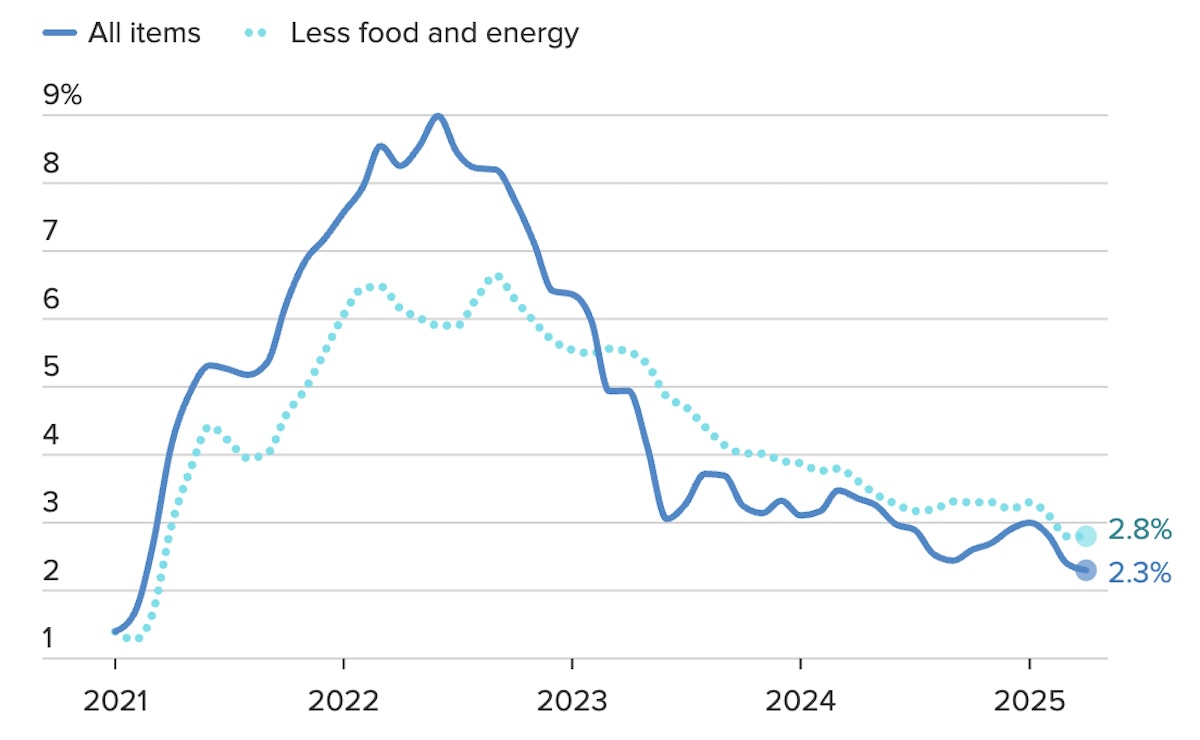
As economic conditions shift and inflation trends capture headlines, one key metric consistently surfaces in financial discussions: CPI, or the Consumer Price Index. In April, the annual inflation rate slowed to 2.3%, its lowest point since early 2021, highlighting CPI’s critical role in tracking price changes across the U.S. economy.
But what is CPI, and why does it matter to consumers, investors, and policymakers?
📊 What Is CPI?
CPI (Consumer Price Index) is an economic indicator published monthly by the U.S. Bureau of Labor Statistics (BLS). It measures the average change over time in the prices paid by urban consumers for a basket of goods and services. These include:
- Housing (rent, shelter)
- Food and beverages
- Apparel
- Transportation (vehicles, fuel)
- Medical care
- Recreation
- Education and communication
CPI is widely used to assess inflation trends, adjust wages, guide monetary policy, and index government benefits such as Social Security.
🔍 April 2025 CPI Report Highlights
According to the BLS April report:
- Overall CPI rose 0.2% month-over-month.
- Annual inflation stood at 2.3%, the lowest since February 2021.
- Core CPI, which excludes food and energy, also rose 0.2% in April, maintaining a year-over-year increase of 2.8%.
These figures suggest a cooling inflationary environment, though still slightly above the Federal Reserve’s 2% target.
📈 Key Factors Behind April’s Inflation Reading
Despite the slowdown, certain categories drove CPI higher:
1. Shelter Costs
- Shelter prices rose by 0.3%, contributing to more than half of the overall CPI increase.
- Housing continues to be a persistent inflationary force due to high demand and limited supply.
2. Energy Prices
- After declining 2.4% in March, energy prices rebounded 0.7% in April, driven by seasonal factors and global oil trends.
3. Medical Care and Insurance
- Medical care services increased 0.5%, while health insurance and motor vehicle insurance rose 0.4% and 0.6%, respectively.
On the flip side, some areas showed price declines:
- Food prices edged down by 0.1%.
- Used vehicles dropped by 0.5%.
- Apparel costs fell 0.2%.
- Egg prices saw a significant 12.7% drop, though still 49.3% higher than a year ago.
🏛️ CPI’s Impact on Federal Reserve Policy
While the Federal Reserve prefers the PCE (Personal Consumption Expenditures) Price Index for core inflation analysis, CPI plays a supporting role in policy decisions. Persistently elevated CPI readings over recent years have led the Fed to maintain a cautious approach toward rate cuts.
Following recent developments, including trade policy adjustments and shifting inflation expectations, markets now anticipate a delay in interest rate reductions. The first cut is now expected around September 2025, down from earlier projections of June.
🌐 The Role of Trade Policy and Tariffs
Another factor influencing the inflation outlook is the reintroduction of trade tariffs. The Trump administration recently announced 10% duties on all U.S. imports, with additional reciprocal tariffs under consideration. However, a 90-day pause on China tariffs has temporarily eased market concerns.
Tariffs can increase input costs for producers, which may be passed on to consumers, ultimately reflected in higher CPI readings. As trade negotiations evolve, CPI remains a vital barometer of the economic impact of these policy shifts.
🧠 Why Understanding CPI Matters
For individuals and businesses alike, understanding what CPI is helps in:
- Budgeting and financial planning based on inflation expectations
- Adjusting wages or contracts linked to inflation
- Evaluating investment strategies in light of monetary policy moves
- Tracking cost-of-living changes for benefits and pensions
✅ Trends on Consumer Purchasing Power
What is CPI? It’s more than just a data point, it’s a crucial tool that reflects the real-world impact of economic trends on consumer purchasing power. With inflation showing signs of easing in April 2025, the CPI offers both reassurance and insight as the U.S. navigates post-pandemic recovery, trade dynamics, and evolving monetary policy.
As new data becomes available, including the upcoming Producer Price Index (PPI) report, CPI will remain central in shaping economic decisions at every level.