Somewhere in New York City right now, there is a pizzeria smaller than most studio apartments, smaller than most food trucks, and arguably smaller than a typical New York City parking spot — because that pizzeria is, quite literally, a Smart Car. Inside it: a working pizza oven, a trained chef with two decades of professional culinary experience, and a story about burnout, reinvention, and finally building something for himself that has resonated with hundreds of thousands of people online.
This is the story of Bradley Alvelo and Pizza Pod NYC — and, for anyone visiting New York City who wants to actually track this thing down and taste it for themselves, a practical guide to how this tiny, mighty pizzeria actually works.
From a Latchkey Kid’s Kitchen to the Culinary Institute of America
Bradley Alvelo’s relationship with food began long before any professional kitchen. As a child, with both parents working demanding jobs, Alvelo and his brothers were frequently home alone — and store-bought snacks only went so far. Rather than settling for crackers, young Bradley started experimenting directly with what was in the fridge, including attempting to recreate dishes he had watched his mother cook, like chicken wings. That early, self-taught improvisation in an empty kitchen was, in retrospect, the first real spark of a culinary career that would eventually span two decades.
The next formative step came in high school, when Alvelo began working at a Southern cuisine restaurant immediately after his last class period each day, handling prep work and takeout orders. That first real exposure to a working restaurant environment left a lasting impression — a genuine sense that this could be more than a part-time job.
That impression carried him to the Culinary Institute of America, one of the most respected culinary schools in the world, where he received classical chef training. Alvelo has described the particular pull of professional cooking in terms of the immediate, visceral feedback it provides: the anticipation of watching someone’s reaction to a dish, waiting to see whether they genuinely love what’s been put in front of them. That instant, honest feedback loop — so different from many other professions — became one of the defining attractions of the work for him.
The Grueling Reality of Fine Dining
After culinary school, Alvelo’s career took him into a French-Moroccan restaurant — and into the genuinely brutal schedule that defines much of high-end professional kitchen work. His days began around 5:30 in the morning and didn’t end until well after the restaurant closed around midnight, often stretching to 1:30 or 2:00 a.m. before he could finally leave. Living in Yonkers at the time, he wouldn’t arrive home until roughly 3 a.m. — only to begin the entire cycle again just hours later.
Alvelo has been candid about the toll this pace took on him personally, describing himself during this period as becoming something close to “a zombie” — present physically but increasingly disconnected from any deeper engagement with life beyond the relentless cycle of shifts. Compounding the physical exhaustion was a very practical financial pressure: a culinary education at an institution like CIA does not come cheap, and the resulting student loan debt became a significant factor pushing Alvelo to look beyond independent fine dining toward more stable, better-compensated kitchen work.
Corporate Dining: A Different Kind of Burnout
That search led Alvelo into corporate dining, beginning with a position at the NFL’s corporate offices — an experience he has described positively, working in a comparatively smaller, more contained environment serving around 800 people, with the novelty of professional football players occasionally coming through.
From there, Alvelo moved to a corporate dining role at the New York Stock Exchange — an environment he has described as genuinely intense. The role required managing food service across multiple floors of one of the world’s most demanding financial institutions, with shifts regularly extending until 11:30 at night. Despite the prestige and stability of the position, Alvelo found himself recognizing an uncomfortably familiar pattern: the same robotic, disconnected mental state that had defined his earlier years in fine dining was creeping back in. He has described this specifically as a fear of “turning into a zombie again” — a state defined by living purely in service of the next shift, without genuine presence or engagement with one’s own life.
That recognition, and his explicit refusal to slide back into it, became the turning point. Alvelo made the decision to leave the New York Stock Exchange role — a decision that, by his own account, was not well received by upper management at the time. But for Alvelo, the calculation was straightforward: he was not willing to trade his genuine love of food and cooking for the security of a role that was slowly eroding his relationship with the work entirely.
Building Something of His Own
Leaving corporate dining left Alvelo with a clear, if initially undefined, ambition: to build something genuinely his own, drawing on two decades of accumulated culinary skill and a deep, sustained passion for food in all its forms. He has described approaching this moment with a straightforward internal logic: he possessed real skills, genuine versatility across different culinary traditions, and an authentic passion — surely there was a way to convert that combination into something independent and self-directed.
The first concrete step was almost deceptively simple. Alvelo began cooking from his own home and posting a menu on Instagram. The response was immediate and, by his account, somewhat startling: people began lining up outside his building to order food directly from him — a clear signal of genuine demand in a neighborhood where, as he put it, no one else was offering anything comparable at the time.
A meaningful turning point in the business’s development came through an entirely unrelated personal connection: Alvelo met Yoko, the owner of a local coffee shop called Drink Talk, through jiu-jitsu training. Their conversations led organically to an informal partnership, with Alvelo bringing pizza-making to the coffee shop’s space — an early example of the kind of resourceful, low-overhead collaboration that would come to define his approach to building the business.
How a Smart Car Became NYC’s Smallest Pizzeria
The defining, headline-grabbing element of Pizza Pod’s story traces back to an entirely unrelated problem: parking tickets. During the COVID-19 pandemic, while living in the Heights neighborhood and driving a Volkswagen Tiguan, Alvelo found himself accumulating what he has described as thousands of dollars in parking tickets — an unsustainable financial drain in a notoriously difficult parking environment. His solution was practical and direct: find a smaller car that would be easier to park and navigate through the city.
That smaller car turned out to be a Smart Car — and it would eventually become something far more significant than a parking solution.
As word-of-mouth interest in Alvelo’s pizza grew beyond his home kitchen and the coffee shop partnership — through rooftop events, kids’ parties, and informal pop-ups — he found himself needing a more mobile, flexible setup to meet rising demand. He already had the core equipment: pizza ovens and everything required to make pizza at a genuinely professional standard. The realization that ultimately defined the business was almost absurdly practical: since he lived in the city and didn’t use his car very much for personal transportation anyway, why not repurpose the vehicle itself as the foundation of a fully mobile pizza operation?
Alvelo has been open about the skepticism this idea generated among people around him at the time — variations of “you can’t make pizza out of your car” were a common response. He built it anyway. The result: Pizza Pod, now widely recognized and marketed as New York City’s smallest fully mobile pizzeria, built directly inside a Smart Car and capable of pulling up to rooftops, private events, city sidewalks, and pop-up locations across all five boroughs.
What Pizza Pod Actually Serves
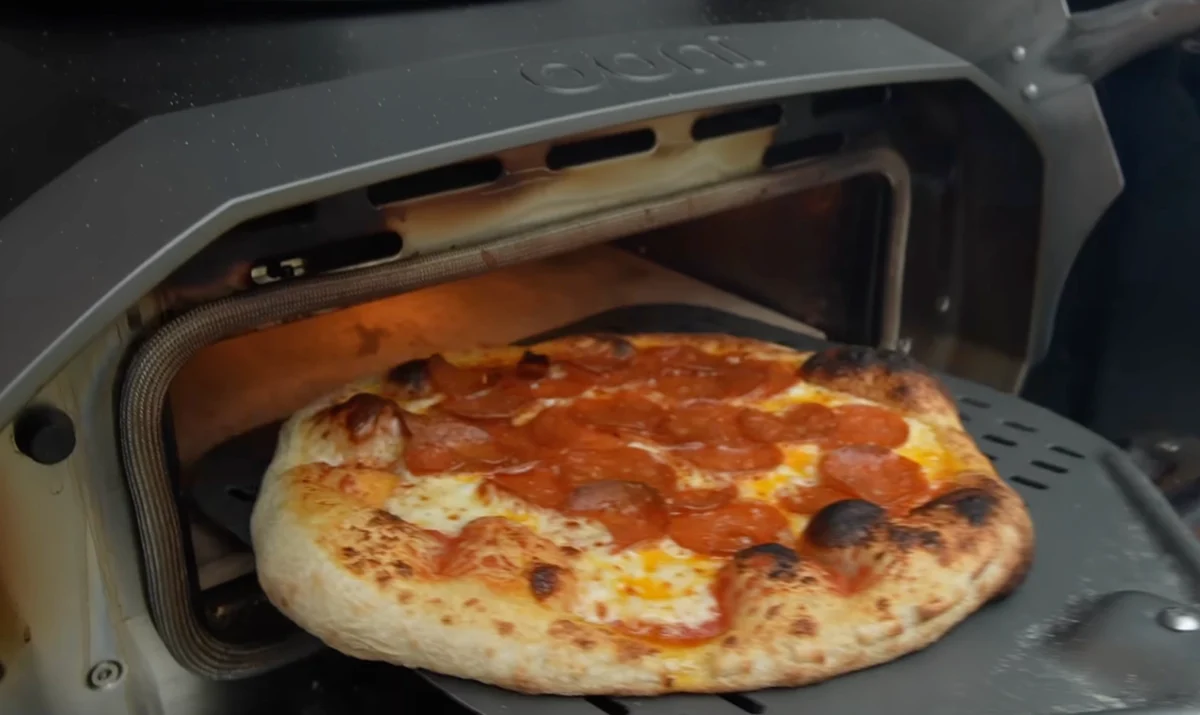
Pizza Pod’s menu centers on New York-style pizza available in two sizes: a 10-inch personal pie and a 12-inch pie, each at a different price point appropriate to the size. The pizzas are made fresh on-site, regardless of location — whether that’s a private rooftop event, a corporate office gathering, a wedding reception, or simply a city sidewalk where Alvelo has set up for the afternoon.
The business has also expanded into culturally specific menu offerings tied to community events, including a Nuyorican-inspired Puerto Rican pizza menu featured at cultural festivals in East Harlem’s El Barrio neighborhood — demonstrating the kind of creative menu flexibility that a fully independent, mobile operation can offer in ways a fixed-location restaurant typically cannot.
Today, Pizza Pod operates as a genuine mobile catering business, serving corporate events, gym brand activations, nonprofit functions, weddings, rehearsal dinners, block parties, and private celebrations across the city — a far cry from the home-kitchen Instagram menu that started it all.
How to Book or Find Pizza Pod NYC
For visitors and locals alike hoping to actually experience Pizza Pod, here is what’s practically useful to know.
For private events and catering: Pizza Pod operates primarily as a booking-based mobile catering service. The business caters corporate gatherings, brand activations, weddings, rooftop parties, birthdays, and private outdoor celebrations across all five boroughs of New York City. Interested parties typically reach out directly via email to arrange bookings, with the Smart Car pizzeria pulling up to the event location, oven and all.
For spontaneous street encounters: Part of Pizza Pod’s social media appeal comes from spontaneous appearances — the Smart Car parked on a city street or at a pop-up location, with fresh pizza made and served directly from the vehicle. Following Pizza Pod’s social media accounts is the most reliable way to catch these unannounced appearances, since locations and timing vary based on bookings, weather, and Alvelo’s own schedule.
For cultural events and festivals: Pizza Pod has also appeared at community cultural festivals, including Puerto Rican heritage events in El Barrio, often featuring menu items specifically created for those occasions. Checking community event listings for East Harlem and other NYC cultural festivals is a good supplementary strategy for visitors hoping to catch Pizza Pod during a specific neighborhood celebration.
What to expect on arrival: Given the genuinely tiny scale of the operation — a Smart Car contains an oven and very little additional space — visitors should expect a hands-on, personal, conversational experience rather than a high-volume, fast-moving food line. Alvelo himself is typically the one making and serving the pizza, and the experience leans into exactly that kind of personal, story-driven encounter that has made the business a social media phenomenon in the first place.
Why Pizza Pod Resonates Beyond NYC
Pizza Pod’s appeal extends well beyond the city it operates in, and the reasons are worth examining for anyone interested in entrepreneurship, career reinvention, or simply good storytelling.
The Career-Change Narrative Is Genuinely Relatable
Alvelo’s journey — from a demanding, well-credentialed culinary career through corporate dining roles that offered stability but at the cost of personal engagement, to finally building something independent — reflects a recognizable arc for a significant number of professionals across many industries, not solely the culinary world. The specific language he has used to describe his low point, becoming “zombie-like” and disconnected from any genuine relationship with his own work, resonates with anyone who has experienced burnout in a high-pressure, prestige-driven job.
Resourcefulness as a Core Business Asset
The Smart Car pivot exemplifies a broader entrepreneurial principle: identifying an existing asset — in this case, a car that was already owned and barely used for its original purpose — and creatively repurposing it to solve a genuine operational need, rather than waiting until sufficient capital existed to acquire a conventional food truck or commercial kitchen space. This kind of resourceful, asset-light approach to launching a business is a recurring theme among successful bootstrapped entrepreneurs across many industries.
Word-of-Mouth as the Original Growth Engine
Before any formalized marketing strategy, Pizza Pod’s growth was driven entirely by organic word-of-mouth — people hearing about good pizza from a neighbor or passerby and seeking it out themselves. That early validation, generated with essentially zero advertising spend, gave Alvelo the confidence and customer base needed to formalize the business into the structured catering operation it has since become.
Lessons From Bradley Alvelo’s Story
Several principles from Alvelo’s path apply directly to anyone considering a significant career change or a resource-constrained business launch.
Recognize the warning signs of burnout before they compound. Alvelo’s explicit recognition of his “zombie-like” state — both during his fine dining years and later at the New York Stock Exchange — and his willingness to act on that recognition, even against the advice and approval of people around him, was the necessary precondition for everything that followed.
Patience is foundational, not optional. Alvelo has stated plainly that patience was the single most important quality in building Pizza Pod from a home-kitchen Instagram menu into a citywide mobile catering business. Sustainable growth, particularly for a personally-run, identity-driven business, tends to compound gradually rather than arrive all at once.
Use what you already have before acquiring what you think you need. Rather than waiting to save enough capital for a conventional food truck, Alvelo recognized that a car he already owned and barely used could be adapted to serve the business’s actual operational needs — a far lower-risk path to launching a mobile food business than a large upfront capital investment.
Dedicate consistent effort toward your goal, even while maintaining other responsibilities. Alvelo’s own advice to aspiring entrepreneurs is to consistently direct a portion of time and energy from a primary job toward a personal goal, allowing it to gradually build momentum until it can stand on its own — rather than expecting an immediate, complete transition.
Protect your relationship with the work itself. Alvelo’s repeated emphasis on not wanting to lose his love of food, even when leaving secure and well-regarded positions to do so, underscores a principle relevant well beyond the culinary world: career decisions optimized purely for stability or prestige, without regard for genuine engagement, can come at a real personal cost over time.
Key Facts: Pizza Pod NYC at a Glance
| Business name | Pizza Pod NYC |
| Founder | Bradley Alvelo |
| Founder’s background | Culinary Institute of America graduate; 20 years as a chef |
| Prior roles | French-Moroccan fine dining, NFL corporate dining, New York Stock Exchange corporate dining |
| Vehicle used | Smart Car originally purchased to solve a parking ticket problem |
| Business model | Mobile pizza catering across NYC’s five boroughs |
| Menu | New York-style pizza: 10-inch personal pie, 12-inch pie; seasonal/cultural specialty menus |
| Notable partnership | Drink Talk coffee shop (owner met via jiu-jitsu) |
| Event types served | Corporate events, weddings, rooftop parties, birthdays, brand activations, community festivals |
| Notable cultural event | Nuyorican Pizza Fest at La Fonda, El Barrio |
| Recognition | Viral Widely covered on YouTube and TikTok as “NYC’s Smallest Pizzeria” |