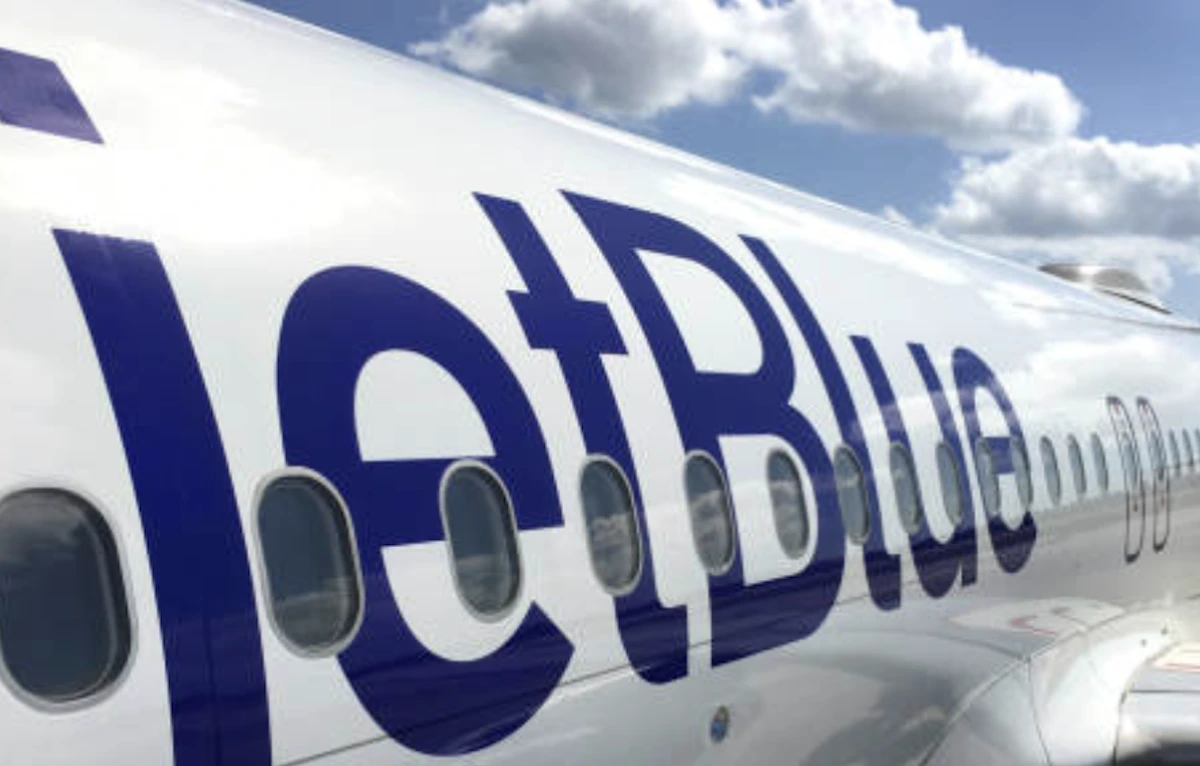
A Regulatory Decision Meant to Preserve Competition — Followed by Less of It
In January 2024, a federal judge blocked JetBlue Airways’ proposed $3.8 billion acquisition of Spirit Airlines, siding with the US Department of Justice’s argument that the deal would eliminate a major discount competitor and drive up fares for cost-conscious travelers. It was framed, at the time, as a clear win for consumers and competition.
Just over two years later, Spirit Airlines doesn’t exist. The company shut down entirely on May 2, 2026, after filing for bankruptcy twice, laying off roughly 17,000 employees. And the airline now absorbing most of Spirit’s former market, routes, and even its laid-off staff at Spirit’s biggest hub, Fort Lauderdale-Hollywood International Airport? JetBlue — the same airline the government blocked from buying Spirit in the first place, now expanding into the exact market position regulators tried to prevent it from reaching, without having to pay for the acquisition or absorb Spirit’s outstanding debt.
This is a genuinely useful real-world case study in how antitrust enforcement plays out over time — and in where the reasoning behind a blocked merger holds up, and where it doesn’t.
Background: Why the Merger Was Blocked in the First Place
The Justice Department, joined by six states and the District of Columbia, filed a civil antitrust lawsuit in March 2023 to stop JetBlue’s acquisition of Spirit. The case went to a 17-day trial in Boston beginning that October, and in January 2024, US District Judge William Young ruled in the government’s favor, blocking the deal.
The government’s core argument centered on what the DOJ’s complaint called the “Spirit Effect”: Spirit’s ultra-low fares didn’t just serve Spirit’s own passengers — they forced competing airlines to lower their prices to stay competitive on shared routes. Eliminating Spirit as an independent, standalone carrier, the DOJ argued, would remove roughly half of the country’s ultra-low-cost airline seats and let fares drift upward across the wider market. Judge Young’s ruling reflected this reasoning directly, noting that letting JetBlue absorb Spirit would eliminate one of the airline industry’s few primary competitors that provided real price discipline.
It’s worth noting the broader industry context the ruling sat inside. At the time, four major carriers — American, Delta, United, and Southwest — controlled roughly 80% of US airline ticket revenue between them. The DOJ’s case was part of a wider push against industry consolidation, and the ruling was seen as a notable win for antitrust enforcement more broadly, alongside a separate decision blocking a regional partnership between JetBlue and American Airlines in the Northeast.
What Actually Happened to Spirit Anyway
Blocking the merger didn’t save Spirit as an independent company — it just changed how its story ended. Spirit filed for Chapter 11 bankruptcy protection, attempted to reorganize, and ultimately filed again before shutting down operations completely on May 2, 2026. JetBlue CEO Joanna Geraghty later characterized the company’s trajectory bluntly, noting that Spirit’s repeated bankruptcy filings had been a widely visible sign of its struggles well before the final shutdown.
At the time of its collapse, Spirit still held a substantial share of the market at its largest hub: roughly 24–25% of all operations at Fort Lauderdale-Hollywood International Airport, according to data from Broward County and the Bureau of Transportation Statistics, serving more than 6.6 million passengers annually through that single airport alone.
Core Analysis: Did Blocking the Merger Actually Protect Competition?
Claim: Blocking the JetBlue-Spirit merger successfully protected airline competition and kept fares lower for consumers.
Evidence: At the time of the ruling, this was the DOJ’s central argument, and Attorney General Merrick Garland publicly framed the decision as a direct win for travelers who would otherwise have faced higher fares and fewer choices.
Interpretation: In the short term, immediately following the ruling, Spirit did continue operating independently, which technically preserved the existence of a separate ultra-low-cost option in the market — the outcome the DOJ said it wanted.
Limitation/counterpoint: The long-term outcome looks considerably less favorable to the “protecting competition” framing. Spirit didn’t survive as an independent, price-disciplining competitor regardless of the blocked merger — it collapsed entirely within roughly two years, removing the “Spirit Effect” from the market anyway, just without any of the structured divestitures, regulatory conditions, or negotiated safeguards a supervised merger might have included. The market has now consolidated around JetBlue at Fort Lauderdale specifically, with JetBlue’s share of flights at that airport climbing from around 20% before Spirit’s collapse to roughly 36% afterward, according to data reported by CNBC — a bigger single-carrier concentration at that airport than existed before, achieved without any merger review process at all.
Claim: JetBlue’s current expansion proves the original merger would have been fine all along.
Evidence: JetBlue is now absorbing much of Spirit’s route network, hiring former Spirit employees, and growing its Fort Lauderdale operations from about 70 flights a year ago to a planned 150 by the end of 2026 — reaching a scale of market presence comparable to what the blocked merger would have created.
Interpretation: JetBlue’s own CEO has made close to this exact argument publicly, calling the government’s decision to block the merger short-sighted and arguing it ultimately cost jobs and left South Florida with one fewer airline.
Limitation/counterpoint: This argument conflates two different things: what JetBlue is doing now, and what a completed merger would have looked like in 2024. A supervised merger could have included negotiated conditions — route divestitures, gate-sharing requirements, fare protections — that don’t automatically exist when one airline simply expands into a bankruptcy vacuum on its own terms. It’s also worth noting that JetBlue isn’t the only beneficiary: rival carrier Frontier Airlines has separately moved into routes Spirit vacated, meaning the market didn’t consolidate around a single winner by default — it’s more accurate to say regulators prevented one specific path to consolidation while a different, less-supervised one occurred regardless.
Why Spirit’s Business Model Failed Independently of the Merger Decision
It’s worth being precise about a separate question the merger case doesn’t fully answer: why did Spirit collapse at all, merger or no merger? Spirit’s ultra-low-cost model was built on unbundling — charging rock-bottom base fares, then generating revenue through fees for seat selection, carry-on bags, and other add-ons. That model had driven rapid growth for years and had genuinely pressured competitors to lower fares industry-wide, which is exactly why the DOJ considered it worth protecting.
But the same model left Spirit financially fragile in ways unrelated to the JetBlue case: thin margins, heavy fuel and labor cost exposure, and intensifying competition from larger airlines that began offering their own basic-economy fare tiers to compete directly with ultra-low-cost carriers on price, without needing Spirit’s stripped-down cost structure. Spirit’s repeated bankruptcy filings reflect this underlying financial fragility, separate from — and arguably more decisive than — the outcome of the blocked merger.
The Numbers Behind JetBlue’s Fort Lauderdale Expansion
- JetBlue’s daily Fort Lauderdale flights: roughly 70 a year ago, 130 as of mid-2026, targeting 150 by the end of the year
- JetBlue’s market share at Fort Lauderdale: roughly 20% before Spirit’s collapse, climbing to approximately 36% afterward
- Spirit’s former market share at Fort Lauderdale: roughly 24–25% of operations, serving 6.6 million passengers annually
- Employees affected by Spirit’s shutdown: approximately 17,000
- JetBlue now offers 55 nonstop destinations and close to 400 connecting itineraries through Fort Lauderdale
- JetBlue’s original proposed Spirit deal: $3.8 billion, with a $470 million breakup fee JetBlue would have owed Spirit had the deal failed for antitrust reasons before its July 2024 expiration
What This Means for Antitrust Policy and Business Strategy
For students of antitrust law or competition policy, this case is a useful illustration of a structural limitation in merger review: regulators can evaluate and block a proposed transaction, but they generally can’t compel a struggling company to remain independently viable afterward. Blocking a merger preserves the possibility of continued competition — it doesn’t guarantee the outcome, particularly when the target company’s underlying financial position is already fragile.
For business strategy students, the case also illustrates a distinct competitive advantage: acquiring market position through organic expansion into a bankruptcy vacuum can, in practice, be more efficient for the acquiring company than acquiring it through a negotiated merger — no purchase price, no assumed debt, no merger review process, and considerable flexibility to cherry-pick the most valuable routes, gates, and staff rather than absorbing an entire company wholesale.
Where This Analysis Has Real Limits
A few things are worth flagging honestly. First, causation here is genuinely difficult to establish cleanly: it’s not possible to know with certainty whether a completed JetBlue-Spirit merger would have kept Spirit’s operations alive under JetBlue’s ownership, or whether Spirit’s underlying financial problems would have surfaced in a different form regardless of ownership structure. Second, this case is still recent enough that its longer-term effects on Fort Lauderdale-area airfares — the actual outcome the antitrust case was meant to protect — aren’t yet fully measurable in available data. Third, JetBlue’s own public commentary on the blocked merger, understandably, reflects the company’s institutional interest in that outcome being framed as a mistake, and should be read as an interested party’s perspective rather than a neutral assessment.
The Bigger Question This Case Leaves Open
The JetBlue-Spirit case doesn’t offer a clean verdict on whether blocking the merger was the right call — it offers something more useful for genuine analysis: a real-world natural experiment in what happens when regulators successfully prevent one path to market consolidation, only to watch a less-supervised version of a similar outcome occur anyway. Whether that counts as regulatory failure, an unavoidable outcome given Spirit’s underlying financial weakness, or simply evidence that merger review and bankruptcy law are built to answer different questions entirely, is likely to remain a live debate in antitrust and aviation policy circles for years to come.
Frequently Asked Questions
Why was the JetBlue-Spirit merger blocked?
A federal judge ruled in January 2024 that the $3.8 billion acquisition would violate antitrust law by eliminating Spirit as an independent, price-disciplining competitor, which the Justice Department argued would raise fares for cost-conscious travelers.
Did blocking the merger save Spirit Airlines?
No. Spirit filed for bankruptcy twice after the merger was blocked and shut down operations entirely in May 2026, laying off approximately 17,000 employees.
Is JetBlue essentially getting what it wanted anyway?
In terms of market position at Fort Lauderdale, JetBlue has expanded significantly following Spirit’s collapse, though without paying an acquisition price or assuming Spirit’s debt, and without the merger conditions a supervised deal might have included. Rival carrier Frontier Airlines has also expanded into other former Spirit routes, so the outcome isn’t a single-company monopoly on Spirit’s former market.