Last updated: November 2, 2026. This guide is general information based on REI’s published expert advice and is not affiliated with REI or any boot brand. Brand and model names are not endorsed; check each boot’s own spec sheet before you buy.
The best winter boot is the one that matches what you do in it. A boot for a snowy walk to the bus stop is not the same as a boot for winter hiking, and buying the wrong one is the fastest way to end up with cold, wet feet. Four things decide most of the outcome: insulation, waterproofing, traction and fit.
The Short Answer
- Insulation: around 200 grams suits active use such as hiking or snowshoeing. Boots with more than about 400 grams are meant for standing around in subzero temperatures.
- Waterproofing: look for a waterproof membrane or sealed construction and read the fine print. Only walk through snow in waterproof boots.
- Traction: deep, angular lugs (more than 4 mm) for snow and mud; shallower lugs for icy sidewalks and driveways.
- Fit: try boots on with the socks you will wear. Many winter boots need a half or full size up.
1. Insulation: More Grams Is Not Always Warmer
Insulation is measured in grams, and bigger numbers do not automatically mean warmer feet. According to REI, about 200 grams is enough for active use such as hiking, backpacking, mountaineering or snowshoeing. More than that can make you sweat, and damp socks leave your toes cold once you stop moving. Boots with more than roughly 400 grams are designed for stationary time in subzero temperatures, such as waiting at a bus stop or watching a game.
Some boots use a wool or polyester lining and give no gram rating at all. In that case, rely on the maker’s stated temperature rating and on reviews from people who use the boot in a climate like yours.
| What you will do | Insulation to look for | Why |
|---|---|---|
| Hiking, snowshoeing, brisk walks | About 200 g | Warm enough while moving without overheating |
| Mixed town and trail use | 200 to 400 g | Balances warmth for stops with comfort for walking |
| Standing still in very cold weather | More than about 400 g | Your body produces less heat when you are not moving |
2. Waterproofing: Read the Fine Print
Snow melts into water the moment it meets a warm boot, so waterproofing matters even on dry-looking days. REI’s rule is simple: only hike through snow with waterproof boots. Two common approaches are:
- Waterproof membranes that block water but still let sweat vapor escape.
- Sealed or seam-sealed construction that closes the gaps where water usually gets in.
Remember that laces are not waterproof, and a boot that is too short for deep snow will let snow in over the top. For deeper snow, many winter walkers add gaiters.
3. Traction: Match the Lugs to the Surface
Lugs are the raised pattern on the sole, and they work like the cleats on athletic shoes. REI explains the trade-off this way:
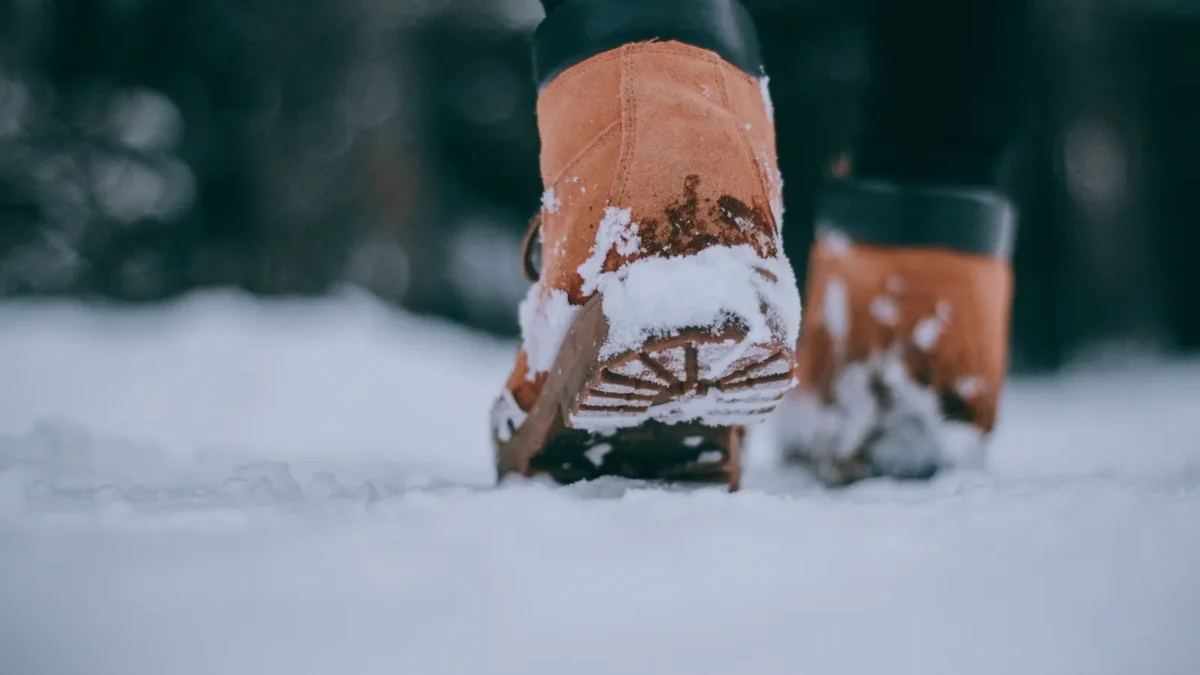
- Deep, angular lugs (more than 4 mm) bite into soft snow and shed mud, which is useful on trails.
- Shallower lugs work better on large flat surfaces such as icy sidewalks and driveways.
- Special outsole compounds infused with materials such as fabric, silica or fiberglass can improve friction on slick surfaces.
If you mostly walk on cleared city streets, you do not need the most aggressive sole. If you mostly walk on packed trails, you do.
4. Fit and Sizing: Plan for Thick Socks
Winter boots are often sized differently from everyday shoes. REI’s reviewers note that some models run small and recommend going up a half or full size, especially if you wear heavier socks. A boot that is too tight cuts off circulation, and tight boots feel colder, not warmer.
- Shop in the afternoon, when feet are slightly larger.
- Wear the socks you will use in winter.
- Walk up and down a slope. Your heel should stay put and your toes should have room to wiggle.
Which Type of Winter Boot Fits You?
- Trail-to-town crossover: comfortable for daily wear and light snow.
- Technical winter hiking or snowshoeing: more supportive midsoles, taller collars and aggressive lugs.
- Heavy or harsh weather: extra insulation and taller shafts.
- Heavy loads: choose a boot with a stiffer, more supportive midsole than a lightweight crossover boot offers.
Build the Rest of Your Winter Outfit
Boots work best as part of a system. Wool or thick socks inside waterproof boots are a reliable combination, and our three-layer guide to dressing for winter shows how to keep the rest of your body warm without looking bulky. If you are also shopping for a coat this season, see our comparison of down versus synthetic winter coats.
Frequently Asked Questions
How many grams of insulation do I need in winter boots?
For active use, about 200 grams is usually enough. For standing in subzero weather, look for roughly 400 grams or more.
Are waterproof boots worth it?
Yes, if you will be in snow or slush. Melting snow soaks through non-waterproof boots quickly, and wet feet lose heat fast.
Should I size up for winter boots?
Often, yes. Try boots on with your winter socks, and check reviews for the specific model, because some run small.
What lug depth is best for ice?
Shallower lugs suit flat icy surfaces, and special outsole materials can add grip. Deep lugs are better for snow and mud.
Bottom Line
Choose insulation for how much you move, insist on real waterproofing, match the lugs to the surfaces you walk on, and leave room for thick socks. Do that and you can skip the guesswork and shop with confidence.
Source: REI Co-op Expert Advice, “Best Winter Boots” (rei.com/learn/expert-advice/best-winter-boots.html). Product specifications change, so confirm details with the manufacturer.