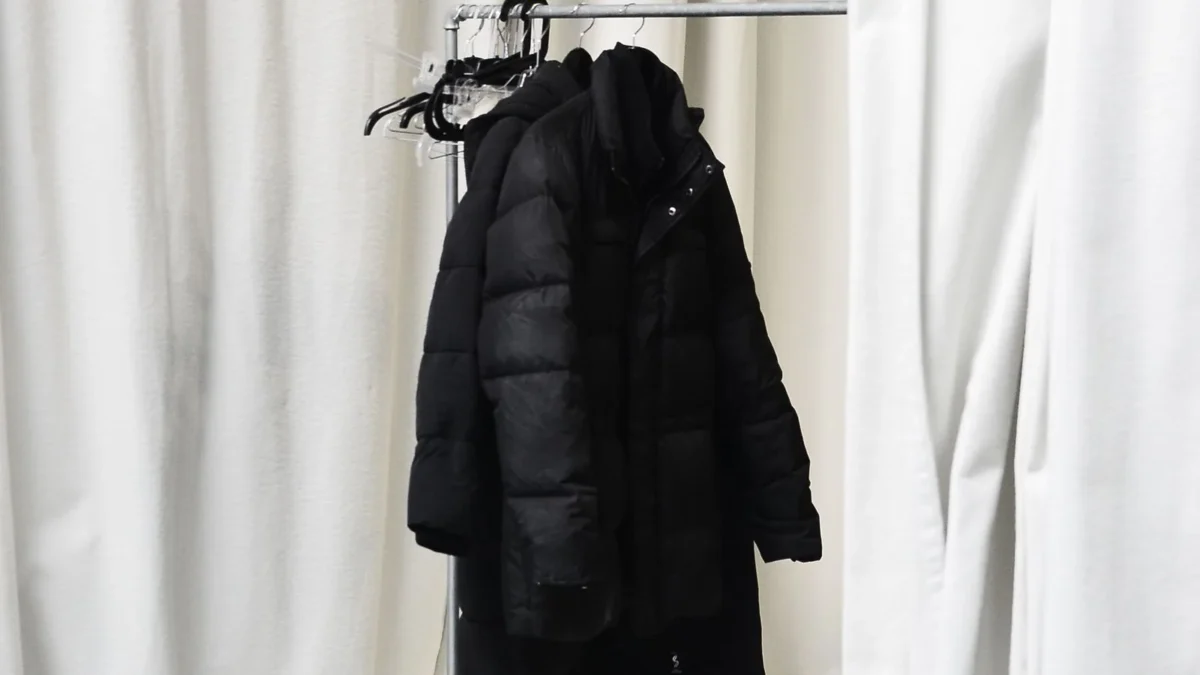
Walk into any store in November and you will see two kinds of puffy coats: ones labeled "down" and ones labeled "synthetic" or "insulated." They can look identical on the hanger, but they behave very differently once you are standing at a cold bus stop or caught in sleet. This guide explains how down and synthetic insulation compare, how to read the numbers on a down coat, and which one fits your climate, budget and daily routine.
The Short Answer
- Choose down if you want the most warmth for the least weight, and your winters are cold and mostly dry.
- Choose synthetic if you deal with rain, wet snow or damp cold, if you are on a tighter budget, or if you want to avoid animal products.
- Either way, the shell fabric, the coat’s construction and how you layer underneath matter nearly as much as the insulation itself.
Down vs Synthetic at a Glance
| Factor | Down | Synthetic |
|---|---|---|
| Warmth for its weight | Best. Lighter and warmer for the same amount of insulation | Good, but slightly heavier and bulkier |
| When wet | Clumps and loses much of its insulating ability | Handles moisture better, so it is the safer choice for mixed or wet weather |
| Best conditions | Very cold, dry days | Cool, damp or changeable weather |
| Price | Usually costs more | Usually costs less |
| Packability | Compresses small, especially high fill power | Packs down less |
| Animal products | Yes (goose or duck) | No, and generally hypoallergenic |
What Is Down, Exactly?
Down is the soft layer of clusters beneath the outer feathers of geese and ducks. The clusters trap air, and trapped air is what keeps you warm. A coat labeled only "down" contains natural down, while a coat labeled "down alternative" is a synthetic fill designed to imitate it, so read the tag carefully. Goose down is generally considered warmer than duck down.
How to Read Fill Power
Fill power is the number you will see on a down coat’s tag, and it measures quality, not total warmth. It describes how much space one ounce of down fills, in cubic inches, once it has been fluffed. A higher number means each ounce traps more air, which means more warmth per ounce and a lighter, more compressible coat. Retailers and brands describe the usual range as roughly 400 to over 900, with guides suggesting around 300 to 500 for milder conditions and 700 to 900 for serious cold.
Here is the part many shoppers miss: fill power is not the whole story. Fill weight, the amount of down actually inside the coat, matters just as much. Columbia notes that a coat with a lower fill power but more down can be warmer than a high-fill-power coat with less down. If a brand lists fill weight in grams or ounces, compare it, not just the fill power number.
What Is Synthetic Insulation?
Synthetic insulation is usually polyester fiber engineered to trap warmth like down. It repels water better, keeps insulating when damp, and generally costs less. The tradeoffs are weight and bulk: for the same warmth, a synthetic coat is slightly heavier and does not squeeze as small. For most commuters, that difference is easy to live with.
Which Should You Buy? A Quick Guide by Situation
| Your situation | Better pick | Why |
|---|---|---|
| Very cold, dry winters (think prairie or mountain cold) | Down | Maximum warmth with less weight |
| Rainy, snowy or damp climate | Synthetic, or down with a waterproof shell | Wet down loses insulation; synthetic copes better |
| Daily commute with stop-and-go weather | Synthetic or a mid-weight down coat with a water-resistant shell | Easy care and more forgiving in changing conditions |
| Tight budget | Synthetic | Typically better value if you can accept a little extra weight |
| Travel and packing light | Down | Compresses small and weighs less |
| Allergies or avoiding animal products | Synthetic | No animal-derived fill |
What Else Makes a Winter Coat Warm?
Insulation is only one part of the coat. Check these before you buy:
- Shell fabric. A water-resistant and windproof outer layer keeps wind from stealing heat and keeps down dry. A great fill in a thin, drafty shell will disappoint you.
- Baffle construction. Box-style baffles hold down in place and prevent cold spots. If the stitching lets the fill migrate, the coat will feel uneven.
- Hood, cuffs and hem. Insulated hoods, adjustable cuffs and drawcord hems seal in warmth. Insulated hand pockets help too.
- Fit. The coat should fit over a sweater without squeezing, since compressed insulation does not trap air. Too much extra room lets warm air escape.
- Seams and zipper. Straight seams, an even hem, no loose threads, and a smooth zipper are signs of careful construction.
- Temperature rating. Some brands publish a recommended temperature range. Treat it as a guide, since people feel cold differently.
A Note on Ethical Down
Down is an animal product, and not all down is sourced the same way. If this matters to you, look for brands that state where their down comes from and that follow a third-party standard, such as the Responsible Down Standard, rather than relying on a vague "ethically sourced" label. If you prefer to avoid animal products entirely, choose a synthetic fill.
How to Try On a Coat Like You Mean It
- Wear the sweater or thickest layer you plan to wear under the coat when you try it on.
- Raise your arms, reach forward and sit down. The sleeves and hem should not ride up.
- Zip it all the way up and turn your head. The collar should not choke you or leave a gap.
- Check the tag for fill type, fill power and fill weight, and for the shell fabric.
- Keep the tags on until you have worn it around your home. A coat that itches or feels drafty is better returned.
Care Basics
Follow the care label on your specific coat, because washing instructions for down and synthetic fills can differ and the wrong method can flatten the insulation. Store the coat uncompressed in the off-season so the fill can stay lofty.
Build the Whole System
A great coat works best with the right layers underneath. Our guide on how to layer clothes for winter shows how a base layer, mid layer and outer shell work together, and our look at fall 2026 coat trends can help you match warmth with style.
Frequently Asked Questions
Is down warmer than synthetic?
For the same weight, yes. Down delivers more warmth per ounce and compresses smaller, which is why it is popular for very cold, dry conditions.
What fill power should I buy?
Higher numbers trap more air per ounce. Lower fill powers suit milder weather, while 700 to 900 is typically chosen for serious cold or when low weight and packability matter. Also check the fill weight, because a coat with more down can beat a higher-rated coat with less.
Does down stop working when it is wet?
Wet down clumps and loses much of its insulating ability. That is why a water-resistant shell matters, and why many people choose synthetic for rain or wet snow.
Is synthetic as warm as down?
It can be very warm, but for the same warmth it is usually a bit heavier and bulkier. In damp weather it often performs better.
Is a more expensive coat always better?
Not automatically. Construction, shell fabric, fill weight and fit matter, so compare specifications and try the coat on instead of paying only for a brand name.
Sources: Gear Patrol, "Down vs Synthetic Insulation: Read This Before You Buy a Winter Coat"; Columbia Sportswear, "How You Can Tell How Warm a Down Jacket Is"; Reviewed, "How to Buy a Winter Coat That Lasts." Fill power ranges vary slightly by brand and guide, so use the figures here as general guidance and check each manufacturer’s specifications.