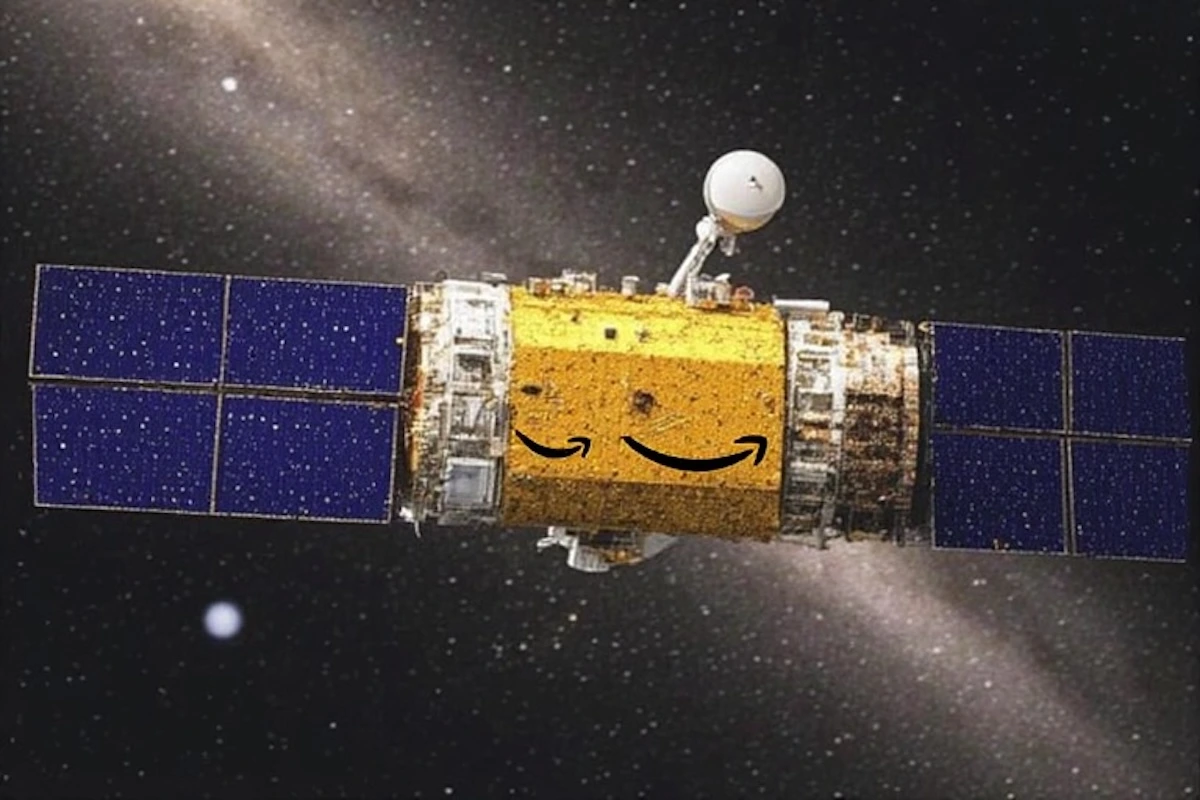
Amazon is accelerating its push into the satellite broadband industry with Amazon Leo, the company’s rebranded low-Earth orbit (LEO) satellite initiative previously known as Project Kuiper. While still in its early deployment stage, Leo is already emerging as one of the most serious challengers to SpaceX’s Starlink and other global satellite internet providers.
With billions of dollars invested, hundreds of satellites already in orbit, and integration plans across Amazon’s ecosystem, Amazon Leo represents more than just another internet service. It is a strategic infrastructure play that could transform global connectivity, enterprise networking, aviation broadband, smart mobility, and even consumer entertainment.
Amazon Leo’s Rapid Expansion
Since launching its operational deployment campaign a year ago, Amazon Leo has placed 304 satellites into orbit across 11 launches. According to Chris Weber, Amazon Leo’s Vice President of Business and Product, the company plans to dramatically increase its pace over the next 12 months.
“The theme moving forward is acceleration,” Weber said during an interview at Amazon Leo’s Mission Operations Center in Redmond, Washington.
Amazon aims to double its launch cadence, satellite deployment, and service expansion in the coming year. The company has already secured contracts for approximately 100 rocket launches, making it one of the largest commercial launch procurement efforts in space industry history.
Initially, the service will launch in selected regions within the northern and southern hemispheres before expanding globally as more satellites are deployed.
Why Amazon Leo Matters
Satellite internet is no longer viewed as a niche technology for remote areas. The market is rapidly evolving into a strategic global communications sector with enormous economic potential.
An Oxford Economics study commissioned by Amazon estimates that LEO satellite broadband could contribute between $32 billion and $863 billion to global GDP by 2035, while supporting up to 21 million jobs worldwide.
This growth projection reflects increasing demand for:
- Rural and remote broadband access
- Enterprise-grade secure communications
- Aviation and maritime connectivity
- Government and defense communications
- Smart transportation systems
- Internet resilience during disasters and outages
Amazon Leo is positioning itself to compete across all of these sectors simultaneously.
Why Competitors Should Be Concerned
Although Starlink currently dominates the market with more than 10,000 satellites and over 12 million subscribers, Amazon Leo possesses several strategic advantages that could make it a formidable competitor in the years ahead.
1. Amazon’s Massive Ecosystem Advantage
Unlike many standalone satellite providers, Amazon can integrate Leo into one of the world’s largest digital ecosystems.
Potential integrations include:
- Amazon Web Services (AWS)
- Prime Video
- Fire TV
- Ring smart home devices
- Zoox autonomous vehicles
- Amazon logistics and delivery systems
This creates opportunities for bundled services and cross-platform customer retention that competitors may struggle to match.
For example, enterprise customers could directly connect satellite terminals into AWS private cloud infrastructure without routing through the public internet — a highly attractive feature for governments, defense organizations, and regulated industries.
2. Strong Enterprise and Government Positioning
Amazon is aggressively targeting high-value enterprise and government clients rather than focusing solely on retail consumers.
Its private networking capability through AWS offers:
- Secure communications
- Reduced latency
- Enhanced cybersecurity
- Integrated cloud computing access
This approach could allow Amazon Leo to build profitable business relationships even before mass consumer adoption scales globally.
3. Competitive Hardware Portfolio
Amazon has unveiled three terminal categories:
- Nano: portable 100 Mbps terminal
- Pro: 400 Mbps terminal
- Ultra: up to 1 Gbps download speed
These options allow Leo to serve multiple customer segments ranging from consumers to industrial operations.
The Ultra terminal’s gigabit-class capability could become especially attractive for businesses operating in underserved regions.
4. Financial Firepower
Amazon’s financial resources give Leo significant staying power.
Initial estimates placed the project’s cost at over $10 billion, but some analysts now believe total investment could exceed $20 billion. Few companies globally possess the capital capacity to sustain such a long-term infrastructure project.
Even more importantly, Amazon can tolerate years of aggressive expansion before profitability becomes necessary.
5. Direct-to-Device Ambitions
Amazon’s partnership strategy involving Globalstar and Apple signals a broader ambition beyond broadband.
Direct-to-device satellite communication could eventually enable:
- Emergency messaging
- Voice services
- Vehicle connectivity
- IoT communications
- Global mobile coverage expansion
Rather than replacing broadband, Amazon sees direct-to-device capability as complementary — creating broader connectivity ecosystems.
Challenges Ahead
Despite its momentum, Amazon Leo still faces major hurdles.
Satellite Deployment Pressure
Under FCC licensing rules, Amazon must deploy a significant portion of its constellation within strict deadlines. The company is currently seeking a two-year extension.
Even if launch rates double, Amazon still faces a difficult timeline to complete deployment targets by the late 2020s.
Rocket Supply Constraints
The global launch market remains heavily constrained. Delays involving Blue Origin’s New Glenn rocket and limited heavy-lift launch availability have slowed deployment schedules.
Ironically, Amazon is purchasing launches from SpaceX — its biggest competitor — to help accelerate satellite deployment.
Catching Up to Starlink
Starlink maintains a substantial first-mover advantage:
- Larger constellation
- Established global coverage
- Existing consumer base
- Operational maturity
Amazon Leo will need to differentiate through pricing, integration, reliability, and enterprise services rather than simply matching Starlink satellite-for-satellite.
The Future Outlook
Amazon Leo’s future appears highly promising, particularly if the company successfully combines:
- Affordable broadband pricing
- AWS cloud integration
- Consumer ecosystem bundling
- Enterprise networking solutions
- Aviation and mobility partnerships
- Direct-to-device expansion
If executed effectively, Leo could evolve into a foundational layer of Amazon’s global digital infrastructure strategy.
More importantly, the project may accelerate competition across the satellite communications industry, driving lower prices, broader coverage, and faster innovation worldwide.
For competitors, Amazon Leo is not just another satellite constellation. It is Amazon entering the global connectivity race with the full weight of its logistics, cloud computing, AI, hardware, and consumer ecosystem behind it.
And that is precisely why the industry is paying attention.