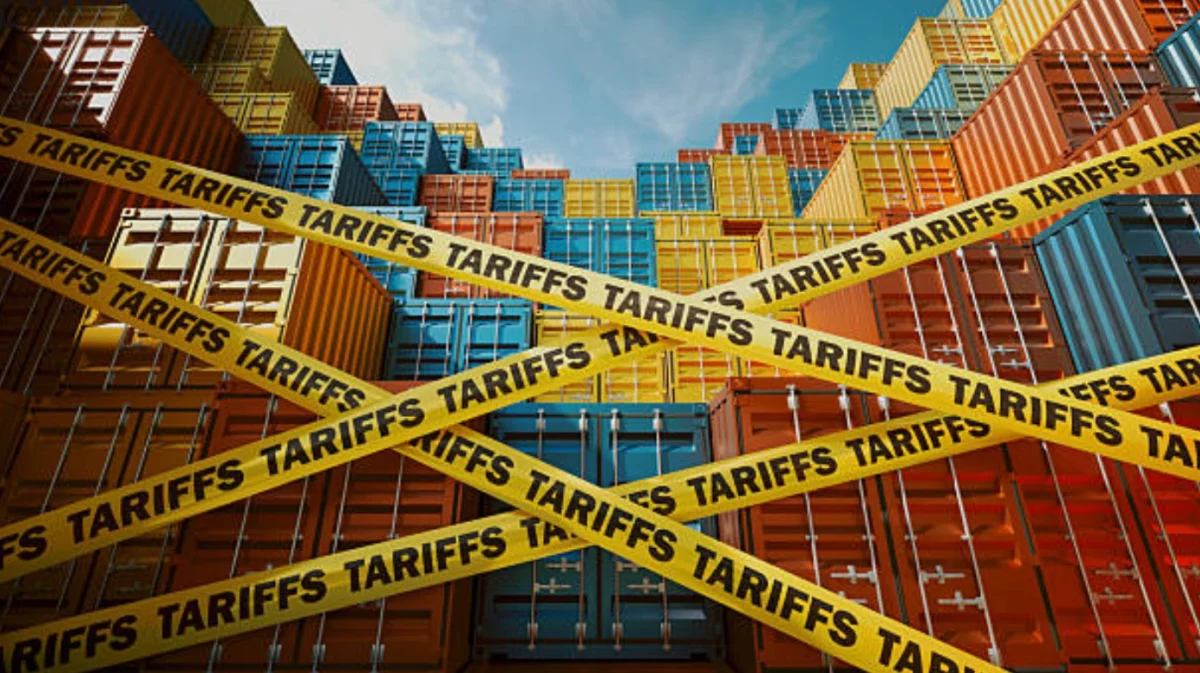
Tariffs were supposed to be the policy that the courts finally reined in. Instead, they have become the policy that keeps reinventing itself. Every time one legal avenue closes, the Trump administration has opened another, and the result is a tariff regime that looks less like a single emergency measure and more like a permanent structural feature of US trade policy. Understanding how that regime was built, what statutes it now rests on, and where it is heading next is essential for anyone studying contemporary trade policy, international economics, or executive power in 2026.
From “Liberation Day” to the Supreme Court’s Rebuke
The current chapter of America’s tariff story begins in early 2025, when the administration announced a near-universal tariff under the International Emergency Economic Powers Act (IEEPA), layering country-specific “reciprocal” rates on top of a blanket duty. For over a year, that framework defined how the U.S. tariff policy today may create jobs but at what cost became a live national debate, as manufacturers weighed reshoring against rising input costs.
That framework collapsed on February 20, 2026, when the Supreme Court ruled 6–3 that IEEPA does not grant the president authority to impose broad, non-emergency tariffs on nearly all trading partners. It was a genuine defeat for the White House’s legal theory — but not, as it turned out, for the policy itself. Within hours, Trump announced a replacement 10% tariff under Section 122 of the Trade Act of 1974, a statute that permits the president to impose duties of up to 15% for balance-of-payments emergencies, but caps them at 150 days unless Congress extends them. That ceiling meant the clock was already ticking toward a new deadline: July 24, 2026.
Section 301: The Legal Bridge That Held
Rather than let tariff revenue lapse when Section 122 expired, the U.S. Trade Representative spent the spring building the legal scaffolding for a successor regime under Section 301 of the same 1974 law — a provision that lets the USTR investigate and respond to “unfair” foreign trade practices on a country-by-country basis. In March, USTR opened two sweeping probes: one into alleged “structural excess manufacturing capacity” across sixteen major economies, including China, the European Union, Japan, India, and Indonesia, and a second examining forced-labor practices across sixty economies representing nearly all US imports.
Those investigations concluded just as Section 122 tariffs expired. On July 24, new tariffs of 10% to 12.5% took effect on goods from roughly sixty trading partners — covering an estimated 99.4% of US imports — justified on forced-labor grounds. Countries that had separately negotiated agreements to address forced-labor concerns received the lower rate; the rest were assigned the higher one. Legal scholars have been blunt about what this represents. As one litigator involved in earlier tariff challenges put it, Section 301 is a “targeted, country-specific and practice-specific remedial authority,” not a blanket mechanism for taxing nearly all imports at a preset rate — making a fresh round of court challenges all but certain.
This pattern — a policy struck down, then rebuilt under a different statute within days — is why some trade economists at outlets like the Tax Foundation now estimate the effective 2026 US tariff rate at roughly 5.3%, the highest since 1972, and why total customs-duty revenue jumped from $79 billion in 2024 to over $264 billion in 2025.
What Comes Next: Section 338 and the EU Tech Fight
The more consequential story for students of trade policy may be what happens after Section 301. Because that statute doesn’t offer the speed or flexibility of emergency powers, trade experts are increasingly focused on a rarely used provision: Section 338 of the 1930 Smoot-Hawley Tariff Act, which allows the president to impose tariffs of up to 50% against countries found to discriminate against US commerce — without the lengthy investigation process Section 301 requires. If invoked, Section 338 would represent the third distinct legal pathway the administration has used to sustain the same underlying trade agenda within eighteen months.
In parallel, Trump has announced a new Section 301 investigation into the European Union over its treatment of major US technology firms — including Google, Apple, Meta, and Amazon — which could stack additional duties on top of the tariffs the EU is already absorbing. The EU’s response has been sharp; its foreign policy chief called the July tariffs a “negative surprise” and rejected the forced-labor rationale outright, a friction point that mirrors the broader tension documented in the US-Europe tariff war. Any tariffs emerging from the tech-discrimination probe would not replace existing duties — they would stack on top of them, meaning EU exporters could eventually face compounding tariff layers from multiple statutory tracks simultaneously.
Who Actually Pays: Tracing the Costs Through the Economy
Tariffs are, mechanically, a tax paid by the importer at the border — but the incidence rarely stays there. Several sectors illustrate how the cost travels through supply chains to reach consumers, and each is worth studying as a distinct case:
Autos. Vehicle manufacturers depend on components sourced across dozens of countries, so a tariff on any single input can ripple through an entire assembly line. The dynamics are laid out in detail in how tariff spats affect car prices and in the sector-specific breakdown of the U.S. tariff on automakers, both of which show how Section 232 national-security tariffs on steel and aluminum interact with newer Section 301 duties to compress manufacturer margins.
Groceries and consumer staples. Because the United States imports a meaningful share of its produce, seafood, and packaged goods, tariff pass-through shows up quickly at the checkout line — a dynamic explored in how Trump’s tariffs will impact U.S. grocery prices and consumer spending. Specific commodity chains make the mechanism concrete: the shrimp tariffs and supply-chain fraud case study shows how origin-mislabeling schemes emerge precisely because tariff differentials between countries create financial incentive to disguise where a product actually came from, while tariff troubles brewing for local coffee bean stores shows the same pressure hitting small, non-diversified importers hardest.
Housing. Tariffs on lumber, steel, and imported building materials feed directly into construction costs, which is why mortgage rates and tariffs has become a genuinely interconnected policy question rather than two separate ones — tariff-driven inflation expectations can keep the Federal Reserve cautious about cutting rates, which in turn keeps mortgage costs elevated.
Apparel and retail. Fast-fashion and e-commerce platforms that relied on low-value shipment exemptions have had to restructure pricing entirely, as shown in the Shein and Temu tariff loophole closing and its price increases, while established brands are adjusting more conventionally — see Adidas facing U.S. tariff pressures and signaling a sportswear price hike. Even niche retail segments are affected, as detailed in how tariffs are reshaping the U.S. bridal boutique industry.
Technology and manufacturing. The administration’s stated goal of reshoring production runs headlong into the complexity of global electronics supply chains, a tension examined in iPhone prices and the future of U.S. manufacturing.
Each of these case studies reinforces the same underlying finding from the Tax Foundation’s modeling: the 2026 tariffs amount to roughly $700 in additional per-household tax burden on top of the $1,000 households absorbed in 2025 — making this, by some measures, the largest tax increase as a share of GDP since 1993.
Markets, Allies, and the Geopolitical Ledger
Financial markets have registered the uncertainty in real time. Equity indices tied to major exporting economies have moved sharply on tariff headlines — documented in the coverage of the Hang Seng Index’s steep decline amid US tariff fears and the Singapore Straits Times Index decline amid global tariff concerns. Safe-haven assets have benefited from the same uncertainty, a pattern reflected in gold’s surge past $3,000 an ounce amid economic uncertainty.
The geopolitical dimension is arguably as important as the economic one. China’s own retaliatory posture is chronicled in China’s response to Trump’s 104% tariffs, while North American trade relationships have proven more resilient than many analysts expected, a dynamic captured in why the expected fight over the North American trade deal never kicked off and in the friction documented in the U.S.-Canada trade war over the F-35. Zooming out further, the broader realignment of trade, currency, and defense relationships is the subject of the changing global order: economic shifts, geopolitics, and what it means for you and the three engines: how the clash of China, Russia, and Trump’s economic visions reshapes your wallet.
Two Ways to Read the Same Data
Economists and policymakers genuinely disagree about how to weigh these facts, and a balanced academic treatment should present both readings rather than adjudicate between them.
Supporters of the administration’s approach argue that tariffs function as leverage tools that have already produced concrete negotiated outcomes — new bilateral agreements, forced-labor commitments from trading partners, and a partial reshoring of manufacturing investment — and that a modest, broad-based tariff functions similarly to a consumption tax whose revenue can offset other federal obligations. They also point out that the administration has consistently found statutory footing for each iteration of the policy, arguing that this reflects careful legal engineering rather than evasion.
Critics counter that the rotation between IEEPA, Section 122, Section 301, and potentially Section 338 shows an executive branch searching for whichever authority survives judicial review, rather than following a coherent statutory mandate — a concern echoed by legal advocacy groups that have already challenged the tariffs in court twice. On the economic side, critics note that tariffs are a regressive tax whose costs fall disproportionately on lower-income households that spend a larger share of income on tariff-exposed goods like groceries and apparel, and that the “excess capacity” and “forced labor” justifications for the March and July actions were, in the view of some trade economists, largely predetermined conclusions rather than genuine findings.
For a foundational grounding in the concepts underlying this debate — inflation measurement, monetary policy responses, and exchange-rate mechanics — background explainers like what is CPI: understanding the Consumer Price Index and its role in measuring inflation and how macroeconomic policies shape a nation’s trade and economic health provide useful context for interpreting the household-cost estimates cited above.
Why the Next 150 Days Matter
Because Section 301 tariffs lack the speed of emergency powers, the administration has signaled it wants pending investigations — including the EU tech probe and the sixteen-country “excess capacity” review — resolved quickly, ideally before any legal challenge to the July 24 tariffs succeeds. That creates a narrow but consequential window: if the excess-capacity investigations conclude with new sector-specific tariffs on top of the forced-labor duties already in place, average effective tariff rates could approach or exceed 2025 levels, at which point the inflationary and growth effects become considerably harder for policymakers to dismiss — particularly if energy prices remain elevated. Alternatively, if courts strike down the Section 301 forced-labor tariffs as they did the IEEPA tariffs, the administration’s pivot to Section 338 would represent an even more novel test of presidential tariff authority, one with no significant modern precedent.
For students researching this topic, the throughline worth emphasizing is procedural, not just economic: this is now the third distinct legal theory the executive branch has used within eighteen months to sustain functionally the same tariff wall, and each rebuilding cycle has been faster than the last — a pattern that raises structural questions about the balance of trade authority between Congress and the presidency that will likely outlast this specific administration.
Sources:
- CNN Business, “Trump imposes new tariffs targeting dozens of countries” (July 2026)
- CNN Business, “Trump’s appetite for tariffs never faded. His next moves could reshape trade” (July 2026)
- NPR, “A defiant Trump imposes replacement tariffs on biggest U.S. trading partners” (July 2026)
- CNBC, “Greer hints at new Trump tariffs, recreating overturned trade regime” (July 2026)
- Atlantic Council Geoeconomics Center, “Trump Tariff Tracker”
- Tax Foundation, “Tariff Tracker: 2026 Trump Tariffs & Trade War by the Numbers”
- Office of the U.S. Trade Representative, press releases on Section 301 forced-labor investigations
This article reflects publicly reported developments through July 27, 2026. Tariff policy in this area is changing rapidly; readers using this piece for academic work should verify the latest status of any pending litigation or investigation before citing specific figures.