At a moment when global trade patterns are being redrawn and supply chains reassembled by geopolitical pressure, two of Southeast Asia’s most strategically intertwined economies met in Jakarta to reaffirm the depth — and expand the ambition — of their bilateral partnership.
The 16th Singapore-Indonesia Six Bilateral Economic Working Groups Ministerial Meeting, held in Jakarta on 9 June 2026, brought together Singapore’s Deputy Prime Minister and Minister for Trade and Industry, Gan Kim Yong, and Indonesia’s Coordinating Minister for Economic Affairs, Airlangga Hartarto. What emerged was not a routine diplomatic courtesy call but a substantive catalogue of commitments across industrial development, digital infrastructure, renewable energy, supply chain coordination, and agricultural cooperation.
At its centre is a financial relationship of remarkable scale: Singapore contributed approximately USD 17.4 billion in foreign direct investment to Indonesia in 2025 alone, maintaining its standing as the country’s top foreign investor — a position it has held consistently since 2014.
Why This Bilateral Relationship Matters Now
The Singapore-Indonesia partnership is one of the most strategically significant bilateral economic relationships in the Asia-Pacific — and the current global environment is amplifying its importance.
Supply chains that once flowed through single geographies or depended on single sourcing relationships are being diversified at speed. Trade patterns that held for decades are being restructured by tariffs, sanctions, and the strategic competition between major powers. Business confidence, in turn, is being suppressed by geopolitical uncertainty that has no clear near-term resolution.
In this environment, stable, institutionalised partnerships between neighbouring economies with complementary strengths acquire new strategic weight. Singapore brings world-class financial infrastructure, logistics expertise, established legal frameworks, and global capital access. Indonesia brings the world’s fourth-largest population, Southeast Asia’s largest digital economy, abundant natural resources, and manufacturing capacity that is increasingly attractive to multinationals diversifying away from more concentrated supply bases.
The Six Bilateral Economic Working Groups (6WG) framework — which covers six areas of cooperation: the Batam, Bintan and Karimun (BBK) region and other Special Economic Zones; investment; manpower; transport; agribusiness; and tourism — provides the institutional architecture through which these complementary strengths are coordinated and developed. The 2026 meeting is the 16th in a series that has steadily expanded in ambition and concrete deliverables.
Supply Chain Resilience: The New Priority
One of the most significant outcomes of the 2026 ministerial meeting was a formal agreement to strengthen cooperation on supply chain resilience — an acknowledgment by both governments that the ability to keep trade flowing under extreme circumstances has become a first-order economic security concern.
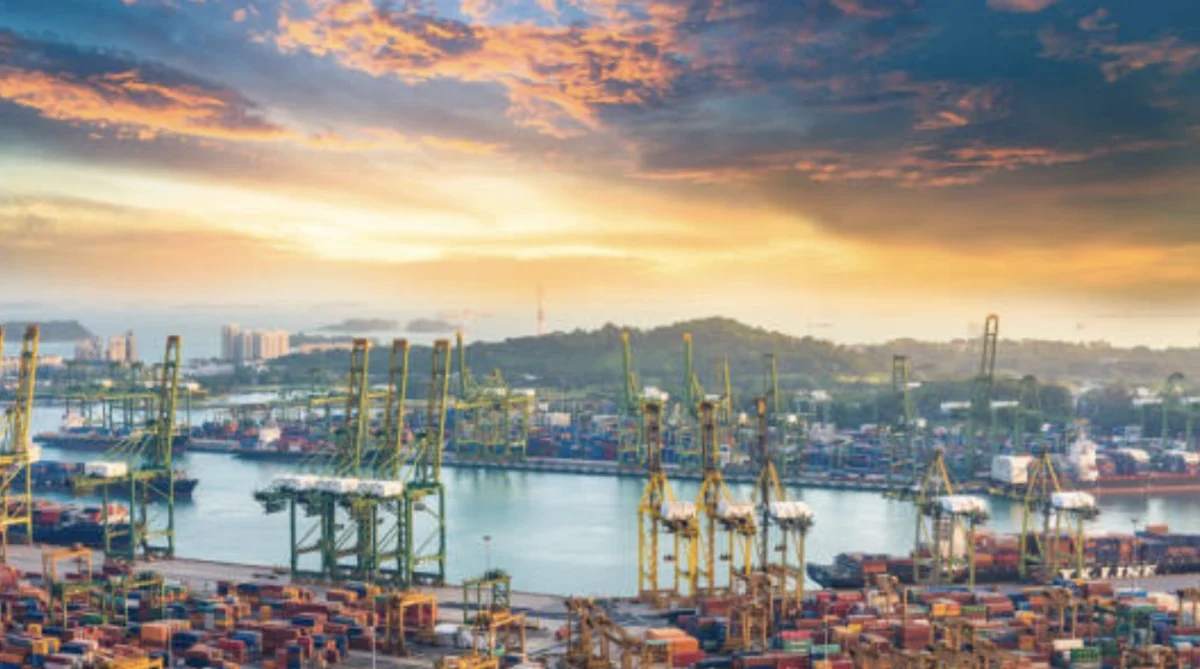
The specific mechanisms through which Singapore and Indonesia will pursue this cooperation are still being developed, with both sides committed to exploring how their respective strengths can be made mutually reinforcing. Singapore’s position as one of the world’s busiest container ports and most sophisticated logistics hubs makes it a natural anchor for regional supply chain coordination. Indonesia’s geographic spread across a vast archipelago — encompassing the Strait of Malacca, the Lombok Strait, and multiple other strategically vital waterways — makes its participation essential to any genuinely resilient regional supply chain architecture.
The agreement to develop concrete frameworks in this space reflects a maturation of the bilateral relationship: from investment facilitation and economic development into the domain of strategic infrastructure and economic security planning.
Investment and Business Facilitation: Streamlining Cross-Border Operations
A second major pillar of the 2026 meeting focused on the investment environment for businesses operating across both countries. Both ministers acknowledged that sustaining the USD 17.4 billion FDI flow from Singapore into Indonesia requires ongoing attention to the quality of the regulatory and administrative environment that investors encounter.
Discussions centred on simplifying the processes through which businesses establish and operate across both borders, with the aim of keeping the investment climate consistently attractive as global competition for foreign capital intensifies. Indonesia’s position as the primary destination for Singapore’s outbound investment is not a given — it must be actively maintained through policy work that reduces friction and increases predictability for companies making long-horizon capital allocation decisions.
The BBK Region: Becoming a Digital Hub
The Batam, Bintan and Karimun (BBK) region — a cluster of Indonesian islands positioned immediately south of Singapore — has been a centrepiece of the bilateral partnership for decades. Its proximity to Singapore, combined with Indonesia’s cost structure and land availability, has made it a natural location for manufacturing, logistics, and services investment from Singapore-based companies.
The 2026 meeting marked a significant evolution in the BBK’s strategic direction. Both governments agreed to conduct a joint technology-sector study to identify opportunities and develop concrete recommendations for transforming the region into a genuine digital hub. The study will inform regulatory and investment decisions designed to accelerate digital economy development across the BBK zone.
Investment in the BBK region reached USD 5.7 billion in 2025, an increase from the previous year, according to Coordinating Minister Airlangga. Projects already underway include the expansion of the Nongsa Special Economic Zone — which has attracted significant data center investment — and new data center commitments in both Batam and Bintan from operators including DayOne, PT Equator Gate System, and DCI Indonesia.
The joint technology-sector study is designed to build on this momentum, creating a policy and regulatory foundation that can support the next generation of digital infrastructure investment in a region that sits at one of the world’s most strategically significant maritime crossroads.
Kendal Industrial Park: A Decade of Success and a Major Expansion
If the BBK region represents the Singapore-Indonesia partnership’s digital future, the Kendal Industrial Park (KIP) in Central Java represents its proven industrial backbone — and 2026 marks a milestone year for both.
KIP celebrates its 10th anniversary in November 2026. In that decade, the park has grown from a bilateral ambition into a mature industrial ecosystem. A joint development between Sembcorp Industries of Singapore and Jababeka of Indonesia, the park has attracted 139 tenants, secured approximately USD 11 billion in cumulative investment, and supported close to 77,000 jobs as of March 2026.
With the first phase of KIP now at full capacity, the 2026 ministerial meeting confirmed that Phase 2 will add a further 1,000 hectares to the park’s footprint. This expansion, positioned in Central Java — one of Indonesia’s most populous and industrially significant provinces — will accommodate new manufacturing investment, support continued supply chain diversification by multinationals seeking Indonesian production bases, and create additional employment at scale.
The KIP story is one of the bilateral relationship’s most concrete demonstrations of what long-term, institutionalised cooperation between two complementary economies can produce. A decade of patient investment and policy coordination has yielded a USD 11 billion industrial anchor with nearly 77,000 jobs attached. Phase 2 represents a bet that the next decade can be equally productive.
The Green Economy: Solar, Biofuel, and Young Farmers
Perhaps the most forward-looking dimension of the 2026 ministerial outcomes is the expanding collaboration in green economy development — an area where both Singapore and Indonesia are building complementary capabilities and where the two countries’ respective strengths are particularly well-matched.
SAMCOP Solar Project: One of Indonesia’s Largest
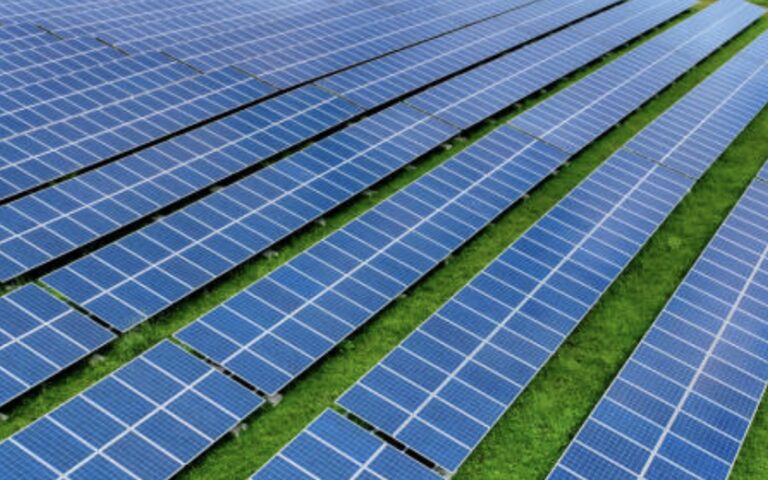
The SAMCOP project, implemented through PT Sumba Energy Surya Nusantara (SENSA), is a joint Singapore-Indonesia initiative that will deliver one of Indonesia’s largest utility-scale solar installations. The project features a 200-megawatt solar deployment paired with an 80-megawatt-hour battery energy storage system — a combination that addresses both generation capacity and the intermittency challenge that has historically constrained renewable energy deployment in the Indonesian grid.
The project is currently under construction and is scheduled for completion in 2027. When operational, it will represent a significant contribution to Indonesia’s renewable energy transition and a model for the kind of large-scale, cross-border clean energy project that both governments are keen to replicate across the region.
Indonesia’s First Bio Gas to Biomethanol Plant
Singapore and Indonesia are also co-developing a pioneering biogas-to-biomethanol facility in North Sumatra through the Ceremina Biofuel project. Biomethanol, produced from organic waste streams, is a low-carbon fuel with applications in shipping, industrial processes, and chemical manufacturing. Indonesia’s agricultural sector — one of the world’s largest — generates substantial organic waste that can serve as feedstock for this technology.
For Singapore, which has committed to decarbonising its maritime sector and is actively developing a sustainable aviation fuel and alternative fuels ecosystem, access to a regional biomethanol supply chain has direct strategic relevance. The joint development of this facility reflects the increasingly sophisticated nature of bilateral cooperation in the energy transition space.
Young Farmers Development Programme
The green economy collaboration extends into agricultural innovation through the Young Farmers Development Programme, which is currently undergoing its inaugural run in Singapore. The programme is designed to build a new generation of agricultural professionals equipped with modern farming techniques and sustainability practices — strengthening cooperation between the two countries in agribusiness, one of the six pillars of the 6WG framework.
Food security is an area of shared strategic concern for both Singapore, which produces less than 10% of the food it consumes domestically, and Indonesia, which has a large and growing agricultural sector but significant productivity improvement potential. Developing human capital in modern agricultural practice is one lever through which both countries can address this challenge simultaneously.
What the USD 17.4 Billion FDI Number Actually Means
The headline figure of USD 17.4 billion in Singapore-sourced FDI to Indonesia in 2025 is significant not just in its scale but in what it represents structurally.
Singapore’s investment in Indonesia encompasses a wide range of sectors — manufacturing and industrial parks, financial services, digital infrastructure, real estate, and increasingly, green energy. The breadth of sectoral exposure means that the bilateral investment relationship is diversified across economic cycles in a way that a narrower, single-sector relationship would not be.
The figure also reflects a deliberate policy choice by both governments to maintain and deepen economic integration despite the headwinds of global uncertainty. In a world where economic nationalism is on the rise and many bilateral relationships are contracting or becoming more transactional, the Singapore-Indonesia partnership is expanding.
For businesses assessing Southeast Asia as an investment destination, the consistency and scale of Singapore’s investment in Indonesia is itself a signal worth noting. Singapore-based investors have access to detailed market intelligence, established networks, and deep institutional knowledge of the Indonesian operating environment. Their sustained and growing commitment to Indonesia through a period of global disruption reflects a considered view of the country’s long-term economic trajectory.
The Broader Significance: A Partnership for a Multipolar World
The 2026 ministerial meeting’s outcomes read, in aggregate, as a partnership that has matured well beyond its origins. What began as a framework for managing the economic development of islands geographically adjacent to Singapore has evolved into a comprehensive bilateral architecture spanning industrial development, digital infrastructure, renewable energy, supply chain security, food systems, and talent development.
This evolution is well-timed. The world is increasingly multipolar, with economic relationships being restructured by strategic considerations that go beyond pure comparative advantage. In this environment, deeply institutionalised partnerships between neighbouring economies — where trust has been built over decades, where the regulatory frameworks are familiar to investors on both sides, and where concrete projects have established a track record of delivery — represent a form of strategic asset that is genuinely difficult to replicate.
Singapore and Indonesia are not simply neighbouring countries. They are, through the 6WG framework and the investments it has catalysed, co-architects of a regional economic ecosystem that is becoming more valuable as the global environment becomes more uncertain.
For businesses, investors, and policy observers tracking Southeast Asia’s economic trajectory, the 2026 ministerial outcomes provide a detailed map of where the two economies intend to take that ecosystem next.
Key Outcomes at a Glance
| Area | 2026 Commitment |
|---|---|
| FDI | USD 17.4 billion Singapore investment into Indonesia in 2025 |
| Supply Chain | Formal agreement to strengthen resilience cooperation |
| BBK Region | Joint technology-sector study; USD 5.7B investment in 2025 |
| Kendal Industrial Park | Phase 2 expansion of 1,000 additional hectares in Central Java |
| SAMCOP Solar | 200MW solar + 80MWh battery storage; completion 2027 |
| Biomethanol | Indonesia’s first biogas-to-biomethanol plant, North Sumatra |
| Young Farmers Programme | Inaugural run in Singapore; deepening agribusiness cooperation |
| Data Centers (BBK) | DayOne, DCI Indonesia, PT Equator Gate System investments in Batam/Bintan |