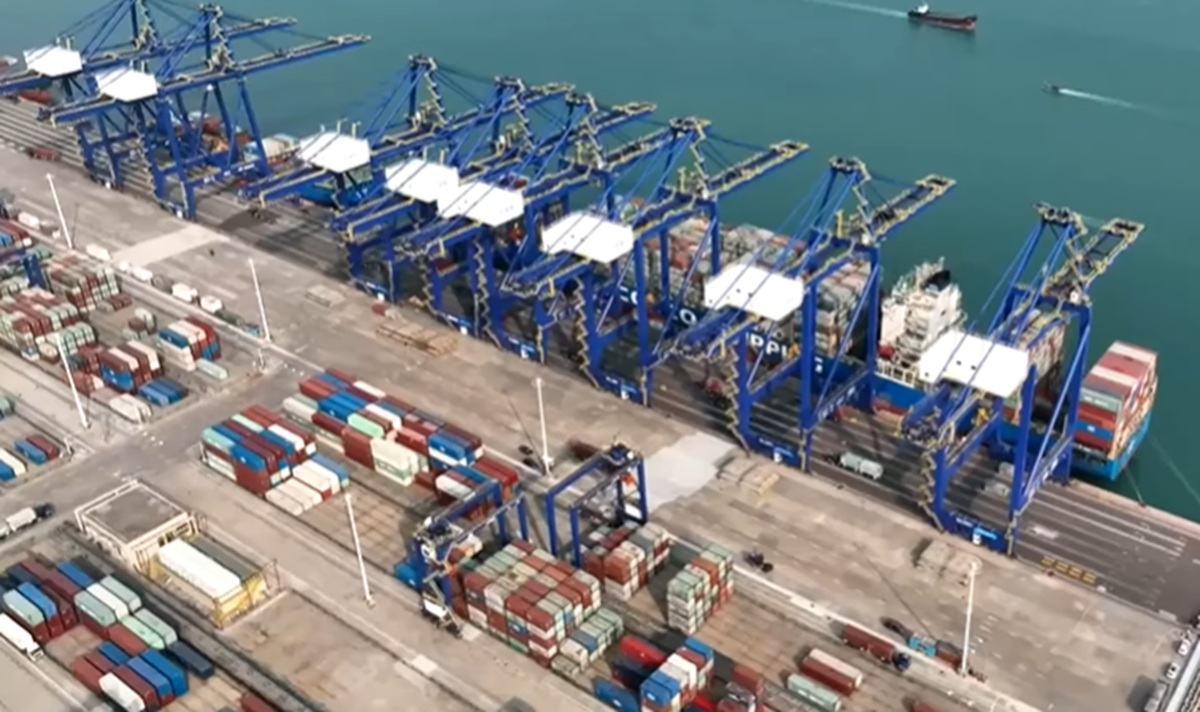
When people hear the name Hainan, images of palm-lined beaches and turquoise waves usually come to mind. Often called China’s Hawaii, the tropical island has long been known as a leisure destination. But after 2025, Hainan is set to be recognized for something far bigger than tourism.
It is preparing to become one of the most ambitious economic experiments in the world: a high-level Free Trade Port with independent customs operations.
For global investors, entrepreneurs, and multinational companies, Hainan is quietly transforming into a gateway to China’s next phase of opening-up.
From Holiday Island to Global Trade Hub
In 2025, Hainan’s Free Trade Port will officially begin independent customs operations, marking a turning point in the island’s development. This change will convert the entire island into a special customs supervision zone, fundamentally reshaping how goods, capital, and businesses move in and out.
At the heart of this system is a simple but powerful framework:
Free flow at the first line, control at the second line, and liberalization within the island.
- The first line refers to Hainan’s border with the rest of the world. Most imported goods entering Hainan will be exempt from tariffs, allowing businesses to import and export freely.
- The second line separates Hainan from mainland China. Goods moving from Hainan to the mainland will be treated as imports and subject to duties, VAT, and consumption taxes.
- Liberalization on the island means simplified customs procedures, fewer regulatory barriers, and a business-friendly environment designed to let companies operate with minimal friction.
Chinese policymakers describe it simply as “letting firms in and letting them do business.”
Zero Tariffs, Lower Taxes, and Real Cost Savings
Many incentives are already in place—and they are about to expand.
Currently, Hainan applies zero-tariff policies to a selected list of goods. Even with limited coverage, the results have been striking. By October 2024, more than 460 companies had saved nearly 2.9 billion yuan (around USD 400 million) through these policies.
After independent customs operations begin, the scope of zero-tariff goods will expand significantly, benefiting both businesses and consumers. Imported products will become more affordable, while companies gain access to global supply chains at lower costs.
Tax incentives go further:
- A 15% corporate income tax
- A 15% personal income tax for qualified talents
Known as the “double 15%” policy, these rates are expected to be further optimized, strengthening Hainan’s appeal to international businesses and skilled professionals.
Building an International Business Environment by Design
Hainan’s transformation is not accidental—it is guided by a detailed master plan that requires the island to establish an international-standard business environment by 2025.
Since June 2020, when China released the master plan, Hainan has issued more than 78 policy documents, covering:
- Tax reductions
- Customs supervision reforms
- Duty-free policies
- Capital flow liberalization
- Foreign investment facilitation
- Intellectual property protection
This step-by-step approach ensures stability while steadily raising the level of openness.
Legal Certainty and Strong Intellectual Property Protection
In June 2020, China passed the Hainan Free Trade Port Law, providing a national-level legal framework for the port’s development. The law emphasizes:
- Rule-based administration
- Clearly defined government authority
- Protection of international and private enterprises
One notable highlight is intellectual property protection. In addition to IP courts in Beijing, Shanghai, and Guangzhou, a fourth intellectual property court was established in Hainan in December 2020.
Hainan has also pioneered mobile micro courts, allowing litigants and lawyers to access legal services digitally. The system improves efficiency, transparency, and access—especially for foreign businesses.
To enhance international participation, residents from Hong Kong, Macao, and Taiwan have been selected as jurors and mediators, reinforcing legal credibility and cross-border trust.
Greater Market Access with a Shorter Negative List
Hainan’s foreign investment negative list contains just 27 items, fewer than both the national list and other free trade zones in China. This signals a higher level of market openness.
The list allows:
- Overseas law firms to establish representative offices
- Participation in non-litigation legal services
- Expanded access to trade, transportation, and financial services
This openness is positioning Hainan as a testing ground for reforms that may later be replicated nationwide.
One-Stop Services and Innovation Parks
To translate policy into practice, Hainan has established 11 key Free Trade Port parks. These zones serve as laboratories for reform and offer end-to-end government services, including:
- Company registration
- Investment approvals
- Tax services
- Visa and talent services
In many cases, businesses can complete the entire company setup process in five to eight days.
The parks also help identify and support high-level international talent, offering housing subsidies, education benefits, healthcare policies, and transportation incentives—factors that are crucial for long-term business success.
How Hainan’s Free Trade Port Will Reshape Regional Trade
Beyond its impact on China’s domestic reforms, the rise of the Hainan Free Trade Port (FTP) is likely to influence trade dynamics across East Asia, Southeast Asia, and the broader Asia-Pacific region.
With the implementation of independent customs operations in 2025, Hainan will function as a distinct trade node—one that sits between global markets and the Chinese mainland. For regional exporters, especially those in ASEAN and neighboring economies, Hainan offers a new low-cost, low-friction entry point into China’s vast consumer and industrial markets.
A New Regional Logistics and Distribution Hub
The zero-tariff and liberalized import regime allows regional producers to bring goods into Hainan with minimal trade barriers. From there, products can be:
- Stored, processed, or assembled on the island
- Re-exported to global markets
- Gradually introduced into mainland China through the “second line” under clear customs rules
This setup encourages the development of regional supply chains, where value-added activities—such as light manufacturing, packaging, testing, and branding—can take place in Hainan before final distribution.
For regional trade partners, this reduces costs, shortens supply chains, and increases flexibility.
Strengthening Asia-Pacific Trade Integration
Hainan’s Free Trade Port complements existing regional trade frameworks by acting as a policy bridge rather than a replacement. Its shorter negative list, streamlined regulations, and international-standard legal protections make it easier for regional firms—especially small and medium-sized enterprises—to participate in cross-border trade without navigating the full complexity of mainland regulations at the outset.
As trade liberalization deepens, Hainan may also serve as a testing ground for rules and standards that could later influence broader regional trade practices, including:
- Customs facilitation
- Digital trade
- Services trade
- Cross-border investment mechanisms
In this way, Hainan’s reforms could gradually spill over into regional trade norms, improving predictability and confidence for international businesses operating in Asia.
Increased Competition, and Opportunity, for Regional Ports
The emergence of Hainan as a Free Trade Port will inevitably introduce new competition among regional logistics hubs. However, rather than diverting trade, it is more likely to expand overall trade volume by lowering entry barriers and unlocking new commercial flows.
For regional economies, this creates opportunities to:
- Partner with Hainan-based firms
- Integrate into Hainan-centered supply chains
- Use the island as a launchpad for China-facing trade strategies
In practical terms, Hainan is positioning itself not as a closed gateway, but as a connector—linking regional producers, global markets, and the Chinese mainland.
Looking Ahead to 2050
China’s long-term vision is clear: to build a globally influential Free Trade Port in Hainan by 2050.
While it may be premature to compare Hainan directly to Hong Kong, Singapore, or Dubai, the direction is unmistakable. Independent customs operations in 2025 represent not an endpoint, but a new beginning—a foundation for deeper integration into global trade and investment networks.
For businesses watching China’s next chapter, Hainan is no longer just an island getaway. It is becoming a strategic platform for the future of international commerce.