Why Iowa Is More Than a Flyover State
Iowa is often dismissed as just another Midwestern state, quietly passed over between coasts. Yet beneath its calm appearance lies one of the most strategically important regions in the United States. From shaping westward expansion and feeding the world to influencing presidential elections and leading renewable energy adoption, Iowa plays a role far larger than its size suggests.
Understanding Iowa is essential to understanding how the United States grew, how it functions today, and how it prepares for the future.
A State Defined by Rivers and Movement
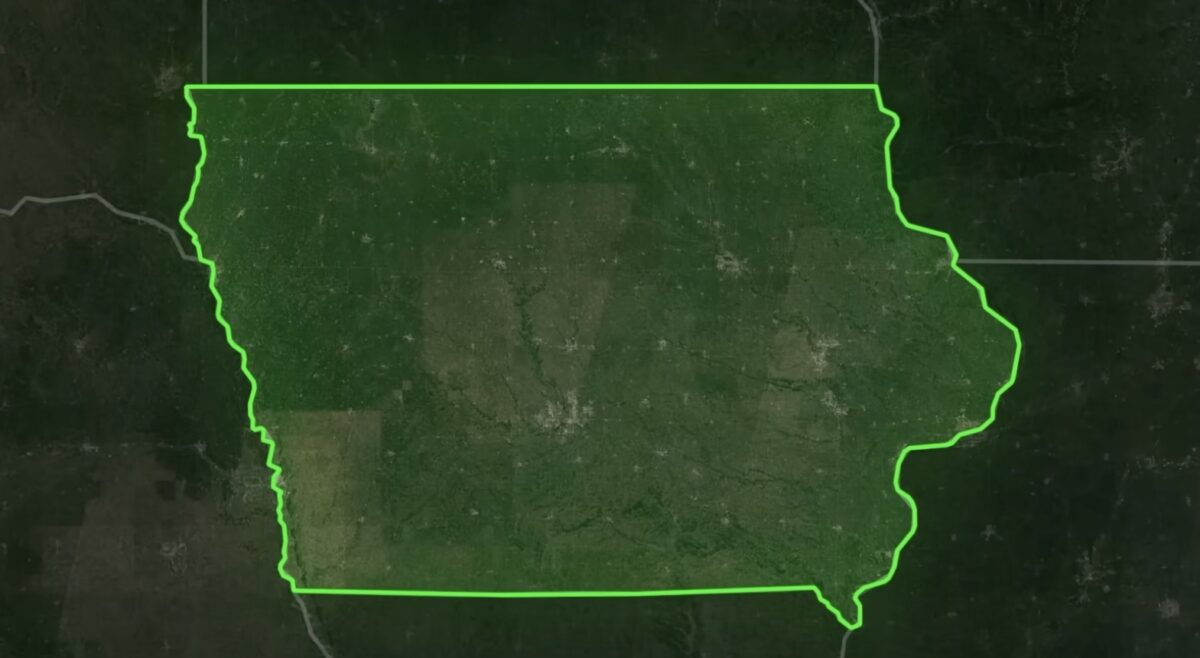
Iowa holds a rare geographic distinction: it is bordered almost entirely by two of the most important rivers in North America. The Mississippi River defines its eastern edge, while the Missouri River forms its western boundary. These rivers served as early highways for trade, migration, and ideas, long before railroads and interstates existed.
This river-based geography made Iowa a natural corridor connecting eastern markets to western frontiers. Agricultural goods flowed outward, while settlers and supplies flowed inward, turning Iowa into a meeting point where the eastern United States connected with the expanding West.
Soil That Feeds Nations
The foundation of Iowa’s global importance lies beneath the surface. The state is covered by some of the most fertile soil on Earth, known as mollisols. This deep, nutrient-rich soil was formed by ancient grasslands and enriched by minerals left behind by glaciers.
Unlike regions with thin topsoil, Iowa’s farmland is exceptionally resilient and productive. This geological advantage supports a massive agricultural industry that rivals entire countries in output. Corn, soybeans, pork, and eggs produced in Iowa reach markets across the globe, making the state a critical link in the global food supply.
A Rare Landscape Found Almost Nowhere Else
Along Iowa’s western edge rises a geological phenomenon found in only one other place on Earth: the Loess Hills. Formed from fine windblown silt deposited during the last ice age, these sharp, ridge-like hills create a striking landscape unlike anything else in the Midwest.
Beyond their beauty, the Loess Hills support unique ecosystems and plant species more commonly associated with arid regions of the western United States. This makes Iowa not only agriculturally rich, but ecologically rare.
The Driftless Area: Iowa’s Untouched Past
While glaciers flattened much of the state, northeastern Iowa was mysteriously spared. This unglaciated region, known as the Driftless Area, features limestone bluffs, deep valleys, cold-water streams, caves, and sinkholes.
The rugged terrain supports diverse wildlife and rare plant communities, creating a hotspot for biodiversity, fishing, hiking, and outdoor recreation. It also preserves a glimpse of North America’s ancient landscape, untouched by the last ice ages.
The Land That Launched Westward Expansion
Iowa’s national importance solidified after the Louisiana Purchase, when it became centrally located within a vast new American territory. Its position made it a critical gateway for exploration and settlement beyond the Mississippi River.
Later, Iowa played a pivotal role in connecting the nation coast to coast. The western leg of the transcontinental railroad officially began in Council Bluffs, making Iowa the starting point for one of the most transformative infrastructure projects in U.S. history.
The Birthplace of Modern Agriculture
A quiet agricultural revolution began in Iowa’s cornfields with the development of hybrid seed corn. This innovation dramatically increased crop yields, consistency, and resilience, transforming farming into a science-driven industry.
The impact spread far beyond state borders. Modern agricultural practices rooted in Iowa helped increase global food production, reshaping how nations grow and distribute food and reinforcing Iowa’s role as a global agricultural leader.
Outsized Political Influence
Every four years, Iowa becomes the center of American political attention. As the first state to participate in the presidential nomination process, Iowa plays a unique role in shaping national elections.
The state’s early position forces candidates to engage directly with voters, testing ideas and momentum before campaigns move to larger states. This process gives Iowa an influence that extends far beyond its population, making it a critical testing ground for national leadership.
An Agricultural Giant by Global Standards
If Iowa were an independent nation, it would rank among the world’s top producers of key agricultural commodities. The state produces more corn than many countries and leads the United States in pork and egg production.
With approximately 85% of its land dedicated to agriculture, Iowa’s farms support global food systems and stabilize supply chains, proving that small regions can have enormous global impact.
A Leader in Renewable Energy
Iowa has successfully translated its geography into a clean energy advantage. Located in the heart of America’s wind belt, the state generates a majority of its electricity from wind power.
This shift has strengthened energy independence, created jobs, and provided farmers with additional income streams, all while reducing environmental impact. Iowa stands as a model for how rural regions can lead the transition to renewable energy.
Culture, Finance, and Orderly Design
Beyond farming, Iowa contributes to American culture and commerce in surprising ways. Iowa City is internationally recognized as a center of literary excellence, while Des Moines has grown into a major hub for the insurance and financial services industry.
Even the state’s orderly landscape tells a story. A grid-based land survey system shaped its roads, farms, and towns, creating one of the most organized rural geographies in the country and influencing how communities developed across the Midwest.
Iowa’s True National Significance
Iowa is not defined by what it lacks, but by what it quietly sustains. It feeds millions, influences elections, powers homes with renewable energy, preserves rare landscapes, and reflects the layered history of American expansion.
Far from being a flyover state, Iowa is a cornerstone of the United States—geographically, economically, politically, and culturally. Understanding Iowa means understanding the heart of America itself.