Picture this: A Fortune 500 CEO secretly funnels company funds into a risky side venture. The board ignores red flags. Shareholders lose millions. The stock crashes. This isn’t just bad leadership—it’s corporate governance failure at its worst.
From Enron’s collapse to Volkswagen’s emissions scandal, weak governance destroys companies. But when done right, it builds trust, profitability, and long-term success.
In this guide, we’ll break down:
✔ What corporate governance really means
✔ How it protects businesses and investors
✔ The explosive link between governance and ESG
✔ 4 ethical pillars every company must uphold
What Does Corporate Governance Mean?
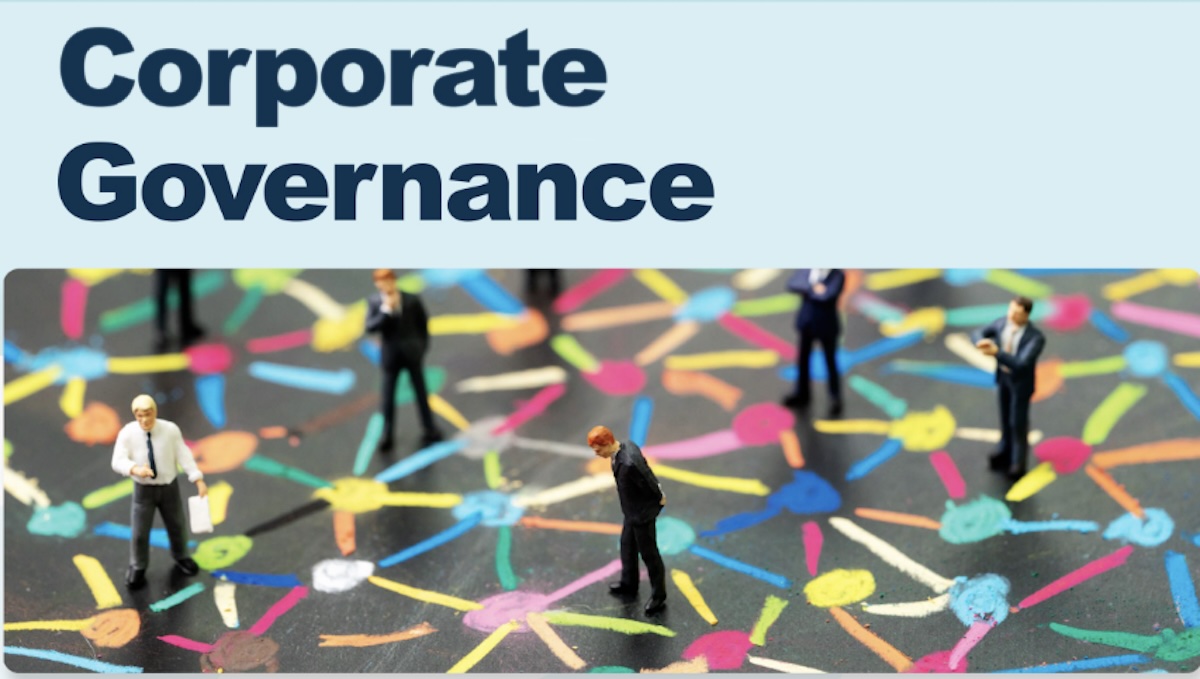
Corporate governance is the system of rules, practices, and processes that control and direct a company. Think of it as a playbook that answers:
- Who’s in charge? (Board vs. executives)
- How are decisions made? (Transparency, accountability)
- Who gets protected? (Shareholders, employees, customers)
Real-World Impact:
- Good governance → Apple’s $3T valuation (clear leadership, innovation focus)
- Bad governance → FTX’s $32B meltdown (no board oversight, secret deals)
What Is Corporate Governance in Business?
In practice, corporate governance shapes how companies:
1. Make Strategic Decisions
- Boards approve mergers, CEO hires, and major investments.
- Example: Disney’s board fired CEO Bob Chapek in 2022 after poor streaming losses.
2. Manage Risk
- Policies prevent fraud, lawsuits, and PR disasters.
- Example: Johnson & Johnson’s talc lawsuits forced governance reforms.
3. Ensure Financial Transparency
- Independent audits verify accurate financial reporting.
- Example: Sarbanes-Oxley Act (2002) required stricter controls post-Enron.
4. Balance Stakeholder Interests
- Shareholders want profits. Employees want fair wages. Governance finds middle ground.
- Example: Microsoft’s employee stock program aligns worker/owner incentives.
Does ESG Fall Under Corporate Governance?
Yes—ESG (Environmental, Social, Governance) is now governance’s #1 priority.
| ESG Factor | Governance Connection |
|---|---|
| Environmental | Boards oversee climate policies (e.g., carbon targets) |
| Social | Ethics committees monitor diversity, labor practices |
| Governance | Anti-corruption rules, executive pay transparency |
Why It Matters:
- 85% of S&P 500 companies now tie CEO pay to ESG goals (Harvard Law).
- BlackRock rejects board nominees at firms with weak climate plans.
ESG Governance Fail:
When Boeing rushed the 737 Max (ignoring safety for profits), 346 people died—a catastrophic governance/ESG breakdown.
4 Elements of Corporate Governance Tied to Ethics
1. Board Accountability
- Ethical Duty: Directors must prioritize the company over personal gain.
- Red Flag: Overlapping board seats (e.g., Elon Musk leading Tesla/Twitter/X).
2. Whistleblower Protections
- Ethical Duty: Let employees report misconduct without fear.
- Example: Wells Fargo’s fake-accounts scandal ignored internal warnings.
3. Transparent Executive Pay
- Ethical Duty: CEO compensation tied to performance, not cronyism.
- Data: Typical CEO earns 272x more than workers (Economic Policy Institute).
4. Conflict-of-Interest Policies
- Ethical Duty: Ban self-dealing (e.g., CEOs awarding contracts to family).
- Scandal: FTX’s Sam Bankman-Fried lent $546M to his hedge fund.
Corporate Governance Frameworks: US vs. World
| Model | Used In | Key Feature |
|---|---|---|
| Shareholder Model | USA, UK | Maximizes investor returns |
| Stakeholder Model | EU, Japan | Balances employees, society, planet |
Trend: Even U.S. firms now adopt stakeholder principles (e.g., Amazon’s $15 minimum wage).
How to Spot Weak Governance (Before You Invest or Work There)
🚩 No independent board members
🚩 Frequent SEC violations
🚩 CEO also serves as board chair
🚩 Vague ESG reporting
Tool: Check a company’s governance score on MSCI ESG Ratings or ISS QualityScore.
The Future of Corporate Governance
By 2030, expect:
🔮 AI-powered governance audits (real-time risk detection)
🔮 Climate-qualified board members
🔮 NFT-based shareholder voting
How well do you understand corporate governance now? Whether you’re a business student, a corporate professional, or simply curious about the principles that keep organizations accountable and ethical, this quiz is for you. Corporate governance plays a critical role in ensuring transparency, fairness, and responsibility within companies—but how deep is your knowledge of its frameworks, roles, and regulations? Take the quiz below to test your understanding and see how you stack up!
Corporate Governance Ethics Quiz
Question: Which are elements of corporate governance tied to ethics? (Select 2 correct answers)
Corporate Governance Quiz
Question: Which of the following describes the system of corporate governance? (Select 1 correct answer)
Key Takeaways
- Corporate governance is the rulebook for ethical, profitable businesses.
- ESG isn’t optional—it’s modern governance’s core.
- Ethical governance requires transparency, accountability, and fairness.
- Investors and employees now demand strong governance—ignore it at your peril.
Weak governance sinks companies. Strong governance builds legacies. Which path is your business on?