Venezuela sits on more proven oil than any other country on Earth — some 303 billion barrels, more than Saudi Arabia. For most of the last decade, it has pumped almost none of it. That changed dramatically on August 28, 2026, when President Donald Trump announced that Washington had secured majority control of a venture holding more than 65 billion barrels of Venezuela’s reserves, in what he called “the biggest oil deal in world history.” The agreement arrives less than eight months after US forces captured Venezuela’s longtime president, Nicolás Maduro, and installed his former deputy as interim leader. Whether this counts as an unprecedented investment opportunity or a textbook case of resource extraction depends entirely on whose account you believe — and the evidence supports pieces of both stories.
Key Takeaways
- The US-Venezuela oil deal gives Washington an effective 55% share of output from a new joint venture covering 17 strategic oil fields with roughly 65 billion barrels of proven reserves — about a fifth of Venezuela’s total.
- The deal follows the January 3, 2026 US military operation that captured then-President Nicolás Maduro, who now faces narco-terrorism charges in New York.
- Interim President Delcy Rodríguez, Maduro’s former vice president, negotiated the agreement and says it will bring over $100 billion in investment and roughly $209 billion in tax revenue to Venezuela.
- Venezuela’s oil production has partially recovered since January, reaching roughly 1.23–1.25 million barrels per day by late August 2026 — a seven-year high, though still a fraction of the 3 million barrels a day it pumped in the late 1990s.
- Critics, including Latin America researchers and international governments, have called the arrangement neocolonial; the deal’s own $100-year concession length has few, if any, modern precedents.
- Accounting for the oil revenue collected since January has been largely opaque: reporting cited in this piece suggests roughly $3 billion has reached the Rodríguez government, with the destination of the remainder unclear.
Table of Contents
- Timeline: From Maduro’s Capture to the Oil Deal
- What’s Actually in the Deal?
- The Case That This Is Exploitation
- The Case That This Is a Real Opportunity
- Historical Precedent: Has This Happened Before?
- The Transparency Problem
- Analysis: What Would Have to Be True for This to Work
- FAQ
Timeline: From Maduro’s Capture to the Oil Deal
| Date | Event |
|---|---|
| Jan 3, 2026 | US special forces and FBI agents, backed by the military, capture President Nicolás Maduro and his wife Cilia Flores in Caracas; Maduro is flown to New York to face narco-terrorism charges. |
| Jan 8, 2026 | Interim President Delcy Rodríguez publicly pushes back on US plans for indefinite control of Venezuelan oil, saying any partnership must benefit Venezuelans. |
| Jan 29, 2026 | Rodríguez signs a reformed Hydrocarbons Law opening the oil sector to privatization, reversing two decades of state-controlled policy. |
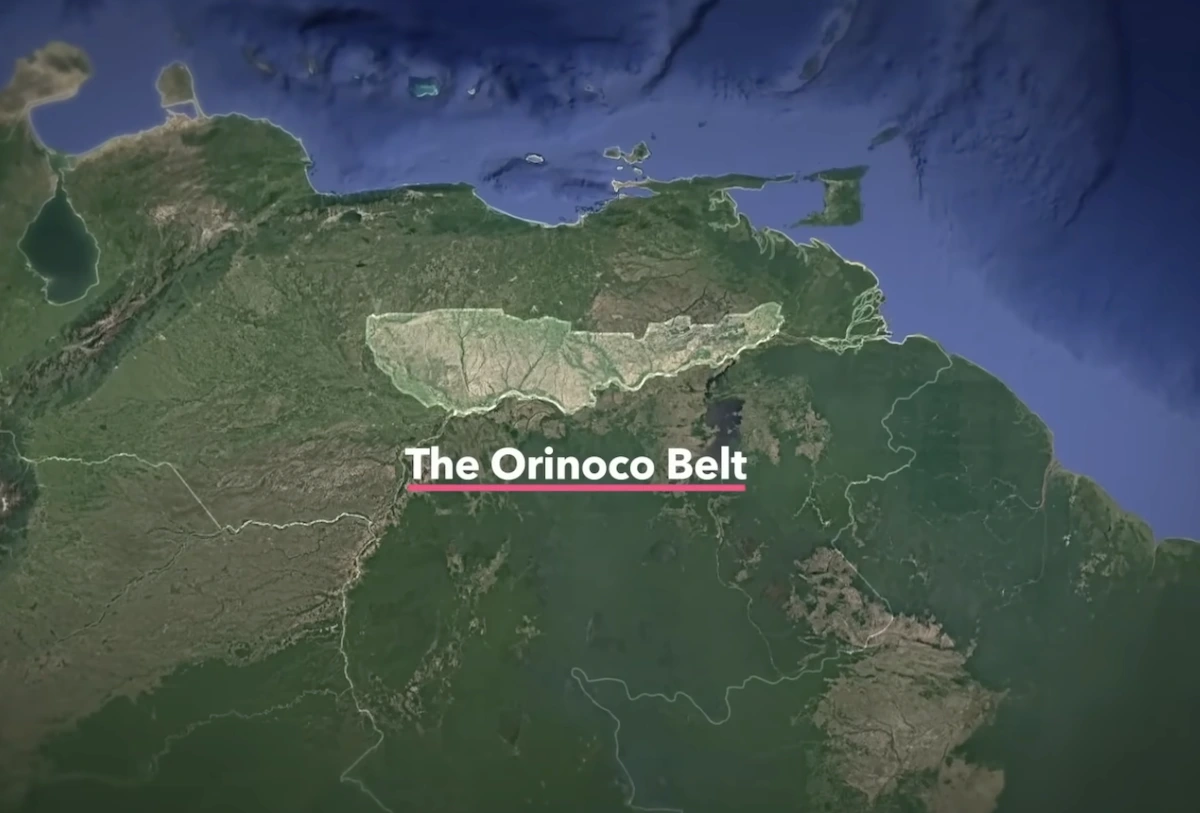
| Apr 2026 | Chevron and Venezuela’s state oil company PDVSA finalize an asset swap consolidating Chevron’s position in the Orinoco Belt. |
| Jun 2026 | Venezuela’s oil output hits a seven-year high of roughly 1 million barrels per day, still less than half its early-2000s peak. |
| Aug 21–28, 2026 | Reports emerge that 17 oil fields are on the table in talks with US and international operators; Trump announces the finalized deal on August 28. |
This timeline matters for one reason: every stage of Venezuela’s oil-sector opening happened under a government that took power as a direct result of US military action, not through an election.
What’s Actually in the Deal?
According to reporting from multiple outlets, the arrangement gives the United States an effective 55% share of output from a new private joint venture covering 17 strategic fields, with development backed by more than $100 billion in investment. Rodríguez’s government frames the concession length at up to 100 years. Trump has stated the deal costs American taxpayers nothing and will help lower US gas prices, which have climbed amid the six-month-old US conflict with Iran over the Strait of Hormuz.
Several structural details are worth noting. The joint venture would reportedly become the second-largest corporate holder of proven oil reserves in the world, trailing only Saudi Aramco. Secretary of State Marco Rubio and then–Defense Secretary Pete Hegseth negotiated the agreement alongside private business partners, rather than through a conventional state-to-state energy pact. And unlike prior US engagement in Venezuela — such as Chevron’s long-standing, sanctions-limited operations — this deal explicitly gives Washington an ownership and governance stake, not just an operating license.
The Case That This Is Exploitation
Christopher Sabatini, who directs the Latin America program at Chatham House, has been blunt in characterizing the arrangement: in his assessment, it qualifies as neocolonialism and exploitation simultaneously, while also being something close to unprecedented in the modern era — a case of one country effectively owning another’s mineral reserves. Analysis from Energy Intelligence raises a related concern: if PDVSA loses its central role as an integrated national oil company, Venezuela risks sliding into a dependency structure where production, revenue, and governance decisions are all effectively made outside the country. That analysis also notes that several governments — including Brazil, China, and Russia — along with some UN diplomats, have criticized the broader US intervention as an act of aggression.
There’s also a political irony underlying the deal. The ruling party in Venezuela, the United Socialist Party, was built on a platform of resource nationalism under Hugo Chávez, who nationalized foreign oil holdings in the 2000s specifically to reclaim them from foreign — often American — control. Handing majority effective control back to Washington represents, by Sabatini’s account, a stark reversal for a movement whose founding premise was the opposite.
The Case That This Is a Real Opportunity
The counterargument starts with a simple observation: Venezuela’s oil industry was already in ruins before this deal, and it was ruined by Venezuelan mismanagement, not American interference. Production fell from roughly 2.7 million barrels a day when Chávez died in 2013 to below 500,000 barrels a day by 2020, before partially recovering. Entire production regions, including the once-prosperous Maracaibo basin, saw the vast majority of their wells go idle — reporting cited in analysis of the sector suggests fewer than 2,000 of a former 12,000 wells in that basin remain functional.
Rodríguez’s own public statements lean heavily into this framing, describing the agreement as central to what her government calls “Venezuela Reborn” — a recovery plan built around private capital returning to a sector that has been starved of investment and expertise for two decades. Proponents of this view argue that no realistic Venezuelan-led path existed to rebuild an oil sector at this scale without external capital, given the country’s isolation from international credit markets and the technical expertise required to reopen fields that have sat dormant for years.
It’s also worth noting that most major oil companies did not rush into Venezuela even after Trump’s administration opened the door — only Chevron moved decisively, according to Sabatini’s account, in part because the interim government’s legitimacy and the country’s security situation deterred more conservative investors. In that reading, US government backing functions less as opportunism and more as a guarantee that private capital alone was unwilling to provide.
Historical Precedent: Has This Happened Before?
Analysts pressed on this question tend to struggle to find a clean parallel. US-backed regime change tied to resource interests has precedent — the 1954 Guatemalan coup, partly connected to United Fruit Company’s banana holdings, is the most commonly cited example — but even in that case, Washington didn’t take direct ownership and operational control of the resulting production the way this deal structures US involvement in Venezuelan oil. Sabatini’s closest comparison is to the British East India Company: a private commercial entity operating with the backing of state power, extracting resources from a nominally sovereign territory under long-term concession terms. That comparison is not intended as a flattering one.
The Transparency Problem
Perhaps the most concrete point of concern isn’t ideological — it’s procedural. Under Maduro, an estimated one in every two dollars of oil revenue was reportedly siphoned off through corruption, with PDVSA functioning more as a family-controlled enterprise than a national oil company. The current arrangement was supposed to improve on that: oil revenue is collected and sold by US-linked management, with profits redistributed to the Venezuelan government only after requests are verified by an American accounting firm. A public tracking website was promised to let citizens monitor the flow of funds.
That website has reportedly not been meaningfully updated. Reporting cited in discussion of the arrangement suggests only around $3 billion has been distributed to the Rodríguez government since January, with no clear public accounting of where the remainder of Venezuela’s oil revenue — from a country now exporting at a seven-year production high — has actually gone.
What Would Have to Be True for This to Work
Stripped of the political framing on both sides, the deal’s ultimate outcome depends on a handful of concrete, checkable conditions rather than on which side’s rhetoric sounds more convincing today.
First, the investment has to actually reach the ground. Rebuilding Venezuela’s oil infrastructure — reopening thousands of idle wells, extending electricity to remote production zones still affected by daily blackouts, and rebuilding a workforce that has emigrated over the past decade — is, by most credible estimates, a decade-long undertaking, not a quick production ramp. If the $100 billion in promised investment doesn’t materialize at scale, the deal’s headline numbers become largely symbolic.
Second, the revenue accounting has to become genuinely transparent, not just promised as transparent. The gap between the $3 billion reportedly delivered to Caracas and the value of oil Venezuela has actually exported since January is the single most measurable indicator of whether this arrangement benefits ordinary Venezuelans or primarily reshuffles who controls the money.
Third, and most structurally important: an economy this dependent on a single extractive resource has a poor historical track record of translating resource wealth into broad-based prosperity, even under favorable terms. Countries that have managed this transition — Norway and, more debatably, the UK’s North Sea experience — did so by reinvesting resource revenue deliberately into other sectors over long periods, under host-country control. It’s an open question whether a Venezuelan government whose oil revenue flows through foreign-controlled channels, and whose own legitimacy is contested (Rodríguez’s approval rating is reported at around 25%, against an opposition that independent observers say won roughly two-thirds of the disputed 2024 vote), is positioned to make those long-term reinvestment decisions at all.
None of this resolves the “exploitation versus opportunity” framing — and it may be the wrong question to resolve in the abstract. The more useful test is whether, years from now, oil revenue shows up in Venezuelan infrastructure, healthcare, and non-oil industries, or whether it simply changes which foreign and domestic actors control the same extraction economy that has defined — and repeatedly failed — the country for a century.
FAQ
Is the US-Venezuela oil deal legal under Venezuela’s constitution?
This is disputed. Venezuela’s 2000 constitution, drafted under Chávez’s own party, restricts ceding control of natural resources to foreign powers, and critics argue the deal is constitutionally questionable even though Rodríguez’s government approved it.
How much oil does Venezuela actually produce right now?
Roughly 1.23–1.25 million barrels per day as of late August 2026, a seven-year high but still less than half of the 2.7–3 million barrels a day Venezuela produced in the late 1990s and early 2000s.
Why did only Chevron move into Venezuela when other companies didn’t?
According to Latin America analysts, most major oil companies were deterred by the interim government’s low approval ratings, uncertain political legitimacy, and ongoing security concerns in production regions, leaving Chevron as the primary company willing to expand its position.
Does this deal actually lower US gas prices?
That’s uncertain. Critics note that developing new Venezuelan oil fields at scale takes years, meaning the deal is unlikely to affect gas prices in the near term regardless of its long-run potential.
What happened to Nicolás Maduro?
He was captured by US forces on January 3, 2026, and is currently facing narco-terrorism and related charges in a New York federal court.
The Bottom Line
The honest answer to whether this is exploitation or opportunity is: both framings describe real, verifiable parts of the same deal, and which one dominates will only be settled by what happens to the money and the wells over the next several years — not by this week’s headlines. What do you think: does this deal represent a path to Venezuela’s recovery, or a new chapter in a very old story? Share your take in the comments.