Abstract
The increasing demand for critical raw materials, coupled with environmental and geopolitical constraints on conventional mining, has intensified interest in alternative resource strategies. Urban mining—the recovery of valuable materials from waste streams in urban environments—has emerged as a promising approach within the circular economy paradigm. This paper provides a comprehensive review of the concept of urban mining, its operational mechanisms, and its environmental, economic, and social implications. Drawing on interdisciplinary literature, the study explores key material sources such as electronic waste, construction and demolition debris, and landfills. It further examines technological processes, market dynamics, and policy frameworks that shape urban mining practices. The findings highlight that while urban mining offers substantial benefits in reducing environmental impacts and enhancing resource security, significant challenges remain, including technological complexity, hazardous material management, and behavioral barriers. The paper concludes by emphasizing the role of innovation, governance, and stakeholder engagement in scaling urban mining as a viable complement to traditional resource extraction.
1. Introduction
Global resource demand is rising at an unprecedented rate, driven by population growth, urbanization, and technological advancement. At the same time, traditional mining activities are increasingly associated with environmental degradation, social conflicts, and supply chain vulnerabilities (Ali et al., 2017; Bell & Donnelly, 2006). Recent disruptions, such as those experienced during the COVID-19 pandemic, have further exposed the fragility of global supply systems for critical metals (Akcil et al., 2020).
In response, attention has shifted toward alternative resource recovery strategies, particularly within the framework of the circular economy. One such strategy is urban mining, which refers to the extraction of valuable materials from the “technosphere”—the accumulated stock of materials embedded in urban infrastructure and waste (Krook & Baas, 2013). This concept challenges the traditional perception of waste as a liability, instead framing it as a secondary resource.
This paper aims to provide a structured and critical overview of urban mining by addressing three key questions: (1) What constitutes urban mining and its primary sources? (2) How are materials recovered through urban mining processes? and (3) What are the broader implications for sustainability and resource governance?
2. Conceptual Foundations of Urban Mining
Urban mining is broadly defined as the recovery of valuable materials from anthropogenic stocks, including products, buildings, and waste deposits (Krook & Baas, 2013). It is closely aligned with the principles of the circular economy, which emphasize resource efficiency, waste minimization, and material recirculation (Witjes & Lozano, 2016).
The concept encompasses several domains:
- Electronic waste (e-waste): Discarded electronic devices containing metals such as gold, copper, and rare earth elements (Awasthi et al., 2019).
- Construction and demolition waste (C&DW): Materials derived from buildings and infrastructure, including concrete, steel, and wood (Ajayi et al., 2015).
- Landfill mining: Recovery of materials from historical waste deposits (Krook & Baas, 2013).
These sources collectively represent a substantial reservoir of secondary raw materials, often with higher concentrations of valuable elements than natural ores (Zeng et al., 2018).
3. Sources and Material Potential
3.1 Electronic Waste
E-waste is one of the fastest-growing waste streams globally, driven by rapid technological obsolescence and consumer behavior (Robinson, 2009). Studies indicate that electronic devices contain significant quantities of recoverable metals, making them a critical focus of urban mining initiatives (Hira et al., 2018).
However, collection rates remain suboptimal, as many consumers store unused devices rather than recycling them (Bovea et al., 2018; Speake & Yangke, 2015).
3.2 Construction and Demolition Waste
The construction sector is a major contributor to global waste generation. Nevertheless, it also offers considerable potential for material recovery through selective demolition and recycling practices (Ghisellini et al., 2018; Ramos et al., 2024). Circular construction initiatives, such as those promoted in European policy frameworks, aim to transform buildings into material banks for future reuse (Coluccia et al., 2023).
3.3 Landfills as Resource Reservoirs
Landfills contain decades of accumulated waste, including metals and other materials that were previously discarded due to technological or economic limitations. Advances in recovery technologies are increasingly enabling the extraction of these resources, although environmental risks must be carefully managed (Krook & Baas, 2013).
4. Urban Mining Processes and Technologies
Urban mining involves a multi-stage process:
- Collection and Logistics
Efficient collection systems are essential for ensuring a steady supply of recyclable materials (Ongondo & Williams, 2011). - Sorting and Pre-treatment
Waste streams are separated into material categories using mechanical and automated systems. - Material Recovery
Recovery technologies include mechanical separation, pyrometallurgical processes, and hydrometallurgical methods (Gu et al., 2019). - Reintegration into Production Systems
Extracted materials are reintroduced into manufacturing supply chains, reducing the need for virgin resource extraction.
Emerging technologies are enhancing recovery efficiency, particularly for complex products such as smartphones.
5. Environmental and Economic Implications
Urban mining offers several environmental advantages. By reducing reliance on conventional mining, it mitigates land degradation, water pollution, and greenhouse gas emissions (Bell & Donnelly, 2006). Furthermore, it contributes to resource conservation and waste reduction, aligning with circular economy objectives (Witjes & Lozano, 2016).
From an economic perspective, urban mining can be cost-effective, particularly when recovering high-value metals from e-waste (He et al., 2020; Zeng et al., 2018). It also creates new business opportunities and markets for recycled materials (Nogueira et al., 2023).
6. Comparison with Traditional Mining
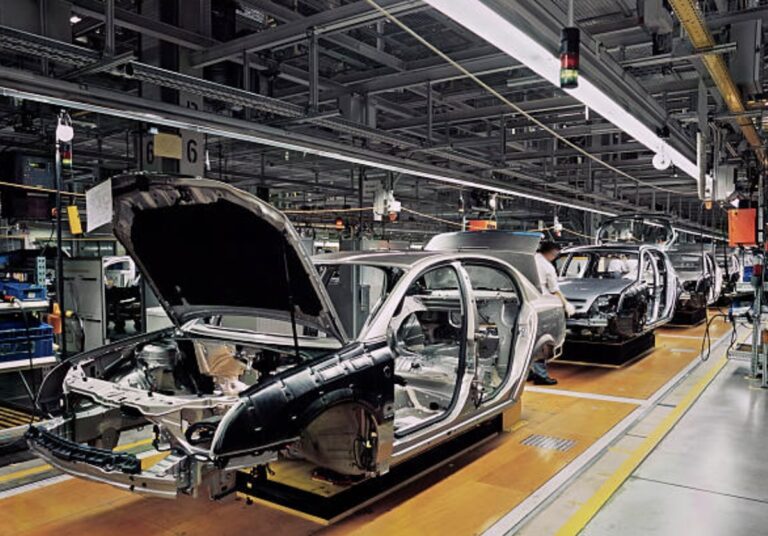
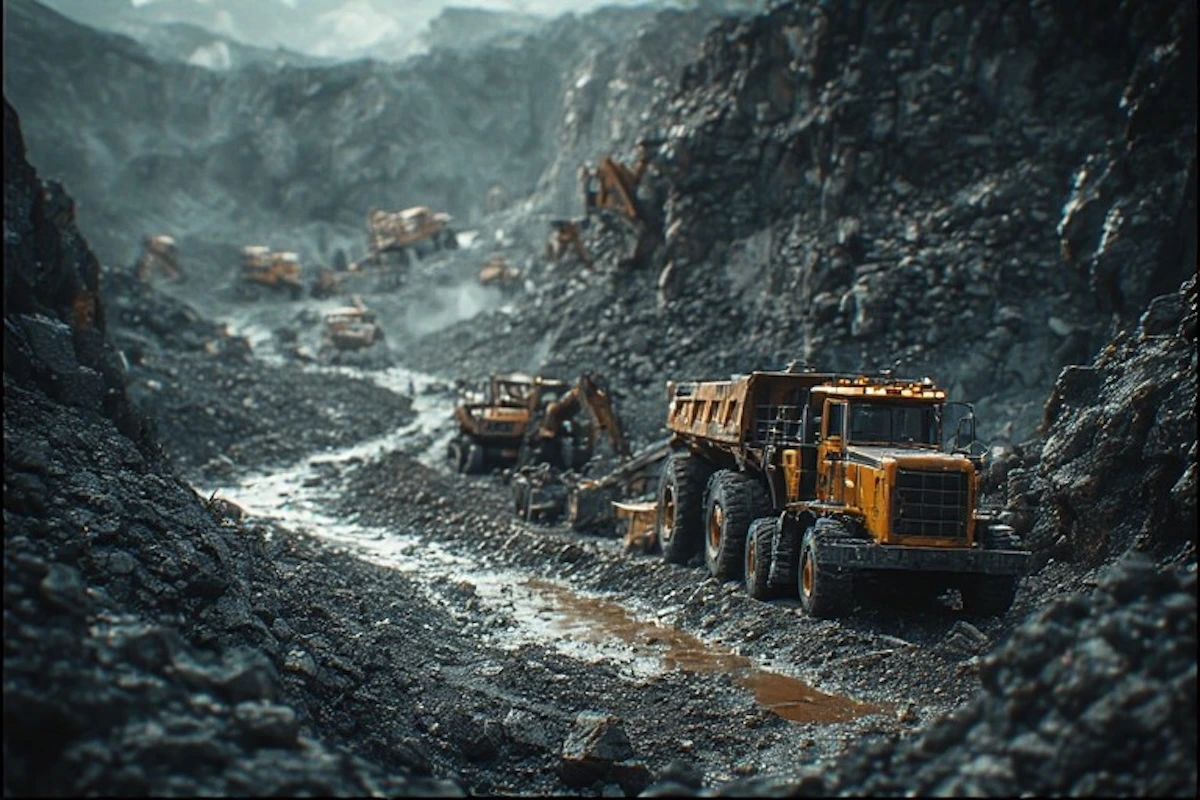
While traditional mining relies on natural deposits, urban mining utilizes anthropogenic resources. This distinction has significant implications:
- Environmental impact: Urban mining generally has a lower ecological footprint.
- Material concentration: Certain waste streams, such as e-waste, contain higher concentrations of valuable metals.
- Social considerations: Urban mining avoids many of the social challenges associated with conventional mining, including labor exploitation and community displacement (Hilson, 2010; Feichtner et al., 2019).
However, urban mining is not a complete substitute but rather a complementary strategy.
7. Challenges and Barriers
Despite its potential, urban mining faces several constraints:
- Technological challenges: Complex material compositions complicate recovery processes (Kiddee et al., 2013).
- Hazardous substances: Toxic components in e-waste require careful handling (Bodar et al., 2018).
- Market limitations: Underdeveloped markets for secondary materials hinder scalability (Caldera et al., 2020).
- Behavioral factors: Consumer reluctance to recycle reduces material availability (Bovea et al., 2018).
Addressing these barriers requires coordinated policy and technological innovation.
8. Urban Mining within the Circular Economy
Urban mining is a central component of circular economy systems, which aim to close material loops and minimize waste. Strategies such as eco-design, material passports, and sustainable procurement enhance the effectiveness of urban mining (Heinrich & Lang, 2019; Witjes & Lozano, 2016).
Institutional frameworks and governance structures also play a critical role in enabling circular practices (Scott, 1995).
9. Future Directions
The future of urban mining is shaped by technological advancements, policy support, and increasing demand for critical materials. Automation, artificial intelligence, and advanced recycling technologies are expected to improve efficiency and scalability.
Moreover, global initiatives focused on sustainability and supply chain resilience are likely to accelerate the adoption of urban mining practices (World Economic Forum, 2021).
10. Conclusion
Urban mining represents a transformative approach to resource management, shifting the paradigm from extraction to recovery. By leveraging existing material stocks within cities, it offers a pathway toward sustainable resource use, environmental protection, and economic resilience.
However, realizing its full potential requires overcoming technical, economic, and behavioral challenges. Future efforts should focus on innovation, policy development, and stakeholder engagement to integrate urban mining into mainstream resource systems.
References
Ajayi, S. O., Oyedele, L. O., Bilal, M., Akinade, O. O., Alaka, H. A., Owolabi, H. A., & Kadiri, K. O. (2015). Waste effectiveness in the construction industry: Barriers and improvement strategies. Resources, Conservation and Recycling, 102, 101–112.
Akcil, A., Sun, Z., & Panda, S. (2020). COVID-19 disruptions highlight vulnerabilities in tech-metal supply chains. Nature, 587.
Ali, S. H., Giurco, D., Arndt, N., Nickless, E., Brown, G., Demetriades, A., & Meinert, L. D. (2017). Resource governance and mineral supply for sustainable development. Nature, 543(7645), 367.
Allcott, H. (2011). Social norms and energy conservation behavior. Journal of Public Economics, 95(9–10), 1082–1095.
Awasthi, A. K., Li, J., Koh, L., & Ogunseitan, O. A. (2019). Electronic waste within the circular economy framework. Nature Electronics, 2(3), 86–89.
Bell, F. G., & Donnelly, L. J. (2006). Mining and its environmental impact. CRC Press.
Bodar, C., Spijker, J., Lijzen, J., Waaijers-van der Loop, S., Luit, R., Heugens, E., & Traas, T. (2018). Managing hazardous substances in circular systems. Journal of Environmental Management, 212, 108–114.
Bovea, M. D., Ibáñez-Forés, V., Pérez-Belis, V., & Juan, P. (2018). Consumer behavior toward end-of-life strategies for small electronic devices. Waste Management, 71, 589–602.
Caldera, S., Ryley, T., & Zatyko, N. (2020). Barriers and enablers for construction and demolition waste markets. Sustainability, 12(23), 9931.
Coluccia, C., Petitjean, L., Christensen, T. B., Simonsen, G., Kernel, P. K., & Buchard, M. V. (2023). Circular construction in Europe: A handbook for local and regional governments. CityLoops Project.
Debacker, W., Manshoven, S., Peters, M., Ribeiro, A., & De Weerdt, Y. (2017). Circular design in the built environment. In Proceedings of the HISER Conference on Recycling and Waste Management (pp. 114–117).
Feichtner, I., Krajewski, M., & Roesch, R. (2019). Human rights in the extractive industries. Springer.
Ghisellini, P., Ripa, M., & Ulgiati, S. (2018). Costs and benefits of circular economy in construction sectors. Journal of Cleaner Production, 178, 618–643.
Gu, F., Summers, P. A., & Hall, P. (2019). Advances in recovering materials from waste mobile phones. Journal of Cleaner Production, 237, 117657.
He, P., Feng, H., Hu, G., Hewage, K., Achari, G., Wang, C., & Sadiq, R. (2020). Life cycle cost analysis of recycling metals from mobile phones. Journal of Cleaner Production, 251, 119498.
Heinrich, M., & Lang, W. (2019). Material passports for circular construction systems. Technical University of Munich.
Hilson, G. (2010). Child labor issues in artisanal mining communities. Development and Change, 41(3), 445–473.
Hira, M., Yadav, S., Morthekai, P., Linda, A., Kumar, S., & Sharma, A. (2018). Metal content analysis of mobile phone waste. Journal of Hazardous Materials, 342, 29–40.
Kiddee, P., Naidu, R., & Wong, M. H. (2013). Overview of electronic waste management approaches. Waste Management, 33(5), 1237–1250.
Krook, J., & Baas, L. (2013). Urban mining and landfill resource recovery research review. Journal of Cleaner Production, 55, 1–9.
Nogueira, L. A., Lindeløv, B., & Olsen, J. (2023). Waste valorization and market systems. Business Strategy and the Environment, 32(4), 2261–2274.
Ongondo, F. O., & Williams, I. D. (2011). Mobile phone recycling systems and practices. Waste Management, 31(6), 1307–1315.
Robinson, B. H. (2009). Global impacts of electronic waste. Science of the Total Environment, 408(2), 183–191.
Ramos, M., Paiva, A., & Martinho, G. (2024). Stakeholder perceptions of selective demolition. Journal of Building Engineering, 82, 108353.
Scott, W. R. (1995). Institutions and organizations. Sage Publications.
Speake, J., & Yangke, L. (2015). Consumer attitudes toward mobile phone disposal. Human Geography, 9(2), 241.
Wang, Z., Zhang, B., & Guan, D. (2016). Responsibility in electronic waste disposal. Nature, 536, 23.
Witjes, S., & Lozano, R. (2016). Circular economy frameworks and sustainable business models. Resources, Conservation and Recycling, 112, 37–44.
World Economic Forum. (2021). Net-zero challenge: The supply chain opportunity. Geneva: WEF.
Zeng, X., Mathews, J. A., & Li, J. (2018). Urban mining as a viable alternative to traditional mining. Environmental Science & Technology, 52(8), 4835–4841.
Zhang, N., Hwang, B.-G., Deng, X., & Tay, F. (2024). Success factors in collaborative contracting for construction. Engineering, Construction and Architectural Management, 31(2), 919–938.
Zimmer, K., Fröhling, M., Breun, P., & Schultmann, F. (2017). Social risk assessment in global supply chains. Journal of Cleaner Production, 149, 96–109.