The Misconception That’s Costing Townsville Its Best Attractions
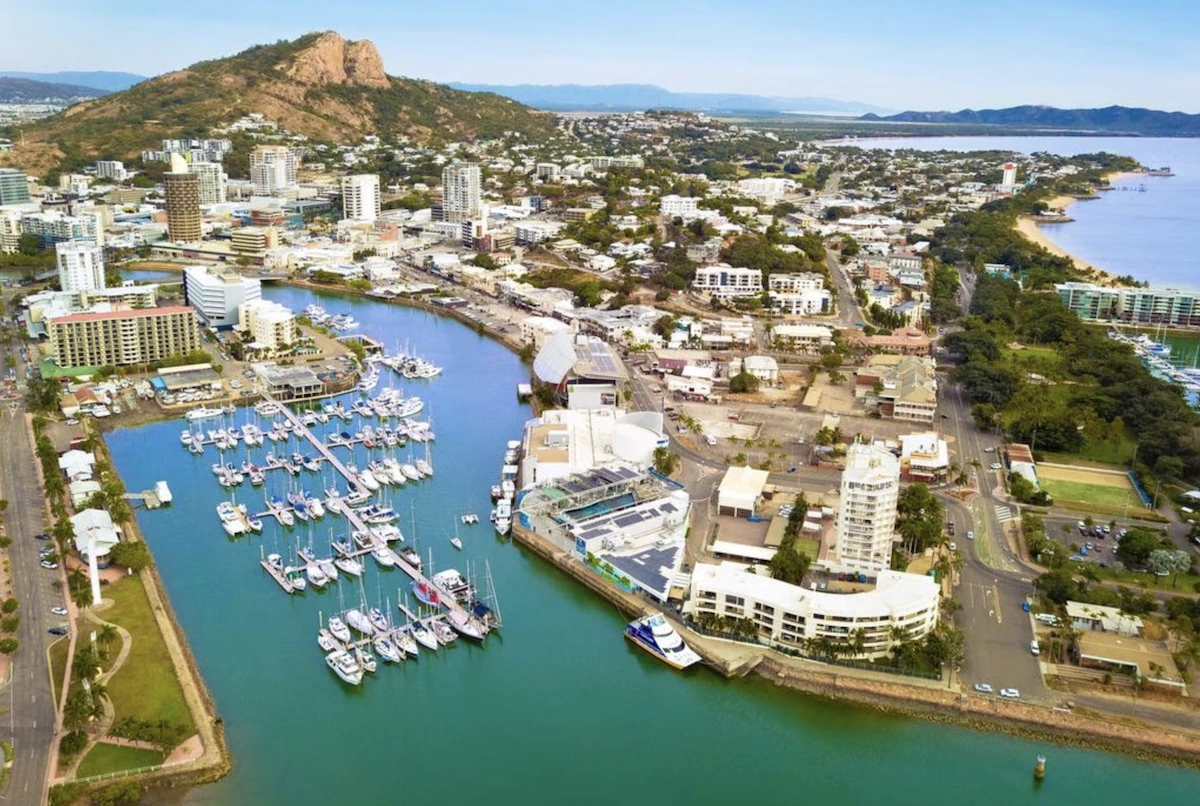
Say “Townsville” to most Australian travellers and you’ll get one of two reactions: a shrug, or “isn’t that just where you catch the ferry to Magnetic Island?” There’s a real and persistent misconception that Townsville is a functional stopover rather than a destination — somewhere to refuel before the reef, not somewhere worth building a trip around. It’s an understandable assumption. It’s also wrong, and the gap between that assumption and reality is exactly why Townsville’s actual highlights stay under-visited even as the wider region posts genuinely strong tourism numbers.
The numbers tell an interesting story on their own: overnight visitor expenditure in Townsville North Queensland hit $1.2 billion in the year to June 2024, up 10.3%, with overnight visitor numbers climbing 22.7% to 1.3 million. A tourism campaign launched in September 2025 has since driven a further 23.7% year-on-year jump in visitor numbers. People are clearly coming — the question this piece answers is whether they’re finding the things actually worth staying for. Below are the attractions that make the “nothing more to offer than the expected” line demonstrably false, organized by what kind of traveller each one suits, plus the honest caveats about weather, access and cost that most listicles skip.
Background: Why “Hidden Gem” Actually Fits Townsville
A city can be well-visited and still have hidden gems, if most of its visitors are passing through rather than exploring. Townsville sits at a genuine geographic crossroads — the gateway to the central Great Barrier Reef, a short ferry ride from Magnetic Island, and the largest city in tropical North Queensland — which means a large share of its visitor traffic treats it purely as a launch point. That’s the structural reason attractions inside and around the city itself stay overlooked: Castle Hill’s 360-degree views over the Coral Sea are frequented by more than 2,500 locals a day, yet plenty of reef-bound tourists never climb it. The city isn’t obscure. Its actual highlights are.
Geography matters here too. Townsville’s tropical climate runs a hot, wet season from December to March and a drier season from April to November, with the coolest, driest window — May through September — offering the best conditions for the outdoor and marine attractions below. Cyclones are a genuine risk from mid-November through mid-May, peaking late December to late March, which is worth knowing before booking anything weather-dependent.
Underwater and Marine: Attractions That Don’t Show Up on a Standard Itinerary
The Museum of Underwater Art
MOUA is the only underwater museum in the Southern Hemisphere, built around sculptures by internationally renowned artist Jason deCaires Taylor. The Ocean Siren — a 4-metre, colour-changing statue installed just off The Strand — is visible without a wetsuit or dive certification, since it partially breaches the surface and can be viewed from the shore or a paddleboard. Further out, the Coral Greenhouse and Ocean Sentinels installations at John Brewer Reef double as artificial coral structures, actively supporting reef restoration rather than just looking striking in photos. It’s a rare case of an attraction that works for casual visitors and serious divers simultaneously.
The SS Yongala
For divers specifically, the SS Yongala is arguably Townsville’s least-known major drawcard, despite being ranked among the world’s best wreck dives. The 110-metre luxury steamship sank in a cyclone in March 1911 with all 122 people aboard, and its wreck went undiscovered until 1943, only conclusively identified in 1961 via its recovered safe. It now draws more than 10,000 divers a year to a site about 89km southeast of Townsville, protected under the Historic Shipwrecks Act 1976 — meaning penetration diving is prohibited, but the exterior teems with turtles, rays, sea snakes, giant gropers and barracuda. It’s recommended for advanced divers only, given the depth and currents, which is likely a meaningful reason it hasn’t become as mainstream a name as the Great Barrier Reef itself.
Culture and History: The Story Most Reef Visitors Skip
Jezzine Barracks (Garabarra)
Jezzine Barracks sits on Kissing Point headland along The Strand and layers two histories most visitors never connect: it’s the traditional Country of the Wulgurukaba people, who used the site as a common food-foraging area for thousands of years before European settlement, and it’s also a former military fort in continuous use from 1885 to 2006. The 15-hectare heritage precinct now houses 32 commissioned public artworks, an ethno-botanical walk of traditional plantings, and a coastal boardwalk connecting Rowes Bay to The Strand — a genuinely free, self-guided way to engage with both Aboriginal cultural heritage and colonial military history in a single walk, which is a combination few Australian coastal cities offer this accessibly.
Nature and Wildlife: Beyond the Reef
Paluma Range National Park and Wallaman Falls
Paluma Range National Park, about 80km north of Townsville, contains the southernmost patch of rainforest in Australia, along with waterfalls, creeks and swimming holes. Further inland, Wallaman Falls is Australia’s tallest single-drop waterfall, plunging 268 metres into a rainforest gorge — a genuine natural landmark that doesn’t get the national profile of, say, Uluru or the Twelve Apostles, largely because of its regional location.
Billabong Sanctuary and TYTO Wetlands
Billabong Sanctuary offers hands-on wildlife encounters with koalas, crocodiles and kangaroos closer to the city, while the TYTO Wetlands — a 120-hectare rehabilitated wetland with a raised boardwalk — is home to more than 240 bird species along with turtles, wallabies and crocodiles, and costs nothing to visit.
Magnetic Island and Cape Cleveland
Magnetic Island (Yunbenun) is well known as a ferry-ride day trip, with 23 beaches and a laid-back, koala-spotting reputation. Less visited is Cape Cleveland, offering quieter beaches, a historic lighthouse and coastal trails without Magnetic Island’s day-tripper crowds — a genuine alternative for travellers who find the more popular island getting busy.
A Reasonable Objection: Is Townsville Actually “Hidden”?
It’s fair to push back on calling any of this “hidden.” Townsville recorded 1.3 million overnight visitors in the year to June 2024 and is Australia’s largest tropical city — that’s not an obscure destination by any reasonable definition, and a skeptical reader could argue the “hidden gem” framing is just travel-content marketing applied to a city that’s already thoroughly on the map.
That’s a fair point, but it conflates two different things: a city being visited and a city’s specific attractions being explored. Most of Townsville’s visitor volume is reef-adjacent or Magnetic-Island-adjacent traffic passing through the city rather than spending time in it — which is exactly why Castle Hill, with 2,500 daily local visitors, doesn’t see anywhere near that volume of tourists, and why the SS Yongala, despite being one of the world’s best wreck dives, draws a comparatively modest 10,000 annual divers rather than reef-scale crowds. “Hidden” here means overlooked relative to the city’s own visitor traffic, not literally undiscovered — a meaningfully narrower and more defensible claim than the framing might initially suggest.
Data & Evidence Summary
| Attraction / Metric | Detail |
|---|---|
| Overnight visitor expenditure, Townsville North Queensland | $1.2 billion (year to June 2024), +10.3% YoY |
| Overnight visitors | 1.3 million (year to June 2024), +22.7% YoY |
| Recent campaign impact | +23.7% YoY visitor growth since September 2025; $37.7m in visitor spend |
| Castle Hill daily local visitors | 2,500+ per day |
| SS Yongala annual divers | 10,000+ |
| SS Yongala distance from Townsville | ~89km (48 nautical miles) southeast |
| Wallaman Falls height | 268 metres (tallest single-drop waterfall in Australia) |
| Paluma Range distance from Townsville | ~80km north |
| Jezzine Barracks heritage precinct size | 15 hectares, 32 commissioned artworks |
| TYTO Wetlands size / bird species | 120 hectares; 240+ species recorded |
| Best time to visit (weather) | May–September (dry season, lowest rainfall) |
| Cyclone risk window | Mid-November to mid-May (peak late Dec–late March) |
Methodology note: visitor and expenditure figures are drawn from Townsville Enterprise and Tourism and Events Queensland reporting; attraction-specific facts (heights, distances, visitor counts, historical dates) are compiled from tourism-board sources (Townsville North Queensland, Queensland.com) and, for the SS Yongala, cross-checked against its Wikipedia entry and specialist diving publications.
Why This Matters Now
For travellers, the practical takeaway is timing: the dry season (May–September) aligns with both the best conditions for outdoor attractions like Paluma Range and Wallaman Falls, and the region’s own peak tourism months, so booking accommodation and dive charters earlier in that window is worth prioritizing given the area’s recent visitor growth.
For the region’s tourism strategy, the data suggests the current campaign-driven growth (23.7% YoY since September 2025) is an opportunity to redirect some of that new visitor volume away from a purely reef-and-island itinerary and toward city-based and cultural attractions like Jezzine Barracks and the Street Art Trail, which currently see comparatively light footfall relative to the region’s overall visitor numbers.
Counterpoints and Limitations
Some of the more remote attractions carry real access constraints this piece hasn’t glossed over: the SS Yongala is recommended for advanced divers only due to depth and current, and Wallaman Falls and parts of Paluma Range require a car and, in wet-season months, road conditions that can limit access. Neither is a casual, no-planning day trip.
The visitor-growth figures cited here reflect the broader Townsville North Queensland region, not city-specific attraction visitation, so this piece can’t confirm precisely how much of that growth is reaching the specific sites discussed above versus reef tours and Magnetic Island alone.
Finally, cyclone season (November–May) genuinely overlaps with several of these attractions’ accessibility, and this piece recommends checking current conditions and park closures before travel in that window rather than treating the destination as reliably open year-round.
Conclusion
Townsville’s problem was never a shortage of things worth doing — it’s that most of its visitors have been moving through the city rather than into it. An underwater museum unlike anything else in the Southern Hemisphere, one of the world’s great wreck dives, a heritage site that holds thousands of years of Wulgurukaba history alongside more than a century of military use, and Australia’s tallest waterfall within a day’s drive are not “expected” attractions by any reasonable measure. The next phase of the region’s tourism growth likely depends less on getting more people to Townsville, which is already happening, and more on getting the people already there to actually stop.
FAQ
What is the best time of year to visit Townsville?
May through September, Townsville’s dry season, offers the lowest rainfall and best conditions for outdoor attractions like waterfalls and national parks; it also falls within the region’s peak tourism months.
Is the SS Yongala suitable for beginner divers?
No. It’s recommended for advanced, experienced divers only, due to depth (up to 30 metres to the sea floor), strong currents, and its Great Barrier Reef Marine Park location roughly 89km from Townsville.
Is Jezzine Barracks free to visit?
Yes. The 15-hectare heritage precinct, including its coastal boardwalk, artworks and ethno-botanical walk, is open to the public at no cost.
How far is Wallaman Falls from Townsville?
Wallaman Falls sits inland from Paluma Range, which begins roughly 80km north of Townsville; it’s Australia’s tallest single-drop waterfall at 268 metres.
Is Townsville just a stopover for the Great Barrier Reef?
Not by attraction quality, though it’s often treated that way. Townsville has its own dedicated draws — including MOUA, the SS Yongala, and Jezzine Barracks — that don’t require a reef trip at all.