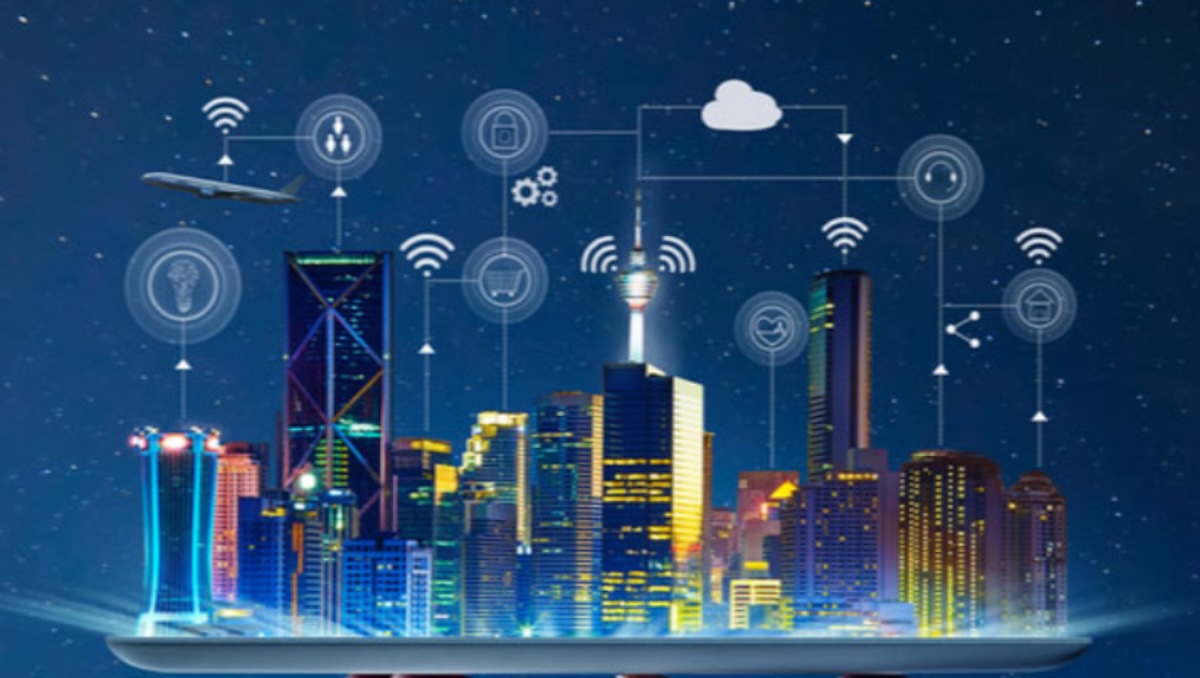
A Day in the Smart City
Imagine waking up in a city where your alarm is set not just by time, but by traffic patterns—you leave later because sensors flagged a gridlock. During breakfast, your home auto‑adjusts power and temperature via a networked system. As you drive, traffic lights request your arrival to optimize flow; public transportation adapts in real time. Your city monitors air quality, water usage, and waste collection to prevent inefficiencies.
This isn’t a sci‑fi movie—it’s the vision of a smart city, and it’s unfolding across America.
What is a Smart City?
A smart city is an urban area that uses information and communications technology (ICT), Internet of Things (IoT), data analytics, AI, and other modern tech to make infrastructure and services more efficient, sustainable, responsive, and livable. Key goals include:
- Improving transportation (reducing congestion, optimizing public transit)
- Enhancing utility operations (energy, water, waste)
- Increasing public safety (crime detection, emergency response)
- Environmental sustainability (pollution monitoring, green buildings)
- Better citizen engagement (feedback loops, open data)
Core Smart City Technologies
Here are some of the tech building blocks behind a smart city:
- IoT Sensors & Devices: Embedded sensors measure traffic, air quality, noise, water leaks, etc.
- High‑Speed Connectivity (5G, Fiber, etc.): For real‑time data transmission among sensors, vehicles, control centers.
- Edge & Cloud Computing: Some data processed near the source (edge) for speed; large scale storage/analysis done in the cloud.
- Big Data & Analytics / AI & ML: To find patterns, forecast issues (storms, traffic), optimize routing, energy usage.
- Smart Infrastructure: Smart streetlights, smart power grids, smart water meters, buildings with embedded controls.
- Autonomous & Connected Systems: Self‑driving or assisted vehicles, networked traffic lights, logistics hubs.
Smart City Data Management
Data is the lifeblood of a smart city. Managing it well is what lets the technologies deliver real benefit. Key aspects:
- Data Sources & Types
- Real‑time sensor / device data (traffic, environment, utilities).
- Infrastructure maps, transit schedules, administrative data.
- Citizen inputs (apps, surveys), usage data.
- Integration & Interoperability
- Avoid siloed systems. For example, traffic, weather, public transit, emergency services need to share data for better decisions.
- Standards, APIs, open data portals help.
- Storage, Processing & Analytics
- Some data is huge and continuous (video feeds, sensor streams). Need scalable storage and efficient processing.
- Edge computing helps reduce latency and bandwidth.
- Privacy, Security, Ethics
- Ensuring personal data is anonymized or protected.
- Guarding against cyber‑attacks.
- Transparency about what data is collected and how used.
- Governance & Policy
- Clear regulations and oversight.
- Long‑term budget and maintenance.
- Citizen engagement and equitable access.
How Many Smart Cities Are There in the U.S.?
This depends on how you define “smart city” (pilot project vs full‑scale deployment). Some relevant data points:
- A large portion of U.S. municipalities are now investing in smart city technology. For example, a 2017 survey indicated two‑thirds have a strategy for implementing at least some smart tech.
- There are dozens of cities (large, medium, small) with substantial smart city programs (e.g. smart grids, smart transit, IoT sensors).
- Leading indexes rank cities like San Francisco, New York, Seattle, Washington D.C., Chicago as among the most prepared or advanced.
There is no authoritative count that everyone agrees on (because of varying definitions), but estimates suggest tens to low hundreds of U.S. cities have meaningful “smart city” elements—and many more are planning or piloting.
Ongoing Smart City Projects in the U.S.
Some examples of what’s happening now:
- Columbus, Ohio (“SmartColumbus”): Has implemented smart transportation, EV charging, and environmental monitoring among other initiatives.
- Numerous cities are integrating smart infrastructure: intelligent traffic systems, smart lighting, sensors for utilities.
- Ranking efforts (e.g. studies by tech/urban planners) are identifying which U.S. cities are most ready for smart futures. Cities like Seattle, Miami, Austin score high in infrastructure readiness.
Bill Gates’ Smart City: Belmont, Arizona — What’s the Status, and When Will It Be Done?
Belmont is one of the most talked‑about planned smart cities in the U.S., thanks to Bill Gates’ involvement via his investment firm(s). Here’s what’s known:
| Feature | What is planned / known |
|---|---|
| Size & Scope | About 24,800 acres near Phoenix, Arizona. The plan includes ~80,000 residential units, public schools on ~470 acres, commercial/office/retail space (~3,800 acres), and open space. Population estimates range around 160,000‑182,000 people (similar to Tempe, AZ). |
| Tech & Design Vision | High‑speed embedded internet, autonomous vehicles compatibility, networked infrastructure, data centers, logistics hubs. |
| Challenges | Water supply is a major concern (this is Arizona, with existing water stresses). The project must demonstrate water sustainability for 100 years. Also, regulatory approvals, infrastructure (roads, utilities), environmental factors (wildfire risk, ecosystem), financing, community buy‑in. |
| Timeline / Completion Date | No publicly confirmed completion date. As of latest reports, no ground has clearly broken in full scale, and project is still largely in planning and conceptual stages. |
So, while Belmont is ambitious, it remains a vision rather than a finished or near‑finished smart city.
Why Some Smart Cities Succeed (and Others Don’t)
Stories of success and failure show what matters:
- Strong foundational infrastructure (power, water, broadband) is necessary. Without reliable basics, advanced tech doesn’t help.
- Clear leadership & governance: transit, utilities, public health, tech divisions need to align.
- Funding beyond initial build‑out: operations, maintenance, upgrades cost money.
- Citizen input, equity & trust: privacy concerns; avoiding digital divide.
- Environmental constraints: water, wildfire risk, land use, regulatory constraints.
What to Watch For in the Smart City Future
- More digital twins (virtual models of cities) used for planning and managing infrastructure.
- Increased use of renewable energy, smarter water systems especially in drought or climate‑stress areas.
- Autonomous public transit & vehicle networks where allowed.
- Standardization of data policies, privacy rules, open data.
- Greenfield smart city development (like Belmont) vs retrofitting existing cities — both paths will occur, but challenges differ.
Smart City Elements
“Smart city” isn’t a fixed endpoint—it’s a process. Many U.S. cities already have smart elements; some are deeply embedded, others are pilot projects. Planned cities like Belmont show what’s possible when you start from scratch, but they also highlight the long timeline, regulatory and environmental obstacles, and need for sustainable resource planning.
For American residents, the impact is tangible: less traffic, cleaner air, better public services, more resilient infrastructure. But it will take time—sometimes decades—for all the promised benefits of smart cities to fully materialize.