Imagine you’re the head of marketing for a growing coffee chain. You have a brilliant idea: a new loyalty program that offers a free pastry after every ten purchases. You launch it, and sales soar by 15% over the next quarter! You’re a hero, right?
But wait. What if a famous food blogger just happened to feature your coffee the same week you launched? What if the weather was unseasonably cold, driving more people to seek hot drinks? What if your 15% sales bump was happening in a neighborhood where three new office buildings just opened?
How can you know, with absolute certainty, that your loyalty program was the real reason for the success?
This is the million-dollar question in business. And the million-dollar answer is a deceptively simple concept from the world of science: the control group.
What is a Control Group? The “Do Nothing” Group That Tells You Everything
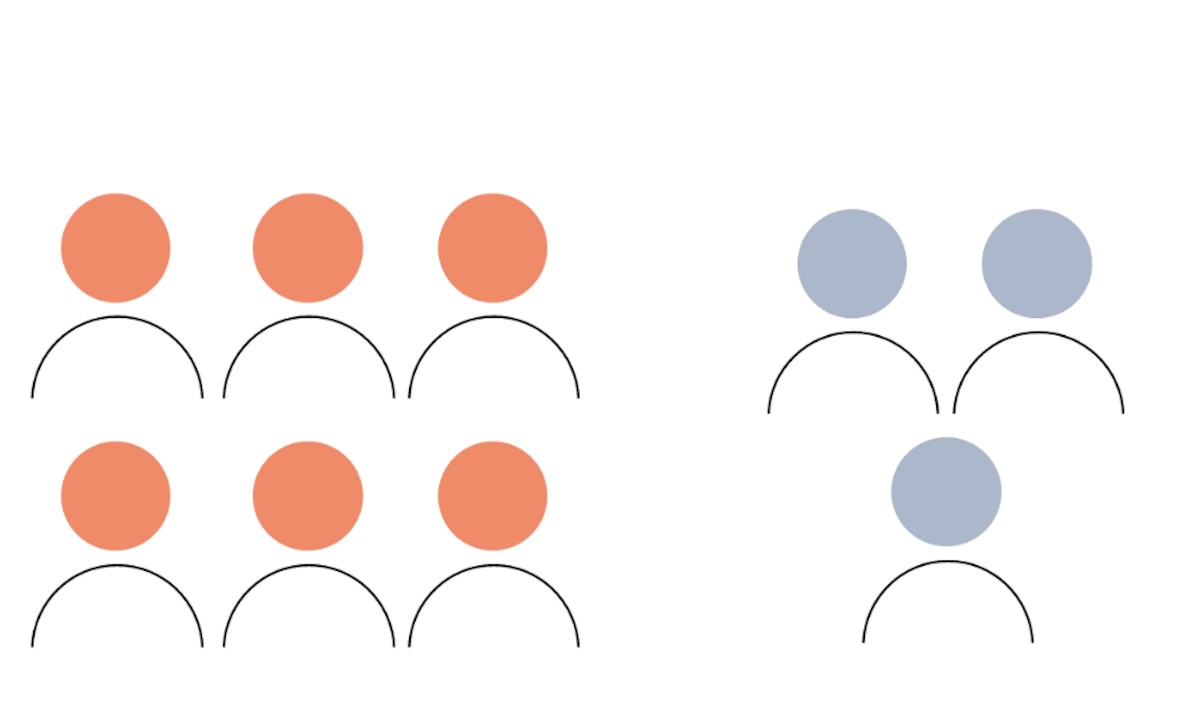
In its simplest terms, a control group is the baseline in an experiment that does not receive the treatment or change you are testing. It’s the “business as usual” group you hold back for comparison.
Think of it like this: You have two identical plots of land to test a new fertilizer.
- Group A (The Test Group): Gets the new miracle fertilizer.
- Group B (The Control Group): Gets the same amount of water and sun, but no new fertilizer—just the old stuff or nothing at all.
If the plants in Group A grow significantly taller than those in Group B, you can confidently say the new fertilizer worked. Without Group B, you’d just have taller plants and a bunch of guesses as to why (more rain? sunnier days? better seeds?).
In business, your “fertilizer” is your new marketing campaign, website redesign, email subject line, or loyalty program. Your “plants” are your customers, and their “growth” is their behavior—clicks, purchases, sign-ups, etc.
Why Your Business Absolutely Needs a Control Group
Skipping a control group is like flying a plane blindfolded. You might be moving, but you have no idea if you’re climbing, descending, or about to hit a mountain. Here’s why it’s non-negotiable:
- It Kills Assumptions: It moves you from “I think this worked” to “I know this worked.” It replaces gut feelings with cold, hard data.
- It Saves You Money: That fancy new website redesign might have cost $50,000, but if you test it against the old one (the control) and find it didn’t increase conversions, you just saved yourself from rolling out a costly failure.
- It Reveals Unexpected Truths: Sometimes, the change you make actually makes things worse. A control group will stop you from accidentally harming your own business. For example, a new email campaign might seem successful, but if the control group (that didn’t get the email) makes more purchases, your campaign might have been annoying customers.
Control Groups in Action: Real-World Marketing Examples
Let’s make this concrete. How do you actually use this?
Example 1: The Email Marketing Campaign
- Test: You want to test a new subject line to improve open rates.
- How to do it: Split your email list into two random segments.
- Group A (Test): Receives the email with the new subject line: “Your Exclusive 50% Offer Inside!”
- Group B (Control): Receives the same email with the old, standard subject line: “Newsletter from [Your Company]”
- The Result: If Group A has a 40% open rate and Group B has a 20% open rate, you have clear proof your new subject line doubled performance. Without the control, you’d just see a 40% open rate with no basis for comparison.
Example 2: The Pricing Page Redesign
- Test: Your design team has a new layout for your pricing page that they believe will reduce confusion and increase sign-ups.
- How to do it: Use website A/B testing software to randomly show visitors one of two pages.
- Group A (Test): Sees the new, shiny pricing page.
- Group B (Control): Sees the original pricing page (this is your control group).
- The Result: You can directly compare the conversion rates of the two groups. The control group provides the definitive benchmark for what “normal” performance looks like.
Example 3: The Social Media Ad Campaign
- Test: You’re running a targeted ad on Facebook to drive traffic to a new product.
- How to do it: Facebook’s algorithm automatically handles this. It shows your ad to a targeted audience (the test group) and simultaneously compares its performance to a similar audience it didn’t show the ad to (the control group). This allows it to calculate “lift”—the true incremental impact of your ad.
How to Set Up a Effective Control Group: A Simple Checklist
- Define Your Goal: What are you trying to improve? (e.g., click-through rate, conversion rate, average order value).
- Isolate One Variable: Only test one thing at a time. Testing a new subject line and a new email design at once won’t tell you which change drove the result.
- Randomize and Split: This is critical. Your test and control groups must be randomly selected and large enough to be statistically significant. They need to be as identical as possible to ensure a fair fight.
- Run the Test Simultaneously: Run both groups at the exact same time to eliminate the impact of external factors like holidays, weather, or news events.
- Measure and Compare: Analyze the results by comparing the performance of your test group against your control group baseline.
Stop Guessing, Start Knowing
In today’s data-driven world, using a control group is not a nice-to-have—it’s a fundamental practice for any business that wants to grow intelligently and sustainably. It’s the key that unlocks true understanding of your customers and the effectiveness of your strategies.
So, the next time you have a “brilliant” idea, don’t just launch it and hope. Be a scientist. Embrace the control group. It’s the single most powerful tool you have to turn marketing guesses into business certainty.