
Netflix’s The Electric State has made waves for several reasons—chief among them being its hefty price tag of over $300 million, making it the most expensive film the streaming giant has ever produced. Directed by Joe and Anthony Russo, best known for their work on the Avengers series, this movie is poised to join the ranks of high-budget cinematic milestones. However, despite its sky-high budget and star-studded backing, The Electric State reveals deeper issues with Netflix’s content strategy that could have long-term implications for both the streaming giant and its audience.
A Movie with a Monumental Budget
When Orson Welles first laid eyes on a movie studio, he famously called it “the biggest electric train set any boy ever had.” With a budget surpassing $300 million, Netflix’s The Electric State makes Welles’ analogy look quaint in comparison. However, despite the immense resources poured into the project, this movie seems to showcase a far more troubling reality: money isn’t always the solution for creativity and originality.
The Russo brothers, with their experience crafting two of the most financially successful films ever—Avengers: Infinity War and Endgame—clearly have the skill to manage massive budgets. Yet, The Electric State doesn’t seem to enjoy the same level of inventiveness. While it certainly looks expensive, the real problem lies in the lack of imagination and emotional depth that should come with such a hefty price tag.
A Dystopian Setting with Familiar Tropes

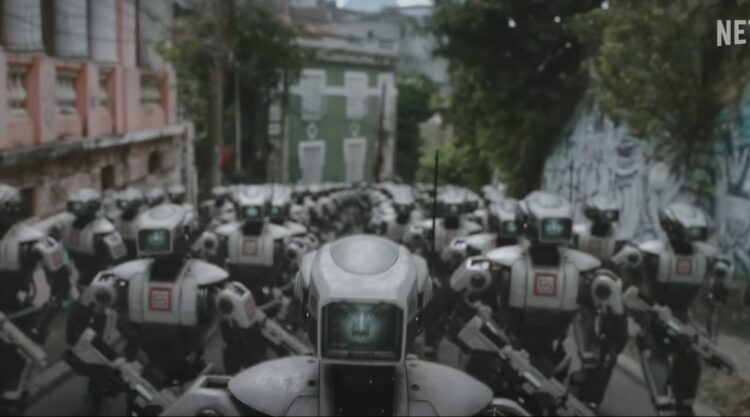
Set in an alternate 1990s where robots are a ubiquitous part of daily life, The Electric State follows a teenage girl, Michelle, played by Millie Bobby Brown, who embarks on a journey to find her long-lost brother. The premise, while promising, is marred by weak execution. The world-building seems more like a patchwork of past cinematic styles and tropes rather than something fresh and original.
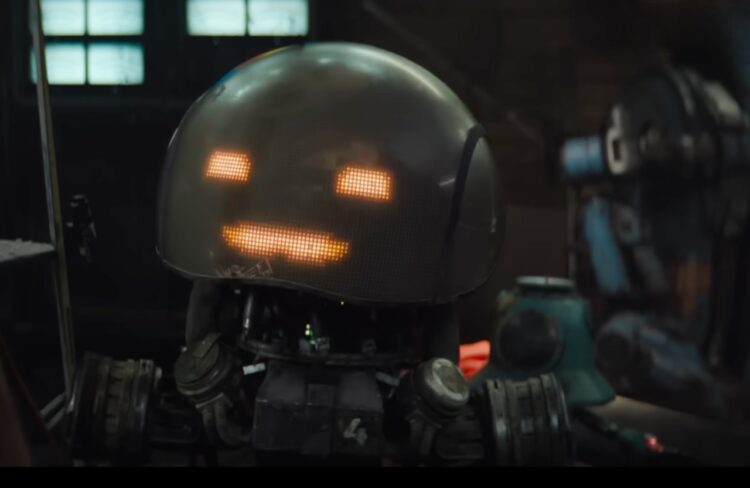
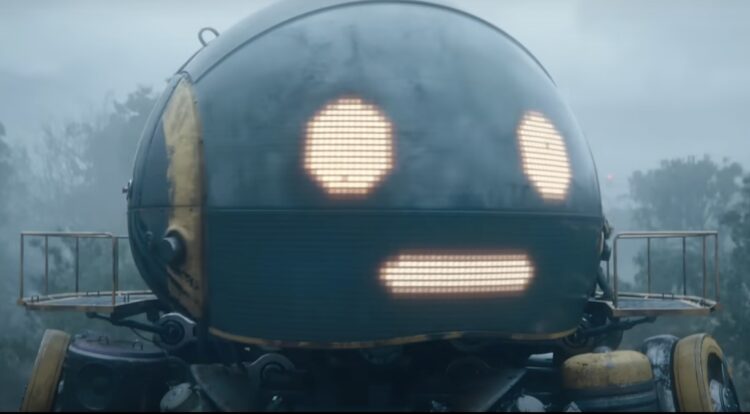
The Electric State introduces quirky machines, such as a robot mascot with a monocle, and strange interactions, including mechanical popcorn buckets and a chatty barbershop chair. The idea of self-aware robots and humans manipulating exoskeletons from afar should provide opportunities for deep philosophical questions or humorous moments. Instead, the movie lacks the emotional resonance of similar futuristic tales and seems to rely on spectacle to carry the narrative forward.
The Problem with Pastiche Over Originality
One of the most glaring issues with The Electric State is its lack of original storytelling. The Russos, who have made their mark with the Marvel Cinematic Universe, seem to rely heavily on pastiche—the act of reusing familiar pop-culture references and intellectual property to fill the gaps in their own creative process. However, the problem lies in their inability to transform these references into something meaningful or new.
The movie’s world is a collage of 1990s nostalgia, pop-culture relics, and corporate mascots, but there’s little sense of novelty. Instead of making the setting a dystopia full of dark consumerist satire, as a filmmaker like Paul Verhoeven might, the Russos have taken a more family-friendly approach reminiscent of 1980s Spielberg films, but without the same emotional depth. The attempt to bring humor to dark themes falls flat, with characters engaging in sarcastic dialogue that feels more like a forced attempt at quirkiness than actual wit.
Underutilized Characters and Missed Emotional Beats
While The Electric State boasts impressive visuals and world-building, it falters when it comes to character development. Michelle’s journey, which could have been an emotional anchor for the story, instead feels hollow. The film rushes past significant emotional moments—like Michelle’s struggle with the idea that her brother may still be alive—without ever truly exploring the grief and hope that would come with such a discovery. This lack of depth undermines the stakes of her journey and makes it difficult for audiences to connect with the story.
The Streaming Giant’s Content Dilemma
At the heart of The Electric State’s failure is a larger issue with Netflix’s content strategy. The streaming platform is increasingly investing in blockbuster films, hoping to rival traditional movie studios with high-budget projects. Yet, as seen with The Electric State, throwing money at a film doesn’t necessarily guarantee quality content.
Netflix’s reliance on high-budget spectacle may seem like a strategy to attract global audiences, but it overlooks the importance of creativity and originality. With The Electric State, Netflix gambled on name recognition—the Russo brothers’ involvement and a massive budget—without fully considering whether the film’s underlying story or characters would resonate with viewers.
Will The Electric State Succeed or Fail?
While it’s impossible to predict the immediate success of The Electric State, one thing is certain: Netflix’s model needs adjustment. Big budgets alone can’t carry a movie, especially when creativity takes a backseat to pastiche and spectacle. The Russos, despite their massive success in the Marvel franchise, seem out of their depth when crafting an entirely original story for Netflix.
The Electric State may draw in viewers initially with its extravagant visuals, but its failure to create a compelling and emotionally engaging narrative could hurt Netflix in the long run. Audiences are becoming more discerning, and they are likely to seek out movies that offer more than just flashy special effects. The streaming giant may need to rethink its content approach, focusing not only on star power and budgets but on stories that resonate deeply with audiences.
A Cautionary Tale for Big-Budget Filmmaking
Netflix’s The Electric State stands as a cautionary tale in the world of big-budget filmmaking. Despite the Russos’ pedigree and a reported budget north of $300 million, the movie fails to deliver the innovation and emotional depth that viewers expect from such a colossal investment. It’s a reminder that quality storytelling should always be the cornerstone of cinematic success, regardless of the size of the budget.
As Netflix continues to pour resources into blockbuster projects, the question remains: will they focus more on genuine creativity and emotional connection, or will they continue to rely on massive budgets and familiar formulas that ultimately fall short of audience expectations?