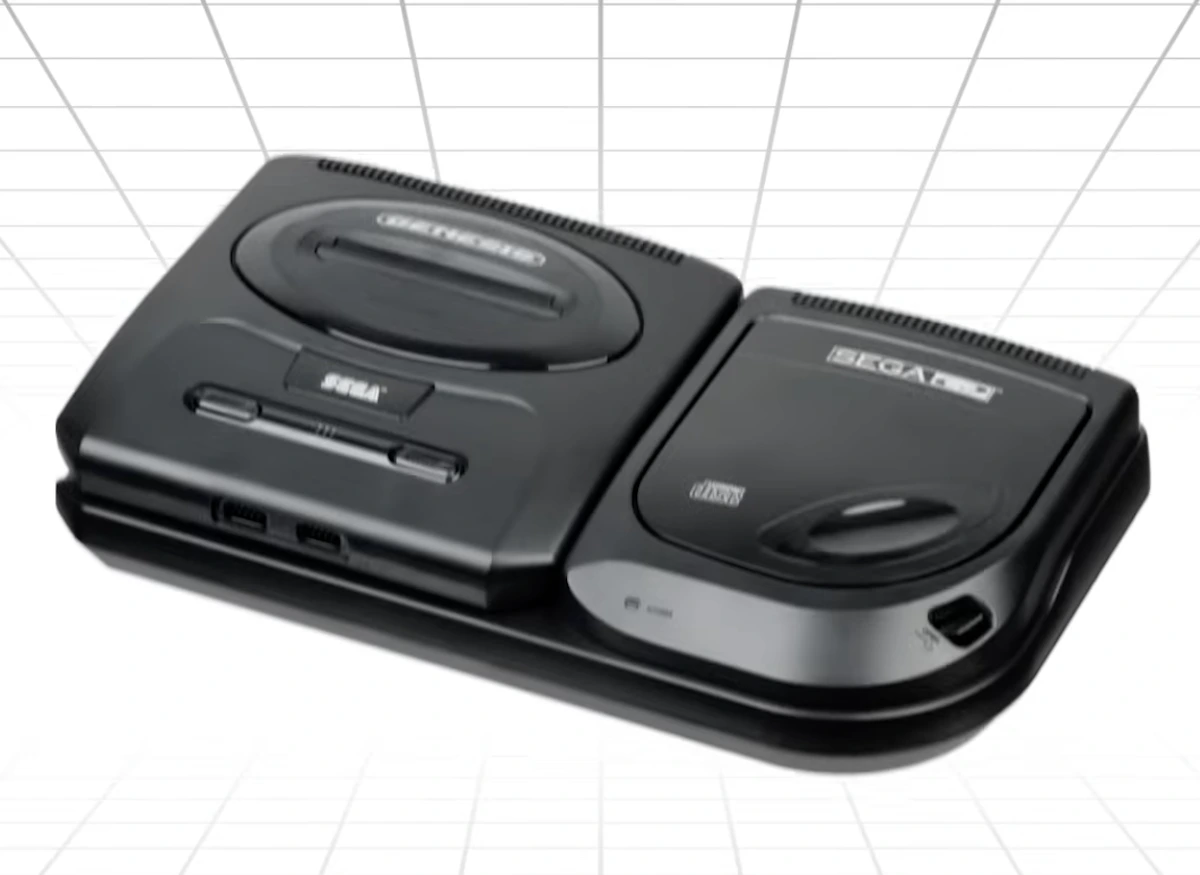
By the late 1980s, Sega had done what once seemed impossible: it beat Nintendo at its own game. The Genesis outran the NES by two years, Sonic the Hedgehog gave the company a mascot with real cultural teeth, and for a few years Sega and Nintendo were the only two names that mattered in home consoles. Then, across roughly six years, Sega made a series of decisions that handed its own market away — first to a partner it turned down, then to a rival it helped create.
This is not a story about a company being out-innovated. Sega’s engineers built genuinely strong hardware, and the Sega Saturn outsold its early rival in Japan. The collapse came from somewhere else: corporate decisions made in Tokyo that ignored warnings from Sega’s own American executives, an unwillingness to share control with outside partners, and a retail rollout that managed to anger nearly the entire industry it depended on. The result is one of the more thoroughly documented case studies in how a market leader can dismantle itself without a rival laying a finger on it.
Sega’s Rise Before the Fall
Sega’s console business took two attempts to find traction. The SG-1000 (1983) and Master System (1985) barely registered against Nintendo’s dominance in Japan and the US. The turnaround came with the 16-bit Mega Drive, released in Japan on October 29, 1988, roughly two years ahead of Nintendo’s Super Famicom/Super NES. Rebranded as the Genesis in North America on August 14, 1989, the console combined a genuine hardware lead with a mascot, Sonic the Hedgehog, built to signal something Nintendo’s family-friendly image didn’t: speed, attitude, and a slightly older audience.
For several years this worked. Genesis and Super NES effectively split the market between them, and Sega — for the only sustained stretch in its history — operated as a co-equal to Nintendo rather than a challenger. That position depended on continued innovation, and Sega’s leadership, under company president Hayao Nakayama, knew it. The instinct that followed — extend the Genesis rather than replace it — is where the trouble starts.
Core Analysis
The Add-On Era: Sega CD and 32X
Claim: Sega’s decision to extend the Genesis with add-ons instead of moving directly to a new console fragmented its own audience and burned through development goodwill before the Saturn ever launched.
Evidence: The Sega CD (1991) attempted to move Genesis games from cartridges to the higher-capacity CD format, but attracted a thin library because third-party developers had little incentive to build for an add-on rather than a full console. The 32X (1994) tried to bridge Genesis owners into 32-bit gaming via a cartridge-slot adapter; Sega manufactured about 800,000 units and sold an estimated 665,000 by the end of 1994, discounting the rest before discontinuing the line in 1996. Reporting on the 32X’s failure consistently cites a threadbare launch library — Sega had promised as many as 60 games in the first year but the system launched in the US with only two, Doom and Star Wars Arcade, and fewer than 40 were ever released in total.
Interpretation: Both products suffered from the same structural problem: developers didn’t know whether to build for the existing Genesis, the add-on, or the fully separate 32-bit console (Saturn) Sega was known to be preparing simultaneously. That uncertainty pushed studios toward the safest option, which was often none of the above.
Limitation: Hardware add-ons were not a uniquely bad idea in the era — CD-based expansion was a genuinely important technological shift, and the underlying Sega CD hardware was later reused as the technical basis for renewed talks with Sony. The failure was less about the concept and more about sequencing and communication with developers.
The Partnership Sega Walked Away From
Claim: Sega had a credible path to a joint console with Sony in the early 1990s and turned it down, directly enabling the creation of the original PlayStation.
Evidence: Around 1992, Sega and Sony explored jointly developing CD-based console hardware, an idea reportedly initiated at the suggestion of Sega chairman Isao Okawa to Sony president Norio Ohga. Sega of America executives, including CEO Tom Kalinske, were engaged in talks with Sony’s US software and hardware leadership about combining Sony’s software strength with Sega’s console platform. Sega of Japan, under Nakayama, ultimately declined, with internal accounts pointing to concern that a much larger Sony (with sales several times Sega’s own) would end up controlling the relationship. Sony proceeded independently and released the PlayStation in Japan in December 1994, then in the US in September 1995 at $299.
Interpretation: This is the single decision most retrospective accounts treat as the pivotal error. Sega’s own hardware and CD know-how effectively primed Sony to become a console maker; the coding-friendly, single-CPU architecture that helped the PlayStation win over developers was built by a company Sega had specifically declined to share a platform with.
Limitation: Hindsight bias is a real risk here. In 1992–93, Sega had no way to know Sony would execute a console launch as effectively as it did — Sony had never shipped a home game console before. Declining to cede platform control to a much larger, unproven partner was a defensible position at the time, even though it looks costly in retrospect.
Three Overlapping 32-Bit Systems
Claim: Sega’s internal indecision about whether to prioritize a cartridge-based or CD-based next-generation console led it to develop three parallel 32-bit platforms, wasting resources that should have gone into the Saturn’s launch library.
Evidence: Alongside the Saturn, Sega reportedly developed a cartridge-based 32-bit system under the code name “Jupiter,” built around the same core chipset as the Saturn, as a hedge in case retailers or developers resisted a full CD-based jump. The 32X, aimed at existing Genesis owners, ran concurrently as a third variant of 32-bit gaming under the Sega name. The Jupiter project was cancelled before release, but not before adding confusion to developer relations in the run-up to Saturn’s launch.
Interpretation: Running three 32-bit strategies simultaneously signaled to third-party developers that Sega itself hadn’t settled on its next-generation direction, discouraging the kind of committed, well-funded game development the Saturn needed to compete with a unified, single-architecture PlayStation.
Limitation: Documentation of the Jupiter project is thinner than for the Saturn or 32X, and some details circulate mainly through developer interviews and retrospectives rather than contemporaneous press. The broader point — that Sega’s next-gen strategy was unusually fragmented — is well corroborated, even if some specifics are harder to pin down.
The Silicon Graphics Decision Nintendo Didn’t Make
Claim: Sega had an early opportunity to secure the advanced graphics chip technology that instead powered its rival Nintendo 64, and turned it down.
Evidence: Silicon Graphics (SGI), looking to bring its supercomputing chip design into consumer hardware, pitched its adapted MIPS-based processor to Sega first. Tom Kalinske and other Sega of America executives were reportedly impressed, but Sega of Japan’s hardware engineers rejected the design. Accounts differ on the exact reason — Sega’s hardware lead has said the chip wasted too much silicon, while Nintendo has suggested Sega demanded exclusivity that it wasn’t willing to grant SGI. Nintendo partnered with SGI beginning in 1993, releasing the Nintendo 64 in Japan in June 1996.
Interpretation: Whatever the precise reason, the outcome fits a pattern: Sega of Japan repeatedly overruled its own US executives on partnership decisions, and each of those reversed calls (Sony, SGI) ended up strengthening a competitor instead.
Limitation: Because both Sega and Nintendo have told this story slightly differently in later interviews, the exact sequence of who rejected whom first is genuinely disputed. What’s not disputed is that Sega had a real seat at the table and didn’t take it.
Counterargument: Was Sega’s Hardware Actually the Problem?
It would be a mistake to reduce the Saturn’s failure entirely to business decisions and ignore the hardware itself. The Saturn used a complex dual-CPU architecture that was notoriously difficult to program for, especially for 3D polygon graphics, which was rapidly becoming the industry standard. The PlayStation’s simpler, single-CPU design was easier for third-party studios to develop for and port games to, which mechanically produced a larger and more competitive software library regardless of any business missteps. Some technology historians argue that even with perfect retail execution and an intact Sony partnership never happening, Saturn’s architecture alone would have struggled against PlayStation’s developer-friendly design. This is a legitimate counterpoint: business misjudgment and technical misjudgment likely compounded each other rather than one single cause explaining the whole outcome.
Data & Evidence Summary
The table below summarizes the verifiable milestones behind Sega’s console-era decline, drawn from console release records and retrospective industry reporting.
| Milestone | Date | Detail |
|---|---|---|
| Mega Drive launch (Japan) | October 29, 1988 | 16-bit console, ~2 years ahead of Super Famicom |
| Genesis launch (US) | August 14, 1989 | Rebranded Mega Drive for North America |
| Sega CD launch | 1991 | CD add-on for Genesis; thin third-party support |
| Sega–Sony hardware talks | 1992–1993 | Joint CD console proposal; declined by Sega of Japan |
| Silicon Graphics pitch to Sega | Early 1990s | Chip design later rejected; went to Nintendo instead |
| 32X launch | 1994 | ~665,000 of 800,000 units sold by end of 1994 |
| Saturn launch (Japan) | November 22, 1994 | Initial 200,000-unit shipment sold out on day one |
| PlayStation launch (Japan) | December 1994 | Sony’s first home console |
| Saturn surprise US launch | May 11, 1995 | Announced at E3; shipped to only 4 retail chains |
| PlayStation US launch | September 9, 1995 | Priced at $299, $100 below Saturn’s $399 |
| Nintendo 64 launch (Japan) | June 23, 1996 | Built on Silicon Graphics chip technology |
| 32X discontinued | 1996 | Sega shifts full focus to Saturn |
| Kalinske departs Sega of America | 1996 | Cited friction with Sega of Japan leadership |
| Dreamcast launch (US) | September 9, 1999 | $199 price point, ~$100 million launch marketing budget |
Methodology note: Dates and figures above are drawn from console manufacturer release records and cross-referenced against multiple independent retrospectives (Time Extension, Fast Company, Forbes, CBR, and Wikipedia’s sourced console entries) rather than the original reference video alone, since several of the video’s dramatized details — exact dialogue between Sega and Sony executives, for instance — cannot be independently verified and are treated here as illustrative rather than documented fact.
Implications
The Saturn saga is frequently cited in business and product-strategy discussions as a case study in centralized decision-making overriding regional market expertise. Sega of America’s leadership, closer to US retailers and developers, repeatedly flagged risks — rushed timelines, retailer favoritism, thin launch libraries — that Sega of Japan’s leadership overrode. For companies operating across global markets, the practical lesson usually drawn is that regional executives closest to a market’s retail and developer relationships need real authority, not just advisory input, particularly on execution-sensitive decisions like retail distribution and launch timing.
Counterpoints and Limitations
Several caveats are worth stating plainly. First, competitive outcomes in the mid-1990s console market were shaped by more than Sega’s decisions alone — Sony’s execution, marketing, and developer relations were independently strong, and PlayStation likely would have been a formidable competitor even under a different Sega strategy. Second, some widely repeated details about internal Sega-Sony conversations originate from participant recollections given years later and should be read as accounts rather than verified transcripts. Third, counterfactuals about a hypothetical Sega-Sony joint console or a Sega-SGI partnership are inherently speculative; there’s no way to confirm such alternate paths would have produced a better outcome for Sega. This piece treats the well-corroborated sequence of events (dates, unit figures, pricing, executive departures) as established fact, while treating specific reconstructed dialogue and motive attribution with appropriate caution.
Conclusion
Sega’s fall from co-leader of the console market to a mid-tier software publisher wasn’t the product of one bad call. It was a sequence of them — a rejected partnership that helped build a rival from scratch, parallel hardware programs that confused the developers Sega needed most, a chip deal declined that ended up powering Nintendo’s next console, and a retail launch strategy that alienated the very stores expected to sell the product. Each decision was made, at the time, with some internal logic behind it. Together, they add up to one of gaming’s clearest examples of a market leader losing its position primarily to its own choices rather than to a competitor’s superior product.
Frequently Asked Questions
Why did the Sega Saturn fail against the PlayStation?
A combination of factors: Sega surprise-launched the Saturn in the US to only four retailers in May 1995, angering the rest of the retail industry; it was priced $100 higher than PlayStation; and its complex dual-CPU architecture was harder for developers to code for than Sony’s simpler design.
Did Sega really turn down a partnership with Sony?
Yes. Around 1992–1993, Sega of Japan declined a proposed joint hardware venture with Sony that would have combined Sony’s software expertise with Sega’s console platform. Sony went on to build the PlayStation independently.
Was the Sega Saturn a commercial success anywhere?
The Saturn performed well in Japan initially, selling through its full 200,000-unit launch shipment on day one in November 1994, driven largely by the arcade port Virtua Fighter. Its US performance was far weaker.
What was the Sega 32X and why did it fail?
The 32X was a 1994 add-on that let the Genesis run 32-bit games. It failed due to a thin game library (fewer than 40 titles were ever released) and developer confusion over whether to support it, the Genesis, or the incoming Saturn.
Did Sega ever recover after the Saturn?
Sega released one more console, the Dreamcast, in 1999, which is well-regarded critically but couldn’t overcome Sony’s PlayStation 2 momentum. Sega exited the console hardware business afterward and became a third-party game publisher.