There was a day, a few years back, when Ty Walker stood at a checkout counter with exactly six dollars in his bank account. He was on his break from his shift at a local grocery store — the job he had taken to keep the lights on and feed his family while he tried to revive an abandoned, century-old fish hatchery he had bought with almost no relevant experience. He spent $5.50 of that six dollars on a latte. “I guess I’m going to be homeless now,” he remembers thinking. “I don’t know.”
That same year, his trout farm did $120,000 in sales.
Today, that business — called Smoke In Chimneys, based on a restored 1930s trout hatchery in rural Newcastle, Virginia — generates approximately $1.1 million in annual revenue, supplies trout to Michelin-starred restaurants across the East Coast, and has done all of it without ever taking on debt or spending a dollar on paid advertising. It is one of the more instructive small business case studies available right now precisely because Walker is unusually transparent about both the brutal early years and the actual numbers behind the business today.
From Family Farm to Abandoned Hatchery
Ty Walker’s path to trout farming did not begin with any particular fish expertise. Before discovering the hatchery, he and his wife, Shannon, had spent time living on his grandparents’ farm, where they raised pastured pork, grass-fed beef, and ran a raw milk herd share — a fairly typical diversified small-farm operation, but with no aquaculture component whatsoever.
The opportunity arrived almost by accident. A friend called Walker with a tip: there was an old trout hatchery for sale in Newcastle, a tiny Virginia village, and it might be worth checking out. Walker was skeptical and, by his own admission, fairly tied up with responsibilities at the family farm already. When he finally visited the property, the signs were not encouraging. The water wasn’t running through any of the pipes. The grass had grown knee-high. Nothing about the site looked like an operating trout farm.
What changed his mind was meeting Jerry, a man who had previously worked at the hatchery decades earlier and still understood its mechanics. Jerry showed Walker enough of the property’s infrastructure — including how to get water flowing again through the system — for Walker to glimpse that the site had genuine potential, even in its neglected state. That was enough for Walker to commit. He has described the entire decision as one of those rare “God moments” in life: a moment of clarity that this was specifically what he was meant to be doing.
The property itself had real history. It was originally built by the U.S. Department of the Interior in the 1930s as a research facility, specifically intended to study how trout could be raised in rural settings using natural, gravity-fed water systems — making Walker’s restoration, in effect, a return to the site’s original scientific purpose nearly a century later.
The Brutal First Three Years
What followed Walker’s purchase of the property was not a quick path to profitability. By his own account, the business spent its first three years with no actual product to sell at all.
Year one was devoted almost entirely to cleaning up the neglected property — clearing brush, restoring water flow, and assessing what infrastructure from the original 1930s facility could still be salvaged and used.
Year two was spent learning, through significant trial and error, how to actually raise trout. Walker has been candid that this period involved killing more fish than the farm successfully raised to maturity — a genuinely difficult statistic for any aspiring farmer to sit with, especially one who had already sunk savings and time into the property.
Year three involved navigating Virginia’s regulatory requirements to legally process and sell trout commercially, working back and forth with state authorities to establish the proper licensing and procedures before the business could bring any product to market at all.
Walker has been unusually direct about the resources — or lack thereof — available to him during this period. There were no readily accessible modern guides for operating a hatchery system built a hundred years ago using outdated techniques. He turned to secondhand books on trout farming purchased on eBay and tried, with mixed success, to learn from other established trout farms willing to share what they knew. The learning curve was, in his words, simply a matter of how to keep fish alive long enough to reach a sellable age — because a trout that does not survive to roughly one year old cannot be sold at all.
The Real Cost of Starting
The financial picture behind those first three years is instructive precisely because it defies the assumption that any agricultural business requires significant upfront capital. The actual infrastructure costs Walker incurred — fixing pipes, repairing structures, basic tools — totaled only around $10,000. What the business actually required in much greater supply was sweat equity: sustained physical labor and time invested in cleaning up and learning the operation, rather than large capital outlays.
That said, the absence of large infrastructure costs did not mean the business was cheap to sustain. Walker’s existing savings — accumulated from farm income and short-term rental properties he had managed previously — were roughly $60,000 when he started. Over the following two years, that entire reserve was depleted, driven substantially by the ongoing cost of fish feed, which ran approximately $2,000 per pallet. The business was consuming significant cash for feed and operational costs well before it had a product mature enough to generate any revenue at all. That financial gap — feed costs accruing for a year or more before any trout could be sold — is precisely what eventually forced Walker to take a job at a local grocery store simply to keep his family afloat while the farm matured.
Building Without Debt: A Deliberate Choice
One of the most distinctive aspects of Walker’s approach, and the detail that gives this case study its specific value for other entrepreneurs, is his explicit and ongoing refusal to take on business debt — even during the periods of greatest financial strain.
Walker has explained this choice in terms of creative and operational freedom rather than pure financial conservatism. He understood that if the business carried significant debt obligations, he would lose the flexibility to make decisions according to his own judgment and timeline, rather than according to a lender’s repayment schedule. Avoiding debt meant the business grew strictly in proportion to what it could actually generate and sustain — a slower path, by his own acknowledgment, but one that preserved his ability to execute according to his own vision throughout.
In practice, this meant resourceful, low-cost solutions wherever possible: using personal vehicles for product deliveries rather than financing a dedicated fleet, avoiding unnecessary equipment purchases, and generally running the operation without the kind of overhead that a more heavily capitalized competitor might carry. It is worth noting plainly that this approach is not without real cost — Walker has acknowledged that growth without debt financing is fundamentally a slower process than growth fueled by borrowed capital. But for Walker, the trade-off was clearly worth it.
Building a Brand Without Spending on Ads
The second pillar of Walker’s “zero” achievement — zero advertising spend — rests on a deliberate content and relationship-building strategy that substituted consistent organic content creation and direct, in-person relationship-building for any paid marketing or advertising budget whatsoever.
Confronting an Industry Stigma Through Content
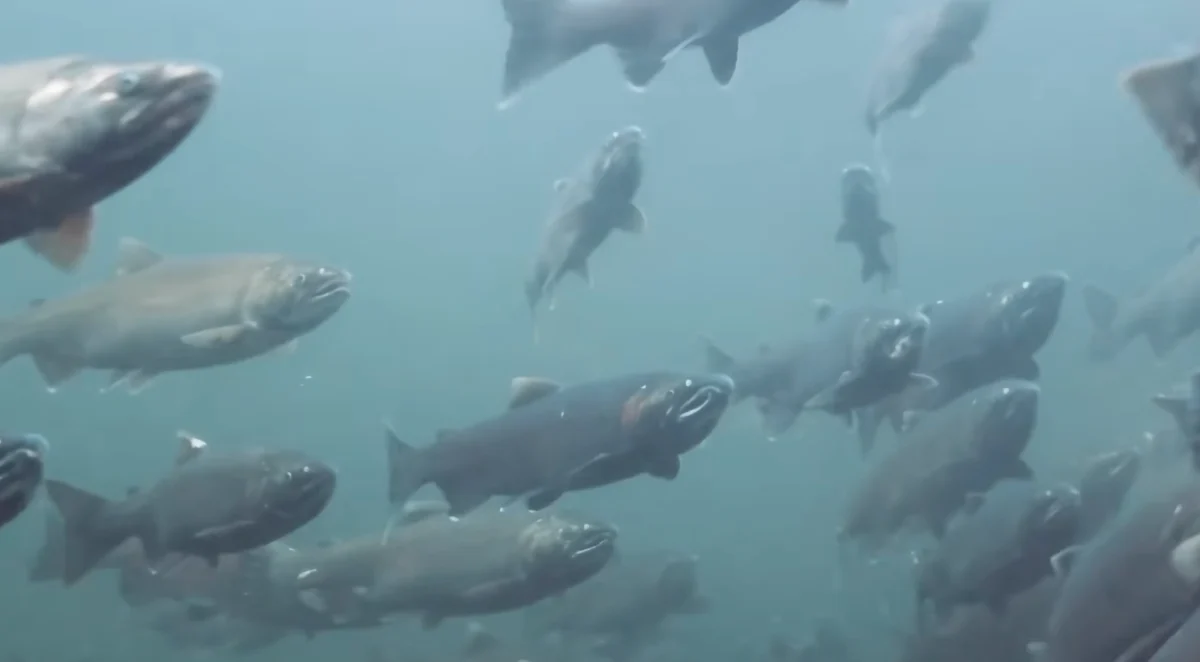
Farm-raised fish carries a genuine perception problem among many consumers and chefs, who often associate the term with crowded, lower-welfare aquaculture operations — the kind of densely packed ocean pens commonly used for large-scale commercial salmon farming. Walker recognized that this stigma was a meaningful obstacle to building a premium brand, and that it was extremely difficult to overcome through words alone. The solution his team arrived at was visual: regular video content showing exactly how the fish were actually raised — in clean, naturally flowing spring water, in conditions that closely mimic a wild trout stream, with no chemical additives, no crowding, and no artificial filtration systems.
This content strategy has become central to how Smoke In Chimneys communicates its value proposition. Rather than asserting quality through marketing language, the farm shows the actual environment and process, letting viewers draw their own conclusions about the difference between this operation and the factory aquaculture image many consumers carry by default.
Selling Through Relationships, Not Pitches
Equally important to the zero-ad-spend model has been Walker’s approach to actually landing restaurant accounts — particularly the high-profile, Michelin-starred kitchens that now anchor a meaningful share of the business.
Rather than developing a polished sales pitch, Walker’s strategy has consistently been to show up in person with a cooler of fresh trout and let the product make its own case. This approach produced one of the more memorable moments in the company’s history: an early visit to chef Dan Barber’s acclaimed restaurant Blue Hill, where Barber — after tasting Walker’s rainbow trout — told him plainly that he specifically wanted brook trout instead. Rather than treating this as a rejection, Walker took it as a specification to fulfill. He returned to the farm, hatched and raised brook trout specifically to meet that request, and came back two years later with exactly what Barber had asked for. The chef’s reaction, by Walker’s account, was genuine surprise and appreciation — a moment Walker describes as having earned his place at the table through patient, literal delivery on a specific request, rather than through any conventional sales technique.
This relationship-first approach has scaled into the business’s broader marketing strategy: leveraging word-of-mouth referrals within the comparatively small and tightly networked fine-dining community, where chef recommendations to other chefs carry far more weight than any advertisement could. The business today supplies trout to more than 100 restaurants, stores, co-ops, and farmers markets across Virginia, Maryland, and Washington, D.C.
The Real Numbers: A Transparent Financial Breakdown
What sets this particular case study apart from most small business success stories is the level of financial transparency Walker has provided. For a farm generating roughly $1.1 million in annual revenue, the actual profit margin and cost structure tell a far more nuanced story than the headline number alone.
Annual Expense Breakdown
| Labor | $120,000 |
| Shipping | $156,000 |
| Fingerlings (small fish) | $96,000 |
| Feed | $84,000 |
| Live fish (larger juveniles) | $96,000 |
| Owner’s salary | $60,000 |
| Packaging | $66,000 |
| Processing | $120,000 |
| Marketing-related (salary + travel) | $72,000 |
| Total Expenses | ~$882,000 |
| Total Revenue | ~$1,100,000 |
| Net Profit | ~$218,000 |
| Net Margin | ~19.8% |
This breakdown reveals a critical lesson for anyone evaluating the “million-dollar business” headline at face value: of that $1.1 million in gross revenue, the owner’s actual take-home salary represents only about $60,000 — a figure Walker has pointed out directly, noting that it requires roughly $360,000 worth of total sales volume to generate every $60,000 he personally earns. That ratio was, by his own account, the single biggest factor in his decision to stop selling at farmers markets entirely, since selling one or two fish at a time could never generate the volume needed to make the underlying economics work. The business needed to sell by the bag, not by the individual fish.
Walker has also been direct that a roughly 20% net margin is fairly typical for a boutique operation of this scale and is a healthy, sustainable target rather than a disappointing one — an important calibration for anyone assuming a million-dollar revenue figure translates to proportionally enormous personal profit.
The Pricing Crisis That Almost Ended the Business
Perhaps the most directly instructive moment in Walker’s entire business journey came not from a production failure, but from a pricing failure that nearly bankrupted the operation slowly, almost without anyone noticing until the numbers were examined closely.
For an extended period, Walker was selling fresh trout at $11.50 per pound. Upon eventually calculating the farm’s true production cost per pound — which came out to approximately $15 — he realized the business was systematically losing money on every single pound of fish sold. As he described it, the business wasn’t going to collapse overnight; it was going to “slowly bleed out” over what might have been another year or two, masked by steady sales volume that obscured the underlying unprofitability of each individual transaction.
Raising the price to $18 per pound was, by Walker’s own account, one of the hardest decisions of his entrepreneurial career, requiring roughly six months of deliberation before he could commit to it. His hesitation centered on fear of losing customers or generating backlash for what would appear, to existing buyers, as a significant price increase.
The decision that ultimately tipped him toward action came from a conversation with the owner of White Oak Pastures, a well-known large-scale regenerative farming operation in Georgia. She told him directly that he was doing his customers a disservice by underpricing his product — because every customer who spends money with a business is, in effect, investing in that business’s continued existence. If the business failed two years later because it had refused to charge a sustainable price, those same loyal customers would be the ones left without a supplier they had been supporting all along.
Walker raised the price. He lost some customers in the process, predominantly smaller retail accounts like grocery stores and co-ops, who had less pricing flexibility than restaurants — which can absorb a wholesale cost increase more easily since they add substantial value to the product through preparation and presentation before it reaches a paying customer. But a meaningful portion of his customer base responded with explicit support, recognizing the legitimacy of the price adjustment and choosing to remain loyal regardless.
Diversifying the Product Line: Smoked Trout
Beyond fresh whole trout, Smoke In Chimneys has steadily grown a second product line: smoked trout fillets, now sold at $25 per pound — a meaningful premium over the $18 fresh trout price, reflecting the additional labor involved in an overnight brining process followed by roughly ninety minutes of smoking.
Walker has been explicit that the company’s smoking process is deliberately different from much of what passes for “smoked trout” in the broader market, where many products rely on liquid smoke flavoring applied to fish that is then dried to a jerky-like texture. Smoke In Chimneys instead aims to preserve the fish’s natural fats and moisture content throughout the smoking process, producing a noticeably different final product. This smoked product line represented roughly 15% of total business revenue in the most recent year referenced, with clear indications of continued growth as a share of overall sales.
Why “Going Big” Was Never the Goal
Perhaps the most countercultural element of Walker’s business philosophy is his explicit rejection of unlimited growth as the implicit goal every business should pursue. He has stated plainly that Smoke In Chimneys will never be able to sell trout to the entire world, and critically, that this was never the actual objective in the first place.
His stated mission is more specific and, in some ways, more achievable: shifting farm-raised fish from a category many consumers and chefs view with skepticism into one of the most desirable products available, served at the most discerning restaurants willing to seek it out. The farm has indicated plans to grow toward roughly $1.5 million in annual revenue, supported in part by a second facility recently opened about 45 minutes from the original property — but this remains an incremental, capacity-driven expansion rather than a pursuit of a fundamentally different scale of operation.
Lessons for Aspiring Entrepreneurs
Walker’s journey, taken as a whole, offers several genuinely transferable principles for anyone considering a similarly resource-constrained path into entrepreneurship.
Low startup capital does not mean low total investment. The infrastructure costs of starting Smoke In Chimneys were modest — roughly $10,000 — but the true cost of the business’s first three years included the complete depletion of $60,000 in personal savings and years of unpaid, physically demanding labor. Aspiring founders evaluating low-capital business ideas should account for this less visible but very real cost of time and sustained cash burn before reaching profitability.
Take messy action and iterate, rather than waiting for certainty. Walker’s own advice to anyone facing a similar starting position is direct: take action even when you know it won’t be done correctly the first time, then adjust based on what you learn. He compares the process to navigating a maze — each obstacle is simply a wall that requires finding the next turn, not a sign to stop moving.
Pricing below true cost is not sustainable generosity — it is a slow-motion failure. Walker’s multi-year underpricing of his core product nearly destroyed a business that was, by every other measure, succeeding. Regularly auditing true production costs against actual selling prices is essential, even — especially — when sales volume appears healthy on the surface.
Debt-free growth trades speed for control. Walker’s explicit choice to avoid business debt meant slower growth than a more aggressively financed competitor might have achieved, but it preserved his ability to make decisions according to his own judgment and creative vision throughout. For founders who place a high value on operational autonomy, this trade-off may be worth the slower timeline.
Authentic content can replace a paid marketing budget, but it requires real consistency. Smoke In Chimneys built its customer base and restaurant relationships without spending on advertising, but this was not a passive outcome — it required sustained, regular content production (by Walker’s account, two to three video posts per week) over a period of years, combined with the willingness to personally show up in front of skeptical chefs with product in hand.
A clearly defined, limited scope of ambition can be a genuine strength. Walker’s explicit rejection of mass-market scale in favor of a premium, relationship-driven niche allowed the business to maintain pricing power and product quality standards that a rapid, capital-fueled expansion would likely have compromised.
Key Facts: Smoke In Chimneys at a Glance
| Business name | Smoke In Chimneys |
| Founder | Ty Walker (with wife Shannon Walker) |
| Location | Newcastle, Craig County, Virginia |
| Property size | ~4 acres |
| Facility origin | 1930s U.S. Department of the Interior research hatchery |
| Water source | Limestone spring, ~3,000 gallons/minute, gravity-fed (no pumps) |
| Fish on site at any time | 50,000–100,000 |
| Years to first sellable product | 3 |
| Annual revenue | ~$1.1 million |
| Net profit | ~$218,000 (≈19.8% margin) |
| Owner’s annual salary | ~$60,000 |
| Business debt | $0 |
| Advertising spend | $0 organic content + relationship-based sales only |
| Restaurant/retail accounts | 100+ across VA, MD, and D.C. |
| Fresh trout price | $18/lb raised from $11.50/lb |
| Smoked trout price | $25/lb |
| Smoker equipment cost | $20,000 |
| Notable client | Blue Hill (Chef Dan Barber) |