Marvel’s Wolverine review embargo lifted on September 10, 2026 — five days before the game’s September 15 launch on PlayStation 5 — and the scores landed nowhere close to what Insomniac Games’ recent track record led most people to expect. After three straight Marvel titles that each scored in the mid-to-high 80s or better, Marvel’s Wolverine settled at 77 on Metacritic, the studio’s lowest Marvel score since it started the franchise.
That number alone doesn’t tell the full story. Individual review scores for Marvel’s Wolverine range from perfect 10s to a 50, which means the “generally favorable” aggregate is hiding a genuinely split critical reaction. Here’s what the reviews actually say, what changed behind the scenes during development, and what all of it means if you’re deciding whether to buy on day one.
Key Takeaways
- Marvel’s Wolverine holds a 77 on Metacritic and an 80 on OpenCritic — well below Marvel’s Spider-Man (87), Spider-Man: Miles Morales (85), and Spider-Man 2 (90).
- Scores are unusually split: outlets including COGconnected, Hardcore Gamer, and GamingBolt gave it a perfect 10, while IGN, GameSpot, Eurogamer, GamesRadar+, and The Guardian landed at 6, and Giant Bomb scored it a 50.
- Nearly every review praises the combat’s Rage system, the gore and motion capture, and the PS5 Pro visual performance.
- The most common criticism is that Wolverine’s combat and its linear, non-open-world structure grow repetitive over the campaign’s length.
- Marvel’s Wolverine changed creative leadership mid-development — Brian Horton departed for Xbox’s Perfect Dark reboot, and Marcus Smith (Ratchet & Clank: Rift Apart) took over as creative director.
- The game launches September 15, 2026 exclusively on PS5, with a $69.99 Standard Edition and a $79.99 Digital Deluxe Edition — no PC or Xbox version has been announced.
Table of Contents
- The Score Breakdown: 77 on Metacritic, Explained
- What Critics Loved
- What Critics Didn’t Love
- What Changed Behind the Scenes During Development
- The Story, Without Major Spoilers
- How Combat Actually Works
- Release Date, Platforms, and Editions
- Should You Buy It?
- FAQ
The Score Breakdown: 77 on Metacritic, Explained
Marvel’s Wolverine currently sits at 77 on Metacritic (from over 100 reviews) and 80 on OpenCritic — both landing in “generally favorable” territory, but a clear step down from Insomniac’s previous three Marvel releases. Here’s how it stacks up:
| Game | Metacritic Score |
|---|---|
| Marvel’s Spider-Man 2 (PS5) | 90 |
| Marvel’s Spider-Man | 87 |
| Marvel’s Spider-Man: Miles Morales | 85 |
| Marvel’s Wolverine | 77 |
| Marvel’s Spider-Man 2 (PC port) | 76 |
What the aggregate number hides is how divided individual outlets actually were. This isn’t a case of every reviewer landing somewhere in the low-to-mid 80s — it’s a genuine split between reviewers who consider it some of Insomniac’s best work and reviewers who found it a disappointment:
- Perfect or near-perfect scores: COGconnected, Hardcore Gamer, ScreenHub, GamingBolt, and Impulsegamer all gave it a 10/10, with PSU, Gameliner, GameSpew, MonsterVine, and GamingTrend close behind at 9/10.
- Solid but not glowing: Destructoid, GameReactor, Push Square, and TheGamer landed in the 8/10 range, praising the production values without calling it a masterpiece.
- Disappointed: IGN, GameSpot, Eurogamer, GamesRadar+, VGC, and The Guardian each scored it a 6/10.
- Lowest score: Giant Bomb gave it a 50, calling the game “boring” and arguing that once exploration is removed from the formula, “the remaining storytelling and combat pillars of Insomniac’s house style struggle to support the studio’s ideas.”
In other words: if you go in expecting a unanimous verdict, you won’t find one. The split tells you more about what to expect than the aggregate score does — which is why the next two sections matter more than the number itself.
What Critics Loved
Almost every review, high score or low, agrees on the same handful of strengths:
- The core combat feel. GameSpot’s own preview coverage called the moment-to-moment satisfaction of landing hits “what I left thinking most about,” and the three-tier Rage system in particular drew consistent praise for how it escalates a fight.
- Presentation. Push Square described the visuals as some of the best possible on current hardware, and reviewers across the board called out the gore, dismemberment effects, facial animation, and 60fps performance (including on PS5 Pro) as a clear step up even from Insomniac’s own Spider-Man games.
- Voice acting. Liam McIntyre’s performance as Logan and Troy Baker’s turn as Nathaniel Essex — the Marvel villain known in the comics as Mister Sinister — were both singled out, with outlets like Skill Up calling the storytelling “wonderfully told” even where they had complaints about pacing.
- Specific set pieces. ComingSoon’s review highlighted the game’s motorcycle-chase sequences and other scripted action beats as some of its most memorable moments.
What Critics Didn’t Love
The lower scores cluster around two related complaints:
- Combat variety runs out before the campaign does. IGN’s review put it directly: the “slick and satisfying combat wears thin well before its conclusion.” GameSpot’s review echoed the point, describing the combat in its final assessment as “weightless” and arguing it doesn’t lean into what Insomniac’s action games are usually best at.
- A linear structure with no open world to explore. Unlike the Spider-Man games, Marvel’s Wolverine is built around linear missions rather than a traversable city. Giant Bomb’s review argued that without exploration to fall back on, the game leans entirely on combat and story carrying the experience — and found both lacking over a full playthrough.
Reviewers are notably split on the story itself: some, including ComingSoon, praised the character work and central performances, while Giant Bomb and several 6/10 reviews said the narrative never fully grabbed them across the full runtime. If you’re deciding whether to buy based on story quality alone, treat that piece of the verdict as genuinely contested rather than settled.
What Changed Behind the Scenes During Development
Some of the still-circulating “everything you need to know” coverage of Marvel’s Wolverine names Brian Horton as creative director and Cameron Christian as game director. That’s out of date. In summer 2024, Horton left the project to become creative director on Xbox’s Perfect Dark reboot at The Initiative — a notable departure, since Horton had been the public face of Wolverine’s announcement. Sony didn’t detail the reasoning beyond attributing the leadership shuffle to “creative decisions around the game.”
Marcus Smith — creative director on Ratchet & Clank: Rift Apart — stepped in as Marvel’s Wolverine’s new creative director. Mike Daly took over as game director, with Cameron Christian, who previously led Marvel’s Spider-Man: Miles Morales and held the game director role on Wolverine, remaining at Insomniac in a different capacity. Smith has since spoken publicly about the game’s central creative idea: pairing Wolverine against Nathaniel Essex and Bolivar Trask as a study in “conflicts” and competing moral outlooks, rather than a straightforward hero-versus-villain setup.
Whether that leadership change is connected to the game’s more mixed reception than Insomniac’s Spider-Man games is impossible to say definitively — mid-cycle director changes are common in AAA development and don’t automatically predict quality. But it’s a real, documented shift worth knowing if you’re trying to understand why this Marvel game landed differently than the last three.
The Story, Without Major Spoilers
Marvel’s Wolverine is set in an original story separate from the comics and film continuities. Logan rejoins Team X, a mutant task force, after mutants who live in hiding — most of the world doesn’t know they exist — start disappearing. The team’s leader, Nathaniel Essex (voiced by Troy Baker, and known in Marvel comics as Mister Sinister), is captured by mutant-hunting industrialist Bolivar Trask and the cybernetic mercenary group the Reavers, setting Essex on what the developers describe as “a dark path.” Telekinetic mutant Jean Grey becomes a key ally, occasionally fighting alongside Wolverine using her powers in combat sequences.
The story moves between several locations, including the Princess Bar in Madripoor — run by Tyger Tiger, voiced by Kelly Hu — as well as stops in Canada and Tokyo. Marvel’s Wolverine deliberately skips Logan’s origin story and the acquisition of his adamantium skeleton; this is a story about who Logan already is, not how he became that way. Lady Deathstrike also appears in the game, though Insomniac hadn’t announced her voice actor as of the review embargo.
The game’s mutants-in-hiding premise arrives at a moment when Marvel is leaning hard into the X-Men across every medium at once — the studio’s live-action X-Men reboot cast reveal earlier this year included the same first look at Marvel’s Wolverine gameplay footage that eventually grew into this launch, making the game one piece of a much larger mutant-focused push rather than an isolated spinoff.
How Combat Actually Works
The system nearly every reviewer singled out as the game’s strongest element breaks down into a few connected mechanics:
- Techniques — named combat moves like Tornado Spin and Bull Rush that form the base combat toolkit.
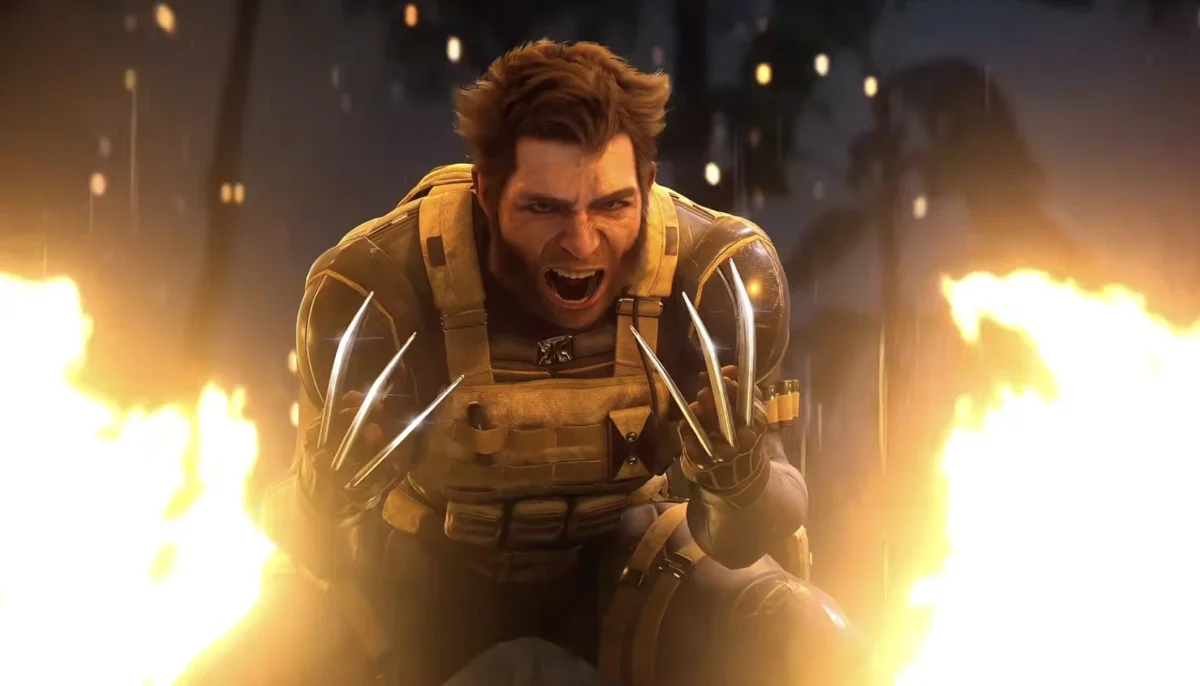
- The Rage system — landing successful attacks builds Logan’s Rage meter across three tiers, unlocking progressively stronger attacks. At Rage Tier 3, the game shifts into what Insomniac describes as a stylized, monochromatic “explosion of savagery.”
- Critical Strikes — finishing moves Wolverine can execute alone or in tandem with an ally like Jean Grey.
- Healing Factor and Last Stand — Logan’s regeneration can be activated through Rage or through a “Last Stand” mechanic that lets him survive what would otherwise be fatal damage, reinforcing his comic-book durability without making combat consequence-free.
Outside of straight combat, the game includes scripted set pieces such as motorcycle chases where Wolverine can slash tires and pull enemies off vehicles mid-ride. The game also ships with a full suite of accessibility features covering cognitive, visual, auditory, and motor needs at launch.
Release Date, Platforms, and Editions
Marvel’s Wolverine releases September 15, 2026, exclusively on PlayStation 5. No PC, PS4, or Xbox version has been announced, and Insomniac hasn’t given any indication that a PC port is planned on the same timeline as Spider-Man 2’s delayed PC release.
| Edition | Price | What’s Included |
|---|---|---|
| Standard Edition | $69.99 | Base game (digital and physical disc), plus pre-order bonuses: Classic Brown suit, Reflective Claws, 1 technique point, and 4 PlayStation avatars |
| Digital Deluxe Edition | $79.99 | Base game, all pre-order bonuses, 5 exclusive suits (Incredible, Savage, Age of Apocalypse, Night Hunt, New Leather), 5 exclusive claw variants, and 3 additional technique points |
Insomniac has suggested more editions could follow, which some outlets read as a hint toward a future physical Collector’s Edition — but as of the review embargo, Standard and Digital Deluxe are the only two confirmed options. If Sony continues its recent pattern with first-party PS5 titles, a physical copy remains an option for now even as the company winds down disc support on its hardware roadmap in the years ahead.
Should You Buy It?
Based on what’s actually in the reviews rather than the single aggregate number, here’s a practical way to decide:
- Buy at launch if: you primarily want a focused, cinematic action game with best-in-class production values, and you’re not expecting Spider-Man-level traversal or an open world. The combat’s peak moments and presentation are, by consensus, genuinely excellent.
- Wait for a sale if: combat variety across a full 12-to-15-hour campaign and a tightly plotted story are your top priorities — this is exactly where the lower scores concentrate their criticism.
- Skip the Digital Deluxe upgrade unless cosmetics matter to you. The extra suits, claw designs, and technique points are cosmetic and minor progression boosts rather than content that changes the campaign itself — the $10 premium buys convenience and appearance options, not more game.
The honest summary of a genuinely split critical reception: Marvel’s Wolverine appears to be a shorter, more linear, combat-forward game than Insomniac’s Spider-Man titles, executed with the same technical polish but without the same structural variety — which is exactly the trade-off some reviewers loved and others didn’t. It’s a genuinely different kind of release from most of 2026’s other major AAA and indie standouts, where combat-driven, tightly scoped action has been rarer than sprawling open worlds and roguelike experiments.
FAQ
What is Marvel’s Wolverine’s Metacritic score?
Marvel’s Wolverine holds a 77 on Metacritic and an 80 on OpenCritic as of its review embargo on September 10, 2026 — below Marvel’s Spider-Man (87), Miles Morales (85), and Spider-Man 2 (90).
Is Marvel’s Wolverine coming to PC or Xbox?
No. As of launch, Marvel’s Wolverine is a PlayStation 5 exclusive with no announced PC, Xbox, or PS4 release.
Who voices Wolverine in the game?
Liam McIntyre, known for Spartacus and The Flash, voices Logan. Troy Baker voices villain Nathaniel Essex (Mister Sinister), and Kelly Hu voices Tyger Tiger.
What editions of Marvel’s Wolverine are available?
A $69.99 Standard Edition and a $79.99 Digital Deluxe Edition, which adds five exclusive suits, five claw variants, and extra technique points. No Collector’s Edition has been confirmed yet.
Is Marvel’s Wolverine connected to Marvel’s Spider-Man?
Not narratively — it’s a separate original story from Insomniac Games rather than a shared-universe sequel to the Spider-Man games, though it’s built by the same studio using similar underlying technology.
Why did Marvel’s Wolverine change creative directors?
Original creative director Brian Horton left in summer 2024 to lead Xbox’s Perfect Dark reboot. Marcus Smith, previously creative director on Ratchet & Clank: Rift Apart, took over for the remainder of development.
The Bottom Line
Marvel’s Wolverine isn’t a disaster, and it isn’t the fourth consecutive Insomniac Marvel classic either — the honest read of a 77 built from scores ranging from 100 to 50 is that the game delivers on combat feel and presentation while trading away the structural variety that made Insomniac’s Spider-Man games so replayable. Whether that trade is worth $69.99 comes down to what you actually want from a superhero game: a focused, brutal, cinematic ride, or an open world to get lost in. Marvel’s Wolverine is confidently the first of those things, and reviewers agree it’s not really trying to be the second.