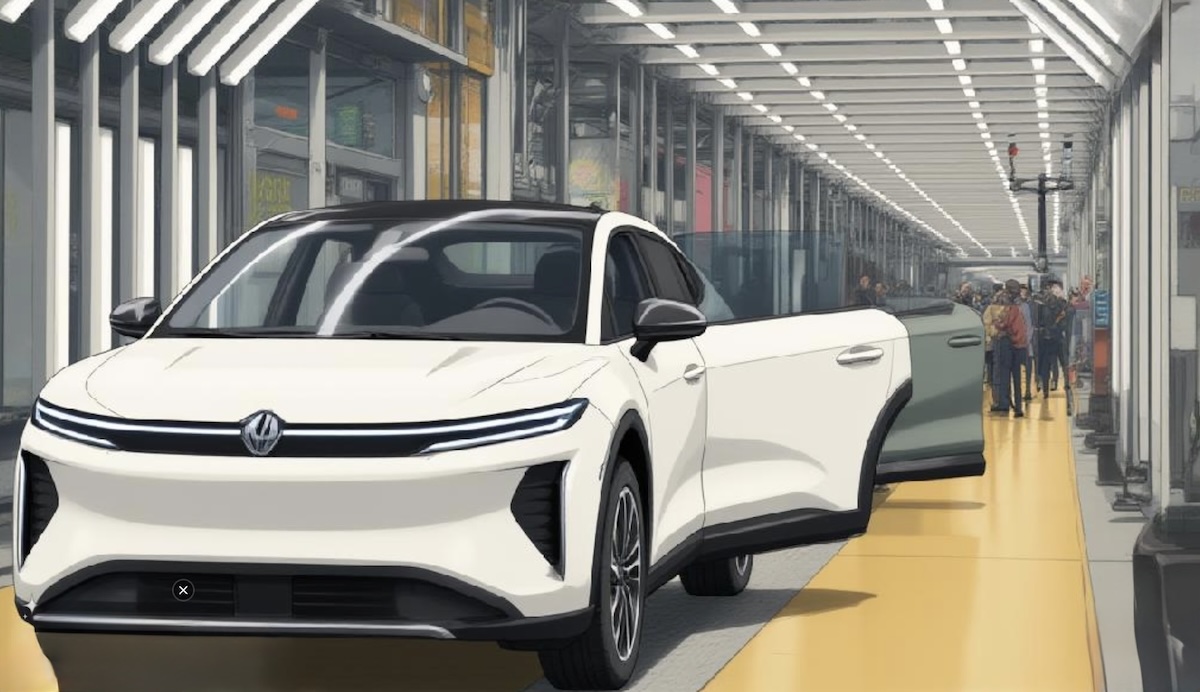
On a stretch of desert outside a small Arizona city stands a massive, ultra-modern factory. Inside, robots glide across polished floors, assembling vehicles praised by critics as some of the finest electric cars ever made. The technology is cutting-edge, the design luxurious, and the performance class-leading. And yet, behind the innovation lies a troubling question that continues to haunt investors and industry watchers alike: why Lucid Motors is losing money.
This is the story of ambition, timing, and the brutal economics of the luxury electric vehicle market.
A Dream Start With Heavy Expectations
Lucid Motors entered the public markets with enormous fanfare. Its debut brought in billions of dollars, providing the company with fresh capital, a purpose-built manufacturing facility, and the confidence that it could challenge established players. From the beginning, expectations were sky-high. Many believed the company would dominate the premium EV space.
The first product, a luxury electric sedan, delivered on its promises. With industry-leading range, breathtaking acceleration, and a refined interior, it set new benchmarks for what an EV could be. Reviewers were impressed. Awards piled up. On paper, it looked like a clear winner.
But excellence alone did not guarantee success.
Lucid Air Sales Performance: A Limited Market
The problem wasn’t the product—it was the market. By the time the sedan reached customers, consumer preferences had shifted sharply toward SUVs and crossovers. The luxury sedan segment had become a narrow niche, even as overall EV adoption grew.
Despite a year-over-year increase in deliveries, volumes remained modest. In fact, total production never reached the ambitious targets set years earlier. The reality was simple: even the best sedan struggles when buyers overwhelmingly want utility vehicles. This mismatch played a major role in Lucid Motors EV sales challenges.
Mounting Financial Pressure
While sales lagged, costs soared. Building a car company from scratch is among the most capital-intensive undertakings in manufacturing. Underutilized factories, massive fixed costs, and complex supply chains quickly eroded margins.
By 2025, the company reported a Lucid Motors nearly $1 billion loss in a single quarter. From 2022 through 2024, cumulative losses reached staggering levels. Every vehicle sold still cost significantly more to produce than it generated in revenue—an unsustainable equation in the long run and the core reason behind Lucid Motors financial losses.
The Gravity SUV Launch: A Critical Turning Point
Recognizing the limitations of the sedan market, Lucid shifted focus to a three-row SUV designed for a much larger audience. The Lucid Gravity SUV launch was meant to be the moment when the business finally scaled.
Demand signals were promising. The SUV entered a segment many times larger than the luxury sedan category. However, execution proved difficult. Lucid Motors production issues slowed the ramp-up, with supply chain disruptions, component shortages, and unforeseen setbacks delaying meaningful deliveries.
For much of the year, production volumes remained in the hundreds rather than the thousands. Only later did output begin to accelerate, offering hope that the worst bottlenecks were easing.
Inside the Arizona Factory
At the heart of the turnaround effort is the Lucid Motors factory in Arizona, a highly automated, vertically integrated facility designed to eventually produce tens of thousands of vehicles per year. The plant houses hundreds of robots and thousands of workers, with separate production lines optimized for different models.
In theory, the factory provides a powerful competitive advantage. In practice, underutilization has been costly. When production capacity goes unused, fixed expenses pile up fast—one of the most difficult electric vehicle manufacturing challenges facing young automakers.
Supply Chain Struggles and Scaling Production
The past year exposed how vulnerable new automakers are to global disruptions. Lucid Motors supply chain problems ranged from magnet shortages to chip constraints and even upstream factory incidents. Larger automakers often receive priority during industry-wide shortages, leaving smaller players scrambling.
Despite these hurdles, the company posted its strongest delivery quarter ever in late 2025, signaling progress in Lucid Motors scaling production. Still, volume remains far below what is needed to achieve profitability.
Searching for the Next Growth Engine
Beyond the SUV, Lucid is betting on a future mass-market platform aimed at significantly lower price points. This move mirrors the broader industry strategy: start at the high end, then move down-market to achieve scale.
At the same time, Lucid is exploring autonomous vehicle partnerships. A high-profile robotaxi partnership with Uber and Nuro brought fresh capital and a long-term commitment to purchase tens of thousands of vehicles. While robotaxis won’t immediately fix the balance sheet, they provide validation of the company’s technology and open a potential new revenue stream.
Can Lucid Motors Survive?
This is the question investors keep asking. The answer depends on execution. The company has liquidity to sustain operations in the near term, but time is not unlimited. Losses continue, competition is intensifying, and government incentives that once boosted EV demand have faded.
The premium EV competition is especially fierce, with established luxury brands benefiting from decades of brand recognition. Awareness remains one of Lucid’s biggest hurdles—many potential buyers simply don’t know the brand well enough to consider it alongside legacy names.
Ultimately, can Lucid Motors survive? Survival hinges on three things: successfully ramping the Gravity SUV, executing the mid-size platform without delays, and steadily improving gross margins. If these pieces fall into place, the company could still carve out a sustainable future.
Lucid Motors Future Growth Outlook
Lucid’s story is not one of failure—but of unfinished execution. It has proven it can build world-class electric vehicles. What remains uncertain is whether it can build them at scale, at the right cost, and fast enough to outpace its losses.
The coming quarters will reveal whether Lucid’s long-term vision can overcome its Lucid Motors business challenges. For now, the company stands at a crossroads—armed with remarkable technology, but racing against the unforgiving economics of the auto industry.