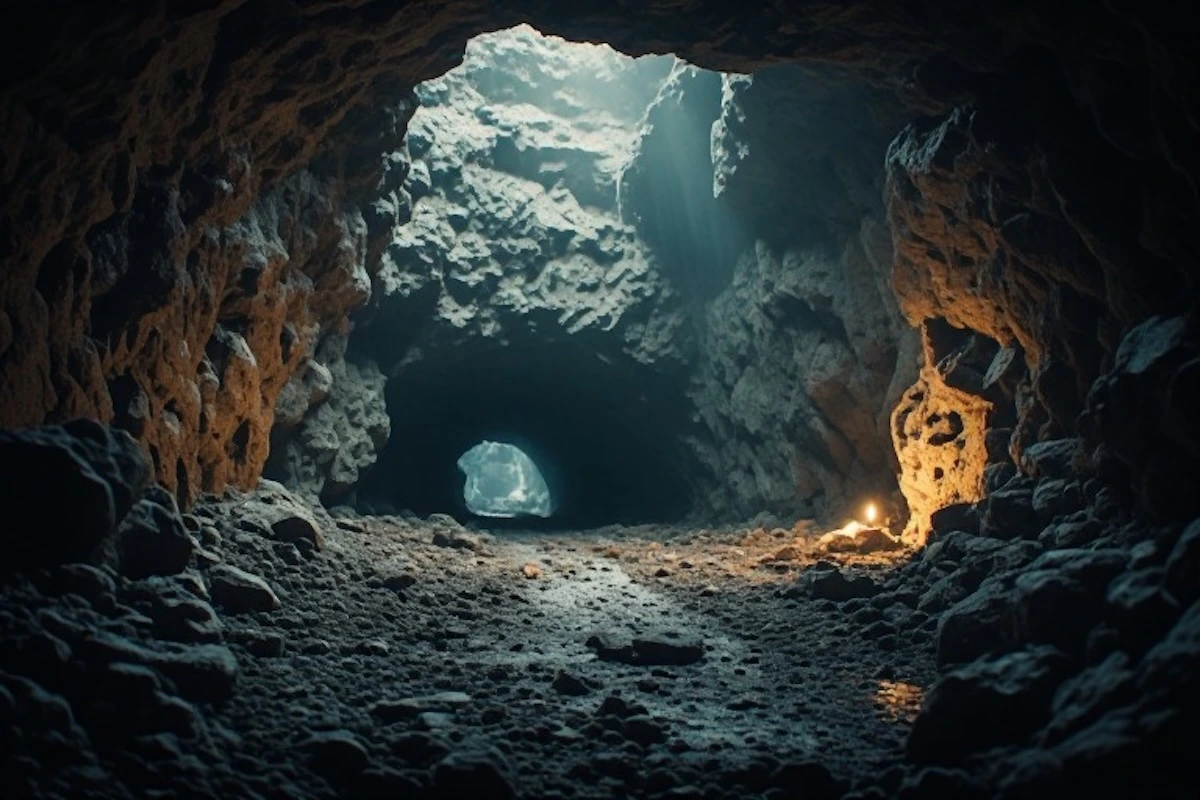
A Country Too Small to Build Outward, So It Built Downward
Singapore has one of the most fundamental constraints any country can face: it’s simply running out of land. With a total surface area of just 716 square kilometres, every hectare devoted to above-ground infrastructure is a hectare unavailable for something else. So when the country needed to expand its oil storage capacity to support one of the world’s leading energy and petrochemical hubs, it made an unusual decision: instead of building more storage tanks on the surface, it carved an entirely new storage facility out of solid granite, more than 130 metres beneath the seabed.
The result is the Jurong Rock Caverns, or JRC, Southeast Asia’s first underground liquid hydrocarbon storage facility, and one of the most technically demanding public infrastructure projects Singapore has ever undertaken. Understanding how it was built, and how it still runs today, is a genuinely useful case study in engineering around a hard physical constraint rather than simply building bigger.
Why Jurong Island Needed This in the First Place
The caverns sit beneath Jurong Island, off Singapore’s southern coast — itself an engineered creation, formed through a major land reclamation project in the 1990s. Today, more than 100 global companies operate refineries and petrochemical plants across the island, making it one of the most concentrated energy and chemical processing hubs in the world.
Facilities like this traditionally rely on large above-ground storage tanks, which take up significant surface real estate. For a country as land-constrained as Singapore, every acre used for oil tanks is an acre that can’t host new industrial development. Locating the caverns roughly 130 metres beneath the seabed let engineers make use of space that would otherwise go completely unused, expanding storage capacity without requiring any additional surface land on an island that was already fully built out.
The scale involved is genuinely difficult to picture. The completed facility ranks as Singapore’s deepest underground public infrastructure project, reaching a depth comparable to a 54-storey building, or roughly the height of the Great Pyramid of Giza, entirely below ground rather than above it. Across four large caverns and one smaller one, the facility holds a combined 1.47 million cubic metres of liquid hydrocarbons — equivalent to around 600 Olympic-sized swimming pools of storage capacity.
The Engineering Problem: You Can’t Just Dig a Hole and Fill It
Building an underground oil storage cavern beneath the seabed involves a genuinely difficult technical puzzle, and solving it took years of dedicated research before construction could even begin.
Step One: Making Sure the Rock Would Hold
The first challenge was physically carving the caverns out of solid granite through controlled blasting, without compromising the structural integrity of the surrounding rock. Rock science specialists, brought onto the project from its earliest stages, collected rock samples directly from the cavern level and tested them under lab conditions, crushing samples to evaluate how much strength the granite retained after blasting. The testing confirmed that even with some blast-related damage, the rock remained stable, largely because it continued to be supported by the surrounding rock mass rather than standing alone.
Step Two: Solving the Water Problem
Passing the strength test solved only part of the puzzle. Because the caverns sit beneath the seabed, the bigger engineering challenge was keeping seawater from compromising the storage space. The granite itself is dense enough that seawater generally can’t penetrate the solid rock matrix directly — but natural fractures running through the rock create pathways that water can travel through instead.
Engineers addressed this by first mapping out exactly where those water pathways ran through the rock, then sealing the fractures with cement paste to control the flow. Interestingly, the goal wasn’t to eliminate water flow entirely. A carefully managed amount of water is intentionally allowed to remain in the surrounding fracture system, keeping the rock fully saturated. That saturation plays a functional role: it helps fully confine the stored oil within the cavern and prevents it from leaking out through the surrounding rock. At the same time, engineers had to prevent excessive water from flowing into the cavern itself, since any water taking up space inside the cavern is space no longer available for oil storage. It’s a genuinely delicate balance, too little water control risks leakage, too much risks losing usable storage capacity, and getting it right required years of testing and iteration.
From initial concept through full completion, the entire project took 15 years.
How Oil Actually Gets In and Out
Once built, running the caverns day to day is its own ongoing operational challenge. The process begins at a jetty, where tanker vessels dock and connect to the facility’s pipeline system. Once a vessel is safely berthed, crews connect pipelines between the ship and the jetty, aligning pipes and valves before oil transfer begins. From there, oil is pumped from the vessel through jetty pipelines, then underground into the storage caverns via a valve manifold area, essentially a pipeline interchange that allows operators to direct incoming hydrocarbons into specific individual caverns as needed.
The caverns themselves have remained sealed since construction was completed, each one now holding liquid hydrocarbons. The only way to physically access the system is through a dedicated operations tunnel positioned directly above the caverns, which houses the equipment needed to serve each cavern and provides the sole access point for maintenance and inspection work.
Keeping an Underground Oil Facility Safe
Operating a sealed hydrocarbon storage facility metres beneath the seabed comes with safety demands that go well beyond routine maintenance. Crews conduct regular inspections of the pumps and pipelines responsible for moving oil in and out of the caverns, physically marking any signs of corrosion they identify for tracking and follow-up repair. Because even a small leak from a valve or pipeline could release hydrocarbon vapours into the enclosed tunnel environment, maintenance teams also perform regular gas leak scans, monitoring both air safety for workers and fire risk within the confined underground space.
Above ground, a dedicated control centre monitors the entire system around the clock, tracking every valve and pipeline in real time. During active operations, such as a vessel discharging oil into the caverns, controllers continuously monitor flow rate and pressure to confirm the system is operating safely within its designed range, coordinating timing down to the specific hour a delivery is expected to complete.
Why This Project Matters Beyond Oil Storage
The significance of Jurong Rock Caverns extends past the specific function of storing hydrocarbons. Completing a project this technically demanding gave Singapore’s engineers deep, hands-on experience in rock mechanics, underground construction, safety management, and long-term operations and maintenance, capabilities that don’t develop from theoretical study alone. As one rock science expert involved in the project put it, underground engineering work is uniquely demanding precisely because you can’t see anything, you have to dig into the ground to find the solution to the problems that arise.
That accumulated expertise is arguably the facility’s most valuable long-term output. Rather than treating Jurong Rock Caverns as a one-off solution to a storage capacity problem, Singapore’s infrastructure planners have described it as a blueprint for future underground infrastructure projects, an engineering foundation the country can build on as land constraints continue to shape how it grows.
What This Means for Land-Scarce Cities More Broadly
For urban planners and engineers elsewhere, Jurong Rock Caverns offers a genuinely instructive example of how severe physical constraints can drive innovation rather than simply limiting growth. Most discussions of land-scarce urban development focus on building upward, taller towers, denser housing. Singapore’s approach here demonstrates a less commonly explored alternative: treating the deep subsurface as usable infrastructure space in its own right, provided the underlying geology and engineering challenges can be solved. For any city facing similar land constraints, particularly ones with suitable bedrock conditions, this kind of underground infrastructure represents a genuine, proven option rather than a purely theoretical one.
Where This Overview Has Limits
A few things are worth noting for anyone researching this further. This overview draws on a single documentary account featuring project engineers and does not include independent financial data, such as total construction cost, or detailed comparative analysis against similar underground storage facilities elsewhere in the world (such as those in Sweden, South Korea, or Japan, which use broadly similar rock-cavern storage principles). Readers interested in the precise engineering specifications, cost breakdowns, or environmental review findings behind the project would benefit from consulting official documentation from Singapore’s JTC Corporation, which oversaw the project, alongside published rock mechanics research from the engineering teams involved.
Frequently Asked Questions
How deep is the Jurong Rock Caverns facility?
The caverns sit more than 130 metres beneath the seabed, a depth roughly comparable to a 54-storey building or the height of the Great Pyramid of Giza.
Why did Singapore build oil storage underground instead of above ground?
Singapore has a total land area of only 716 square kilometres, and traditional above-ground oil storage tanks require significant surface space. Building underground allowed the country to expand storage capacity without using any additional surface land on the already fully developed Jurong Island.
How does the facility prevent seawater from leaking into the oil storage caverns?
Engineers sealed major water pathways in the surrounding rock with cement paste, while deliberately allowing a controlled amount of water to remain in the rock’s fracture system. That controlled saturation actually helps confine the stored oil within the cavern and prevents leakage, while excess water flow is limited to avoid reducing usable storage space.