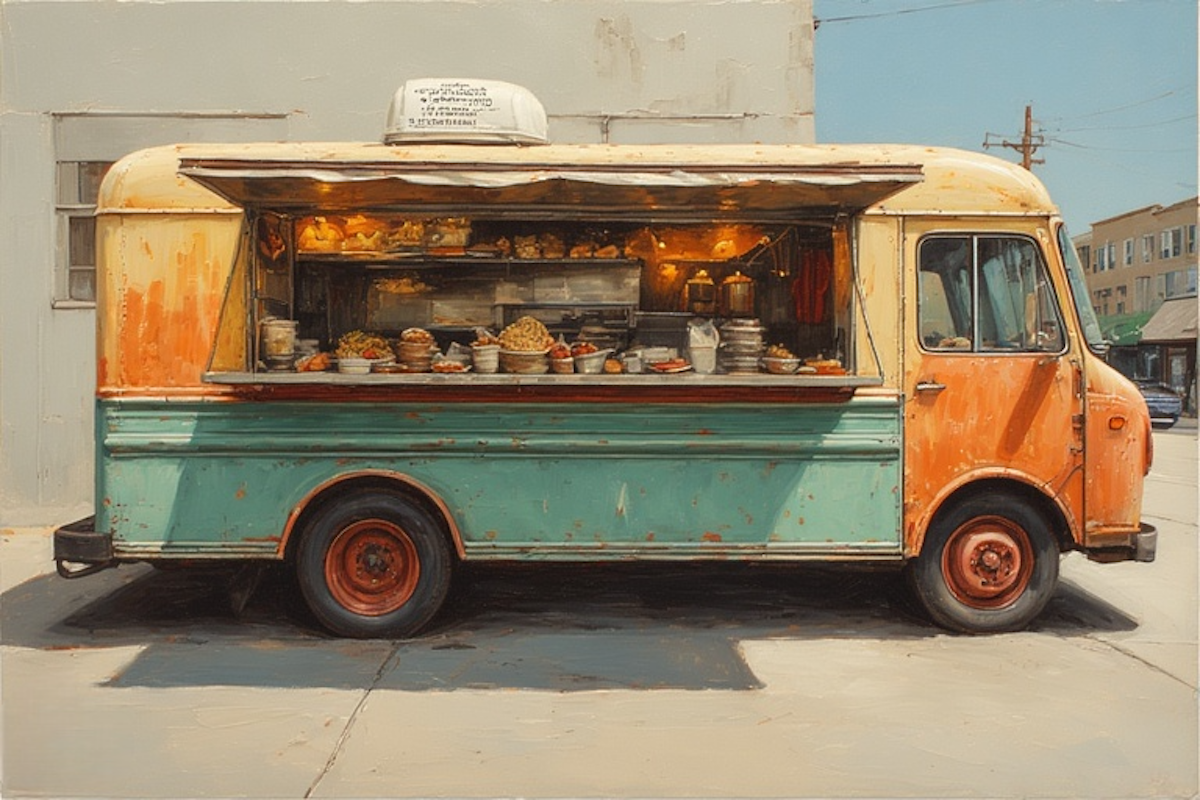
From Zero to $22,000 Weekly: The Remarkable Food Truck Success Story That’s Rewriting Entrepreneurship Rules
Imagine generating $2,200 per hour while working only 10 hours a week. For most people, this sounds like an impossible dream. For Dawon, the founder of Goodie Soul Kitchen, it’s simply Tuesday.
Seven months ago, Dawon was struggling to find employment due to his past, with no culinary background and limited business experience. Today, his food truck generates an astounding $22,000 per week and has grown from $4,000 monthly revenue to over $80,000 per month. His story isn’t just inspiring—it’s a masterclass in strategic entrepreneurship that any aspiring business owner can learn from.
The Midnight Revelation That Changed Everything
Dawon’s entrepreneurial journey began with a simple frustration: the lack of quality late-night food options. Growing up in poverty and facing employment challenges, he found himself “forced into entrepreneurship” out of necessity rather than choice.
“I was done with tacos,” Dawon recalls. “We needed some type of food where I could eat late night and get something that’s good.” This seemingly casual observation would become the foundation of a revolutionary business concept.
Rather than competing in the oversaturated daytime food market, Dawon identified a massive gap: late-night soul food. Goodie Soul Kitchen became America’s only late-night soul food truck, serving lamb chops, fried chicken, and catfish after midnight when virtually no other quality options existed.
Starting Smart: The $1,000 Miracle
One of the most shocking aspects of Dawon’s story is his startup costs. While most food trucks require $60,000-$80,000 in initial investment, Dawon started with just $1,000 down.
Here’s how he did it:
Financing Strategy Breakdown:
- $1,000: Down payment through Click Lease financing
- $43,000: Total trailer cost (100% financed)
- $5,000: Food inventory credit line through Gordon credit card
- 680+ credit score: The key to unlocking these financing options
“If you have good credit over 680 or that 700 mark, they’ll give you the trailer for as little as $0 down,” Dawon explains. This approach allowed him to preserve cash flow for the critical early marketing phase.
The First Day That Defied Expectations
Opening day brought both terror and triumph. Dawon admits: “I remember seeing my first customer and I was in the truck, shaking, like, I don’t even know how to cook.”
Despite his inexperience, the results were remarkable:
- 120 people attended the opening night
- $2,600 in first-day revenue
- Immediate proof of concept for his late-night soul food niche
The secret? Strategic pre-launch marketing that built anticipation weeks before opening.
The Three-Month Crucible: Chaos to Systems
Success wasn’t immediate. The first three months were what Dawon calls “chaos”—constant failure, operational disasters, and overwhelming stress.
“We were running like chickens with our head cut off just to get open. Soon as we were closed, I would have so much relief. Like, I just got through another day.”
The turning point came when Dawon hired a food industry consultant who:
- Fixed recipe standardization
- Streamlined staffing processes
- Established proper cleaning protocols
- Created operational systems
Key insight: “We never had a problem getting customers. We just needed to figure out how to feed the customers.”
The Revenue Rocket Ship
Dawon’s revenue growth tells an extraordinary story:
Month 1-2: $4,000/month (breaking even)
Month 3-4: $6,000-$7,000/week
Month 7: $80,000/month ($22,000/week)
This represents a 2,000% increase in just seven months—growth that would make Silicon Valley startups envious.
The Marketing Genius: $200 Weekly Budget
Perhaps most impressive is Dawon’s marketing efficiency. With a budget of just $200 per week, he’s achieved massive brand awareness through:
The Social Media Strategy:
- 4 posts daily across platforms
- 1 master reel per day (released Thursdays to drive weekend traffic)
- $5/day Instagram ads for food visibility
- 500,000+ weekly page views maintained consistently
The Rollout Formula:
- Build anticipation through social media teasers
- Host a free tasting event with content creators
- Professional food photography for all menu items
- Strategic ad placement at minimal cost
“Run ads behind your food where you can get on Instagram and spend about $5 a day and just basically get people to see your food.”
Location Strategy: The Anti-Movement Movement
While most food trucks chase customers across town, Dawon chose the opposite approach: complete location consistency.
His location criteria:
- High foot traffic areas near bars and entertainment venues
- Late-night activity (his target market)
- Free or low-cost rent (many venues offer free space for quality food)
- Avoiding food truck parks (too much competition)
Monthly location cost: $1,500 + $3,000 security deposit
Benefits: Free electricity, water, and customer predictability
“Once you type something in Google a certain amount of times, it links that address to your food truck. People love convenience.”
The Pricing Psychology Revolution
Dawon’s menu averages $28-30 per order—significantly higher than typical food trucks. His pricing strategy demonstrates sophisticated market understanding:
Premium Pricing Factors:
- Unique time slot (after midnight monopoly)
- Location demographics (studied median income of surrounding area)
- Limited availability (only 4 days/week creates scarcity)
- Quality positioning (restaurant-level food from a truck)
“If you’re someone who’s looking for how to get their prices up a little bit more, I would look at that midnight crowd from 12 AM to probably 3 AM.”
The Four-Day Success Formula
Counter-intuitively, Dawon operates only four days per week (Thursday-Sunday). This isn’t laziness—it’s strategic brilliance:
Benefits of limited operation:
- Builds anticipation (phones ring Tuesday for Thursday orders)
- Prevents staff burnout (sustainable working conditions)
- Concentrates customer demand (creates busy atmosphere)
- Allows proper preparation (quality over quantity)
Operations Mastery: Systems Over Hustle
Dawon’s operational efficiency stems from restaurant-level systems:
Preparation Process:
- 90% of work done in commissary kitchen
- 10% of work done at truck (serving only)
- One-day prep covers entire week
- Standardized recipes ensure consistency
Staffing Philosophy:
- Professional chef handles all culinary decisions
- Detailed recipe books prevent variation
- Two-week intensive training for customer service
- Family atmosphere over ego-driven culture
“The only qualified person on your team needs to be the chef. Everybody else can just be people that you can build on.”
Customer Experience Excellence
Dawon’s approach to customer service reflects deep business wisdom:
Core philosophy: “The customer’s always right. There’s a million places in the world they can eat, but they choose us.”
Service guarantee:
- Full refund for any dissatisfaction
- Free replacement meal (customer doesn’t pay twice)
- Solution-focused problem resolution
This generous policy rarely gets used because quality systems prevent most issues.
The Expansion Blueprint
With proven success, Dawon is scaling strategically:
Current projects:
- Second food truck concept: “Bird in Buns” (hoagies and cheesesteaks)
- Restaurant conversion: Goodie Soul Kitchen transitioning to brick-and-mortar by December
- Consultant-driven expansion: Hiring experts from day one for new ventures
Key difference in expansion: “Since we have the financials to get the consultant, we brought in a whole consulting team from the beginning.”
The Mindset of Strategic Delusion
Dawon’s entrepreneurial philosophy centers on strategic insanity:
“Successful entrepreneurs are insane. They’re very delusional to these ideas. Sometimes you gotta be that delusional. Very strategic and very opportunistic.”
Core principles:
- No Plan B mentality (“You jump out a plane and build a parachute on the way down”)
- Opportunity focus over risk calculation
- Learning by doing rather than endless planning
- Strategic delegation to focus on highest-value activities
Lessons for Aspiring Food Truck Entrepreneurs
Dawon’s success offers actionable insights for anyone considering food truck entrepreneurship:
Market Research Strategy:
- Identify food deserts in your area (time/location gaps)
- Study local demographics and income levels
- Analyze competition timing (when are they closed?)
- Test demand through small-scale tastings
Financing Approach:
- Improve credit score to 680+ before starting
- Research trailer financing options beyond traditional loans
- Consider leasing over buying initially
- Use credit lines for inventory rather than cash
Operational Excellence:
- Hire consultants early rather than learning through failure
- Create detailed recipe books for consistency
- Focus on systems over personal involvement
- Choose consistency over constant movement
Marketing Efficiency:
- Build anticipation before launching
- Host community tastings for word-of-mouth marketing
- Invest in quality food photography
- Use social media strategically rather than randomly
The Broader Business Lessons
Dawon’s story transcends food trucks, offering universal entrepreneurial wisdom:
Find the gap: Success comes from serving underserved markets, not competing in crowded spaces.
Start lean: Massive capital isn’t required—strategic thinking and good credit can overcome financial limitations.
Systems beat hustle: Working harder doesn’t scale—working smarter through systems and delegation does.
Consistency wins: Reliable excellence trumps constant innovation for building customer loyalty.
Price for value: Premium pricing is possible when you solve unique problems at optimal times.
The Future of Food Entrepreneurship
Dawon’s success represents a new model for food entrepreneurship—one that emphasizes strategic thinking over culinary expertise, systems over personal involvement, and market positioning over product complexity.
His journey from struggling job seeker to six-figure food truck owner in seven months proves that traditional barriers to entry can be overcome with creative thinking, strategic positioning, and relentless execution.
For aspiring entrepreneurs, Dawon’s story offers both inspiration and a practical roadmap. The food industry—like many sectors—rewards those who can identify gaps, create systems, and serve customers consistently more than those who simply cook great food.
The question isn’t whether you can cook—it’s whether you can think strategically, execute systematically, and serve customers excellently. As Dawon proves, the answer to business success often lies not in what you know, but in how quickly you can learn and adapt.
Ready to start your own food truck journey? The blueprint is proven—now it’s time for execution.