When a Family Disappears Into Detention
Carol Barrios expected to greet her father at the Miami airport. Instead, days later, she learned he had been taken into ICE custody.
Her father, José, had misunderstood his residency requirements, believing his green card was still valid. Under past administrations, a mistake like his often allowed a person to resolve their case while living freely with family. Today, detention is the norm—and for families like Carol’s, it becomes the beginning of a long, traumatic journey.
Her recordings to the court captured the desperation shared by thousands of families:
“Please… allow me the right to due process,” she begged. “I am an American citizen.”
José’s story is personal, painful—and increasingly common. But what his case also exposes is something bigger: a system where economically struggling towns have become financially dependent on immigrant detention, even as human suffering grows inside the facilities they host.
The Rise of the “Detention Economy” in Rural America
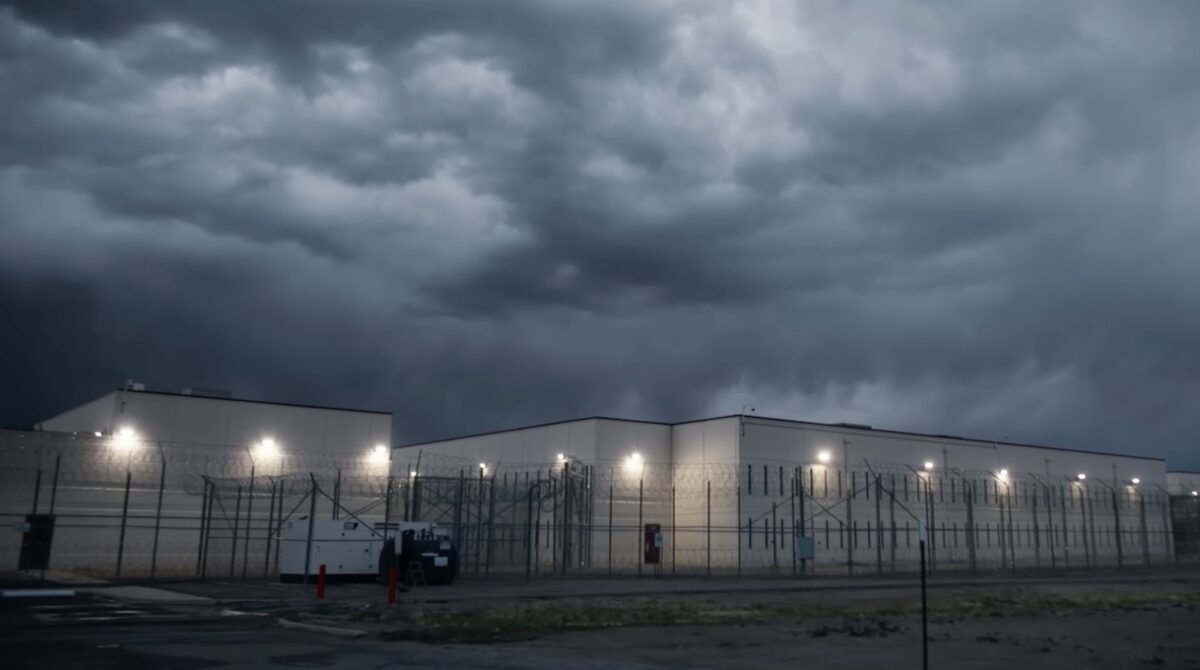
Towns like Estancia, New Mexico—small, remote, and often overlooked—have become central to the federal government’s aggressive immigration enforcement strategy. The Torrance County Detention Facility, operated by private prison giant CoreCivic, is not just another building in town.
It is the lifeblood of the local economy.
Town officials openly acknowledge the financial reality:
- Two-thirds of Estancia’s gross receipts tax revenue comes from the prison.
- The town annexed surrounding land specifically to include the facility in its tax base.
- When CoreCivic temporarily idled the facility in 2017, the town teetered on the brink of financial crisis.
“It’s a necessary evil,” one resident admitted. “Estancia doesn’t exist without the prison.”
This is the central tension of the detention economy:
Communities are surviving because immigrants are being locked up.
How ICE Builds Financial Dependence
ICE operates detention centers through three main methods:
- ICE owns the facility but contracts out management.
- Private companies own and run the facility directly for ICE.
- Private companies own the facility but ICE contracts through the local county, giving local governments a surprising—and profitable—role in federal immigration enforcement.
It’s the third model that creates deep economic entanglement. Counties become intermediaries on multimillion-dollar contracts, making them stakeholders in the continuation of detention.
This kind of partnership transforms small towns into ICE-dependent economies, where every budget decision—from schools to roads—relies on keeping detention beds full.
Inside the Facilities: Fear, Isolation, and Lost Due Process
While towns depend on the revenue, the human cost inside these facilities is staggering.
Former detainees describe:
- Little time outdoors—sometimes only 13 total hours in a month.
- Poor nutrition and lack of medical support.
- Constant fear and widespread anxiety.
- Limited access to lawyers or case information.
- Language barriers that derail legal proceedings.
As José wrote,
“This is the most difficult experience of my life.”
Others wrote about depression, suicidal thoughts, and the emotional collapse of families on the outside. One family member said:
“One doesn’t sleep here. My son has depression he can’t stand. Who is responsible? No one.”
Much of this stems from the confusion inherent in detention. Many detainees have never been in jail before. The guards—employed by CoreCivic—are trained as prison staff, not immigration specialists. People often feel disappeared into a system they do not understand.
And because ICE officers are rarely onsite, detainees rely on tablets to message officials—yet many say they receive no answers at all.
The Business Strain: Staffing Crises and High Turnover
Despite the millions flowing into these facilities, they are notoriously understaffed. Government inspections repeatedly flag inadequate staffing levels.
CoreCivic struggles to recruit locally, leading to:
- Flying in workers from out of state
- Hotels filled with temporary guards
- 16-hour shifts
- Young workers, recruited straight out of high school, often with no experience
Some employees cope through drinking or emotional detachment. Many burn out quickly.
This is not just a workplace issue—it affects safety, conditions, and detainees’ access to basic rights.
A Community Torn: Jobs vs. Morality
Local leaders often find themselves in impossible positions. One commissioner admitted:
“It’s really hard to keep a town alive without the detention center.”
Another said she didn’t believe in private prisons but still voted to extend the ICE contract because the county couldn’t afford to lose the revenue.
Meanwhile, residents who work at the facility feel stigmatized. One said:
“I know the people who work there are good people. I just don’t like the stigma of being a ‘bad place’ because of the detention center.”
This is the heart of the moral tradeoff:
Should a town survive because others are suffering?
Financial Costs to Taxpayers—and the Expansion of Detention
José’s case—months in detention before deportation—is not unusual. But beyond the emotional toll on families, it is financially draining for taxpayers.
ICE was funded for just over 41,000 beds, yet current federal allocations allow the system to expand to 100,000 beds or more.
This means:
- Higher costs
- More overcrowding
- Even more severe staffing shortages
- Deteriorating conditions
And still, counties have incentives to keep facilities open—because their budgets depend on it.
The Human End: Deportation After Months of Uncertainty
José was eventually ordered removed. He was transferred across multiple facilities—El Paso, Otero, Pine Prairie—before finally being deported to Honduras.
Carol followed every move, often unsure where her father had been taken next. Months of fear, tears, paperwork, and unanswered calls culminated in a forced farewell.
For families like hers, deportation is not just an immigration proceeding—it is a traumatic maze shaped by a profit-driven system.
The Bigger Question: What Happens When the Detention Economy Becomes Unsustainable?
Some county officials express hope that conditions can be improved. But many recognize that the real problem is deeper:
A community should not depend on human suffering to balance its budget.
As one advocate put it:
“It benefits everyone when a county is not dependent on human suffering to survive.”
In the long run, relying on detention is economically unstable. Federal policy shifts, court decisions, or public pressure can quickly shrink or shut down facilities—leaving entire towns financially stranded.
A System at a Crossroads
The story of José, Carol, and the town of Estancia reveals the tangled web of economics, politics, and human rights within the U.S. immigration detention system.
Rural communities need stable economic development.
Families need justice and humane treatment.
And a nation must confront the ethics of profiting from detention.
The question is no longer whether immigrant detention is a business.
It’s whether America is willing to keep building its rural economies on the backs of people who never expected to end up in an ICE cell—people like José.