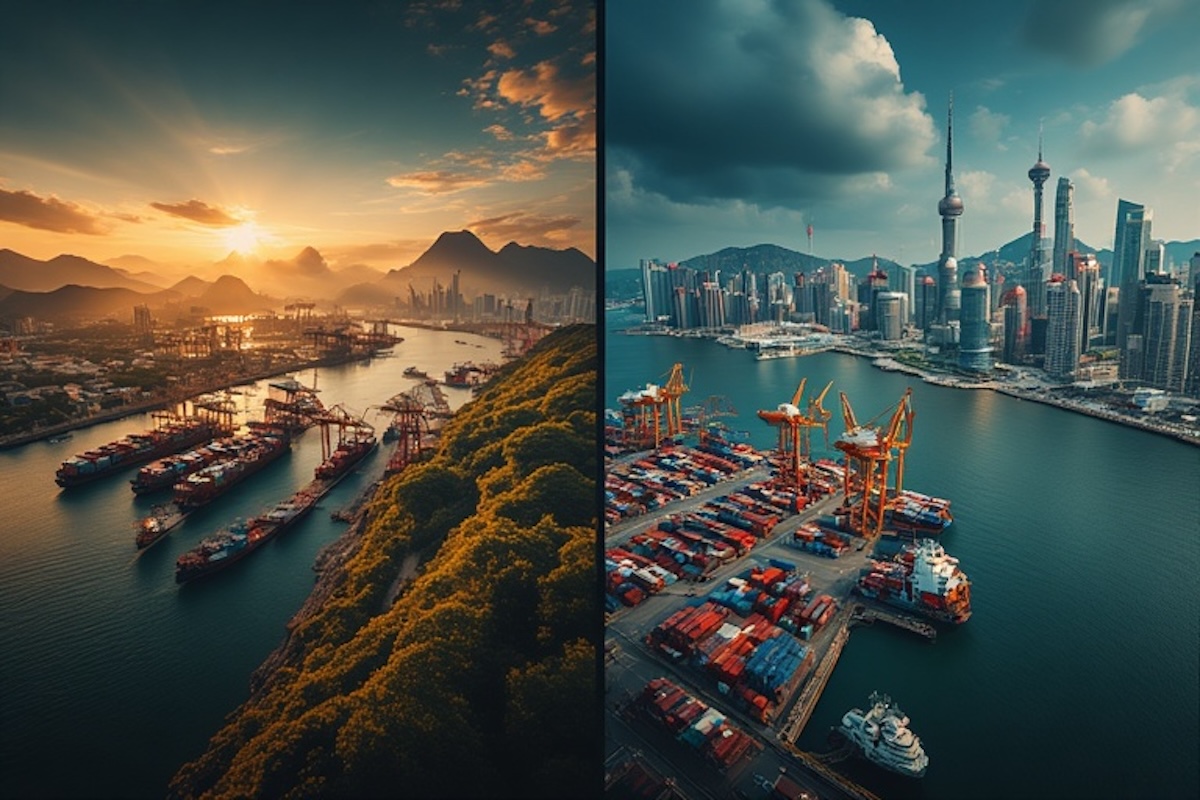
China has established multiple free trade zones to attract foreign investment and accelerate economic reform, but not all free trade zones serve the same purpose. Two of the most talked-about models are the Hainan Free Trade Port (FTP) and the Shanghai Free Trade Zone (FTZ).
While both aim to promote openness, trade facilitation, and global business engagement, their structures, policies, and long-term goals are fundamentally different. Understanding these differences is essential for businesses, investors, and policymakers evaluating opportunities in China.
This article breaks down the key differences between Hainan Free Trade Port and Shanghai Free Trade Zone, helping you decide which model better fits different business strategies.
What Is the Hainan Free Trade Port?
The Hainan Free Trade Port is China’s most ambitious trade liberalization project to date. It is designed as a port-wide free trade system covering the entire island of Hainan, with the goal of becoming a globally competitive trade and investment hub by the mid-21st century.
Unlike traditional free trade zones, Hainan FTP focuses on:
- Zero-tariff or low-tariff trade
- Simplified customs procedures
- Liberalized foreign investment access
- An open, international business environment
Hainan’s strategy positions it closer to global free ports such as Singapore or Hong Kong rather than a standard industrial zone. For a full explanation of Hainan’s business environment and long-term vision, see this detailed guide:
What Is the Shanghai Free Trade Zone?
The Shanghai Free Trade Zone, launched earlier, functions as a pilot zone for economic reform within China’s largest financial and commercial city. Instead of covering an entire region, Shanghai FTZ consists of designated areas focused on testing regulatory flexibility.
Key objectives of Shanghai FTZ include:
- Financial innovation
- Trade facilitation
- Cross-border investment reform
- Regulatory experimentation
Shanghai FTZ plays a crucial role in refining policies before they are expanded nationwide, making it a controlled testing ground rather than a fully open trade port.
Geographic Scope: Island-Wide vs Zone-Based
One of the biggest differences lies in scale.
- Hainan Free Trade Port applies free trade policies across the entire island, creating a unified economic system.
- Shanghai Free Trade Zone operates only within specific designated zones inside the city.
This island-wide model gives Hainan greater flexibility to implement sweeping reforms, while Shanghai’s approach allows for precision testing within limited boundaries.
Trade and Customs Policies Compared
Trade facilitation is a core pillar of both models, but their execution differs.
Hainan Free Trade Port
- Emphasizes simplified customs clearance
- Aims for minimal trade barriers
- Encourages free flow of goods across borders
Shanghai Free Trade Zone
- Focuses on streamlining trade processes
- Maintains closer alignment with national customs systems
- Prioritizes efficiency over radical openness
Hainan’s trade framework is designed to support long-term openness, while Shanghai emphasizes incremental reform.
Tax Incentives and Business Costs
Tax policy is another area where the two diverge.
- Hainan Free Trade Port offers competitive corporate tax incentives and preferential treatment for encouraged industries.
- Shanghai Free Trade Zone provides targeted incentives but operates within higher overall operating costs due to its urban setting.
For cost-sensitive industries or international firms seeking long-term tax advantages, Hainan often appears more attractive.
Foreign Investment Access
Foreign investment rules reveal the philosophical difference between the two zones.
- Hainan FTP promotes broader market access with fewer restrictions across multiple sectors.
- Shanghai FTZ allows foreign participation but remains more tightly regulated, particularly in sensitive industries.
Hainan’s framework is designed to appeal to global investors, while Shanghai balances openness with regulatory caution.
Industry Focus and Strategic Role
Each zone serves a distinct economic role.
Hainan Free Trade Port Focus
- Tourism and services
- Modern logistics
- Digital economy
- International trade and consumption
Shanghai Free Trade Zone Focus
- Finance and banking
- Shipping and logistics
- Advanced manufacturing
- Trade settlement and financial services
Shanghai’s FTZ reinforces its role as China’s financial center, while Hainan positions itself as an international gateway for trade and services.
Which Is Better for International Businesses?
There is no universal answer—it depends on business goals.
Choose Hainan Free Trade Port if you:
- Seek long-term tax efficiency
- Want broad foreign investment access
- Operate in services, trade, or tourism
- Value policy openness over proximity to financial markets
Choose Shanghai Free Trade Zone if you:
- Need access to China’s financial ecosystem
- Operate in finance or advanced manufacturing
- Prefer regulatory stability over experimentation
Many multinational companies evaluate both zones as part of a diversified China strategy.
Final Thoughts
The Hainan Free Trade Port and Shanghai Free Trade Zone represent two distinct models of economic openness in China. Hainan emphasizes bold, long-term liberalization across an entire island, while Shanghai focuses on controlled reform within a global financial hub.
Understanding these differences helps businesses make informed decisions and clarifies why China continues to develop multiple free trade models rather than relying on a single approach.
For a deeper look into how Hainan’s policies shape its international business environment, read the full analysis here:
👉 Hainan Island Free Trade Port: An International Business Environment Explained