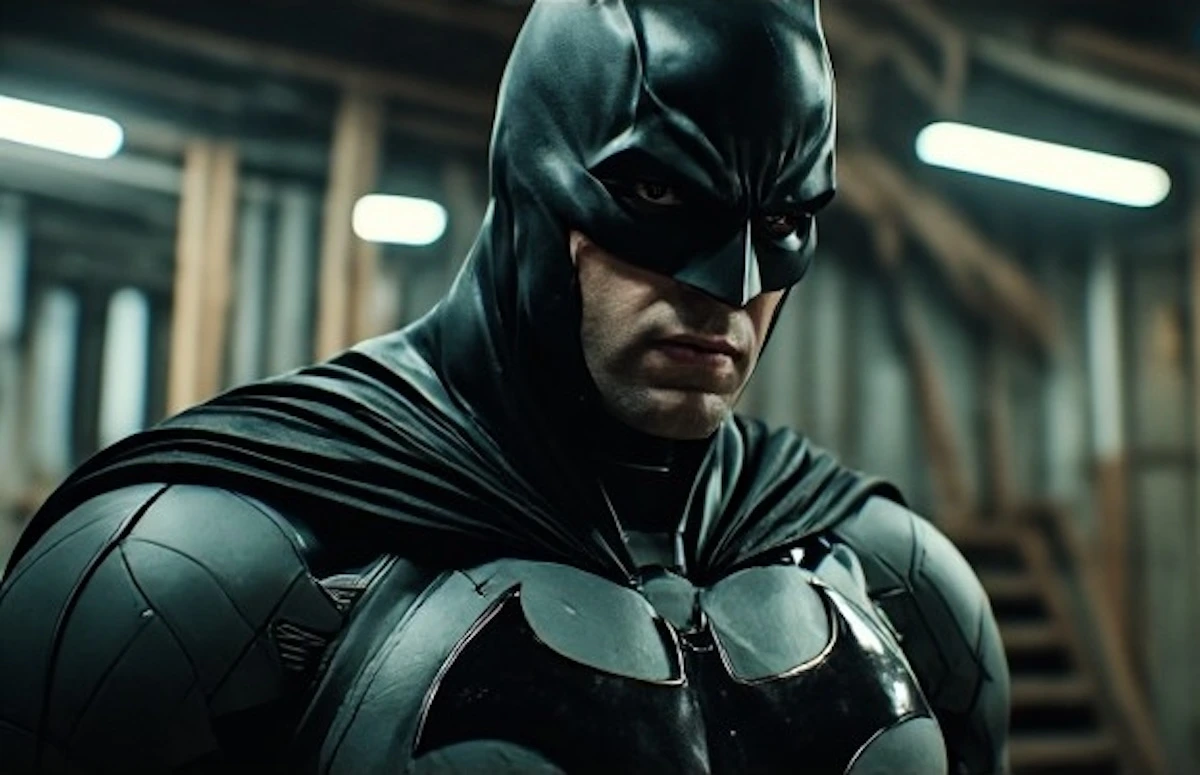
Batman’s wealth has always been part of the character’s basic architecture: the fortune that buys the gadgets, the manor, the mission. DC’s Absolute Batman, launched October 9, 2024, removed that pillar entirely and, against a fair amount of skepticism, turned into one of the best-selling superhero comics of the decade. Written by Scott Snyder and drawn by Nick Dragotta, the series reimagines Bruce Wayne as a 24-year-old blue-collar civil engineer who builds his own gear because he has no other option, operating in a Gotham where several of his classic rogues grew up as his childhood friends and the Joker, notably, is the one who inherited real money.
The series launched as the flagship title of DC’s new Absolute Universe imprint, alongside Absolute Superman and Absolute Wonder Woman, and quickly outpaced expectations that its own writer has publicly described as modest. Its commercial and critical trajectory over the following year offers a useful case study in how a familiar, decades-old character can be meaningfully reworked without simply rebooting the origin story from scratch.
Background and Context
The Absolute Universe line emerged out of 2024’s Absolute Power crossover event, a Mark Waid-written story that closed out DC’s prior “Dawn of DC” publishing era and set up a new, parallel continuity distinct from mainstream DC canon. Rather than another alternate-timeline miniseries, Absolute Universe titles were positioned as ongoing monthly series with their own reworked versions of core characters, with Absolute Batman as the marquee launch alongside its Superman and Wonder Woman counterparts.
Reworking an origin this thoroughly is a familiar move in comics history — Frank Miller’s Batman: Year One and the New 52 relaunch both retooled Batman’s early years to varying degrees — but full wealth removal is a more structurally significant change than most prior reinterpretations attempted, since it affects not just Bruce Wayne’s personality but the entire logistical premise of how Batman operates without a fortune behind him.
Core Analysis
Removing the Fortune, Keeping the Mission
Claim: Stripping Bruce Wayne of inherited wealth is the series’ central structural change, and it reshapes nearly every other element of the Batman mythos built around it.
Evidence: In Absolute Batman, Thomas Wayne is an elementary school teacher and Martha Wayne a social worker, making the family solidly working-class rather than Gotham’s wealthiest philanthropists. Thomas Wayne is killed not in the traditional Crime Alley mugging but in a mass shooting at the Gotham City Zoo during a school field trip. Bruce grows up without a manor, a butler-funded arsenal, or a company to inherit, and instead builds his own combat gear and equipment as a civil engineer with practical, hands-on skills.
Interpretation: This single change forces nearly every downstream element of the mythos to be reinvented rather than simply reskinned — Batman’s tools, his relationship to Gotham’s other characters, and his motivations for fighting crime all had to be rebuilt on a working-class foundation rather than inherited from seventy-plus years of billionaire-vigilante convention.
Limitation: Removing wealth doesn’t remove privilege entirely; the series still gives Bruce Wayne exceptional intelligence, physical ability, and access to specialized training, meaning the “underdog” framing is a meaningful shift in degree rather than a complete rejection of the character’s traditionally exceptional advantages.
Inverting the Rogues Gallery
Claim: Recasting several of Batman’s classic villains as his childhood friends, while making the Joker the story’s wealthy figure, inverts the traditional class dynamic of Batman’s rogues gallery.
Evidence: In this continuity, characters including Killer Croc, the Riddler, and the Penguin are depicted as childhood friends of Bruce Wayne rather than strangers he encounters as an adult vigilante, while the Joker is reimagined specifically as a billionaire. Alfred Pennyworth, rather than serving as Bruce’s butler and father figure, appears in this universe as an MI6 agent tracking Bruce’s activities from the outside.
Interpretation: This inversion directly supports the series’ class-conscious framing: in mainstream continuity, a wealthy Bruce Wayne fights crime largely created by working-class desperation or individual psychopathy, whereas here, some of Bruce’s closest personal relationships are with people failed by the same systems that failed his own family, while the story’s most dangerous antagonist is explicitly positioned as coming from wealth.
Limitation: Reviewers have specifically flagged that this thematic inversion hasn’t been evenly executed across all characters; at least one major review criticized the flat characterization of the series’ primary villain specifically, suggesting the class-inversion concept has worked more successfully for some rogues than others.
An Unexpected Commercial Breakout
Claim: Absolute Batman substantially outperformed internal sales expectations and became one of the best-selling ongoing comic series in recent DC history.
Evidence: Absolute Batman #1 was the best-selling comic book issue of 2024, moving just under 400,000 copies in its first six weeks. The series’ first 14 issues sold more than 3 million copies combined, and it ranked as a top-10 best-selling comic every month of 2025, holding the number-one spot for six of those months. As of Absolute Batman #20, the series has sold over 500,000 copies of that single issue, a milestone matched by only a small handful of DC releases in recent years. Reporting has also indicated the series has been selling at roughly triple the volume Snyder himself initially expected.
Interpretation: Sustained top-10 sales across an entire calendar year, rather than a single strong debut issue followed by decline, suggests the series retained rather than merely attracted its early readership — a distinction that matters more for a monthly ongoing title than for a limited series designed around one big launch.
Limitation: Direct-market comic sales figures (the print-copy numbers cited above) don’t fully capture digital sales, collected-edition/trade paperback sales, or international print runs, meaning total readership is likely higher than single-issue print figures suggest, but also harder to verify with precision.
Counterargument: Is This Really a New Batman, or Marketing Novelty?
It’s worth taking seriously the argument that “de-billionaire-ing” Batman is a well-timed marketing hook rather than a deep reinvention. Batman’s fortune has survived dozens of continuity resets, elseworlds stories, and alternate timelines over eight decades, and skeptics could reasonably argue that removing it now, during a period of heightened public scrutiny of wealth inequality, is an opportunistic rather than artistically necessary choice. Some of the series’ own critical reception supports a version of this concern: reviews have pointed to a perceived lack of narrative consequences in the story despite its high-stakes framing, suggesting the class-conscious premise may function more as marketable texture than as a structurally load-bearing theme throughout every issue. This is a reasonable critical position, even if it hasn’t dampened the book’s commercial performance.
Data & Evidence Summary
| Metric | Figure | Detail |
|---|---|---|
| Launch date | October 9, 2024 | First title of DC’s Absolute Universe line |
| Creative team | Scott Snyder / Nick Dragotta | Writer and artist |
| Issue #1 sales | ~400,000 copies | Best-selling single comic issue of 2024, first six weeks |
| Issues #1-14 combined sales | 3+ million copies | Across first 14 issues |
| Monthly sales pace | ~300,000 copies/issue | Sustained roughly two years post-launch |
| Issue #20 sales | 500,000+ copies | Matches a milestone shared with Batman #1 (2025) |
| 2025 chart performance | Top 10 every month | #1 spot for 6 of 12 months |
| Absolute Universe 2025 total sales | 8.2+ million units | Excludes December 2025 |
| Absolute Batman’s share | ~35% (~3 million units) | Of total Absolute Universe 2025 sales |
| Critical recognition | Eisner Award nomination | Best New Series category |
| Bestseller ranking | #5, New York Times list | September 2025 |
Methodology note: Sales and reception figures above are compiled from comics-trade reporting (Bleeding Cool, Comics Bulletin, The Hollywood Reporter, Dark Knight News, Popverse) and Wikipedia’s sourced entry on the series, current as of early 2026. Direct-market print sales estimates in the comics industry are typically derived from distributor (Diamond/Lunar) sell-in data rather than final point-of-sale figures, so numbers should be read as industry-standard estimates rather than audited totals.
Implications
For DC’s broader publishing strategy, Absolute Batman’s performance provides a strong internal argument for continuing to greenlight substantial character reinventions rather than relying primarily on continuity-safe status quo storytelling in flagship titles. Its sustained sales, rather than a single strong debut followed by fade-out, likely factors into decisions about extending or expanding the Absolute Universe line beyond its initial three founding titles. For the wider comics industry, the series is also a data point in an ongoing conversation about whether socioeconomically grounded reinterpretations of legacy superheroes can outperform, commercially, more traditional takes on the same characters, at a moment when several publishers have experimented with similar class-conscious reworkings of long-running properties.
Counterpoints and Limitations
Some caveats are worth stating directly. Sales dominance in the direct comics market does not necessarily indicate that the series’ specific thematic execution — the class-inversion of the rogues gallery, in particular — has been uniformly well received; published criticism specifically calls out flat villain characterization and a perceived lack of consequences in the narrative, suggesting the commercial and the purely critical response, while both largely positive, are not identical assessments. Additionally, “best-selling comic of the year” claims should be understood within the comparatively small direct market for physical comic books, which is a niche retail category relative to other entertainment media; strong performance within that market doesn’t necessarily translate to mainstream cultural penetration outside existing comics readership. Finally, the Absolute Universe’s premise is explicitly a parallel continuity rather than a replacement for DC’s mainstream universe, so Absolute Batman’s changes to Bruce Wayne’s backstory don’t affect or retcon the character’s traditional continuity elsewhere in DC’s publishing line.
Conclusion
Absolute Batman’s success suggests that one of the most durable assumptions about Batman — that the character requires inherited wealth to function as a concept — was more of a convention than a necessity. By rebuilding Bruce Wayne as a working-class engineer surrounded by friends-turned-villains and shadowed by an outside observer rather than a loyal butler, Snyder and Dragotta produced a version of the character that sold at a pace outperforming even the creative team’s own expectations, while still drawing legitimate criticism for uneven execution on some of its central ideas. Whether the series ultimately reshapes how future Batman stories are told, or remains a well-executed parallel-universe experiment, its first two years of sales data make a clear case that audiences were ready for a Batman defined more by resourcefulness than by resources.
Frequently Asked Questions
What is Absolute Batman about?
It’s a DC Comics series reimagining Bruce Wayne as a working-class civil engineer rather than a billionaire, building his own equipment to fight crime in a Gotham where several classic villains are his childhood friends and the Joker is reimagined as wealthy.
Who created Absolute Batman?
The series is written by Scott Snyder and illustrated by Nick Dragotta, launched October 9, 2024, as the flagship title of DC’s Absolute Universe imprint.
How well has Absolute Batman sold?
Issue #1 was the best-selling comic issue of 2024, and the series has remained a top-10 seller every month of 2025, with issue #20 surpassing 500,000 copies sold.
Is Absolute Batman part of mainstream DC continuity?
No. It’s part of a separate, parallel continuity called the Absolute Universe, launched out of the 2024 Absolute Power crossover event, and does not alter Batman’s traditional mainstream backstory.
Does Absolute Batman replace the classic Batman origin story?
No, it exists alongside the mainstream version. In this alternate continuity, Thomas Wayne dies in a mass shooting rather than a mugging, and Martha Wayne survives longer before a later, separate plot twist involving the Court of Owls.