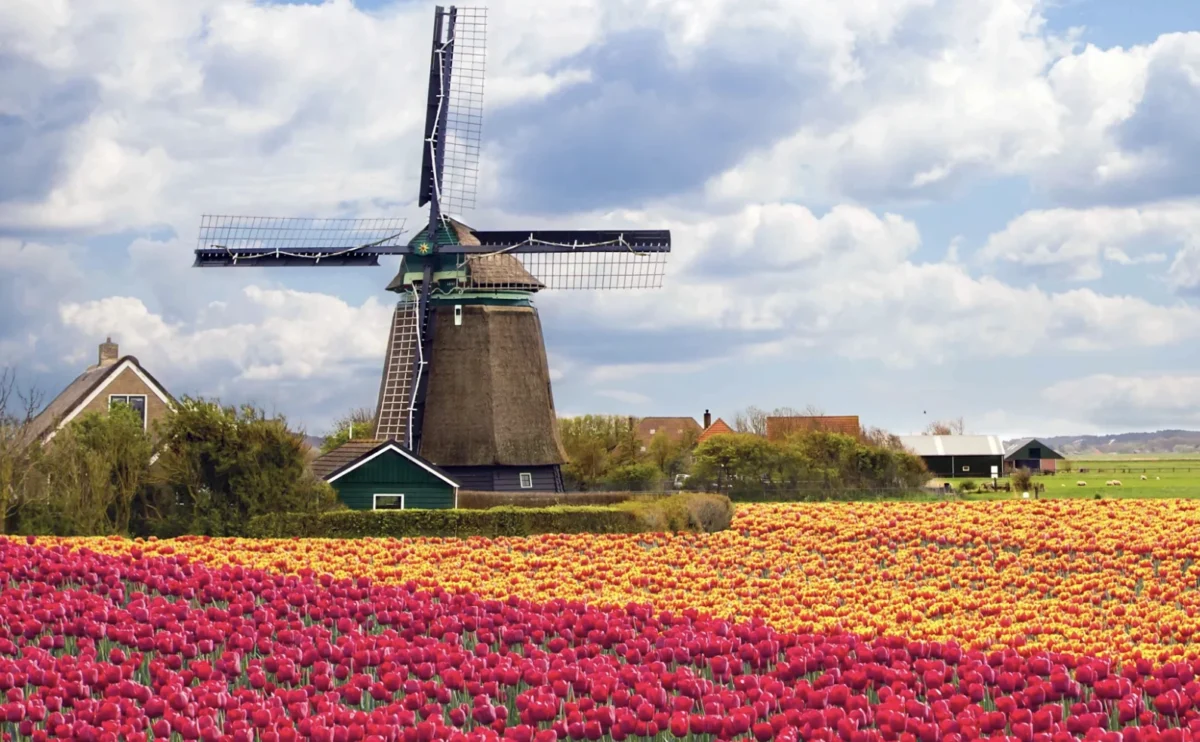
Every spring, the same photo makes its way around social media: endless rows of red, yellow, and pink tulips stretching toward the horizon under a soft Dutch sky. It’s genuinely one of the most beautiful sights in Europe — and also one of the most misunderstood, timing-wise. Show up on the wrong week, or in the wrong part of the country, and you might find a field of green stems and no color at all.
Here’s what actually goes into planning a tulip trip that lives up to the photos — timing, location, and a few things most first-time visitors get wrong.
First, Understand That Tulip Season Is Short — and Moves
The single biggest mistake visitors make is treating “tulip season” like a fixed date on a calendar. It isn’t. Tulip bloom timing shifts every year depending on weather, and even within a single season, different fields and regions peak at different times.
As a general rule:
- Early bloomers (some daffodil and crocus varieties, plus early tulip cultivars) start appearing in late March.
- Peak tulip bloom across most of the country typically falls in the second and third weeks of April, though this can shift a week earlier or later depending on how mild or cold the spring has been.
- Late-season tulip varieties can still be blooming into early May, particularly in the northern flower-growing regions.
A genuinely useful trick locals use: check a live tulip bloom report or flower forecast a week or two before traveling, rather than booking based on last year’s dates. Bloom timing can swing by 7–10 days year to year, and locking in dates too far in advance is the most common reason visitors miss peak color.
Where to Actually See the Tulips
This is where most travel guides stop short — they’ll tell you “go to the Netherlands in April,” without explaining that different regions offer completely different experiences.
Keukenhof Gardens (Lisse) — The Classic, Curated Experience
Keukenhof is the famous one, and for good reason: it’s a meticulously designed garden showcasing millions of bulbs across curated flower beds, generally open from mid-March through mid-May. It’s less “wild countryside” and more “world-class botanical showcase” — every path is planned, every color combination intentional.
Local tip: Arrive right at opening time (8 a.m.) or in the last two hours before closing. Midday, especially on weekends, draws heavy tour bus crowds. Early morning light also happens to be the best time for photos.
The Bollenstreek (Bulb Region) — The Real Working Fields
Just outside Keukenhof, the surrounding Bollenstreek region — stretching between Haarlem and Leiden — is where the actual commercial tulip farming happens. These are working agricultural fields, not tourist gardens, which means the experience feels far more authentic: raw color blocks stretching to the horizon, often without another visitor in sight if you’re willing to explore backroads.
Local tip: Rent a bike. The Bollenstreek is flat, compact, and covered in dedicated cycling paths, making it one of the best regions in the country to explore tulip fields at your own pace rather than being stuck to a bus tour schedule.
The Noordoostpolder and Flevoland — Fewer Crowds, Bigger Fields
For travelers who’ve already done the classic Keukenhof-and-Bollenstreek route, the flower fields further north and east in Flevoland and the Noordoostpolder offer larger, less crowded fields, often blooming slightly later in the season than the fields near Lisse.
Local tip: This region tends to peak about one to two weeks after the Bollenstreek, making it a smart backup destination if you missed peak bloom further south — or a way to extend your tulip trip across two different waves of color.
The Tulip Route (Bollenstreek Route) — A Self-Guided Driving/Cycling Loop
Rather than committing to a single field, many locals recommend following an official signposted tulip driving or cycling route that winds through multiple working fields. These routes change slightly year to year based on which farms are growing tulips that season, but they’re specifically designed to string together the most scenic stretches of color.
When to Go, Broken Down by What You Actually Want
If you want the most reliable, curated experience: Visit Keukenhof in the second or third week of April, arriving at opening time.
If you want the most authentic, uncrowded experience: Rent a bike in the Bollenstreek in early-to-mid April and simply follow the color — some of the most beautiful stretches aren’t marked on any map, just visible from public cycling paths that cut directly alongside working farms.
If you’re traveling later in spring (late April to early May): Head north to Flevoland or the Noordoostpolder, where fields are often still in full bloom after the Bollenstreek has started fading.
If your travel dates are fixed months in advance and can’t be adjusted: Book a trip spanning at least 4–5 days within the broader mid-April window, and treat any single day as flexible — that gives you enough of a buffer to chase good weather and blooms within the trip itself, rather than being locked into one specific date.
Practical Tips Most Guides Leave Out
Weekday mornings beat weekends, always. Dutch and international tourists alike concentrate heavily on weekends, especially Saturdays. If your schedule allows any flexibility, a Tuesday or Wednesday morning will feel dramatically less crowded than a Saturday afternoon at the exact same field.
Check for wind before planning a field visit, not just rain. Tulip fields photograph best on calm days — strong wind flattens the visual “waves” of color that make wide-angle photos look so striking, even under otherwise perfect blue skies.
Bring cash or a Dutch payment method for smaller roadside flower stands. Many independent farms sell bunches of tulips directly from small unmanned stands along country roads, often on an honesty-box payment system. These stands frequently don’t accept international cards, so having a few euros in coins or a Dutch-compatible payment app can be the difference between bringing home flowers and walking away empty-handed.
Don’t pick from working fields. It sounds obvious, but every season, visitors wander into commercial tulip fields to pick a souvenir stem. These are working farms with a full harvest cycle — picking damages the bulb’s commercial value, and many fields now have visible signage (and occasionally fines) specifically because of this.
Consider a helicopter or hot air balloon flight for a genuinely different perspective. Several operators near the Bollenstreek offer short scenic flights during peak season specifically timed around tulip bloom — it’s a splurge, but it’s one of the only ways to see the geometric patterns of the fields the way most aerial photos capture them.
A Realistic Sample Itinerary
Day 1: Arrive in the Bollenstreek region, rent bikes, spend the afternoon exploring working fields near Lisse and Sassenheim at your own pace.
Day 2: Visit Keukenhof Gardens at opening time, then spend the afternoon following the signposted tulip driving/cycling route through nearby villages.
Day 3: Day trip north to Flevoland or the Noordoostpolder for larger-scale fields and a different visual experience, especially valuable if timing is later in the season.
Day 4 (optional): A scenic flight or balloon ride for an aerial view, followed by a relaxed final day revisiting whichever field looked best on Day 1 or Day 2 — bloom conditions can shift meaningfully even within a few days.
The Bottom Line
Seeing the Netherlands’ tulip fields at their best isn’t about picking one perfect date months in advance — it’s about understanding that the bloom moves, the regions differ, and the “postcard” version of the trip usually comes from a mix of curated gardens and quiet backroad cycling rather than any single stop. Build in flexibility, check bloom reports close to your travel dates rather than relying on last year’s calendar, and be willing to chase the color a little further north if you arrive later in the season. Do that, and there’s a very good chance your own photos end up looking exactly like the ones that got you interested in the first place.