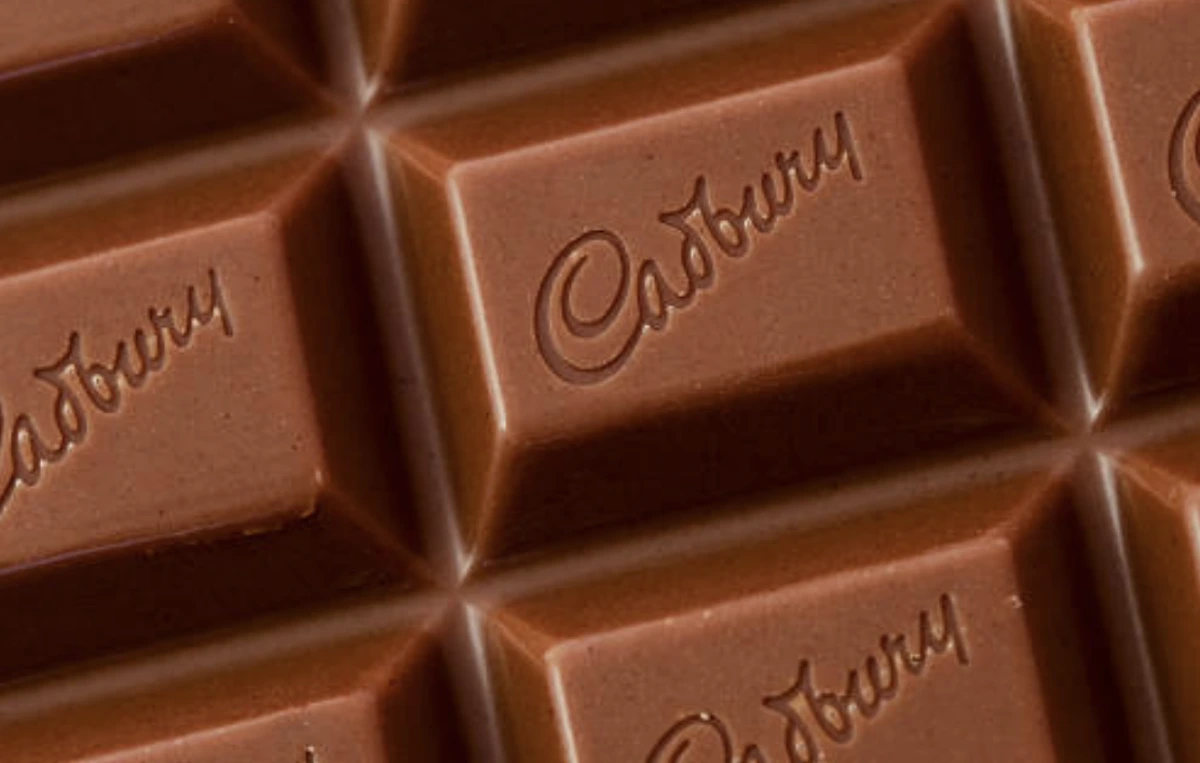
If you’ve ever brought a bar of Cadbury Dairy Milk back from a UK trip and compared it to the “Cadbury” bar sold at your local American grocery store, you’ve probably noticed they don’t taste the same. That’s not your imagination — and it’s not a recipe tweak for the American palate. It’s the result of a decades-long licensing arrangement and a 2015 legal settlement that means the Cadbury chocolate on U.S. shelves has never actually been made by Cadbury.
Key Takeaways
- Hershey has held the exclusive license to manufacture and sell Cadbury-branded chocolate in the United States since 1988 — the “Cadbury” bars in American stores are made by Hershey, not by Cadbury.
- UK-made Cadbury products are effectively blocked from U.S. shelves: a 2015 legal settlement forced importer Let’s Buy British Imports (LBB) to stop bringing in Cadbury, Kit Kat, Toffee Crisps, Yorkie, and Maltesers made overseas.
- The two versions of “Cadbury” chocolate use genuinely different recipes — British Dairy Milk lists milk as its first ingredient, while the American-made version lists sugar first, and uses different fats and emulsifiers, including soy lecithin.
- Hershey’s position, as of its own current public FAQ, is that this licensing arrangement remains in effect — there’s no indication real UK Cadbury is returning to mainstream U.S. shelves anytime soon.
- Fans can still find genuine UK Cadbury at specialty British import shops, some ethnic grocery stores, and online retailers, though usually at a premium price.
- This isn’t unique to Cadbury — Hershey’s Kit Kat license with Nestlé follows a similar structure, which is why U.S. Kit Kats also differ from the UK version.
Table of Contents
- The License That Explains Everything
- How UK Cadbury and US Cadbury Actually Differ
- The 2015 Settlement That Shut the Door
- Why Hershey Is So Protective of the Name
- How Fans Still Get the Real Thing
- Analysis: Trademark Protection or Consumer Choice Restriction?
The License That Explains Everything
The story starts in 1988, when Hershey paid $300 million to acquire Cadbury Schweppes’ U.S. candy operations. That deal handed Hershey the license to manufacture and market Cadbury and Caramello products in the United States, along with other brands like York Peppermint Patties, Mounds, and Almond Joy. Crucially, Hershey didn’t buy the Cadbury company — it bought the rights to make and sell Cadbury-branded chocolate specifically within U.S. borders, using Hershey’s own production facilities, ingredients, and recipes.
That arrangement still governs every “Cadbury” product sold in mainstream American stores today, including the Cadbury Mini Eggs and Caramello bars made at Hershey’s own Pennsylvania facility. Even Cadbury Creme Eggs sold in the U.S. are produced by Mondelez (Cadbury’s actual parent company) in Canada, not in the UK — a detail most American shoppers never realize. According to reporting from a decades-later retrospective on the deal, the original 1988 arrangement has been described as something close to a forced retreat for the UK company at the time, made during a period when Cadbury Schweppes concluded it couldn’t meaningfully compete against Hershey and Mars, who together controlled roughly 70% of the American candy market.
How UK Cadbury and US Cadbury Actually Differ
The taste difference fans describe isn’t subjective — it comes down to genuinely different ingredient lists. British-made Cadbury Dairy Milk lists milk as its first ingredient, reflecting a higher butterfat content in the recipe. The American-made version lists sugar first. The two versions also use different fat blends and different emulsifiers: British Cadbury traditionally uses vegetable fats, while the American-made product includes soy lecithin and PGPR, additives used to extend shelf life and reduce production costs. Compare this to Coca-Cola’s Mexican formula, which many Americans also seek out specifically because it uses cane sugar instead of high-fructose corn syrup — brand names traveling across borders with materially different recipes underneath them is more common than most consumers assume, and it tends to trace back to a similar mix of regional ingredient regulations, cost structures, and licensing terms rather than any single explanation. Cadbury Creme Eggs follow the same pattern: British eggs are made with Cadbury’s own chocolate, while the American version uses chocolate from Mondelez’s Canadian operations, producing a noticeably different final product despite sharing packaging and branding.
The 2015 Settlement That Shut the Door
For years, a handful of specialty importers — most notably a company called Let’s Buy British Imports (LBB) — brought genuine UK-made Cadbury products into the United States for homesick expats and curious fans. Hershey sued, arguing the practice violated its exclusive licensing agreement and created consumer confusion between UK products and Hershey’s own trademarked American versions. Hershey’s complaint extended beyond Cadbury alone: it also targeted UK-made Kit Kat bars, Toffee Crisps (which Hershey argued too closely resembled Reese’s Peanut Butter Cups in packaging), Yorkie bars (positioned as too similar to York Peppermint Patties), and Maltesers.
The lawsuit ended in a settlement rather than a courtroom verdict: LBB agreed to stop importing all of the disputed UK-made products. It’s worth being precise about what Hershey’s leverage actually was here — as a private company, Hershey has no regulatory power to literally “ban” a product from crossing the border. What it can do, and did, is enforce its trademark licensing rights against importers and retailers, which had functionally the same effect: mainstream UK Cadbury imports stopped.
Why Hershey Is So Protective of the Name
From a brand-management standpoint, Hershey’s position is straightforward: it paid for exclusive U.S. rights to the Cadbury name, and a competing product using the identical branding — even one made by the original company — undermines the value of that exclusivity and risks confusing shoppers about which product they’re actually buying. This is a familiar tension in how brand equity gets built and protected over time: a name only stays valuable if the company controlling it can guarantee consistency, and Hershey’s legal position rests on treating “Cadbury” in the American market as effectively a Hershey product line rather than an imported one.
There’s also a quieter commercial logic. Hershey’s FAQ page continues to describe the Cadbury and Caramello license as active and extendable at Hershey’s option, meaning the company has no real incentive to loosen its grip on a recognizable, nostalgia-driven brand name that consistently drives sales without Hershey needing to build that emotional connection from scratch — a dynamic that echoes how deeply brand loyalty is often rooted in nostalgia and repeated positive experience rather than pure product superiority.
How Fans Still Get the Real Thing
None of this means UK Cadbury is entirely unobtainable in America — it just means it’s harder to find and typically more expensive. British specialty grocery stores, some South Asian and Caribbean grocery stores that stock imported UK goods, and dedicated candy shops in cities with strong British expat communities still carry genuine UK Cadbury, often at a noticeable markup over the domestic Hershey version. Online marketplaces and specialty import retailers fill much of the remaining gap, sometimes charging a premium specifically for the “authentic” UK version. Ironically, this dynamic has created something close to a small parallel economy of chocolate importers similar to the specialty-candy niche that companies focused on turning ordinary sweets into new retail formats have found success in — a reminder that restricting a product’s supply through one channel rarely eliminates consumer demand, it just pushes that demand into smaller, higher-margin channels.
Trademark Protection or Consumer Choice Restriction?
It’s tempting to frame this purely as Hershey being uncooperative, but the legal reality is more mundane than that: trademark licensing agreements like this one are common in the confectionery industry, and Hershey’s Kit Kat arrangement with Nestlé follows a nearly identical structure — which is exactly why American Kit Kats also taste different from UK and Japanese versions. Cadbury Schweppes agreed to these terms in 1988 because it made a specific business calculation about the cost of competing directly in the American market versus licensing its name to an established player already there. Once that decision was made, enforcing the resulting exclusivity is a fairly standard exercise of trademark rights, not an unusual overreach.
What’s genuinely interesting is the mismatch between the legal logic and the consumer experience. From a legal standpoint, there’s no meaningful confusion risk left to protect against — dedicated Cadbury fans in America overwhelmingly know the U.S. version tastes different and actively seek out the UK original specifically because it’s different, not because they’re confused about which one they’re buying. The 2015 settlement solved a trademark problem more effectively than it solved anything resembling consumer protection, and three decades on, the practical effect has mostly been to push a small, devoted market of chocolate importers into a permanent gray zone rather than eliminate demand for the product entirely. That’s a pattern worth watching for anyone tracking how the broader landscape of import restrictions and trade barriers tends to shape consumer behavior — restriction rarely kills demand, it just relocates where and how people satisfy it.
FAQ
Can I legally bring Cadbury chocolate into the US from the UK for personal use?
Generally yes, in reasonable personal quantities for your own consumption — the restriction targets commercial importers reselling the product, not travelers bringing back chocolate in their luggage.
Does Hershey actually own Cadbury?
No. Hershey only holds a license to manufacture and sell Cadbury and Caramello products within the United States. Cadbury itself is owned globally by Mondelez International.
Why does American Cadbury taste different from UK Cadbury?
The two use different recipes: British Dairy Milk lists milk as its first ingredient with a higher butterfat content, while the American Hershey-made version lists sugar first and uses different fats and emulsifiers, including soy lecithin.
Are Cadbury Creme Eggs sold in the US actually made by Cadbury?
The chocolate shell comes from Mondelez’s Canadian operations rather than from Cadbury’s UK production, which is part of why the flavor differs noticeably from the British original.
Is this the only British candy affected by import restrictions like this?
No — the same 2015 settlement also stopped mainstream imports of UK-made Kit Kat bars, Toffee Crisps, Yorkie bars, and Maltesers, largely for similar trademark-licensing reasons.
The Bottom Line
The gap between American and British Cadbury isn’t a myth, a marketing trick, or a matter of taste preference — it’s the direct, traceable result of a 1988 licensing deal and a 2015 legal settlement that together determined which company gets to make “Cadbury” chocolate on American soil. Real UK Cadbury hasn’t disappeared, but finding it now means seeking out specialty importers rather than your neighborhood grocery aisle. Have you tried both versions side by side — and did you notice the difference? Let us know in the comments.