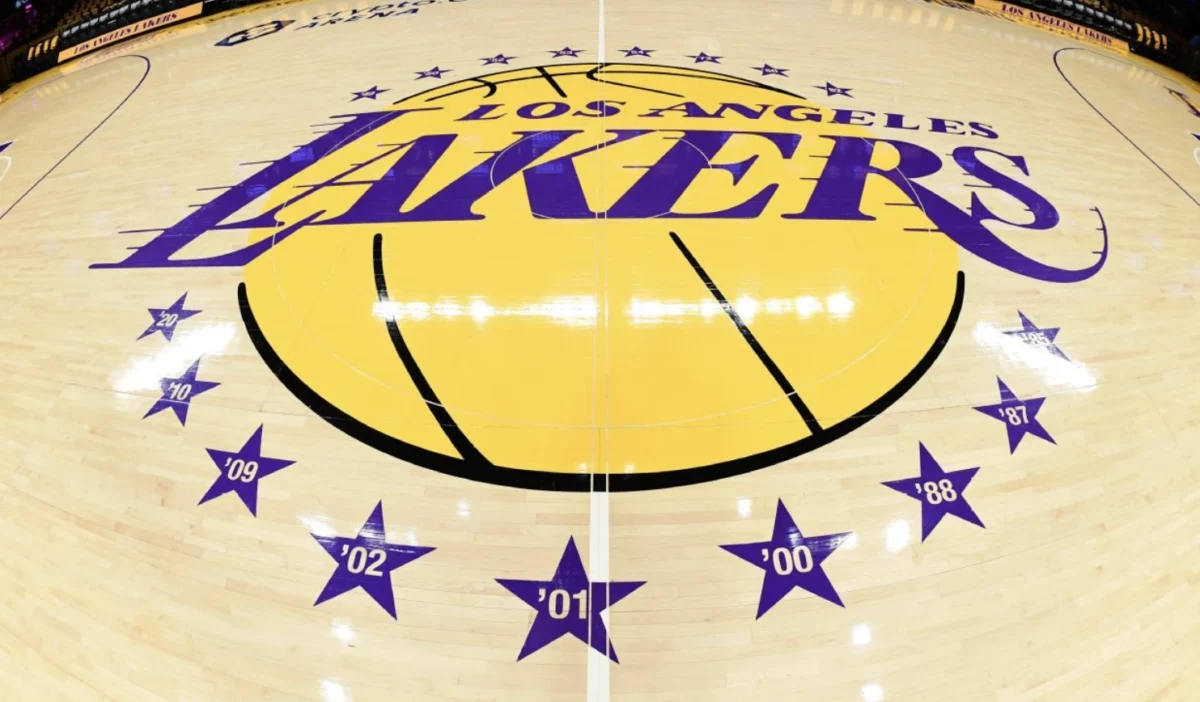
Josh Kushner spent nearly two decades building a reputation as one of venture capital’s quietest heavy hitters — the investor behind early bets on Instagram, Spotify, Stripe, and OpenAI who mostly avoided the spotlight his family name tends to attract. That changed on August 12, 2026, when reports confirmed Kushner and former Disney CEO Bob Iger had agreed to buy the Los Angeles Lakers in a deal valued at more than $12 billion — the largest transaction in U.S. sports franchise history.
This profile breaks down who Josh Kushner actually is, how he built his fortune through Thrive Capital, his history of sports team investments, and exactly what the record-breaking Lakers deal involves.
Who Is Josh Kushner?
Josh Kushner is a 41-year-old American venture capitalist and the founder of Thrive Capital, a New York-based investment firm he launched in 2009 while still in his early twenties. He’s built his career funding some of the technology industry’s most consequential companies, while separately co-founding the health insurance company Oscar Health and the real estate technology platform Cadre. He’s also the younger brother of Jared Kushner, the businessman who served as a senior adviser during Donald Trump’s first presidential administration and is married to Ivanka Trump, and the son of real estate developer Charles Kushner, who became Trump’s ambassador to France in May 2025.
Kushner has been married to supermodel and entrepreneur Karlie Kloss since 2018, and the couple has three children together. They live in a penthouse inside New York’s Puck Building — a property owned by the Kushner family that also happens to house Thrive Capital’s headquarters.
Josh Kushner’s Net Worth in 2026
As of 2026, Forbes estimates Josh Kushner’s net worth at approximately $5.2 billion, a figure that’s climbed steadily as Thrive Capital’s portfolio companies — most notably OpenAI — have soared in valuation. That fortune stands in notable contrast to his brother’s public profile: while Jared Kushner built his reputation largely through real estate and later politics, Josh has built his largely independently, through venture capital returns rather than the family’s real estate business or political connections.
The Lakers deal itself doesn’t directly add to that net worth figure, since it represents an acquisition of a controlling stake rather than a straightforward increase in Kushner’s personal assets — but it does mark a significant expansion of his visibility and influence well beyond the tech investing world where he made his name.
From Harvard to Thrive Capital: Josh Kushner’s Career
Kushner earned his undergraduate degree from Harvard University in 2008, then returned to Harvard Business School for his MBA, which he completed in 2011 — notably launching Thrive Capital in 2009, in between those two degrees, while he was still a student. That early start reflects a broader pattern throughout his career: Kushner built one of the most respected venture firms of his generation while consistently avoiding the media attention that’s followed other members of his family, choosing instead to let his investment track record speak for itself.
That track record includes early positions in companies that later became some of the defining businesses of the past two decades. Kushner backed Instagram before its acquisition by Facebook, and Thrive’s portfolio has since expanded to include stakes in Spotify, Stripe, Slack, Instacart, and Skims. Understanding how a firm builds that kind of track record from a standing start is worth exploring through the broader mechanics of how venture capital actually transforms early-stage companies into industry giants, a process Kushner has executed about as effectively as any investor of his generation.
Thrive Capital: The Investment Firm Behind the Fortune
Thrive Capital now manages tens of billions of dollars in assets, having raised $5 billion for its ninth fund in August 2024 alone. Kushner holds a controlling ownership stake in the firm, and its investor base includes a striking list of names for a firm Kushner still runs directly: Bob Iger, along with billionaires Henry Kravis, Mukesh Ambani, Jorge Paulo Lemann, and Xavier Niel.
The relationship that’s arguably defined Thrive’s recent trajectory most is its bet on OpenAI. Kushner and OpenAI CEO Sam Altman first met around 2011, when Kushner was launching Thrive and Altman was advising startups at Y Combinator, and the two stayed in touch for over a decade before reconnecting more seriously in 2022. Thrive went on to lead a tender offer that valued OpenAI at $86 billion in late 2023, and by August 2024, the firm was leading an additional investment round that helped push OpenAI’s valuation toward $100 billion — a bet that’s paid off dramatically as OpenAI’s valuation has continued climbing since. Altman has described Kushner’s investing style as built on high-conviction bets in high-quality founders, largely indifferent to consensus opinion among other investors — a philosophy that mirrors how some of the most closely watched venture-backed valuations, like SpaceX’s approach to its own IPO process, get built on sustained conviction through years of private funding rounds before ever reaching public markets.
Beyond Thrive: Oscar Health and Cadre
Kushner’s investing career hasn’t been limited to backing other people’s companies. He co-founded Oscar Health, a health insurance company built around the Affordable Care Act marketplace, well before his brother’s father-in-law became president — a detail Kushner’s own public profile has occasionally used to distinguish his independent business record from his family’s later political entanglements. He also co-founded Cadre, a real estate technology and investment platform, applying a tech-investor’s approach to an industry his own family has been deeply involved in for generations.
Josh Kushner’s Sports Ownership History
Kushner’s move into the Lakers didn’t come out of nowhere — it’s the culmination of years of steadily building a presence in professional sports ownership. He first acquired a 2.5% minority stake in the NBA’s Memphis Grizzlies back in 2019, before divesting that position in 2024 to acquire a minority stake in the Miami Heat instead. More recently, Kushner and Iger had been pursuing a bid — reportedly through Thrive Capital — for a majority stake in a planned NBA expansion team in Las Vegas, with Bloomberg reporting on that effort as recently as June 2026.
That Las Vegas pursuit ultimately gave way to something far bigger. Rather than building an expansion franchise from scratch, Kushner and Iger pivoted toward acquiring one of the league’s most storied existing franchises outright — a dramatically different scale of investment than a minority stake in an expansion team would have represented. For basketball fans wondering how this kind of ownership shift might eventually affect how and where games get broadcast or attended, it’s worth keeping half an eye on how ownership changes tend to ripple into the broader fan experience around watching NBA games, even though no such changes have been announced as part of this deal.
The Lakers Deal Explained
The agreement, first reported August 12, 2026, values the Los Angeles Lakers at more than $12 billion — with Forbes reporting a more specific $12.5 billion valuation — making it the largest transaction for a U.S. sports franchise in history. Kushner and Iger are acquiring a controlling ownership stake from Mark Walter, the CEO of investment firm Guggenheim Partners, who himself purchased a controlling interest in the Lakers from the Buss family just last year at a $10 billion valuation. The Buss family had held a stake in the franchise since 1979, and Iger and Kushner specifically praised the family’s stewardship in their joint statement announcing the deal.
This new price tag surpasses Walter’s own purchase from last year and also beats the $9.6 billion sale of the Seattle Seahawks to billionaire Vinod Khosla earlier in 2026, cementing it as the current high-water mark for professional sports franchise valuations in the United States. In their joint statement, Iger and Kushner described themselves as “lifelong NBA fans” deeply honored by the opportunity to steward one of the league’s most iconic franchises — language that frames the deal as a passion investment as much as a financial one, even at a record-setting valuation. The transaction adds to a broader recent pattern of billionaires treating professional sports franchises as a genuine asset class: Mark Cuban acquired a minority stake in MLB’s Athletics in July 2026, and Tom Dundon, who bought the NHL’s Carolina Hurricanes in 2018, purchased the Portland Trail Blazers for $4 billion in March.
Family Background: The Kushner Name
Any profile of Josh Kushner inevitably has to address the family context he operates within, if only because it shapes how his career gets covered relative to his actual business record. He’s the son of Charles Kushner, a real estate developer who became a prominent political figure in his own right after being named U.S. ambassador to France in May 2025, and the younger brother of Jared Kushner, whose own business and political career has been far more publicly entangled with the Trump family. Notably, Josh Kushner has been described in business coverage as holding more liberal political views than his brother — a distinction worth noting given how frequently his career gets framed primarily through his family’s political profile rather than his own two-decade investing track record.
What’s Next for Josh Kushner
With the Lakers deal now public, Kushner’s next chapter looks set to blend his existing venture capital career with a far more visible role in professional sports ownership — a combination few investors of his generation have managed simultaneously at this scale. Whether Thrive Capital’s investment philosophy translates into a similarly hands-on approach to running an NBA franchise remains to be seen, but the sheer size of the transaction guarantees Kushner a level of public attention his career has largely avoided until now.
Frequently Asked Questions
What is Josh Kushner’s net worth?
As of 2026, Forbes estimates Josh Kushner’s net worth at approximately $5.2 billion, built primarily through his venture capital firm Thrive Capital, whose portfolio includes early investments in Instagram, Spotify, Stripe, and OpenAI.
What company did Josh Kushner found?
Josh Kushner founded Thrive Capital in 2009, a New York-based venture capital firm now managing tens of billions of dollars in assets. He also co-founded the health insurance company Oscar Health and the real estate technology platform Cadre.
Is Josh Kushner related to Jared Kushner?
Yes. Josh Kushner is the younger brother of Jared Kushner, the businessman and former senior White House adviser married to Ivanka Trump. Their father, Charles Kushner, became the U.S. ambassador to France in May 2025.
How much did Josh Kushner and Bob Iger pay for the Lakers?
The deal, reported August 12, 2026, values the Los Angeles Lakers at more than $12 billion, with Forbes citing a specific $12.5 billion valuation, making it the largest transaction for a U.S. sports franchise in history.
Who did Josh Kushner and Bob Iger buy the Lakers from?
Kushner and Iger acquired a controlling ownership stake from Mark Walter, CEO of Guggenheim Partners, who purchased a controlling interest in the Lakers from the Buss family in 2025 at a $10 billion valuation.
Did Josh Kushner own other NBA teams before the Lakers?
Yes. Kushner acquired a 2.5% minority stake in the Memphis Grizzlies in 2019, later divesting that stake in 2024 to acquire a minority stake in the Miami Heat. He and Iger had also previously pursued a bid for an NBA expansion team in Las Vegas.