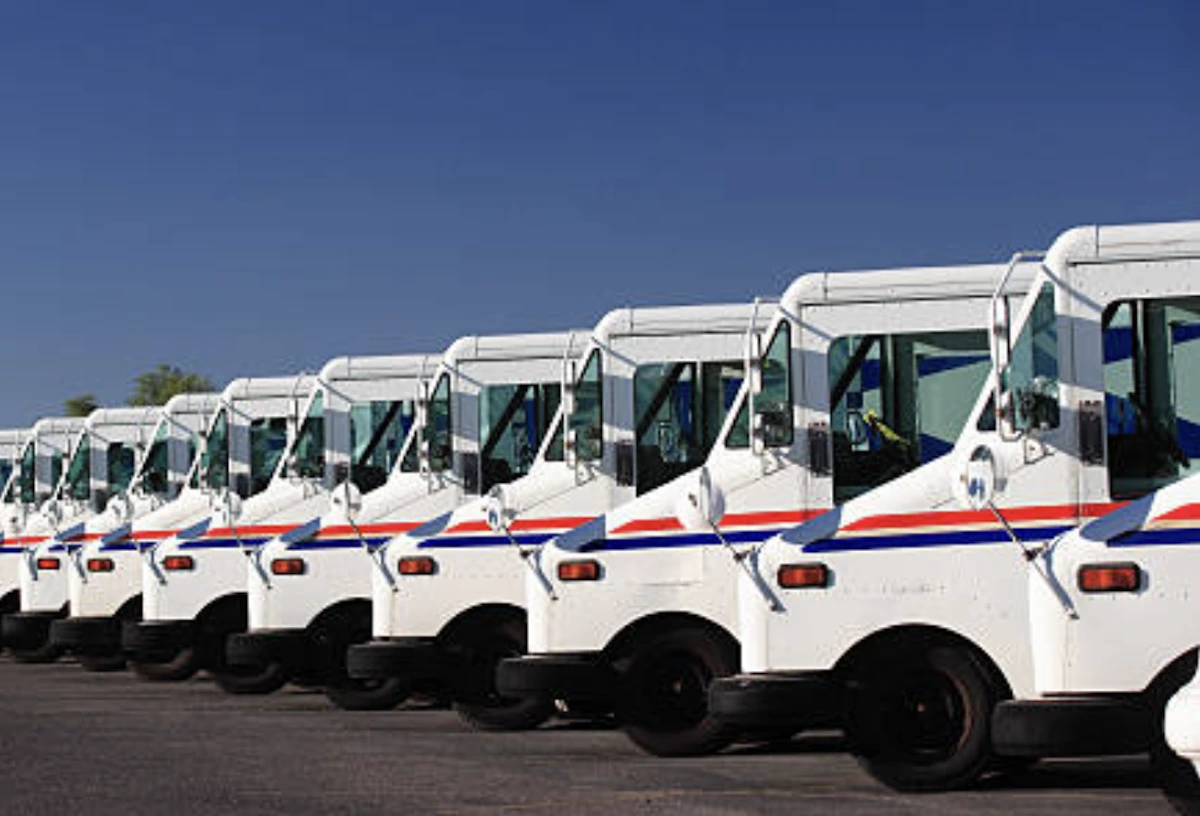
The United States Postmaster General just delivered his most direct ultimatum yet to Congress. The U.S. Postal Service reported a $2.5 billion net loss for its fiscal third quarter on August 7, and Postmaster General David Steiner used the announcement to warn lawmakers that without legislative action this year, USPS plans would have to include closing thousands of unprofitable post offices, cutting service levels, and raising prices. It’s the kind of warning that’s become a recurring feature of USPS earnings calls in recent years — but this time, it arrives against a backdrop where Steiner himself has said the agency could run out of cash by early 2027.
This article breaks down what the Postmaster General actually oversees, what USPS’s latest financial results show, why Steiner is escalating his warnings to Congress now, and what’s realistically at stake for businesses, small-town post offices, and everyday mail service if lawmakers don’t act.
Who Is the United States Postmaster General?
The Postmaster General is the chief executive officer of the United States Postal Service, responsible for overseeing day-to-day operations of an independent federal agency that delivers mail to roughly 170 million addresses nationwide. Unlike most federal agency heads, the Postmaster General isn’t a presidential cabinet appointment — the role is selected by the USPS Board of Governors, and the position sits at the intersection of running a massive logistics operation and lobbying Congress for the statutory changes needed to keep that operation financially viable, since USPS’s rates, service obligations, and borrowing limits are all set by federal law rather than by the agency itself.
David Steiner, the current Postmaster General, took over the role in July 2025 after a career that included serving as CEO of Waste Management. He inherited an agency already carrying significant financial baggage — USPS posted a $9 billion net loss in fiscal 2025, following $9.5 billion in 2024 and $6.5 billion in 2023 — and his tenure so far has been defined largely by an escalating public campaign to convince Congress that the agency’s underlying business model, not simply its management, is what needs to change.
USPS’s Q3 2026 Results: What the Numbers Actually Show
The $2.5 billion third-quarter loss actually represents an improvement of $562 million compared to the same quarter a year earlier, driven by a 6.1% jump in operating revenue to $19.9 billion, fueled largely by continued growth in Ground Advantage shipping and package delivery along with recent price increases on First-Class mail. That revenue growth, however, was partially offset by rising costs tied to retirement benefits, retiree health benefits, and overall compensation — the same structural cost categories that have weighed on USPS’s finances for years.
Steiner’s own characterization of the results was blunt: he described the agency as continuing to face a “severe liquidity crisis,” attributing the losses directly to what he called systemic challenges built into USPS’s congressionally established business model and regulatory framework, rather than to any specific operational failure. That framing matters, because it’s central to Steiner’s broader argument — that no amount of internal cost-cutting alone can fix an agency structurally required to deliver mail to every address in the country under pricing and service rules that Congress, not USPS leadership, ultimately controls.
Why Steiner Is Warning Congress Now
Several converging pressures explain the timing and intensity of this latest warning. First, cash: Steiner told the Associated Press back in March that USPS is on track to run out of cash by early 2027, a timeline that gives Congress a narrowing window to act before the agency’s options become significantly more limited. USPS currently operates under a $15 billion federal borrowing cap that hasn’t been adjusted since 1990, despite decades of inflation and a fundamentally different mail volume landscape than existed when that limit was set.
Second, pension and retirement obligations: USPS temporarily suspended its employer contributions to federal pension programs earlier this year, a move Steiner says will conserve $2.5 billion through the end of September and potentially $15 billion through 2030 — but which is, by its own description, a stopgap rather than a permanent fix, since deferred pension contributions eventually come due regardless. Steiner has specifically asked Congress to modify pension funding rules that he argues place a disproportionate burden on USPS relative to other federal agencies.
Third, a specific piece of pending legislation: a Senate committee-approved bill that would add dozens of new ZIP codes could cost USPS an estimated $800 million, according to Steiner, who flagged the measure directly as an example of Congress adding new financial obligations onto the agency without addressing its underlying revenue and cost structure. That tension — lawmakers layering new requirements onto USPS while its core financial model remains unresolved — captures much of Steiner’s frustration in recent public statements. It’s a dynamic that echoes a broader pattern of federal agencies caught between congressional mandates and inadequate funding mechanisms, similar to the kind of operational strain that surfaces whenever a federal government funding lapse disrupts agency operations and the businesses that depend on them.
What “Closing Thousands of Post Offices” Would Actually Look Like
Steiner’s warning isn’t abstract — USPS’s own numbers show exactly where the financial pressure is concentrated. About 58% of the Postal Service’s roughly 18,000 post offices currently lose money, and roughly 70% of its delivery routes operate at a loss as well. Six-day-a-week delivery to all 170 million addresses nationwide costs USPS $3.4 billion annually on its own, and Steiner has explicitly framed the question of whether that delivery frequency should continue as one of the central issues Congress needs to weigh in on.
That means “closing thousands of unprofitable post offices” isn’t a worst-case hypothetical scenario so much as a description of what already exists financially — a majority of physical locations already operating at a loss, propped up by revenue from the smaller share of profitable routes and services. The open question Steiner is putting to Congress is really about political tolerance: whether lawmakers are willing to let USPS restructure that unprofitable footprint directly, or whether they’d rather provide the funding and reform needed to preserve the current universal service model largely as-is.
The Bigger Picture: Two Decades of Losses
USPS’s current crisis didn’t emerge overnight. The agency has accumulated net losses exceeding $120 billion since 2007, driven primarily by the long-term decline of First-Class mail — historically USPS’s most profitable product — as digital communication has steadily displaced physical letters and bills. That structural shift has left USPS in a genuinely difficult position: legally obligated to maintain expensive, universal physical delivery infrastructure even as the revenue base that infrastructure was originally built to support keeps shrinking.
Package delivery growth, driven substantially by e-commerce, has partially offset that decline, but it’s also put USPS in direct competition with private carriers like FedEx, UPS, and Amazon’s own delivery network — companies unencumbered by USPS’s universal service obligations or its congressionally mandated pricing structure. That competitive pressure is real and growing; Amazon in particular has continued expanding its own delivery infrastructure even while cutting thousands of jobs elsewhere in its operations amid broader AI-driven restructuring, a reminder that USPS isn’t just managing its own internal cost structure — it’s competing against private logistics companies actively restructuring to become leaner and more automated at the same time USPS is asking Congress for room to do the same.
What Congress Could Do — and Why It Hasn’t
Steiner’s specific requests to Congress are relatively concrete: raise the statutory $15 billion debt limit that’s remained unchanged since 1992, reform pension funding rules to reduce USPS’s disproportionate burden relative to other federal agencies, and approve accelerated stamp price increases rather than requiring USPS to wait until its next scheduled adjustment window in July 2027. In March, Steiner told a congressional subcommittee he wanted approval to raise First-Class stamp prices from 90 to 95 cents; a separate increase to 82 cents from 78 cents took effect in July.
None of these requests are new, and that’s part of the frustration evident in Steiner’s increasingly direct public statements. USPS reform has been a recurring topic in Congress for years without producing the kind of structural legislative change Steiner argues is actually needed, partly because postal service touches every congressional district directly — post office closures and service reductions are politically unpopular in a way that makes comprehensive reform difficult to pass, even when the underlying financial math points clearly toward the need for one. The postal service’s Board of Governors is scheduled to meet in the coming weeks to review the agency’s finances further, another sign of mounting internal pressure to find a resolution before Steiner’s early-2027 cash-out timeline arrives.
What This Means for Businesses and Consumers
For small businesses and individual consumers alike, the most immediate practical impact of continued USPS financial strain is likely to be pricing: Steiner’s push for an accelerated January stamp price increase, ahead of the previously scheduled July 2027 adjustment, suggests postage costs are likely headed higher sooner rather than later regardless of whether Congress acts on the broader reform package. Businesses relying heavily on USPS for shipping — particularly small e-commerce sellers using services like Ground Advantage — should factor continued rate volatility into their shipping cost planning, an area where diversifying delivery options has become increasingly common, including through programs like Amazon Hub Delivery, which lets small businesses earn supplemental income by handling last-mile package delivery in their own communities — a sign of how much of the delivery landscape has already shifted toward private-sector alternatives even as USPS works through its own structural challenges.
For communities specifically served by one of the roughly 10,000-plus unprofitable post office locations Steiner has flagged, the risk of consolidation or closure is genuinely real if Congress doesn’t act this year — not a distant hypothetical, but a direct consequence of the specific financial trajectory USPS’s own leadership has now laid out in consecutive quarterly reports. Whether Congress moves quickly enough to change that trajectory, or whether Steiner’s early-2027 cash timeline arrives first, is likely to become one of the more consequential federal policy questions of the coming months.
Frequently Asked Questions
Who is the current United States Postmaster General?
David Steiner is the current United States Postmaster General, having taken over the role in July 2025 after previously serving as CEO of Waste Management. He oversees day-to-day operations of the U.S. Postal Service and has been vocal about the agency’s need for congressional financial reform.
How much money did USPS lose in the third quarter of 2026?
USPS reported a $2.5 billion net loss for its fiscal third quarter of 2026, an improvement of $562 million compared to the same quarter the previous year, driven by a 6.1% increase in operating revenue to $19.9 billion.
Why is USPS warning it might close thousands of post offices?
Postmaster General David Steiner has said that without congressional action this year, USPS may need to close thousands of unprofitable post offices, reduce service levels, and raise prices. Currently, about 58% of USPS’s roughly 18,000 post offices and 70% of its delivery routes operate at a financial loss.
When will USPS run out of cash?
Postmaster General David Steiner told the Associated Press in March 2026 that USPS is on track to run out of cash by early 2027, a timeline driving the agency’s escalating calls for congressional action on its debt limit and pension funding rules.
Will USPS stamp prices increase again soon?
Yes, likely. Steiner has requested approval to implement a new stamp price increase in January 2027, ahead of the previously scheduled adjustment window in July 2027, as part of the agency’s broader effort to address its financial crisis.
What has USPS already done to address its financial problems?
USPS has hired restructuring advisers, suspended non-essential spending on travel and consultants, temporarily suspended employer contributions to federal pension programs, and raised First-Class stamp prices multiple times, while continuing to press Congress for statutory debt limit and pension funding reforms.