Key Takeaways
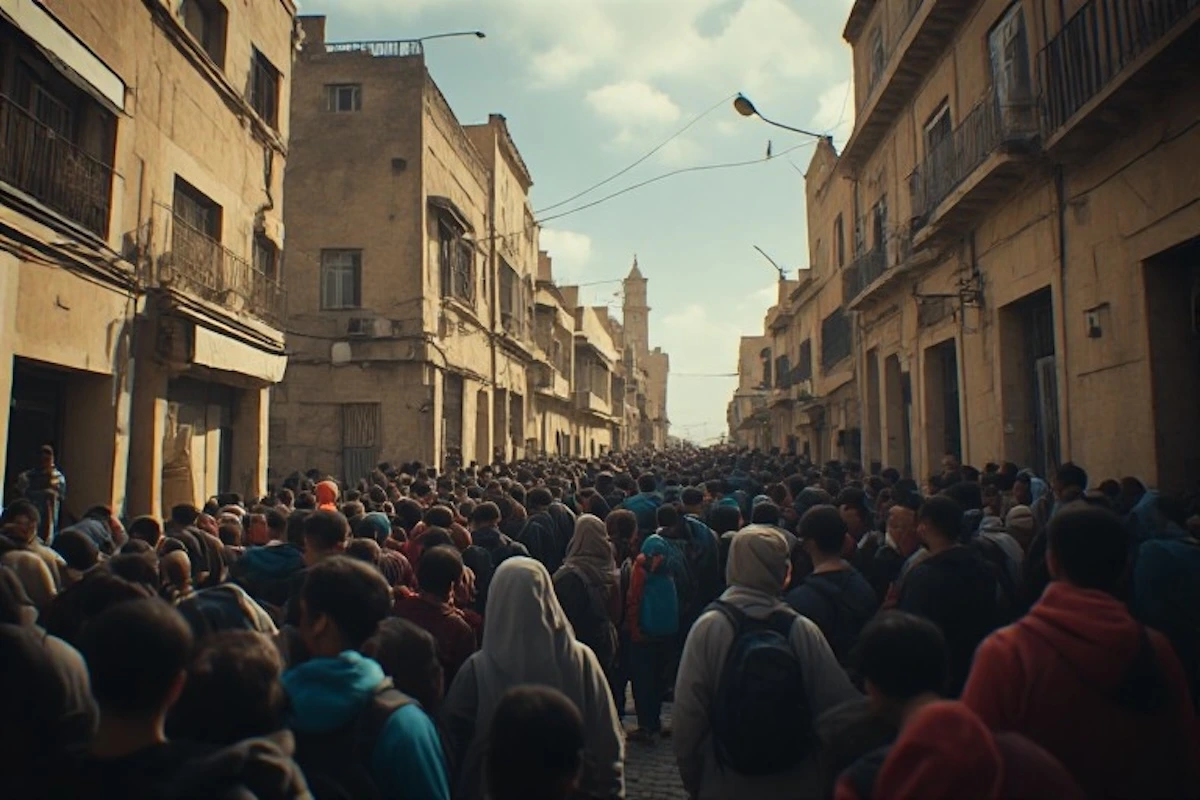
- An estimated 60,000 people crossed from Morocco into Ceuta, Spain’s North African enclave, over roughly 24 hours starting Thursday, July 30, 2026 — the largest single-day crossing in the border’s history.
- At least 34 people died, most by drowning, as crowds overwhelmed border guards by land and sea.
- Spanish Prime Minister Pedro Sánchez traveled to Ceuta and blamed human-smuggling networks for exploiting a Spanish Supreme Court ruling on sea arrivals.
- Italy’s Giorgia Meloni threatened to push for Spain’s suspension from the Schengen Area, Europe’s passport-free travel zone, triggering a diplomatic row.
- Spain says it has already returned roughly 25,000 people to Morocco and is working to “restore order.”
Why This Crisis Matters Right Now
A single day in Ceuta just became a stress test for the entire European Union. When tens of thousands of people cross one border in 24 hours, it isn’t only a Spanish problem — it reopens Europe’s oldest argument: how much border control should any one member state be allowed, or forced, to handle alone? That question is now sitting on Pedro Sánchez’s desk, with Italy publicly threatening to punish Spain over it, and France quietly reinforcing its own frontier in response.
What Happened in Ceuta
Ceuta is a small Spanish city on the North African coast, separated from Morocco by a fortified land border and a stretch of sea — one of only two land borders between the European Union and Africa (the other being Melilla, Spain’s second enclave). Starting Thursday, July 30, crowds began pouring across that border by swimming, wading, and climbing over breakwaters, largely unimpeded at first by Moroccan border guards.
Juan Jesús Vivas, president of Ceuta’s autonomous government, put the number at roughly 60,000 arrivals — a figure equivalent to about 70% of the city’s own resident population arriving in a single day. At least 34 people died in the process, most drowning while trying to swim around the breakwater that marks the maritime border. By Friday, violent clashes had broken out on the Moroccan side of the border in the town of Fnideq, and Spain’s Interior Ministry declared a national emergency, mobilizing army units to help restore order.
Sánchez arrived in Ceuta on Friday and called the crossings a “violation” of Spain’s territorial integrity. He pointed to human-trafficking networks as the driving force, arguing they had seized on a Spanish Supreme Court ruling — one that restricts “border rejection” powers that previously allowed the instant return of migrants who arrive by sea — and spread a distorted version of it to encourage mass crossings. Spain’s government said the surge had nothing to do with its own migrant regularization program, which had drawn more than a million applications and become a lightning rod for criticism from the European right.
Key Players and What They Want
| Actor | Position | What They’re Pushing For |
|---|---|---|
| Spain (PM Pedro Sánchez) | Frames the surge as smuggler-driven exploitation of a court ruling, not a policy failure | Rapid deportations, EU solidarity, restoring order in Ceuta |
| Ceuta’s regional government (Juan Jesús Vivas) | Describes the situation as an “absolutely unsustainable” humanitarian crisis | Emergency federal resources, faster returns |
| Italy (Giorgia Meloni / FM Antonio Tajani) | Casts uncontrolled crossings as a threat to European border security | Floated suspending Spain from the Schengen Area |
| France (Interior Minister Laurent Nuñez) | Wary of secondary movement toward French territory | Reinforced checks at the France-Spain border |
| Morocco | Publicly disputes that the court ruling alone explains the surge | Continued security cooperation with Madrid |
The Driving Factors, Explained
- A legal trigger. Spain’s Supreme Court had ruled that migrants who swim across the maritime border cannot be summarily returned to Morocco under the country’s fast-track “border rejection” rules — a narrower category of protection than full asylum.
- Alleged exploitation by smugglers. Spanish officials say trafficking networks reframed that ruling as a guarantee of entry and used it to drive a sudden surge, a claim some Moroccan activists have publicly questioned.
- Structural push factors. Academic research generally attributes migration surges more to “push” factors — conflict, poverty, and instability in origin countries — than to any single “pull” factor like a court decision, a point Euronews highlighted as pushback against opportunistic political framing.
- Border-policing gaps. As in a smaller-scale 2021 Ceuta crisis, the initial crossings happened with limited resistance from Moroccan border guards before reinforcements arrived.
- Domestic political timing. The surge lands squarely on top of an already polarizing debate in Spain over its mass regularization program, giving critics on the right a ready-made talking point.
How This Compares to Ceuta’s 2021 Crisis
This isn’t Ceuta’s first mass-crossing crisis. In May 2021, around 8,000–10,000 people crossed in a similar rush, tied to a diplomatic dispute between Madrid and Rabat over Spain’s decision to give medical treatment to a Western Sahara independence leader. That episode also triggered Spanish military deployment, EU statements of solidarity, and Moroccan pushback — but at roughly one-seventh the scale of this week’s crossings. The sheer size of the 2026 surge, and the speed with which Italy escalated to threatening Schengen suspension, marks a sharper turn toward treating migration management as a lever in intra-EU disputes rather than a shared burden.
Why Italy’s Schengen Threat Is a Bigger Deal Than It Sounds
The Schengen Area is the passport-free travel zone that lets people move between most EU countries without border checks — a foundational piece of European integration. Suspending a member state from it would be an extraordinary and largely unprecedented step, and legal experts note it isn’t something one government can simply impose on another. But the threat itself does real political work: it pressures Sánchez’s government while signaling to Italian and European right-wing voters that Rome will not tolerate what it frames as porous borders elsewhere in the bloc. Spain’s foreign minister, José Manuel Albares, responded by summoning Italy’s ambassador and calling for “European solidarity” instead of what he characterized as partisan point-scoring.
This dynamic echoes a broader pattern across Europe, where right-wing politicians have blamed Spain’s mass regularization program for the Ceuta escalation while left-leaning voices call the attacks opportunistic — a split that mirrors how Europe’s growing appetite for hard-border security strategy has increasingly turned migration policy into a defense-economy issue rather than a purely humanitarian one. It also isn’t unique to Europe: debates over how strictly a state should police entry and residency status have become a recurring flashpoint, visible even in unrelated corners of migration policy like the proposal that could force applicants to seek green cards from their home countries rather than adjusting status domestically.
What Happens Next
Spain says it has already returned around 25,000 people to Morocco and is working to accelerate further deportations, though the legal restrictions on summary sea-arrival returns complicate how quickly that can happen. Several things are worth watching in the coming days and weeks:
- Whether crossings resume. Spanish authorities say the flow has been “stemmed,” but the underlying legal and enforcement questions remain unresolved.
- The EU’s collective response. Whether Brussels issues a formal statement of solidarity, as it did during the 2021 crisis, or whether member states continue responding unilaterally, as Italy and France have this week.
- Spain-Morocco relations. Whether Rabat’s security cooperation with Madrid — critical to controlling the border in the first place — holds up under the diplomatic strain.
- Political fallout in Madrid. Whether the crisis reshapes the debate around Spain’s regularization policy ahead of future votes, given how directly critics have tied the two issues together.
For now, the images out of Ceuta have done what images at EU borders often do: turned a local emergency into a bloc-wide argument about who is responsible for Europe’s edges — an argument playing out against the backdrop of a changing global order in which migration, borders, and security have become increasingly intertwined with everyday geopolitics.