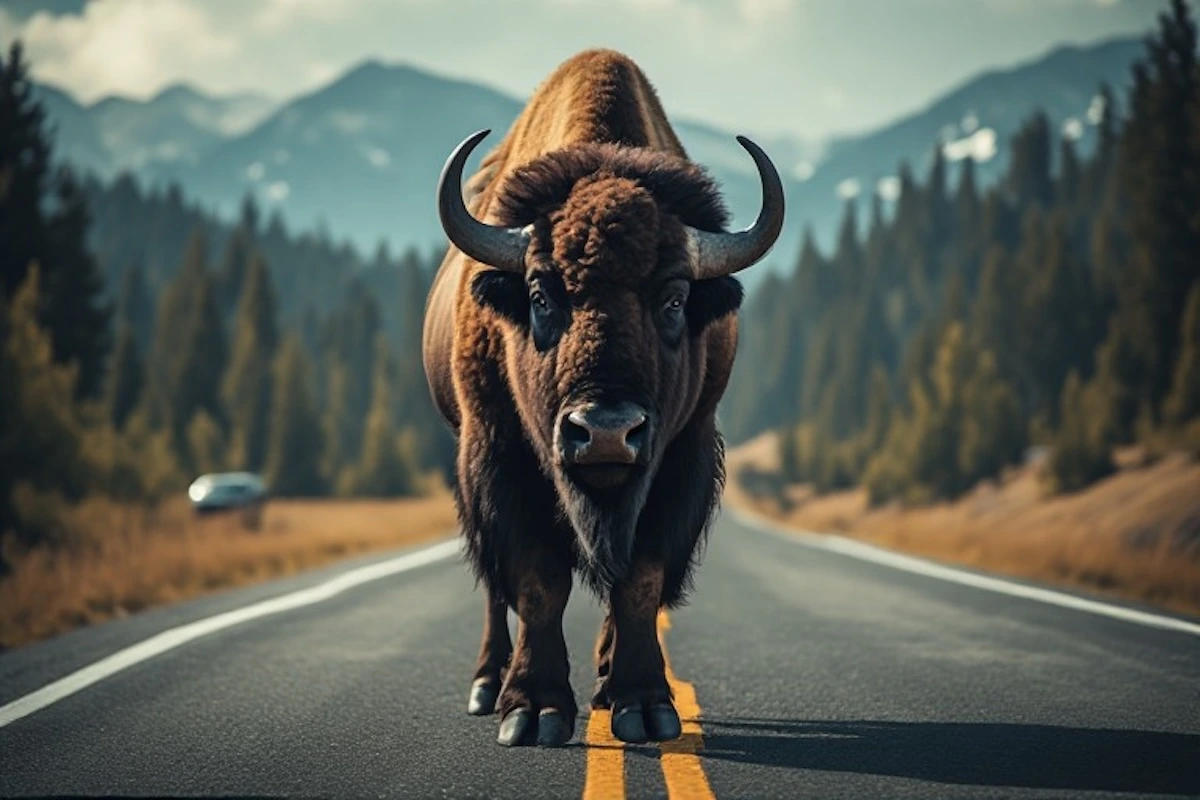
A video out of Yellowstone recently made the rounds for exactly the reason you’d expect: a driver inching through a slow-moving jam of cars tried to nose past a bull bison wandering the road in Hayden Valley, and the bull responded by putting a horn straight through the vehicle’s tire. Nobody was hurt, but the clip is a genuinely useful reminder of something Yellowstone rangers repeat every summer — these animals are not part of the scenery, they’re wild, unpredictable, and, especially in late July through September, in the middle of their annual rut.
If a video like that has you googling flights to Wyoming instead of scrolling past, good instinct. Yellowstone in bison season is one of the most rewarding wildlife trips in North America — as long as you know how to actually enjoy it from a safe distance. Here’s the full travel guide.
Why Bison Get Testy This Time of Year
From roughly late July through September, Yellowstone enters what’s known as the bison rut, or mating season. Bulls compete for access to females during this window, and that competition makes them noticeably quicker to react to anything they perceive as crowding them — including cars, camera-toting tourists, and each other. The animal in the viral clip wasn’t behaving abnormally for the season; it was doing exactly what rut-season bulls do when something moves into their space unexpectedly.
The park’s own safety guidance is simple and worth memorizing before you go: stay at least 25 yards from bison at all times, never approach one for a photo, and if a bison is on the road, stop and wait rather than trying to inch around it. Bison can run roughly three times faster than a human, and despite their calm, grazing appearance, they’re responsible for more visitor injuries in Yellowstone than any other animal in the park.
Planning Your Yellowstone Trip
Before you even get to wildlife-watching, it helps to get the logistics sorted. If you’re new to the park, a solid starting guide to Yellowstone’s location and how to actually get there is worth reading first, since the park spans three states and its size alone surprises a lot of first-time visitors.
Yellowstone has five official entrances, and which one you choose can shape your entire trip. A closer look at choosing the right gate into the park is genuinely useful here, since the North and Northeast entrances put you closer to Hayden Valley’s wildlife-heavy roads, while the West and South entrances are better suited if geysers and hot springs are your main priority.
Where to Stay
Lodging inside the park books up fast, especially during peak bison-viewing season, so it pays to decide early whether you want to sleep inside Yellowstone’s boundaries or in one of its gateway towns.
- Inside the park, historic lodges like Old Faithful Inn and Lake Yellowstone Hotel put you steps from major attractions, but rooms sell out months in advance.
- West Yellowstone, Montana, just outside the West Entrance, has the widest range of hotels, restaurants, and outfitters.
- Gardiner, Montana, near the North Entrance, sits closest to Hayden Valley’s wildlife corridors and the park’s famous Lamar Valley.
- Cody, Wyoming, near the East Entrance, leans more Western-frontier in feel and works well if you’re combining Yellowstone with Cody’s rodeo and museum scene.
For a full breakdown of when to visit and where to actually book a stay, this seasonal Yellowstone planning guide walks through the tradeoffs between summer crowds and shoulder-season quiet in more detail.
Where and How to See Wildlife Safely
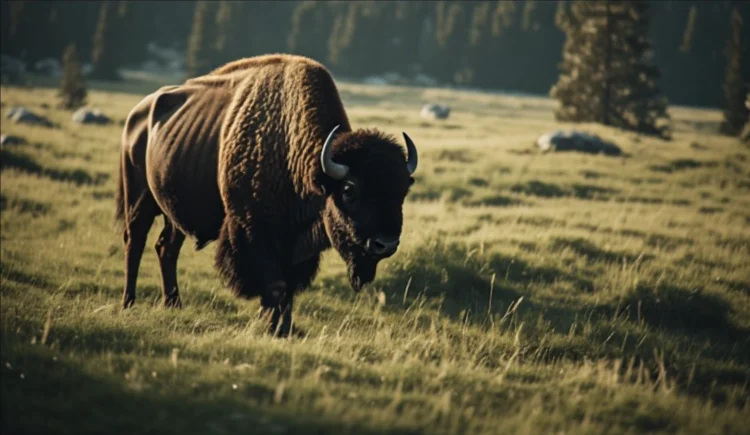
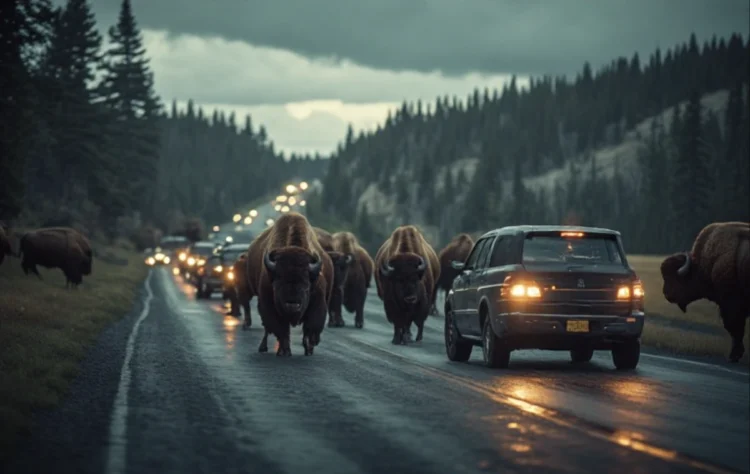
Hayden Valley and Lamar Valley are the park’s two premier wildlife corridors, both known for large bison herds, grazing elk, and the occasional wolf or grizzly sighting from a safe distance. Traffic jams caused by grazing bison — sometimes called “bison jams” by locals — are common on the roads through these valleys, and the right move is always the same: stay in your vehicle, keep your windows up if an animal approaches closely, and simply wait it out rather than trying to pass.
If you want a closer, safer look, a spotting scope or a long camera lens does far more good than trying to close the physical distance yourself. Early morning and early evening tend to be the best wildlife-viewing windows, when animals are most active and the light is best for photos.
Where to Eat
Options inside the park itself are limited, so most visitors either pack meals for the day or eat in a gateway town.
- General stores and lodges inside the park carry basic meals and grab-and-go options, but selection is limited and prices run higher than outside the gates.
- West Yellowstone has the largest concentration of sit-down restaurants, from classic diners to elevated Montana cuisine featuring bison and trout.
- Gardiner offers a smaller but solid lineup of casual restaurants right at the North Entrance, convenient if you’re basing yourself near Lamar and Hayden Valley.
- Packing a cooler for picnic lunches at scenic overlooks is one of the most popular ways to eat in the park, both for convenience and for the views that come with it.
Practical Travel Tips
Transportation: A car is essential — public transit inside Yellowstone is minimal, and the park’s scale means significant driving time between attractions. Expect wildlife-related traffic delays, especially through Hayden and Lamar Valley, and build extra time into your schedule rather than rushing between stops.
Weather: Summer days often reach the 70s and 80s Fahrenheit, but mornings and evenings can be cool even in July, and mountain weather can shift quickly. Layers are non-negotiable.
Budgeting: Park entrance fees, gateway-town lodging, and gas for long driving distances add up quickly. Booking accommodations well in advance and packing some of your own meals helps keep costs manageable.
Safety: Beyond the 25-yard bison rule, the same distance guidance applies to elk, and an even wider 100-yard buffer is required around bears and wolves. Never feed wildlife, never approach an animal for a photo, and always assume a “calm-looking” animal can react instantly if it feels crowded.
A Sample Weekend Itinerary
Day 1 — Arrival and Geysers
Enter through the West Entrance, settle into your gateway-town lodging, and spend the afternoon exploring the Old Faithful area and the Upper Geyser Basin.
Day 2 — Wildlife Valleys
Head toward Hayden Valley in the early morning for the best wildlife-viewing light, pack a picnic lunch at one of the valley’s overlooks, and continue on to Lamar Valley in the late afternoon for a second wildlife-watching window.
Day 3 — Waterfalls and Departure
Visit the Grand Canyon of the Yellowstone and its dramatic waterfalls before heading out through whichever entrance is closest to your route home.
Beyond the Bison
That viral clip of a bull bison popping a tire is a good story, but it’s really just a reminder of the golden rule for visiting Yellowstone: give the animals their space, and they’ll give you one of the best wildlife shows in the country in return. Plan around the rut season if you want peak bison activity, keep your distance, and the rest of the trip — geysers, waterfalls, and all — takes care of itself.
FAQs
Q1: What is the Yellowstone bison rut and when does it happen?
The bison rut is the annual mating season, running roughly from late July through September, when bull bison become more active and quicker to react to anything perceived as crowding them.
Q2: How far away should I stay from bison in Yellowstone?
The National Park Service requires staying at least 25 yards from bison and elk at all times, and at least 100 yards from bears and wolves.
Q3: What should I do if a bison blocks the road?
Stop your vehicle and wait for the animal to move on its own. Never try to pass closely or honk to move it along, since this can trigger an aggressive response.
Q4: What’s the best area in Yellowstone to see bison?
Hayden Valley and Lamar Valley are the park’s two most reliable wildlife corridors, known for large bison herds and frequent elk and wolf sightings.
Q5: Which Yellowstone entrance is best for wildlife viewing?
The North and Northeast entrances put visitors closest to Hayden and Lamar Valley, the park’s primary wildlife-watching corridors.
More Reading
- Where in the World Is Yellowstone? Uncovering America’s Wild Heart — woven into the trip-planning section as an orientation resource for first-time visitors.
- Your Yellowstone Journey: A Guide to Getting There, Choosing Your Gate, and Walking Through History — woven into the same section for readers deciding which park entrance to use.
- Your Ultimate Yellowstone Guide: When to Go, What to Do, and Where to Stay Under the Stars — woven into the “Where to Stay” section for seasonal planning and lodging comparisons.