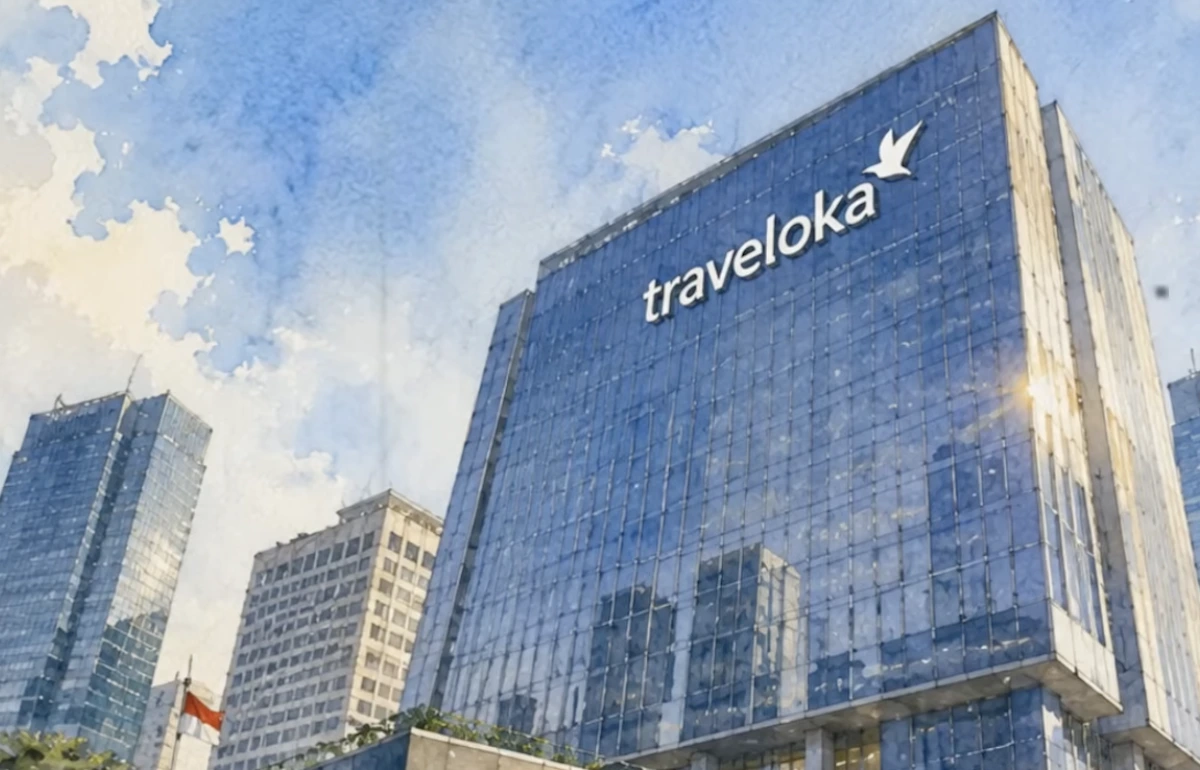
A Decision Everyone Around Him Thought Was a Mistake
In 2011, Ferry Unardi withdrew from Harvard Business School’s MBA program at age 23, walking away from one of the most prestigious credentials available to any young professional, to build a flight-booking website with two friends in a cramped Jakarta apartment. For the first year, the company had no airline partnerships, no outside funding beyond a small seed round, and three laptops between its founders. By 2017, that company — Traveloka — had raised roughly $500 million in a single funding round, including a $350 million investment from Expedia, and become Southeast Asia’s first travel unicorn, valued at more than $1 billion.
This piece traces that specific arc: not just the eventual success, but the year the company nearly didn’t survive, and the single decision — reworking Traveloka’s entire business model in the middle of a cash crunch — that determined which outcome actually happened.
From Padang to Purdue
Unardi was born in Padang, West Sumatra, on 16 January 1988, a city shaped by Minangkabau culture and its tradition of merantau — young people leaving home deliberately, to study, gain experience, and eventually return with something to show for it. He developed an early interest in computing during high school in Padang, at a time when reliable internet access in West Sumatra was far from guaranteed, and left after graduation to study computer science and mathematics at Purdue University in Indiana, earning his degree in 2008. It was at Purdue that he met Albert Zhang, a fellow student who would later become one of Traveloka’s co-founders.
Three Years at Microsoft, and a Recurring Annoyance
After graduating, Unardi worked as a software engineer at Microsoft in Seattle for three years — by most conventional measures, a secure and prestigious outcome for a young engineer. It was also where he met Derianto Kusuma, another engineer who would later join him as Traveloka’s third co-founder. Underneath that stability, though, a specific, recurring frustration was building: every time Unardi flew home to Padang from the US, booking the trip was a genuine ordeal. Unlike routes to Jakarta, flights to West Sumatra required piecing together multiple airlines across confusing websites, incomplete information, and long phone calls or in-person travel-agent visits just to compare options manually across dozens of open browser tabs. The question that frustration eventually produced — why does getting home have to be this complicated? — became the seed of what Traveloka would eventually become.
Harvard, and the Decision That Looked Reckless
By his third year at Microsoft, Unardi had grown restless, questioning whether engineering was really his long-term path. Rather than settling for that uncertainty, he enrolled in Harvard Business School’s MBA program, intending to pair his technical background with business training. He resigned from Microsoft and moved to Boston. Less than a full semester in, though, he became increasingly convinced the MBA itself wasn’t his actual destination — he began experimenting with small-scale flight ticket resale as a side project, and the more he explored the booking problem specifically, the more convinced he became that a real opportunity existed in Indonesia, one nobody had yet built for.
At 23, having already left a stable Microsoft career and with his family in Padang proud of a Harvard enrollment that carries significant social weight in Indonesia, Unardi chose to withdraw before completing the program, flying back to Indonesia with Zhang and Kusuma to found Traveloka in February 2012.
The Cramped Apartment Years: Zero Airlines, Zero Certainty
Traveloka launched in September 2012 as a flight metasearch engine — comparing prices across airlines the way Kayak or Skyscanner do internationally — but Indonesia’s market proved far less receptive than the model assumed. No major domestic airline was willing to partner with an unproven startup founded by three young engineers with no business track record. Traffic was minimal. The company operated with just eight employees and no major outside funding beyond a modest, publicly undisclosed seed round from East Ventures in November 2012 — enough to survive, not enough to feel secure.
The rejection was personal as much as commercial: a founder who had recently sat in Harvard classrooms surrounded by future executives was now being turned away, repeatedly, by airline partnership teams. There was reported shame in explaining to family in Padang that he’d left Harvard for a website generating no revenue, and reported fear about what would happen if the remaining funding ran out before the business found its footing.
The Pivot That Saved the Company
The turning point came in mid-2013, as the metasearch model continued to stall. Rather than continuing to court skeptical airlines directly, Unardi and his co-founders stepped back and rebuilt Traveloka’s core business model: shifting from a price-comparison tool that redirected users elsewhere to complete their purchase, into a full online travel agency where users could search, book, and pay in one place. This wasn’t a minor adjustment — it meant integrating local payment methods critical to the Indonesian market at the time, including direct bank transfer and cash payment through Indomaret and Alfamart convenience stores, given how few prospective users held credit cards.
The strategic logic was to stop pursuing airline partnerships as a prerequisite and instead build a product travelers would choose to use on its own merits, betting that airlines would eventually come to Traveloka once its user base and booking volume made partnership commercially obvious rather than speculative. That bet paid off: as Traveloka’s independently processed booking volume grew, airlines that had previously declined to work with the company began approaching it for official partnerships instead.
From Near-Collapse to Unicorn
Momentum built steadily from there. Global Founders Capital, the venture arm founded by the Samwer brothers, led a Series A round in September 2013 — its first investment in Asia. In 2014, Traveloka added hotel booking and launched its first mobile app; by 2015, that app had been downloaded roughly 10 million times, and the company began expanding beyond Indonesia into Thailand, Malaysia, Singapore, Vietnam, and the Philippines. The culmination arrived in July 2017: Traveloka announced it had raised approximately $500 million over the preceding year, including $350 million from Expedia alongside additional investment from Hillhouse Capital Group, JD.com, Sequoia Capital, and East Ventures — a round that valued the company above $1 billion and formally made it Southeast Asia’s first travel unicorn, alongside contemporaries like Gojek and Tokopedia.
Surviving a Second Near-Collapse: COVID-19
Unicorn status didn’t insulate Traveloka from crisis. When the COVID-19 pandemic hit in 2020, flight bookings collapsed toward zero as travel restrictions took hold globally. The company laid off approximately 100 employees — roughly 10% of its workforce — and processed refunds for around 150,000 flight tickets, totaling an estimated $100 million, as cancellation and rescheduling requests surged roughly tenfold. Traveloka responded with flexible booking options and diversification into adjacent offerings like bundled COVID-19 testing and virtual experiences, and by the end of 2020, its travel business had returned to profitability — a second, very different test of the same resilience that had carried the company through its founding year.
A Counterargument: Was Leaving Harvard Really “The Biggest Mistake,” or the Necessary Bet?
The framing — that walking away from Harvard was Unardi’s biggest mistake — has real force taken at face value. By almost any conventional risk assessment, leaving a nearly-completed MBA at one of the world’s most prestigious business schools, having already left a secure Microsoft career, to pursue an unproven idea with zero committed users or partners, is an objectively risky decision that could easily have ended in dropping two credentials and a career for nothing.
The counterargument is that the decision wasn’t reckless so much as a calculated bet about timing rather than certainty. Unardi has described sensing that the US travel-tech sector was in a genuine growth window, and worrying specifically that waiting two more years to finish his MBA risked either losing that momentum entirely or watching Indonesia’s market get captured by a faster-moving competitor. That’s a different kind of risk calculation than simple impulsiveness — it’s a bet that the cost of delay exceeded the cost of leaving early, made under specific, time-bound market conditions rather than general dissatisfaction.
It’s also worth naming the survivorship bias built into this story’s very existence: this narrative is told, and celebrated, specifically because Traveloka succeeded. Had the pivot to full-service booking failed to gain airline cooperation, or had East Ventures’ seed round run out before Global Founders Capital’s Series A arrived, the exact same decision — leaving Harvard at 23 for an unproven metasearch site — would likely be remembered today as a cautionary tale rather than an inspirational one. The decision itself didn’t change; only the outcome did, and it’s worth being honest that outcome depended on multiple points where the company could plausibly have failed instead.
Data & Evidence Summary
| Milestone | Date | Detail |
|---|---|---|
| Ferry Unardi born, Padang | 16 January 1988 | West Sumatra, Indonesia |
| Purdue University | 2004-2008 | BS, computer science and mathematics; met co-founder Albert Zhang |
| Microsoft software engineer | 2008-2011 | Seattle; met co-founder Derianto Kusuma |
| Harvard Business School MBA | 2011 | Enrolled; withdrew before completing the program |
| Traveloka founded | February 2012 | By Unardi, Zhang, and Kusuma, in Jakarta |
| East Ventures seed funding | November 2012 | Amount undisclosed |
| Metasearch launch | September 2012 | Zero airline partnerships at launch |
| Pivot to full OTA model | Mid-2013 | Added direct booking, local payment integration (bank transfer, Indomaret, Alfamart) |
| Global Founders Capital Series A | September 2013 | GFC’s first Asia investment |
| Mobile app launch / hotel booking added | 2014 | ~10 million downloads by 2015 |
| Regional expansion | 2015 | Thailand, Malaysia, Singapore, Vietnam, Philippines |
| Unicorn round | July 2017 | ~$500M raised; $350M from Expedia; valuation over $1 billion |
| COVID-19 impact | 2020 | ~100 layoffs (~10% of staff); ~150,000 tickets refunded (~$100 million) |
Methodology note: dates and figures are compiled from Wikipedia (Ferry Unardi, Traveloka), TechCrunch’s contemporaneous reporting on the 2017 Expedia investment, and Nikkei Asia/IDN Financials reporting on 2020 layoffs. Some figures — notably the exact size of the 2012 East Ventures seed round — were not publicly disclosed at the time and remain undisclosed in available sources.
Implications
For founders evaluating similar high-stakes decisions, Unardi’s case is often cited as validation for “leaving something prestigious to build something uncertain” — but the more specific and transferable lesson is arguably the mid-crisis pivot in 2013, not the initial decision to leave Harvard: recognizing that the original business model (metasearch) was structurally wrong for the local market, and being willing to rebuild the entire product around actual user constraints (lack of credit cards, need for cash and bank-transfer payment options) rather than persisting with an imported model that wasn’t working.
For Southeast Asian startup investors, Traveloka’s path — a seed round that barely sustained the company through a year of zero airline partnerships, followed by rapid validation once the business model changed — illustrates how a single strategic pivot, rather than early product-market fit, can be the actual inflection point in a startup’s survival.
For understanding regional tech success stories more broadly, Traveloka’s 2020 layoffs and refund crisis are a useful reminder that unicorn status doesn’t eliminate existential risk — it just changes the scale and nature of the crises a company has to survive.
Counterpoints and Limitations
Sources differ slightly on the exact status of Unardi’s Harvard MBA — some describe him as holding an MBA from Harvard Business School, while the more consistent and more frequently repeated account (including his own public narrative around Traveloka’s founding) describes him withdrawing before completing the program. This piece follows the withdrawal account as the better-supported version, but readers should be aware the record is not perfectly uniform across sources.
The exact size of Traveloka’s initial 2012 seed round from East Ventures has not been publicly disclosed in any source located for this piece, and this analysis has not been able to independently verify it.
Finally, this narrative — like most founder success stories — is subject to real survivorship bias, discussed directly in the counterargument section above; readers should weigh the specific decisions described here as informative about founder psychology and startup strategy, not as a template that reliably produces the same outcome if repeated.
Conclusion
The version of this story that gets told is, understandably, the one where a young engineer’s risky bet paid off spectacularly. What’s easy to lose in that framing is how genuinely uncertain 2012 and 2013 actually were for Traveloka — a company with no airline partners, a shrinking runway, and three founders each personally carrying the reputational cost of having left something more secure behind. The pivot that actually saved the company wasn’t the decision to leave Harvard; it was the decision, a year later and under real financial pressure, to admit the original business model was wrong and rebuild it around what Indonesian users actually needed. That’s arguably the more useful lesson than the more dramatic “Harvard dropout becomes unicorn founder” headline it’s usually wrapped in.
FAQ
Who founded Traveloka?
Ferry Unardi, Albert Zhang, and Derianto Kusuma founded Traveloka in February 2012 in Jakarta, after meeting at Purdue University and Microsoft in the United States.
Why did Ferry Unardi leave Harvard Business School?
He enrolled in Harvard’s MBA program after leaving Microsoft, but grew convinced during his first semester that a flight-booking business idea he was experimenting with had more real potential than completing the degree, and withdrew at age 23 to pursue it full-time.
Did Traveloka succeed immediately?
No. It launched in September 2012 as a flight metasearch engine with no airline partnerships and struggled for roughly a year before pivoting in 2013 to a full booking-and-payment model, which is what actually drove its subsequent growth.
When did Traveloka become a unicorn?
In July 2017, after raising approximately $500 million, including $350 million from Expedia, at a valuation exceeding $1 billion — making it Southeast Asia’s first travel unicorn.
How did Traveloka handle the COVID-19 pandemic?
It laid off around 100 employees (about 10% of its workforce) and refunded roughly 150,000 flight tickets worth an estimated $100 million, before returning its travel business to profitability by the end of 2020.