Few things test a visitor’s London travel plans quite like a Tube strike. The London Underground is the backbone of the city’s transport network — carrying millions of passengers every day across 272 stations and 11 lines — so when industrial action disrupts services, the ripple effects are felt across the entire city.
The good news is that London is one of the most transport-rich cities in the world. Knowing your alternatives before disruption hits is the difference between a wasted day and a seamless journey. This guide covers everything you need: which lines are affected during a strike, what alternative services keep running, and how to navigate the city confidently whether you are a first-time visitor or a frequent traveller.
What Causes a London Tube Strike?
Industrial action on the London Underground typically arises from disputes between Transport for London (TfL) — the body responsible for operating the network — and the trade unions that represent Underground workers. The Rail, Maritime and Transport union (RMT) is one of the most prominent of these, representing a significant portion of the operational workforce including station staff and train operators.
Disputes can centre on pay, working conditions, proposed changes to shift patterns, or concerns about safety in safety-critical roles. The union’s position in recent action has included concerns about fatigue under new working arrangements, the impact of longer shifts, and reduced schedule flexibility for workers. TfL, for its part, has argued that proposed changes such as the introduction of a voluntary four-day working week are designed to improve flexibility without reducing contractual hours or adding cost.
When negotiations reach an impasse, 24-hour strike periods are typically announced — giving passengers advance notice to make alternative arrangements.
The Current Dispute: June 2026 Strike Dates. Specific confirmed dates (2 June and 4 June 2026), the history of earlier cancelled dates, and context from the working-hours dispute
Understanding the Strike: Which Lines Are Affected?
Not every line is impacted equally during a London Underground strike. The extent of disruption depends on which union members are participating in the action and how many drivers and staff report for work.
During recent strike action, TfL’s published guidance has indicated the following general pattern:
Lines with No Service During Strike
The hardest-hit lines are typically those where union membership and participation rates are highest:
- Piccadilly line — No service
- Circle line — No service
- Metropolitan line (Baker Street to Aldgate section) — No service
- Central line (White City to Liverpool Street section) — No service
For tourists, the Piccadilly line closure is particularly significant — it is the direct rail link between central London and Heathrow Airport, making alternative airport transport arrangements essential for anyone arriving or departing during a strike.
Lines Running With Significant Disruption
Most other Underground lines can expect a reduced service with longer gaps between trains, heightened crowding, and possible short-notice suspensions on specific sections. Expect journey times to be substantially longer than normal.
Services Running Normally During a Strike
This is the most important information for travellers trying to plan around a strike:
| Service | Status During Strike | Key Routes |
|---|---|---|
| Elizabeth line | Running normally | Heathrow ↔ Paddington ↔ City ↔ Stratford |
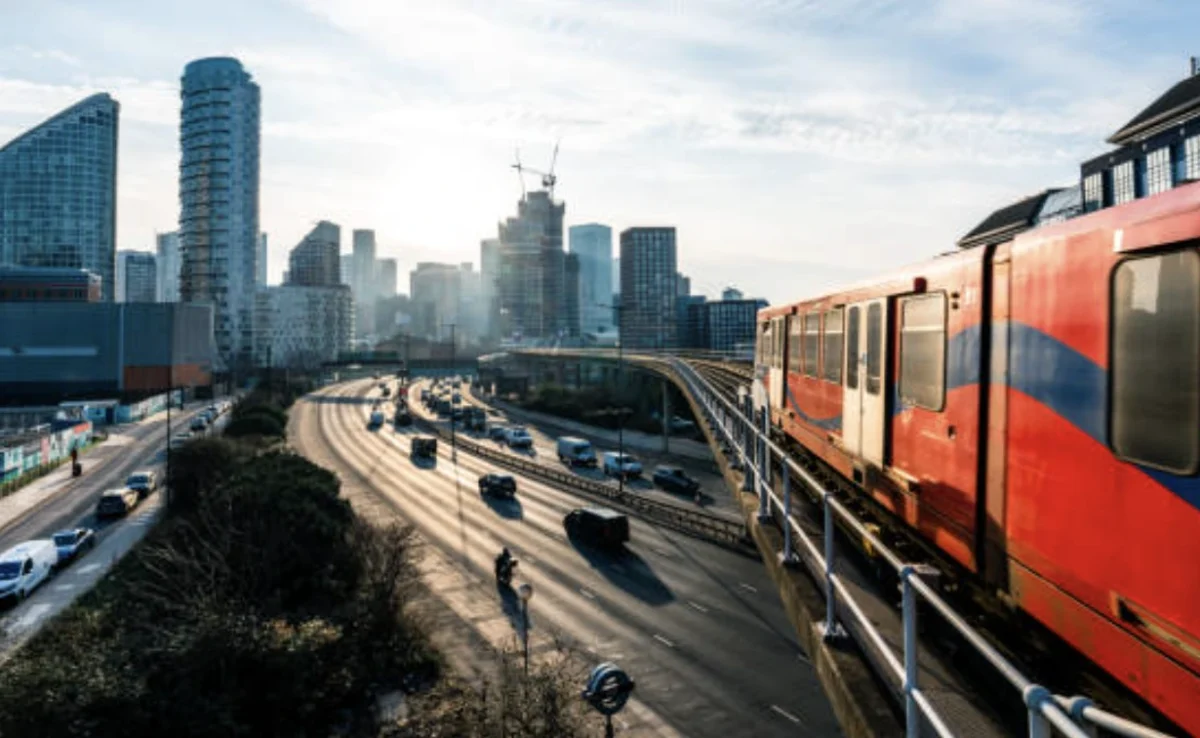
| DLR (Docklands Light Railway) | Running normally | Bank ↔ Canary Wharf ↔ Greenwich ↔ Stratford |
| London Overground | Running normally | Cross-city and orbital routes |
| London Trams | Running normally | South London / Croydon area |
| National Rail | Running normally | Major termini and intercity routes |
| London Buses | Running normally (very busy) | Extensive city-wide network |
| River Bus (Thames Clipper) | Running normally | Embankment ↔ Canary Wharf ↔ Greenwich |
The Elizabeth line in particular has become a game-changer for strike-day travel since its full opening. Running from Reading and Heathrow in the west through central London to Shenfield and Abbey Wood in the east, it provides fast, frequent connections across the city entirely independent of the Underground network.
How to Get Around London During a Tube Strike: Your Full Alternatives Guide
1. The Elizabeth Line: Your Best Friend on Strike Days
If you are travelling between Heathrow Airport and central London, or moving across the city from east to west (or vice versa), the Elizabeth line is the single best alternative to the Underground during a strike. Trains are frequent, modern, and air-conditioned — a significant upgrade on many older Underground lines even on a normal day.
Key Elizabeth line hubs include Paddington (connections to Great Western rail services), Bond Street (West End shopping), Tottenham Court Road (West End and Soho), Liverpool Street (City of London and east), and Canary Wharf (financial district).
If your Tube journey was on a line that remains operational, be aware that those lines will be significantly busier than usual as passengers displaced from suspended services pile onto whatever alternative is available. The Elizabeth line will be particularly crowded at peak times.
2. London Buses: Slower But Comprehensive
London’s bus network is vast — over 700 routes serving virtually every corner of the city. On strike days, buses absorb enormous overflow from the Underground and become extremely crowded, particularly in central London.
Tips for using London buses during a strike:
- Allow two to three times your normal journey time, especially in the morning and evening rush
- Use the TfL Go app or Google Maps to identify the most direct bus route rather than relying on your usual Tube-instinct geography
- Contactless card payment or Oyster is accepted on all buses — no cash needed
- Night buses run through the early morning and can be useful for late evening journeys when some Tube services have already wound down for the day
3. DLR: Essential for Canary Wharf and East London
The Docklands Light Railway runs independently of the Underground and continues operating during Tube strikes. It covers the financial district of Canary Wharf, connects to Greenwich, the O2 Arena area, and Stratford — where Elizabeth line and Overground connections take you across the city.
For visitors staying in east London, the DLR combined with the Elizabeth line gives you a remarkably functional alternative network even when half the Underground is offline.
4. London Overground: The Underutilised Option
The orange-liveried London Overground network loops around much of inner London, connecting areas north, east, south and west of the centre. During strikes it remains operational and offers routes that many visitors overlook entirely because they primarily navigate by Tube.
Useful Overground connections include Shoreditch, Hackney, Dalston, Clapham Junction, Peckham, and Crystal Palace — areas that can feel completely stranded on a bad Tube strike day if you do not know the Overground is running.
5. River Buses: The Scenic Alternative
The Thames Clipper river bus service runs between Putney in the west and Barking in the east, with several central stops including Embankment, Blackfriars, Bankside, London Bridge, and Canary Wharf. Services operate throughout the day and into the evening.
During strikes, river buses offer a genuinely useful alternative for certain journeys — and an exceptional view of the city as a bonus. For tourists staying near the Southbank or visiting Greenwich, this is both practical and one of London’s most underrated travel experiences.
6. Cycling and E-Bikes: Santander Cycles
London’s public hire bike scheme, commonly known as Boris Bikes or Santander Cycles, has docking stations throughout central and inner London. On strike days, demand surges — stations close to major transport hubs empty quickly — but for those who move fast, cycling across central London is often the fastest way to travel distances of one to five miles.
E-bike hire options have expanded significantly in recent years, with several operators running dockless e-bikes across the city. For visitors who are comfortable on two wheels, this can be the most stress-free strike-day transport strategy of all.
7. Taxis and Rideshare
Black cabs are ubiquitous in London and can be hailed on the street. Licensed Uber and other rideshare vehicles also operate extensively. On strike days, demand spikes sharply and prices — particularly for rideshare surge pricing — can increase substantially.
If you are planning to use a taxi or rideshare, budget extra time and cost. Pre-booking a black cab for critical journeys (such as airport runs) is strongly advised on known strike days.
8. Walking: More Useful Than You Think
London’s central geography is more compact than it appears on the Underground map, which famously distorts distances for the sake of readability. Many stations that look far apart on the map are actually walkable in 15–25 minutes.
Notable walkable distances that surprise most visitors:
- Covent Garden to Leicester Square: 3 minutes on foot
- Westminster to Waterloo: 12 minutes on foot
- St Paul’s to Tate Modern (across Millennium Bridge): 10 minutes on foot
- Oxford Circus to Bond Street: 8 minutes on foot
- Kings Cross to Euston: 5 minutes on foot
Investing in a decent London map app (Google Maps, Citymapper) and being willing to walk will transform your strike-day experience.
Heathrow Airport During a Tube Strike: Critical Information
For travellers flying in or out of Heathrow, a Piccadilly line shutdown is the most disruptive consequence of a Tube strike. The Piccadilly line is the primary Underground route between the airport and central London — and when it is suspended, alternatives are essential to know in advance.
The Elizabeth line is the most practical replacement. Running from Heathrow Terminal 2/3 (and Heathrow Terminal 4 via a separate branch), it connects to central London in approximately 30–40 minutes, with services continuing east across the city. This is the recommended option for most travellers during a Piccadilly line suspension.
Heathrow Express continues running during Tube strikes — it is operated independently of TfL and connects Heathrow to London Paddington in 15 minutes. Tickets are more expensive than the Tube or Elizabeth line but the journey is fast and guaranteed during strikes.
National Express and other coach services operate from Heathrow’s central bus station and provide a slower but affordable ground transport option to central London and beyond.
For a full breakdown of which airlines operate from which Heathrow terminals — essential knowledge when you are planning transport during a disruption — the complete guide to airlines and terminals at Heathrow Airport is a practical pre-trip resource.
What If a Strike Affects Your Day Trip Plans?
Many visitors to London use the Tube as the primary way to reach rail terminals for day trips — Paddington for Bath, Bristol, and Windsor; Victoria for Brighton and the South Coast; St Pancras for Canterbury, Eurostar, and Midlands destinations; Waterloo for the Surrey Hills and Hampshire.
The good news is that most of London’s major rail terminals are reachable via alternative services during a strike:
- Paddington — Elizabeth line (fully operational during strikes)
- Liverpool Street — Elizabeth line, DLR (Bank connection)
- Victoria — Buses from central London, Overground connections
- Waterloo — Buses, walking from Westminster or London Bridge
- St Pancras / Kings Cross — Multiple bus routes, short walk from each other
Once you reach the terminus, intercity National Rail services continue running normally regardless of Tube strikes. Your day trip from London to Windsor, Bath, or Canterbury can still happen — you just need a different plan for the first and last leg.
For inspiration on the best day trips from London and how to plan them efficiently, the complete guide to the perfect day trip from London for first-time explorers covers Windsor, Bath, and Canterbury in detail.
Planning Tips: How to Prepare Before a Strike Day
Being proactive is everything when a London Tube strike is announced. Here is a practical pre-strike checklist:
Check TfL’s official travel advice. Transport for London publishes specific line-by-line guidance before each strike, including maps and alternative route suggestions. Check tfl.gov.uk or the TfL Go app the night before.
Top up your Oyster card or set up contactless. If you will be relying on buses or river buses rather than the Tube, make sure you have a payment method ready. All TfL services — bus, DLR, Overground, Elizabeth line, river bus — accept Oyster and contactless payment.
Reconsider your timing. Strike-day congestion is at its worst between 7–10am and 4–7pm. If your schedule allows, shifting journeys to late morning or early afternoon significantly reduces the disruption you will experience.
Book airport transfers in advance. If you have a flight during or immediately after a strike day, do not rely on turning up for the Piccadilly line. Pre-book an Elizabeth line journey, Heathrow Express, or a private car transfer.
Allow generous extra time. Whatever journey time you estimate, double it. Even the services that are running normally become congested as passenger volumes surge.
For Travellers Considering a London Visit: Does a Strike Change Things?
If you are planning a trip to London and a strike is announced, the practical advice is: do not cancel or drastically change your plans unless absolutely necessary.
London’s alternative transport network — the Elizabeth line, DLR, Overground, buses, river buses, and cycling infrastructure — is genuinely capable of moving large numbers of people across the city even without the Underground. Strike days are inconvenient and slower, but they rarely make London impassable for a tourist who has done a small amount of preparation.
For travellers thinking through the broader cost and logistics of London visits — including whether the city fits within their budget — the guide to how much it costs to live in London provides a useful financial overview of the city’s transport, accommodation, and daily living costs that applies equally to extended stays and shorter tourist trips. And for those researching London’s property and rental market — particularly relevant if you are considering a long-term move to the city rather than a visit — the analysis of London landlords leaving the rental market and its impact on housing costs provides important context for understanding the city’s housing landscape.
Strike-Day Transport Summary
| If you need to get to… | Best alternative during a strike |
|---|---|
| Heathrow Airport | Elizabeth line or Heathrow Express |
| City of London / Canary Wharf | Elizabeth line, DLR |
| West End (Oxford St / Soho) | Elizabeth line to Tottenham Court Road, buses |
| Southbank / Tate Modern | London Bridge via Overground or National Rail, then walk |
| Kings Cross / St Pancras | Bus routes from central London |
| Paddington | Elizabeth line |
| Greenwich / O2 | DLR from Bank or Stratford |
| Victoria / Gatwick connection | Buses, walk from Westminster |
| Any central London destination | Walk if under 25 minutes; Santander Cycle if comfortable |
Final Word
A London Tube strike is an inconvenience, not a catastrophe — and for well-prepared travellers, it is often far more manageable than the headlines suggest. The Elizabeth line, DLR, Overground, and London’s extensive bus network collectively form a parallel transport system capable of absorbing a great deal of the Underground’s passenger load.
Know your alternatives before you travel, check TfL’s official guidance on the day, and build extra time into your plans. London remains one of the world’s most connected and navigable cities — even when the Underground is not at full capacity.