
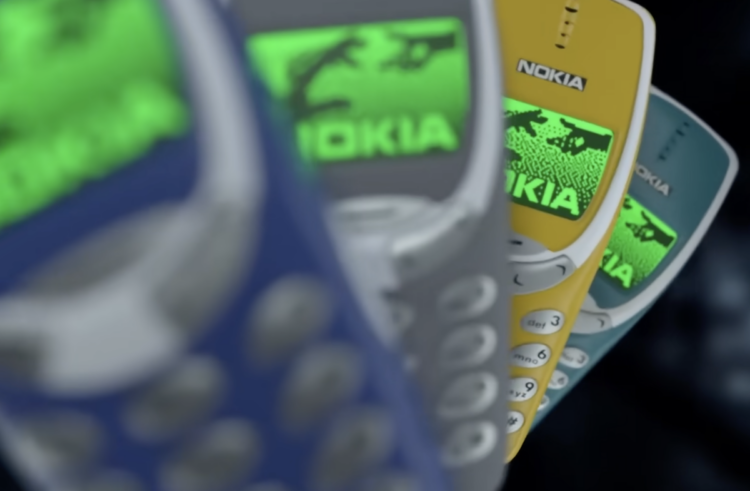
Once the undisputed king of mobile phones, Nokia experienced one of the most dramatic collapses in corporate history. Yet, instead of disappearing, the company reinvented itself—and eventually attracted a massive $1 billion investment from NVIDIA.
This is not just a comeback story. It’s a masterclass in survival, strategy, and long-term vision.
The Rise and Fall of a Global Giant
At its peak, Nokia dominated the global mobile phone market. By the early 2000s, it:
- Produced nearly half of the world’s phones
- Contributed significantly to Finland’s economy
- Became one of the most valuable tech companies globally
But everything changed in 2007 when Steve Jobs unveiled the iPhone.
Nokia underestimated the shift toward touchscreen smartphones and app ecosystems. While competitors adapted quickly, Nokia struggled with outdated software and internal missteps.
By 2012, its stock had collapsed by 98%, dropping to just €1.33. Bankruptcy seemed inevitable.
The Critical Mistake—and Harsh Reality
Nokia’s biggest failure wasn’t technology—it was misreading the future.
Despite early warnings, the company:
- Dismissed touchscreen innovation
- Relied on its outdated Symbian system
- Failed to build a competitive app ecosystem
Even when switching to Microsoft’s Windows Phone, it was too late. Market share collapsed, and the company lost its dominance.
The Turning Point: Letting Go to Survive
One of the most important decisions Nokia made was also the hardest:
👉 They sold their mobile phone business to Microsoft in 2013 for $7.2 billion.
At the time, many saw this as the end of Nokia. But in reality, it was the beginning of its transformation.
Why This Move Was Genius
- The phone division was already declining
- Selling it generated massive cash reserves
- It allowed Nokia to focus on stronger assets
Ironically, Microsoft later wrote off more than the value of the acquisition—proving Nokia exited at the right time.
Rebuilding from the Ground Up
Instead of trying to revive a failing business, Nokia made a bold pivot:
👉 Focus on telecom infrastructure—the backbone of global connectivity.
The company:
- Acquired full control of its network division
- Purchased Alcatel-Lucent for €15.6 billion
- Gained access to Bell Labs, one of the world’s most advanced research centers
This positioned Nokia as a major player in:
- 4G and 5G networks
- Telecommunications infrastructure
- Enterprise networking solutions
Real-Life Example: Strategic Reinvention in Action
The reference story highlights a critical moment during Nokia’s collapse:
In 2012, while revenues were falling and losses were rising, leadership made a counterintuitive decision:
Instead of using remaining resources to survive, they used them to transform.
- They sold a declining core business (mobile phones)
- Invested billions into acquiring new capabilities
- Shifted focus to infrastructure rather than consumer devices
This move is often compared to rebuilding an airplane mid-flight—a risky but necessary transformation.
The result? Nokia didn’t just survive—it re-emerged in an entirely different industry.
The $1 Billion Bet: Why NVIDIA Chose Nokia
Fast forward to 2025.
At a major tech conference, Jensen Huang announced a $1 billion investment in Nokia.
Why would a leading AI company invest in a former phone manufacturer?
The Answer: The Future of AI Needs Infrastructure
NVIDIA dominates AI chips, but AI’s future is not just in data centers—it’s at the edge:
- Autonomous vehicles
- Smart cities
- Real-time applications
- Mobile AI systems
To make this work, AI must run directly on telecom networks.
And Nokia had exactly what NVIDIA needed:
- Global telecom infrastructure
- Flexible network architecture
- Capability to integrate AI into networks
The Vision: AI-Powered Telecom Networks
Together, Nokia and NVIDIA aim to build:
- AI-powered cell towers
- Real-time data processing networks
- Faster, more efficient communication systems
This concept could:
- Reduce latency dramatically
- Improve network efficiency
- Enable next-generation technologies
In simple terms:
👉 They are turning telecom networks into distributed AI systems.
The 3 Key Lessons from Nokia’s Comeback
1. Let Go of the Past
Holding onto a failing core business can destroy a company. Nokia survived because it let go.
2. Invest in the Future During Crisis
Instead of cutting back, Nokia invested heavily in transformation.
3. Build on Hidden Strengths
Nokia’s network division existed long before the crisis—it simply wasn’t the focus.
That overlooked asset became the foundation of its comeback.
The story of Nokia proves that failure is not final—it’s often a turning point.
From near bankruptcy to becoming a key player in the future of AI infrastructure, Nokia’s journey shows the power of strategic reinvention.
The $1 billion investment from NVIDIA is not just a financial move—it’s a signal.
👉 The company that once connected people through phones may now power the networks that connect intelligent machines.
And this time, Nokia isn’t just part of the future—it’s helping build it.