
The Deadly Illusion of Instant Riches
Picture this: You are driving through a busy street or scrolling through your phone on a weekend. Suddenly, you see an impossibly long queue snaking in front of a small new stall. People stand for hours under the scorching sun, sweating, just to get one portion of a food or drink that has exploded across social media.
In that moment, your middle-class entrepreneurial brain whispers a very tempting illusion: “Wow, if I open a business like this, I will be rich by tomorrow.”
This illusion of instant wealth from viral trends is the most intoxicating poison for modern entrepreneurs. It creates an acute Fear of Missing Out (FOMO). When you see a neighbor buy a new car after opening a trendy drink stall, your hands itch to follow. Without market research, you raid emergency savings, sell assets, or take high-interest bank loans—just to buy a franchise package.
But let us splash cold water on that fantasy. Today, we will excavate a mass grave of businesses that were once worshipped, queued for by hundreds daily, but have now vanished—swallowed by the brutal natural selection of economics.
Case 1: Es Kepal Milo – The Sugar Bomb That Exploded Too Fast
Years ago, before Ramadan, streets suddenly filled with shaved ice and thick chocolate sauce. Es Kepal Milo was born—a simple concept: shaved ice shaped into a fist, drenched in malt chocolate powder, and topped with nuts and biscuit crumbs.
Why It Seemed Perfect:
Production cost was very low. Ice, bulk chocolate powder, sweetened condensed milk, and an affordable ice shaver. No advanced cooking skills needed. Any college student or housewife could set up a stall.
Why It Died:
The barrier to entry was nearly zero. Within weeks, 5 to 10 identical stalls appeared on the same street. They entered a brutal price war—a race to the bottom. Worse, consumers realized that Es Kepal Milo was a sugar bomb. The sweetness that felt indulgent at first became nauseating after five spoonfuls.
People queued not because they loved the taste, but because they wanted a photo for Instagram. Once the photo was posted and the likes came in, there was zero rational reason for a repeat purchase. When public curiosity ended, the stalls became empty. The ice shavers rusted in corners.
Business Lesson: A sudden sensation is not a sustainable business model. If your product exists only for social validation, loyalty will evaporate the moment the trend moves on.
Case 2: Batu Akik – The Greater Fool Theory in Action
Between 2014 and 2015, Indonesia was hypnotized by polished stones—batu akik. From high-ranking officials to motorcycle taxi drivers, everyone wore giant gemstone rings. Green bacan, red delima, stones with natural patterns claimed to be worth millions.
Why It Seemed Perfect:
A massive economic bubble formed. Grinding machines roared in every neighborhood. Craftsmen, jewelry box sellers, and stone polishers earned millions daily. People traveled to forests and rivers hunting for raw stones, believing these gems were future investments that would only rise in value.
Why It Died:
The valuation of batu akik was completely artificial. Unlike gold or diamonds, there is no international standard. Price was determined by whatever hallucination the seller and buyer agreed upon. A stone could cost millions simply because the seller told a mystical story.
This is the perfect example of the Greater Fool Theory—you knowingly buy an overpriced asset, hoping a greater fool will buy it from you later at an even higher price. The problem is, the supply of fools eventually runs out. When everyone already owns a ring and no new buyers appear, the bubble bursts. Panic selling flooded the market. People who traded family cars or pawned house certificates to buy stones at peak prices watched their “treasures” become worthless. Today, those stones sit at the bottom of aquariums or prop open doors.
Business Lesson: If your product’s value is based purely on speculation and storytelling—not utility or scarcity—you are not investing. You are gambling.
Case 3: Celebrity Cakes – Selling Boxes, Not Cake
A few years ago, every tourist city in Indonesia had giant, brightly colored shops displaying celebrity faces on their signs. They claimed to sell the city’s oleh-oleh (souvenir food), even though the celebrity might visit once a year. Millions queued just to carry a shopping bag with their idol’s face.
Why It Seemed Perfect:
Celebrities used their millions of Instagram followers to create mass hysteria. Middle-class consumers knew the cake tasted average, but they bought it for social status. Bringing home a cake box with a top celebrity’s logo was considered a luxurious vacation achievement.
Why It Died:
The product itself was ordinary—standard factory sponge cake with thick cream and excessive cheese or chocolate. No ancestral recipe, no authentic local wisdom. Tourists eventually grew smarter. Their tongues could no longer be fooled by packaging. Repeat orders collapsed because the cake had no memorable identity. Local residents never bought it because prices were too high.
When celebrities got bored, they pulled their investments and moved to the next trend, leaving regional partners drowning in losses. Today, those grand shops are dusty empty buildings with faded “for rent” signs.
Business Lesson: A business not supported by local taste loyalty is a business waiting to die from operational costs. Your product itself—not the packaging or the face on it—must earn repeat customers.
Case 4: Janda Bolong – The Plant Bubble
During pandemic lockdowns, extreme boredom hit millions of workers. Unable to show off vacation photos or cafe hangouts, they found a new status symbol: houseplants. The craze peaked with janda bolong (variegated Monstera adansonii). A single leaf could cost as much as a new motorcycle—tens or even hundreds of millions of rupiah.
Why It Seemed Perfect:
Buyers didn’t actually care about the plant’s beauty. They were gambling. They bought janda bolong not to admire while drinking coffee, but as a short-term speculation instrument, hoping to sell it to an even more desperate buyer.
Why It Died:
Unlike gold, plants are living things that can be propagated easily—through cuttings or tissue culture. When large-scale plant farmers flooded the market with hundreds of thousands of pots, the illusion of scarcity shattered. Oversupply met stagnant demand. When quarantine ended and offices reopened, boredom disappeared. Expensive plants were abandoned, wilted, and died. Prices crashed back to tens of thousands of rupiah.
Business Lesson: If your asset can be mass-produced easily, the bubble will burst the moment supply catches up. Never confuse biological reproducibility with true scarcity.
Case 5: Boba Brown Sugar Franchises – The Master Franchise Trap
Before the coffee milk boom, brown sugar boba drinks monopolized every sidewalk. The visual of brown sugar syrup flowing beautifully down a plastic cup hypnotized millions of young people to queue for an hour.
Why It Seemed Perfect:
Franchise owners sold dreams of passive income. For tens of millions of rupiah, you got a stall, initial ingredients, and a cup-sealing machine. No experience needed.
Why It Died:
Greed killed the ecosystem. To collect instant cash from license sales, master franchise owners imposed no minimum distance rules. It was common to see three to five identical boba stalls facing each other within one housing complex. Instead of profits, franchise partners cannibalized each other.
Then the health trend hit. Boba brown sugar is a calorie poison that can damage the pancreas long-term. When healthy lifestyles and diabetes awareness flooded social media, consumers slammed the brakes. Stalls rotted on sidewalks. Sealing machines sold at 90% discounts on secondhand apps. The master brand owners walked away rich. The small partners drowned in stale tapioca pearls.
Business Lesson: A franchise that does not protect its partners’ territories is not a business opportunity—it is a trap. And if your product relies on a health-damaging trend, your clock is already ticking.
Why the Bubble Always Bursts
Several expert frameworks explain these collapses:
- The Greater Fool Theory (Economics): Investors buy overvalued assets hoping to sell to someone even less informed. This works only as long as fools remain in the market. Eventually, they run out.
- FOMO (Fear of Missing Out) – Psychology: Viral businesses exploit acute FOMO. People buy not because they need the product, but because they fear being left behind. Once the fear fades, so do sales.
- Barrier to Entry (Michael Porter): When entry barriers approach zero, oversupply is guaranteed. Price wars destroy everyone’s margins.
- Social Validation Economy (Consumer Behavior): Many viral products are purchased purely for Instagram or TikTok photos. Once the photo is posted and liked, the product has served its purpose. There is zero incentive for repeat purchase.
- The Tipping Point (Malcolm Gladwell): Trends reach a threshold and then collapse when they lose emotional relevance. Viral businesses often tip into irrelevance faster than they tipped into fame.
Building Businesses That Survive
The mass grave of these five viral phenomena should be a hard slap of reality. Building a genuine street-level business cannot rely on panic-driven trend-chasing or thirst for social media validation.
A strong business has four pillars:
1. Solves a Real Problem
Does your product address an actual, recurring need—or does it exist purely for a photo opportunity?
2. Not Easily Copied
If your neighbor can open an identical stall across the street next week, you do not have a business moat. You have a temporary gig.
3. Earns Organic Repeat Purchases
Do customers return without a discount or a viral challenge? Loyalty must be built on quality and experience, not hype.
4. Financially Sustainable Without Subsidies
If you need to burn cash or run endless promos to attract buyers, your unit economics are broken.
Stop Chasing Ghosts
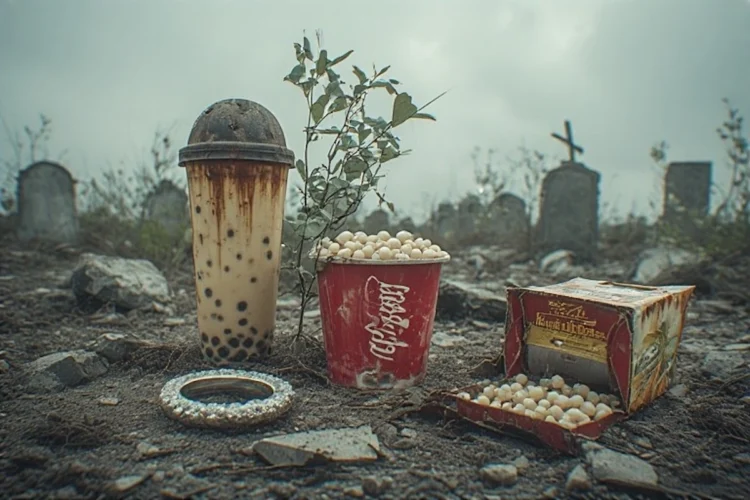
The most tragic stories from these bubbles are not the celebrities or master franchisors who walked away rich. The tragedies are the middle-class workers who raided their children’s education funds, pawned house certificates, or took predatory loans to buy into a dream that evaporated in months.
Viral fame is not a strategy. A queue is not a business model. A celebrity face is not a product.
Stop throwing your hard-earned money into the whirlpool of middle-class illusions. Start building assets that survive across economic seasons—assets grounded in genuine value, not speculation, not hype, and not the fear of being left behind.
The graveyard of viral businesses is full. Do not dig your own grave there.