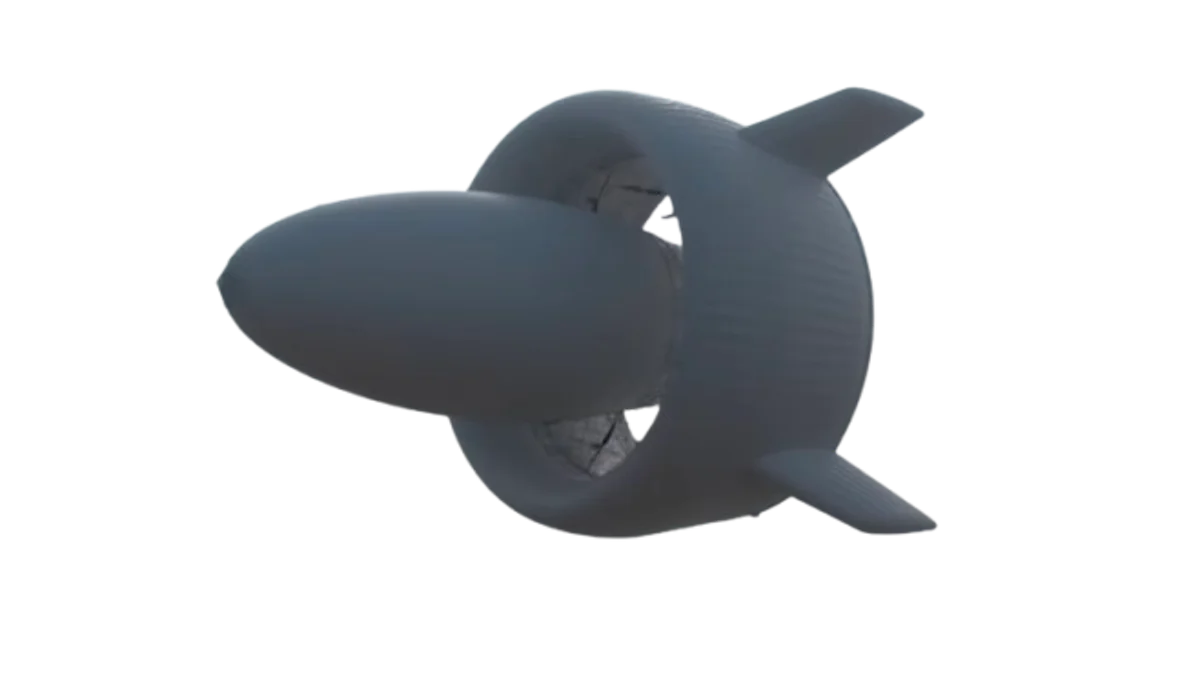
China continues to attract global attention with rapid technological innovation, especially in the renewable energy sector. One of the most striking recent developments is the creation of a flying wind power generation system often described as a “giant airborne power bank.” Known as the SAWES S2000, this innovation represents a major step forward in wind energy technology and clean power distribution.
What Is SAWES S2000?
SAWES S2000 stands for Stratosphere Airborne Wind Energy System, a megawatt-class wind power generation system developed by Beijing Lin Yunchuan Energy Technology. Unlike conventional wind turbines that are fixed to the ground, SAWES S2000 operates in the air, combining helium balloon technology with wind turbine systems in a single airborne unit.
This system is designed to capture stronger and more stable wind currents at high altitudes and transmit the generated electricity directly to the ground through a specialized cable.
How the Flying Wind Power System Works
The SAWES S2000 resembles a massive helium-filled balloon equipped with wind turbines. When airborne, the turbines rotate as they are struck by high-altitude wind, generating electricity. The power produced is then transferred via a long cable connecting the system to ground-based infrastructure.
In simple terms, the technology merges:
- Airborne balloon systems
- Wind turbine energy generation
- Direct grid connection technology
This integrated design allows electricity to flow from the sky straight into the national power grid.
Size, Capacity, and Performance
Despite its enormous scale, SAWES S2000 is engineered for efficient flight and energy production.
Key Specifications
- Length: approximately 60 meters
- Width: approximately 40 meters
- Height: approximately 40 meters
- Maximum operating altitude: up to 2,000 meters
During a test flight conducted in January 2026, the system reportedly generated 385 kWh of electricity, enough to supply around 1,500 households under normal usage conditions. In practical terms, this energy output is comparable to charging tens of thousands of smartphones simultaneously.
A World-First in Wind Power Technology
SAWES S2000 is described as the world’s first megawatt-class airborne wind power system capable of connecting directly to a national electricity grid. This is a significant milestone, as most experimental airborne wind systems remain limited to small-scale or off-grid applications.
According to the development team, the system achieves higher transmission efficiency by utilizing advanced high-power-density and medium-voltage direct current technologies, while maintaining a relatively lightweight structure.
Advantages Over Conventional Wind Power
The SAWES S2000 offers several advantages compared to traditional wind turbines:
- Minimal land usage, making it suitable for dense urban areas
- Lower environmental impact than large ground-based turbines
- Compact and modular structure
- Access to stronger, more consistent winds at high altitude
These features make it particularly attractive for regions with limited space or challenging geography.
Potential Applications
Beyond regular power generation, SAWES S2000 is designed to operate under adverse weather conditions and may support multiple use cases, including:
- Emergency power supply during natural disasters
- Electricity distribution to remote islands
- Urban energy support in space-constrained cities
- Smart mapping and surveillance support
- Climate-friendly energy transition initiatives
Its ability to provide rapid and flexible power makes it especially valuable for disaster response and emergency relief scenarios.
A Step Toward Clean Energy Transition
Chinese media and energy experts have expressed optimism that SAWES S2000 could play a role in addressing energy access challenges while supporting climate goals. By combining renewable energy generation with innovative airborne engineering, the system demonstrates a potential pathway toward sustainable, low-impact power solutions.
If deployed at scale, this technology could help reduce reliance on fossil fuels and accelerate the transition to renewable energy without requiring extensive land development.
The SAWES S2000 flying wind power system highlights China’s growing leadership in renewable energy innovation. By turning high-altitude wind into usable electricity through an airborne platform, this technology reimagines how and where clean energy can be produced. While further testing and scaling will determine its long-term impact, SAWES S2000 represents a bold and promising vision for the future of global energy systems.