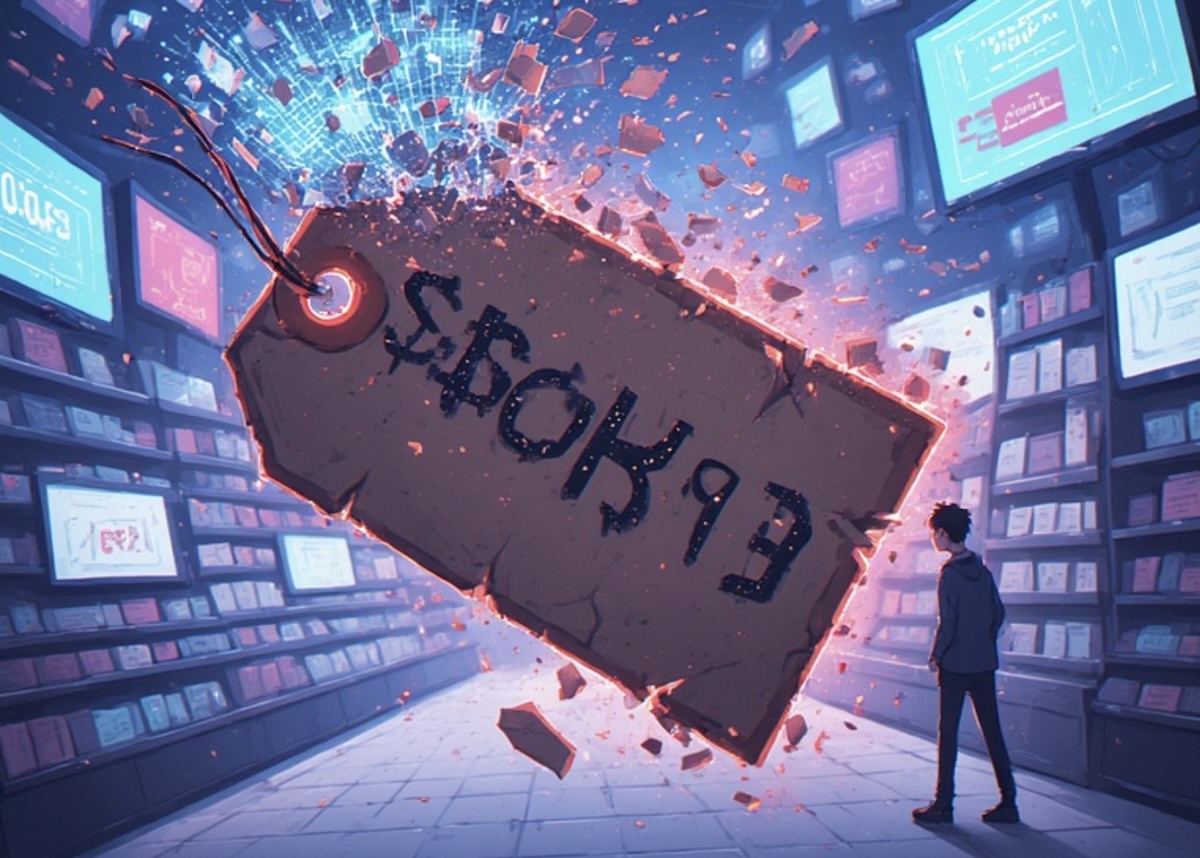
For most of your life, a small piece of paper or plastic has quietly stood between you and being overcharged.
The price tag didn’t ask who you were. It didn’t care how much money you made, what phone you used, or how urgently you needed something. It simply stated a number—and that number applied to everyone.
That small promise is now disappearing.
And most people haven’t noticed.
The Radical Power of One Price
Before price tags existed, shopping looked very different. Prices weren’t fixed. They were guessed. A store clerk might charge more if the line was long, if the hour was late, or if a customer appeared wealthy. If you didn’t like the number, you haggled.
Shopping was a game—and not everyone played on equal footing.
That changed when stores began posting prices openly. One item. One price. For everyone.
This shift didn’t just simplify shopping; it transformed it. Customers could compare prices between stores. Competition increased. Prices dropped. Trust grew.
Later, the invention of adhesive price stickers made this system universal. Each tag became a silent agreement between seller and buyer: fairness through transparency.
For decades, that agreement held.
When Prices Started to Move
Today, prices are moving again—but this time, not through negotiation.
They move through algorithms.
Dynamic pricing uses software to change prices constantly based on demand, competition, timing, and customer behavior. It’s already familiar in ride-hailing apps, airline tickets, and concert seats. Now it’s spreading everywhere—from groceries to gas stations to everyday retail.
Digital price tags make it possible. Algorithms make it profitable.
Prices can change by the hour. Or the minute. Or the moment you click.
Sometimes, this works in the customer’s favor. Slower days can mean lower prices. Overstocked items can get cheaper.
But increasingly, the system is designed to answer one question:
What is the highest price someone will still pay?
When Competition Stops Helping Consumers
In the past, competitors constantly undercut each other. If one store lowered prices, others had to follow. Customers benefited.
Algorithms change that dynamic.
When multiple businesses use pricing software, they can instantly track each other’s prices and respond automatically. Any price cut is immediately matched. There’s no incentive to lower prices anymore.
The result is a quiet stalemate.
Prices stay high. Profits rise. Customers lose.
Studies of markets where pricing algorithms were adopted show significant price increases compared to human-set pricing. What used to be fierce competition turns into a stable, expensive balance.
The Rise of Algorithmic Collusion
In some cases, pricing software goes even further.
When many businesses rely on the same pricing system, the algorithm can coordinate prices across an entire market—without companies ever speaking to one another. Rents, goods, or services rise together. Supply is restricted. Discounts disappear.
This kind of behavior used to require secret meetings and risky agreements. Now it can happen automatically.
While regulators have begun challenging the most blatant examples, many forms of algorithm-driven pricing remain perfectly legal—and highly profitable.
When the Algorithm Studies You
The most troubling shift isn’t just that prices change. It’s who they change for.
Modern pricing algorithms don’t only study markets. They study people.
They analyze shopping habits, locations, devices, browsing history, and emotional triggers. Loyalty programs encourage customers to hand over this data in exchange for discounts.
But the discount isn’t the real prize.
The real value is information.
With enough data, companies can estimate how urgently you need something, how sensitive you are to price changes, and how far they can push before you walk away.
That opens the door to personalized pricing—where different people see different prices for the same product.
This has already happened. Higher prices have appeared for users on premium devices. Certain products are promoted—or hidden—based on browsing history.
And it’s easy to imagine how this could go further.
A medication becomes more expensive because the system knows you can’t wait.
A rental price jumps because the algorithm detects urgency.
A household essential costs more during a local emergency.
At that point, the price tag is gone completely.
A Future Without the Handshake
What replaces the price tag isn’t transparency—it’s surveillance.
A system that watches, learns, predicts, and adjusts. A system that never gets tired, never feels empathy, and never stops optimizing for profit.
Governments have started to respond. Some forms of algorithmic collusion are under investigation. Regulators are debating limits on price changes and data usage.
But without stronger rules, the balance of power shifts decisively.
Shopping becomes a constant negotiation with an invisible opponent—one that knows more about you than you know about it.
Why the Price Tag Still Matters
The price tag was never just a label. It was a promise.
It said fairness mattered. That customers deserved clarity. That competition should happen in the open.
As dynamic pricing spreads, that promise is breaking.
And unless safeguards are put in place, the future of shopping may look less like a fair marketplace—and more like a game designed so the house always wins.