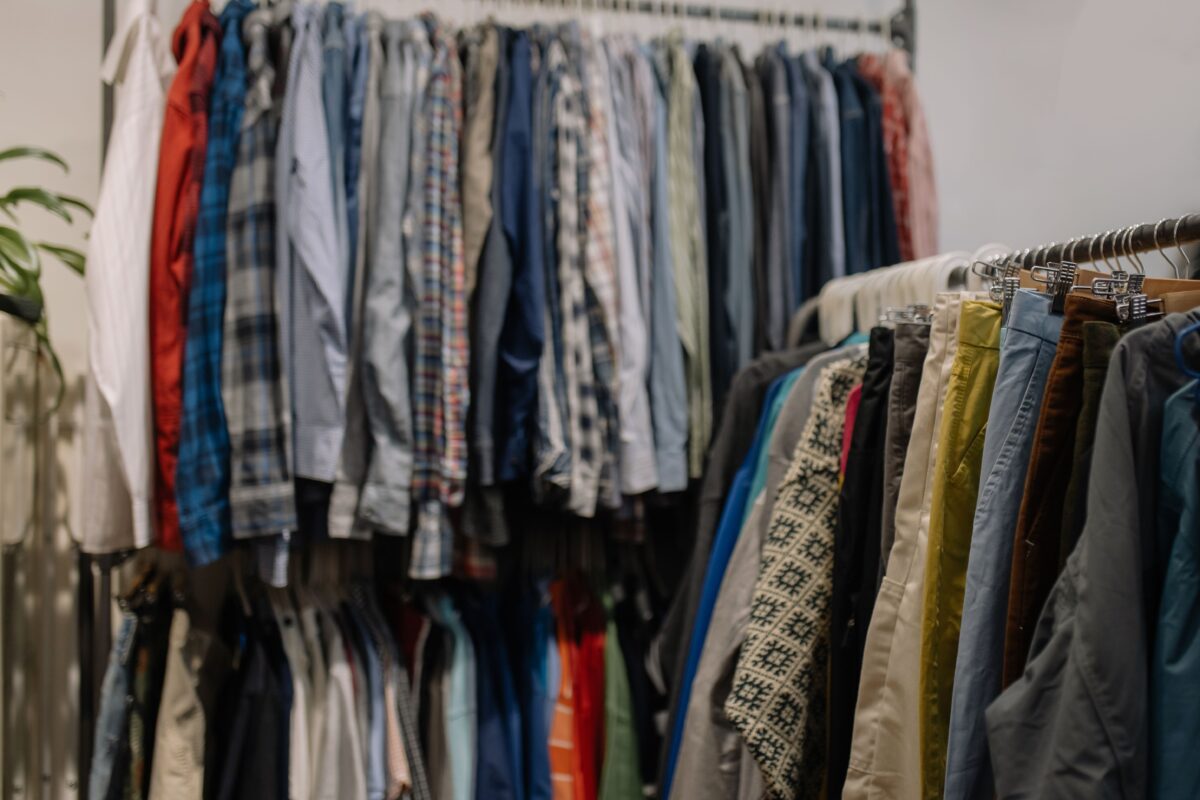
The U.S. secondhand apparel market reached an estimated $61 billion in 2026, up nearly 9% from the year before, and it’s growing roughly twice as fast as the overall clothing industry. That’s no longer a niche statistic. Fifty-nine percent of U.S. shoppers bought at least one secondhand clothing item in the past year, and among Gen Z specifically, 83% have either already bought secondhand or say they’re open to it. Resale has moved from a budget workaround to a mainstream first choice for a growing share of shoppers — and the reasons go well beyond price.
Key Takeaways
- The U.S. secondhand apparel market hit roughly $61 billion in 2026 (up 8.9% year over year), with the global market estimated at $289 billion — both growing faster than new-clothing sales.
- About one-third of all apparel purchases in the U.S. are now secondhand, and 59% of shoppers bought at least one secondhand item in the past year.
- Gen Z is driving much of the growth: 83% have purchased or are open to purchasing secondhand clothing, well above the overall population.
- Shoppers who thrift regularly save an average of $1,452 a year compared to buying everything new, according to consumer research.
- Buying one secondhand item instead of a new one saves an estimated 8.41 pounds of carbon emissions — a roughly 25% reduction per item.
Why Resale Stopped Being a Fallback and Became a Strategy
For a long time, secondhand shopping carried a specific reputation: a budget necessity, or a niche hobby for vintage collectors. That framing hasn’t matched the data for a while, and 2026’s numbers make the shift explicit. The global secondhand apparel market is projected to reach $393 billion by 2030, growing at roughly twice the rate of the overall apparel industry — a trajectory that only makes sense if resale is pulling in mainstream, price-insensitive shoppers, not just budget-conscious ones.
Three forces are driving that shift at once. First, quality and selection have genuinely improved: resale platforms increasingly carry recent-season and designer inventory, not just decades-old donations, which makes secondhand a realistic option for building a current, stylish wardrobe rather than a compromise. Second, the sustainability case has become harder to ignore as regulatory pressure on fast fashion has intensified — see our coverage of France’s new per-item fee and advertising ban targeting ultra-fast-fashion platforms like Shein and Temu, one of several signals that the true cost of cheap new clothing is starting to show up on the receipt, not just in a supply chain report. Third, resale fits naturally with two of the biggest style movements of the past two years: the rise of “quiet luxury” — understated, well-made basics over logo-driven pieces — and the renewed popularity of the capsule wardrobe, a small, deliberately chosen set of pieces that work together rather than a large, fast-turnover closet.
The Real Numbers Behind the Resale Boom
| Metric | Figure |
|---|---|
| U.S. secondhand apparel market (2026) | ≈ $61 billion (+8.9% YoY) |
| Global secondhand apparel market (2026) | ≈ $289 billion (+12.5% YoY) |
| Global secondhand market, projected 2030 | ≈ $393 billion |
| Share of U.S. apparel purchases that are secondhand | ≈ 1 in 3 |
| U.S. shoppers who bought secondhand apparel in the past year | 59% |
| Gen Z open to or already buying secondhand | 83% |
| Average annual savings for regular thrifters | $1,452 |
The gap between the U.S. figure (+8.9%) and the global figure (+12.5%) is worth noting on its own: it suggests the U.S. market, while large, may actually have more room left to grow relative to markets where resale culture is even further along — a detail that points to continued expansion in selection and platform investment in the U.S. specifically over the next few years, rather than the category topping out.
The Environmental Case, in Plain Numbers
Buying secondhand instead of new isn’t just a values statement — the environmental math behind it is concrete. Choosing a secondhand clothing item over an equivalent new one saves an estimated 8.41 pounds of carbon emissions, roughly a 25% reduction. Multiply that across even a modest number of purchases a year and the savings compound quickly, without requiring a shopper to buy less overall — just to buy differently for the items that make sense secondhand.
That framing matters because it doesn’t ask anyone to feel guilty about buying clothes at all. It simply reframes the decision: for a huge share of everyday wardrobe items — basics, denim, outerwear, workwear — a well-maintained secondhand piece delivers the same function as new, at a fraction of the cost and environmental footprint, with no meaningful compromise on how it looks or performs.
How to Actually Build a Wardrobe Around Resale
Start with your capsule list, not the platform
Before opening a resale app, write down the handful of pieces your wardrobe is actually missing — a tailored blazer, a pair of well-fitting dark denim, a versatile coat. Shopping resale without a list tends to produce impulse buys just as easily as shopping new does; the advantage of resale disappears if it just becomes a cheaper way to accumulate clutter.
Match the platform to the item
Different resale platforms specialize in different tiers and categories — some focus on curated designer and luxury pieces with in-house authentication, others on high-volume everyday basics, and others on a peer-to-peer marketplace model with minimal vetting. A designer handbag or luxury coat is worth buying through a platform that offers real authentication and a return window; a basic cotton t-shirt or pair of jeans generally doesn’t need that same level of scrutiny.
Check the return policy before you check the price
Secondhand sizing runs less predictably than new retail, since fit can shift with the era, brand, and previous owner’s alterations. A genuinely low price on a platform with no returns is a worse deal than a slightly higher price with a real return window, once you factor in the odds of a fit that doesn’t work.
Read condition descriptions and photos closely
Look specifically for close-up photos of high-wear areas — cuffs, seams, soles, zippers — rather than just the flattering full-outfit shot most listings lead with. A seller who includes detail shots unprompted is generally a better sign of an accurately described item than one who doesn’t.
Sell as you buy
Many of the same platforms that make buying secondhand easy also make selling straightforward, which is what actually keeps the resale loop economically sustainable for a household — trading out pieces you no longer wear for the wardrobe gaps you’re actually trying to fill, rather than just adding items on top of what you already own.
Where This Fits Into 2026’s Bigger Fashion Story
Resale’s growth isn’t happening in isolation from the rest of this year’s fashion news. It’s arriving alongside real regulatory pressure on the ultra-fast-fashion model that resale often serves as the direct alternative to, and alongside a runway-level shift away from maximalism: this year’s New York Fashion Week ran fur-free for the first time in its history, part of a broader industry conversation about what a more responsible fashion supply chain actually looks like at every level, from raw materials to how a garment is discarded once an owner is done with it. Secondhand shopping is the consumer-facing half of that same conversation — a very direct way an individual shopper can act on the same values driving those bigger industry and policy shifts, without waiting for a law or a runway trend to force the issue.
FAQ
Is secondhand clothing actually cheaper than buying new?
For most everyday categories, yes — regular thrifters save an average of $1,452 a year compared to buying everything new, according to consumer research, though savings vary widely by category and platform.
How much of the U.S. apparel market is secondhand now?
Roughly one-third of all apparel purchases in the U.S. are now secondhand, in a market estimated at around $61 billion in 2026.
Is buying secondhand actually better for the environment?
Yes, measurably. Choosing a secondhand item over an equivalent new one is estimated to save about 8.41 pounds of carbon emissions per item, a roughly 25% reduction.
What should I buy secondhand versus new?
Basics, denim, outerwear, and workwear tend to be the safest secondhand categories since fit and quality are easier to judge. Higher-value designer or luxury items are worth buying through platforms offering real authentication and a return policy, given the higher stakes if the item turns out to be inauthentic or a poor fit.
Why is Gen Z buying so much secondhand clothing?
Consumer research points to a combination of cost savings, sustainability values, and the fact that resale platforms increasingly carry current styles and recognizable brands rather than only outdated inventory — removing the main reason younger shoppers historically avoided secondhand shopping.
The Bottom Line
Secondhand fashion’s growth in 2026 isn’t a temporary budget trend — it’s a structural shift in how a large and growing share of shoppers, especially younger ones, think about building a wardrobe at all. The case for it now rests on three separate pillars that all point the same direction: it’s measurably cheaper, it’s measurably lighter on carbon emissions, and the selection has genuinely improved enough that “secondhand” no longer means settling for less. Starting with a short list of what your wardrobe actually needs, matching the platform to the item, and treating resale as a two-way loop rather than a one-way purchase is what turns those numbers into a wardrobe that’s actually better, not just cheaper.
Market size and consumer statistics in this article are sourced from ThredUp’s Resale Report and consumer research aggregating U.S. Census Bureau, Statista, EPA, and NARTS data. Figures are estimates based on available industry research and may be revised as new data is published.