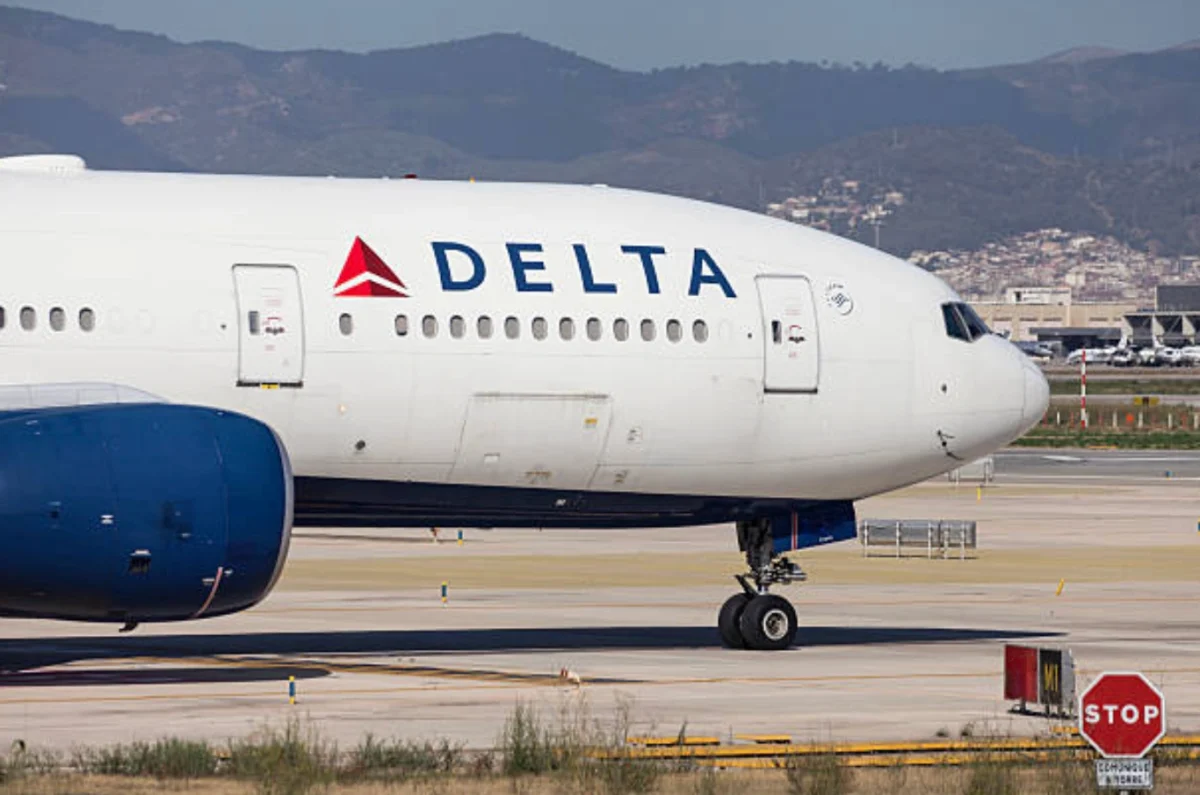
Delta Air Lines has announced its first-ever nonstop flights between Los Angeles and the Philippines, launching March 28, 2027, on an Airbus A350-900 between LAX and Manila’s Ninoy Aquino International Airport. The move makes Delta the only US carrier flying the route nonstop, stepping into a corridor Philippine Airlines has effectively had to itself for years and one of the largest untapped long-haul markets tied to the roughly 1.7 million Filipino Americans living in California.
The announcement is smaller in scope than a typical Delta network expansion story might suggest. This isn’t simply a new city added to a route map; it’s Delta re-entering a market it exited years ago, timed to a broader push to make Los Angeles its Pacific gateway and to close a significant revenue gap with United Airlines, which has dominated transpacific traffic in recent years. Understanding both the route’s specifics and the competitive context around it explains why an airline would commit an A350 widebody, with its premium four-cabin configuration, to a market its rival has served largely unchallenged.
Background and Context
Delta’s connection to Manila isn’t entirely new. The carrier inherited service to the Philippine capital through its 2008 merger with Northwest Airlines, with the Northwest brand continuing to operate there until January 2010. Delta later served Manila as a fifth-freedom route connected through its Tokyo Narita hub, before announcing in 2019 that it would shift that connection to Seoul as part of a broader transpacific gateway change. The rerouted Manila service was scheduled to begin in March 2020, the same month COVID-19 upended global air travel, and the plan was shelved before it ever launched. Delta’s upcoming LAX-Manila route is therefore best understood as a delayed comeback to a market the airline had already committed to serving before the pandemic intervened, rather than an entirely new strategic direction.
The Los Angeles-Manila corridor itself is a substantial and historically underserved market relative to its demand. Los Angeles County is home to roughly 321,000 Filipino residents, with an additional 400,000 across other Southern California counties, making it the largest concentration of Filipinos outside Manila itself. Philippine Airlines has been the dominant, and until now the only, operator on the direct LA-Manila corridor, expanding its own service to 18 weekly flights as of June 2026 in apparent anticipation of new competition.
Core Analysis
The Route, Aircraft, and Ramp-Up Schedule
Claim: Delta’s rollout plan for the route is deliberately gradual, starting well below full capacity before scaling to daily service within roughly ten weeks of launch.
Evidence: Flights begin March 28, 2027, operating three times weekly before increasing to daily service on June 7, 2027. The westbound flight (DL181, Los Angeles to Manila) is blocked at approximately 14 hours 40 minutes, departing Los Angeles at 11:50 p.m. and arriving in Manila at 5:30 a.m. two days later local time; the return flight (DL180) is blocked at roughly 13 hours 25 minutes. The aircraft is an Airbus A350-900 configured with four cabins: Delta One (up to 40 lie-flat business class seats), Delta Premium Select (up to 40 seats in a 2-4-2 layout), and Delta Comfort and Delta Main economy cabins in a 3-3-3 configuration.
Interpretation: A phased three-times-weekly-to-daily ramp is a standard risk-management approach for long-haul widebody routes, allowing Delta to build demand, secure reliable connections, and validate the route’s profitability before committing to daily widebody service, which carries substantially higher fixed operating costs.
Limitation: Announced launch schedules for long-haul international routes are sometimes adjusted or delayed between announcement and actual entry into service, particularly when routes depend on securing landing slots at congested destination airports; Manila’s Ninoy Aquino International Airport has previously been cited as a congested facility, which could affect the pace or reliability of the ramp-up.
Challenging Philippine Airlines’ Long-Standing Position
Claim: Delta’s entry directly challenges Philippine Airlines’ effective monopoly on nonstop Los Angeles-Manila service, and PAL has already responded by expanding its own capacity ahead of Delta’s launch.
Evidence: Philippine Airlines increased its Los Angeles-Manila service to 18 weekly flights by June 2026, roughly nine months before Delta’s announced entry date. Delta will be the first US-based carrier to offer nonstop service on this specific city pair, meaning the competitive dynamic is specifically Delta versus Philippine Airlines rather than a crowded multi-carrier market.
Interpretation: Philippine Airlines’ capacity increase before Delta’s service even begins suggests the incumbent carrier anticipated new competition and moved to reinforce its market position and brand loyalty with existing customers, including the large Filipino diaspora community, ahead of Delta’s arrival.
Limitation: Whether Philippine Airlines’ expanded schedule was made specifically in anticipation of Delta’s entry, versus reflecting independent post-pandemic demand recovery on one of its flagship routes, isn’t something that can be confirmed without a direct statement from Philippine Airlines attributing the change to competitive response.
The Broader Pacific Strategy Behind the Announcement
Claim: The Manila route is one piece of a larger Delta strategy to build Los Angeles into a Pacific gateway hub and close a substantial revenue gap with United Airlines in transpacific markets.
Evidence: Reporting indicates United earned approximately $6.9 billion in Pacific revenue in 2025 compared to Delta’s roughly $2.8 billion, a gap Delta is reportedly working to close through LAX expansion. Alongside Manila, Delta has added or announced LAX routes to Hong Kong and Melbourne, and is investing in supporting infrastructure including two new Delta One Lounges at LAX. The airline has also announced a separate new nonstop Newark-Los Angeles route launching in April 2027, aimed at strengthening domestic feed into its LAX international network.
Interpretation: Viewed alongside these other moves, the Manila route functions as one node in a coordinated hub-building strategy rather than an isolated response to Filipino-American travel demand alone; Delta appears to be using a combination of new long-haul international routes and reinforced domestic feed to make LAX competitive with United’s existing Pacific network strength.
Limitation: Revenue comparisons between airlines on regional bases (like “Pacific revenue”) are typically derived from earnings-call disclosures or analyst estimates rather than standardized public reporting, so the specific $6.9 billion versus $2.8 billion figures should be treated as approximate rather than precisely comparable, audited figures.
Is This Route Actually a Sound Bet?
It’s reasonable to question whether Delta’s re-entry into Manila is a stronger strategic move than it appears at first glance. Philippine Airlines’ home-market advantages, including established codeshare relationships, loyalty program penetration within the Filipino diaspora, and now expanded 18-weekly-flight capacity, represent a meaningfully entrenched competitive position that a new entrant carrier has struggled to displace on comparable routes elsewhere in the industry. Long-haul widebound routes with four premium cabins also carry high fixed costs, and a slow three-times-weekly ramp-up, while prudent, also signals that Delta itself may be uncertain about near-term demand sufficient to fill a daily A350 schedule. Skeptics of the move could reasonably argue that Delta is entering a market with a well-defended incumbent primarily to signal broader Pacific ambition to investors and to preempt United, rather than because the standalone economics of the Manila route are obviously superior to alternative uses of the same aircraft and slots.
Data & Evidence Summary
| Detail | Figure |
|---|---|
| Launch date | March 28, 2027 |
| Initial frequency | 3x weekly |
| Daily service begins | June 7, 2027 |
| Aircraft | Airbus A350-900 |
| Cabins | Delta One, Premium Select, Comfort, Main |
| Delta One / Premium Select seats | Up to 40 each |
| Westbound flight time (LAX-MNL) | ~14 hrs 40 min |
| Eastbound flight time (MNL-LAX) | ~13 hrs 25 min |
| Philippine Airlines weekly LAX-MNL flights | 18 (as of June 2026) |
| Filipino residents, LA County | ~321,000 |
| Filipino residents, other SoCal counties | ~400,000 |
| United 2025 Pacific revenue (reported) | ~$6.9 billion |
| Delta 2025 Pacific revenue (reported) | ~$2.8 billion |
| Delta’s prior Manila service | Via Northwest merger (2008-2010), then Narita/Seoul fifth-freedom plan shelved in 2020 |
Methodology note: Route, schedule, and aircraft details are drawn from Delta’s own route announcement as reported by aviation trade outlets (Simple Flying, One Mile at a Time, Aviation A2Z, AirlineGeeks) and travel media (The Points Guy, AFAR, Skift), cross-checked against multiple independent outlets for consistency. Revenue figures for Pacific-region performance are analyst or trade-press estimates rather than airline-disclosed segment financials, since neither carrier publicly breaks out route-specific or fully audited regional revenue in standard filings.
Implications
For travelers, particularly the large Filipino-American population across Southern California, the new route introduces the first US-carrier nonstop alternative on this corridor, which may affect pricing and schedule competition on one of the busiest long-haul markets tied to a single diaspora community in the country. For the airline industry, the move is a visible signal that Delta considers the Pacific, and LAX specifically, a priority growth area worth committing premium widebody aircraft and lounge infrastructure to, rather than ceding continued dominance to United uncontested. For Philippine Airlines, sustained competition on its flagship US route may pressure pricing, loyalty program value, or service investment on the corridor going forward, regardless of whether Delta’s entry proves financially successful in the near term.
Counterpoints and Limitations
Some caveats apply. The route doesn’t launch until March 2027, meaning all schedule, aircraft configuration, and frequency details remain subject to change between now and actual entry into service, as is common with long-lead airline announcements. Whether Philippine Airlines’ capacity expansion was a direct competitive response to Delta’s entry, as opposed to independent demand-driven growth, cannot be confirmed without an explicit statement from Philippine Airlines. The broader claim that this route is part of a coordinated Delta strategy to close the Pacific revenue gap with United is a reasonable inference supported by Delta’s other simultaneous route announcements, but is not identical to a confirmed, publicly stated corporate strategy document from Delta itself.
Conclusion
Delta’s first-ever nonstop Los Angeles-Manila route represents both a specific comeback, closing a service gap the airline left when pandemic-era plans for Manila service were shelved in 2020, and a piece of a larger strategic push to build LAX into a genuine Pacific gateway capable of competing with United’s existing network strength. The route puts Delta in direct competition with an entrenched Philippine Airlines on one of the largest diaspora-driven long-haul corridors in the US market, with a deliberately staged rollout that will show, over its first several months, whether demand supports the daily widebody service Delta has planned for June 2027.
Frequently Asked Questions
When does Delta’s new Los Angeles to Manila route start?
The route launches March 28, 2027, operating three times weekly before increasing to daily service on June 7, 2027.
What aircraft will Delta use on the LAX-Manila route?
An Airbus A350-900, configured with Delta One (business class), Delta Premium Select, Delta Comfort, and Delta Main cabins.
Has Delta flown to Manila before?
Delta previously served Manila through its 2008 Northwest Airlines merger and later planned a Seoul-connected route to Manila that was shelved in March 2020 due to the pandemic before ever launching.
Who currently flies nonstop between Los Angeles and Manila?
Philippine Airlines is the current operator, running 18 weekly flights as of June 2026. Delta’s entry will make it the first US carrier to fly the route nonstop.
Why is this route significant for Filipino Americans?
Los Angeles County has roughly 321,000 Filipino residents, with another 400,000 across neighboring Southern California counties, making the LA-Manila corridor one of the largest diaspora-driven long-haul travel markets in the United States.