A Bowl of Ramen Tells the Whole Story
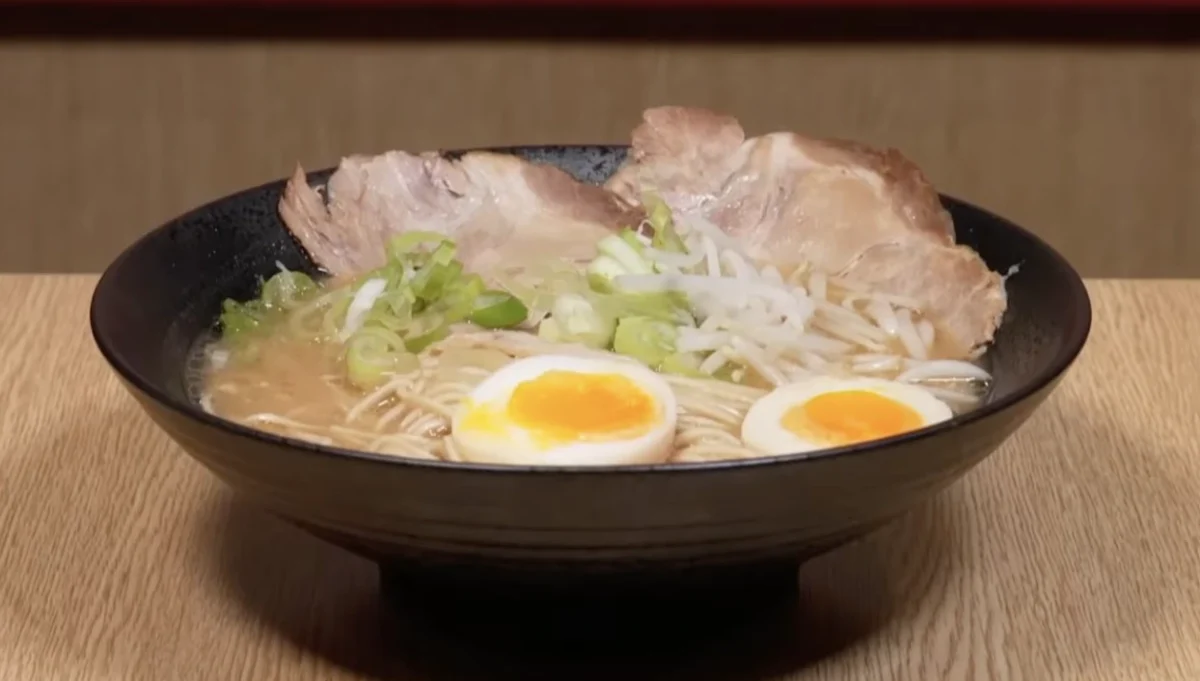
Ramen is often described as the quintessential Japanese dish, but look closely at what’s actually in the bowl and it looks considerably less Japanese than the reputation suggests. The wheat in the noodles is commonly sourced from Australia. The pork is frequently imported from Spain. The soybeans and soy sauce base of the broth trace back to American farms. It’s not an isolated irony: Japan imports roughly 60% of the calories its population consumes, making it one of the least food self-sufficient major developed economies in the world, far below countries with comparably large agricultural land bases.
That gap between cultural self-image and material reality is the subject of this piece. Japan’s food self-sufficiency rate — the share of domestically consumed calories that are also domestically produced — has been stuck at 38% for years, against a government target of 45% by 2030 that was originally supposed to be reached a decade earlier, in 2020. Behind that stalled number sits a genuinely layered set of causes: an aging farming population, a five-decade-old policy of deliberately limiting rice production, a fishing industry contending with warming seas, and a 2024-2025 rice price crisis severe enough to force a cabinet minister’s resignation. This piece works through each of those threads and what they add up to.
What “Food Self-Sufficiency” Actually Measures
Japan’s food self-sufficiency ratio measures the share of domestic consumption met by domestic production, using total calories consumed — a figure calculated by multiplying population by average per-capita consumption — as the denominator. On that measure, Japan’s rate has fallen substantially over time: from roughly 80% in the mid-1960s, to 53% by 1984, to 38% today. That decline reflects, in large part, rising national wealth: as incomes grew, Japanese consumers began eating a wider variety of higher-value foods, including meat and imported fruit, much of which cannot be produced domestically at competitive cost or scale.
The aggregate 38% figure also obscures enormous variation by commodity. Japan’s soybean self-sufficiency rate is roughly 7%; its wheat self-sufficiency rate is around 16-17%; sugar sits near 32%; meat looks comparatively strong at roughly 65% — until that figure is adjusted for the fact that Japan imports nearly all of the grain used to feed its livestock. Once feed-grain imports are counted, meat’s “true” self-sufficiency contribution collapses, and Japan’s overall self-sufficiency rate, calculated on that stricter feed-adjusted basis, falls to just 17% — a considerably more sobering number than the headline 38% figure typically reported.
The Soybean and Wheat Problem
Japanese consumers eat more soy per capita than any other population in the world — more than 8 kilograms a year — yet Japan grows only about 7% of the soybeans it consumes; the rest is imported, mainly from the United States, Brazil and Canada. Natto, the fermented soybean dish eaten daily by many Japanese households, is emblematic of the broader pattern: even a food this deeply embedded in daily Japanese life is now built almost entirely on imported raw material, sourced specifically for its processing properties rather than any domestic growing tradition.
Wheat and soybeans share a structural disadvantage in Japan that goes beyond policy: both crops are naturally suited to dry growing conditions, and Japan’s wet, rain-heavy climate depresses yields significantly when either crop is grown domestically. Soybean and wheat yields per hectare in Japan run at roughly half those achieved in the United States or Brazil. Compounding that natural constraint, more than 80% of Japan’s land area is mountainous, leaving little of the flat, contiguous farmland needed for large-scale mechanized grain cultivation that underpins high-yield production elsewhere.
Rice: Protected, Controlled, and Now in Crisis
Fifty Years of Deliberately Limiting Supply
Unlike wheat and soy, rice is a crop Japan is naturally well-suited to grow, and for decades the government’s core rice policy wasn’t about boosting production — it was about restraining it. For roughly 50 years, Japan operated a production-adjustment program (known as “gentan”) that paid farmers subsidies to grow other crops instead of rice, specifically to prevent oversupply from crashing prices for an oversupplied domestic market. The policy succeeded at maintaining price stability for decades, but at a structural cost: protected from international competition and insulated from the pressure to raise yields, Japan’s rice sector had little incentive to modernize. By 2017, high-yield rice varieties accounted for only 2-3% of Japan’s total planted rice acreage — a striking figure for a crop that is, globally, one of relatively few staple grains still experiencing meaningful yield growth in other producing countries.
The 2024-2025 Price Crisis
That fragility became visible in dramatic fashion starting in 2024. Rice prices, driven by a poor 2023 harvest damaged by extreme heat and a subsequent wave of panic-buying tied to a major earthquake advisory, began climbing sharply; wholesale prices reached roughly 27,102 yen per 60 kilograms by June 2025 — nearly double pre-crisis levels, with year-on-year increases of 92.5% in March 2025 and 98.4% in April 2025. Some retailers limited customers to one bag of rice each. The political fallout was swift: then-Agriculture Minister Taku Eto resigned in May 2025 after remarking at a public event that he never buys rice because he receives so much of it as gifts from supporters — a comment that triggered public outrage precisely because rice carries such deep cultural and historical weight in Japan, where wealth and taxation were once measured in it. His successor, Shinjiro Koizumi, released 300,000 tons of rice from state emergency reserves to help stabilize supply and prices.
Aging Fields: Japan’s Farmer Succession Crisis
The Demographics
Japan’s core agricultural workforce is aging at a pace that threatens the country’s production base independent of any single crop’s economics. The average age of core farmers reached 69.2 in 2024, with 71.7% of them aged 65 or older. The total number of core farmers fell from 2.4 million in 2000 to just 1.1 million in 2024 — more than halved in two decades. As farmers retire without successors, land goes out of production: an estimated 257,000 hectares of Japanese farmland now sits abandoned or unused, more than 60% of which is considered too degraded to easily restore to cultivation.
Consolidation as the Policy Response
Japan’s response has centered on consolidating fragmented small farms into larger, more efficient operations. More than 95% of Japan’s farms remain small, family-owned plots, historically restricted from corporate ownership — companies could lease farmland but not own it outright. A 2023 legal reform relaxed that restriction on a municipal-request basis, and beginning in 2025, the government has effectively mandated the use of “farmland banks” to lease and consolidate fragmented plots into larger operations. On the ground, that consolidation often looks like a single remaining large-scale farm absorbing dozens of small plots as neighboring farmers retire — one such operation profiled in the reporting behind this piece grew more than tenfold in size over recent decades, though it now manages fields scattered up to five kilometers apart, a fragmentation that meaningfully slows machine-based farming since more time is lost traveling between disconnected plots than working the land itself.
Smart Farming as a Labor Substitute
Facing a shrinking workforce that consolidation alone can’t fully replace, the government has also begun subsidizing autonomous tractors, unmanned planting equipment and other “smart farming” technology, on the logic that automation can let a shrinking number of farmers manage a growing amount of consolidated land. Whether this technological substitution can outpace the retirement rate of Japan’s aging farmers, most of whom are already past typical retirement age, remains an open and consequential question.
Fisheries: A Parallel Decline
Japan’s fishing industry has followed a strikingly similar trajectory to its farm sector, driven by different causes converging on the same outcome. Per-capita seafood consumption peaked at 40.2 kilograms in 2001 and has since fallen to roughly 21.4 kilograms as of fiscal 2023 — a decline of nearly half. Japan’s seafood self-sufficiency rate fell to a record-low 52% in fiscal 2024, down from 113% in 1964, meaning Japan now imports more seafood than it produces domestically, a reversal from six decades earlier when it was a substantial net seafood exporter in self-sufficiency terms.
Multiple forces are driving the decline simultaneously. Japan’s rapid industrialization from the 1960s onward converted much of its coastline away from fishing use, reducing both fishing grounds and the number of working fishers. Research from the University of Tokyo has found that since the 2010s, commercially important fish species have grown smaller as warmer seas reduce food availability — Japan’s fisheries depend on the meeting of the warm Kuroshio current flowing north from the tropics and the cold Oyashio current flowing south from the North Pacific, and a shifting balance between them is altering where fish populations concentrate. Compounding the domestic supply problem, competition from neighboring countries’ fishing fleets for shared migratory stocks — Pacific saury being a well-documented example — has further reduced Japan’s own catch of species long considered a seasonal staple.
Is Low Self-Sufficiency Actually a Crisis, or a Rational Trade-off?
There is a coherent case that Japan’s low food self-sufficiency ratio reflects rational economic specialization rather than policy failure. Japan’s mountainous terrain and rain-heavy climate make it a poor fit for producing the calorie-dense staple grains, like wheat and soy, that dominate the self-sufficiency calculation, while it remains genuinely well-suited to producing high-value specialty crops. Japan’s fruit exports — premium grapes, strawberries and other cultivars — are frequently cited as evidence that Japanese agriculture has rationally concentrated its comparative advantage in high-value, quality-differentiated products rather than competing on cost in bulk commodities it can’t efficiently grow. Under this view, importing cheap bulk grain while exporting premium fruit and investing domestic land in rice, the one staple grain Japan can grow competitively, is simply comparative advantage working as economic theory predicts, and the 38% headline figure is a misleading proxy for genuine food insecurity.
The counter to that argument is that comparative advantage assumes stable, reliable global trade, and 2025’s rice crisis specifically demonstrated how quickly a supply shock — a single bad harvest plus a wave of panic-buying — can expose a system with too little domestic production buffer, even for the one staple crop Japan is naturally equipped to grow. More broadly, several of Japan’s low self-sufficiency figures don’t reflect land-use logic so much as five decades of a policy that actively discouraged higher rice yields rather than pursuing them, a choice rather than a geographic inevitability. Critics of current policy argue Japan has never seriously tested whether raising domestic productivity to compete with imports is actually infeasible, because production-limiting policy prevented that competition from ever being attempted at scale. Both arguments have merit: Japan’s terrain genuinely limits what bulk grains it can grow competitively, and Japan’s own rice policy genuinely chose to suppress productivity gains rather than pursue them — meaning “geography” and “policy choice” are both real, separable contributors to the same low self-sufficiency number.
Data & Evidence Summary
| Metric | Figure |
|---|---|
| Overall calorie-based food self-sufficiency rate | 38% (stuck for multiple years) |
| Government target (originally due 2020, now) | 45% by 2030 |
| Self-sufficiency rate, ~1965 | ~80% |
| Self-sufficiency rate, 1984 | 53% |
| Soybean self-sufficiency | ~7% |
| Wheat self-sufficiency | ~16-17% |
| Feed-adjusted overall self-sufficiency | ~17% |
| Rice wholesale price, June 2025 | ~27,102 yen/60kg (nearly double pre-crisis levels) |
| Rice price YoY increase, April 2025 | +98.4% |
| Core farmer average age (2024) | 69.2; 71.7% aged 65+ |
| Core farmer population, 2000 → 2024 | 2.4 million → 1.1 million |
| Abandoned farmland | 257,000 hectares |
| Seafood self-sufficiency, FY2024 | 52% (record low), down from 113% in 1964 |
| Per-capita seafood consumption, 2001 → FY2023 | 40.2kg → ~21.4kg |
| Food inflation, 2025 | +6.8% YoY (more than double overall inflation) |
Methodology note: figures are compiled from Japan’s Ministry of Agriculture, Forestry and Fisheries (MAFF) data as reported by Japan Times, Reuters (via Investing.com and ESM Magazine), Nippon.com, and Al Jazeera, alongside a broadcast documentary segment providing on-the-ground interviews with farmers, fishers, and food-industry figures across Japan. Historical self-sufficiency figures for 1965 and 1984 are as cited by an agricultural economist interviewed in that documentary segment and have not been independently cross-verified against a separate MAFF historical dataset in this piece.
Implications
For Japanese consumers, the practical consequence of low self-sufficiency combined with a weaker yen and global supply disruptions is now directly visible in grocery bills: 2025’s food inflation ran at more than double the overall inflation rate, and food banks have reported a rising share of low-income households — over half in one recent survey — saying their children weren’t getting enough food during school holidays, up from 43% the year before.
For Japanese agricultural policy, the 2024-2025 rice crisis functions as a natural stress test of the low-buffer, production-limited model Japan has run for fifty years, and the political cost — a cabinet minister’s resignation — suggests the issue has moved from a technical agricultural-policy debate into mainstream electoral politics, reflected in the 2026 general election’s attention to food security and the self-sufficiency target.
For food security more broadly, Japan’s experience is a live case study other import-dependent developed economies are likely watching closely: it demonstrates both the fragility a low domestic-production buffer creates during supply shocks, and the genuine difficulty of reversing decades of land-use, demographic and policy decisions on anything faster than a multi-decade timescale.
Counterpoints and Limitations
This piece draws substantially on a single broadcast documentary for its on-the-ground detail — individual farmer, fisher, and food-bank accounts — which should be read as illustrative case studies rather than a statistically representative sample of Japan’s roughly 1.1 million core farmers or its fishing communities nationwide.
The claim that Japan’s rice policy specifically suppressed yield-improving innovation is supported by the 2-3% figure for high-yield rice variety acreage as of 2017, but this piece has not independently verified more recent figures on that specific metric, and adoption may have shifted in the years since amid the 2024-2025 price crisis and renewed policy attention.
Finally, this analysis treats Japan’s low self-sufficiency rate as a policy-relevant concern, but reasonable economists genuinely disagree, as discussed above, about whether the underlying metric itself — a raw calorie-based ratio — is the right lens for assessing food security in a wealthy, trade-integrated economy with reliable purchasing power, as opposed to alternative measures focused on supply-chain diversification or strategic reserve capacity.
Conclusion
Japan’s food self-sufficiency problem isn’t a single crisis with a single fix — it’s the accumulated effect of geography that genuinely limits what staple grains Japan can grow competitively, a fifty-year rice policy that chose price stability over productivity, a farming population aging faster than it can be replaced, and a fishing industry contending with warming seas it didn’t cause. The 2024-2025 rice crisis made all of that visible to ordinary consumers in a way abstract self-sufficiency statistics never had, which is likely why food security has become a live political issue rather than a background policy debate. Whether Japan’s stated 2030 target of 45% is achievable depends less on any single reform than on whether farmland consolidation, smart-farming automation, and renewed attention to productivity can move faster than the retirement clock currently running on the country’s aging farming population — and on that timeline, the country has already missed one deadline before.
FAQ
What is Japan’s food self-sufficiency rate?
Japan’s calorie-based food self-sufficiency rate has remained at 38% for multiple years, meaning less than two-fifths of the calories Japanese people consume are grown domestically; the government’s target is 45% by 2030, after missing an earlier 2020 goal.
Why is Japan’s food self-sufficiency rate so low?
A combination of factors: mountainous terrain and a wet climate that limit yields for staple grains like wheat and soy, a five-decade rice policy that deliberately restrained production and yield improvement to maintain prices, an aging farming population, and rising consumer demand for imported, higher-value foods as the country grew wealthier.
What caused Japan’s 2024-2025 rice crisis?
A poor 2023 harvest damaged by extreme heat, panic-buying triggered by a major earthquake advisory, and decades of production-limiting policy that left little buffer stock, combined to nearly double rice prices and force the resignation of Japan’s agriculture minister after a controversial remark.
How many farmers does Japan have, and how old are they on average?
Japan’s core farming population fell from 2.4 million in 2000 to 1.1 million in 2024, with an average age of 69.2 and 71.7% of core farmers aged 65 or older.
Is Japan’s seafood self-sufficiency also declining?
Yes. Japan’s seafood self-sufficiency rate fell to a record-low 52% in fiscal 2024, down from 113% in 1964, while per-capita seafood consumption has nearly halved since peaking in 2001.